Archive
11/16/2017 – Ephemeris – The Leonid meteors will reach their peak numbers tonight and tomorrow
Ephemeris for Thursday, November 16th. The Sun will rise at 7:40. It’ll be up for 9 hours and 32 minutes, setting at 5:13. The Moon, 2 days before new, will rise at 6:33 tomorrow morning.
The Famous Leonid meteor shower, which has had spectacular displays about every 33 years is forecast to reach two peaks this year, near noon our time, today and tomorrow. So the numbers of meteors, forecast during those peaks, of about 10 per hour near dawn our time probably won’t pan out, but you never know. None of these meteors will be seen before midnight. The last great 33 year peak was in 1998, so we’re a ways away from the next one. The responsible body for these meteors is the comet Tempel-Tuttle. Every time the comet passes through the inner solar system the sun’s heat liberates gas, dust and small grains of rock. These small grains end up in close orbits to the comet, and like the comet, return again and again.
The times given are for the Traverse City/Interlochen area of Michigan. They may be different for your location.
Addendum
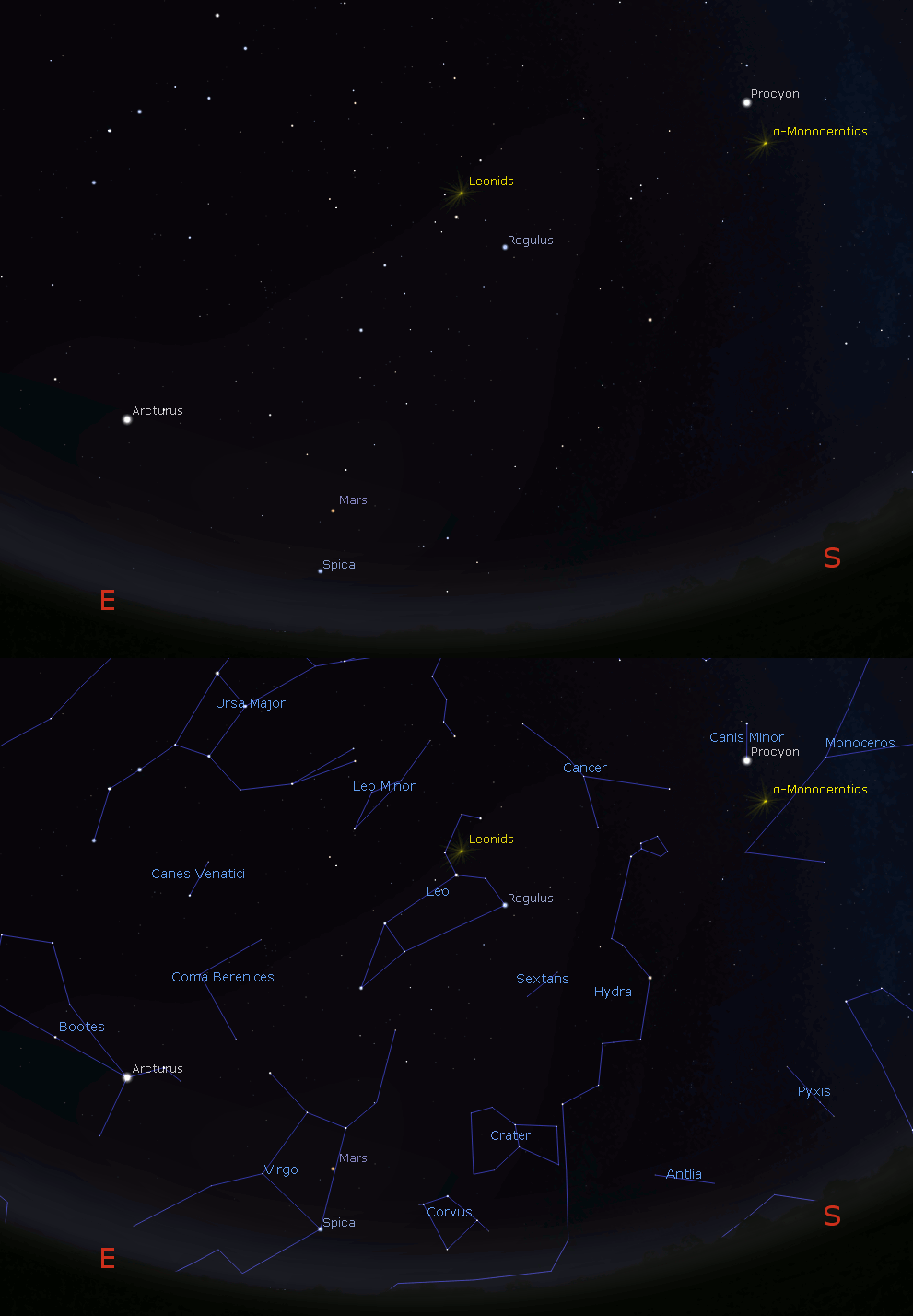
Leonid Meteor Shower Radiant finder chart fir 6 a.m., November 17, 2017. Click on image to enlarge. Created using Stellarium ans GIMP.
Note that there is another meteor shower radiant in the image, below the star Procyon. It’s the Alpha Monocerotids. It will reach its peak on the 21st. with an expected zenithal hourly rate (ZHR) of only 5 meteors an hour. By the way the zenithal hourly rate is the expected rate if the radiant was directly overhead, at the zenith. In 1995 this shower had for five minutes an estimated ZHR of 460, which was within a 30 minute outburst. The next big outburst isn’t expected until 2043, but not very much is known about this meteor shower. So keep an eye out, it could surprise us.
The radiant point wasn’t well known before the 1995 outburst, when it was thought to be closer to α Monocerotis, the unnamed bottom star in Monoceros the unicorn. There was a meteor shower called the Monocerotids listed before this shower was identified. So even though the radiant is actually in Canis Minor we are stuck with its name.
Much of the above information comes from the International Meteor Organization 2017 Meteor Shower Calendar. This and next years calendars are located at https://www.imo.net/resources/calendar/.
 Bob Moler's Ephemeris Blog