Archive
Ephemeris: 09/04/2023 – One more look at Saturn’s Rings
This is Bob Moler with Ephemeris for Labor Day, Monday, September 4th. Today the Sun will be up for 13 hours and 5 minutes, setting at 8:14, and it will rise tomorrow at 7:09. The Moon, 2 days before last quarter, will rise at 10:32 this evening.
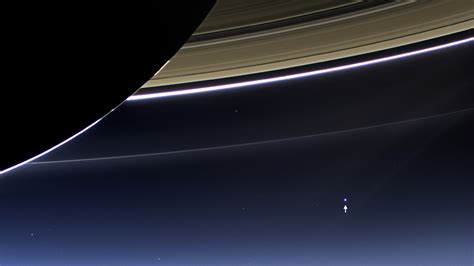
We are going to take one more look at Saturn’s rings, and these are the rings which are not visible from the Earth, but only from spacecraft in the vicinity of Saturn. We have the A, B and C rings which are visible from here Then there’s a D ring inside the C ring. There’s the F ring, a very thin ring which is controlled by a tiny moon called Prometheus, just outside the A ring. Farther out there’s an E ring which is a very diffuse ring, in the orbit of the moon Enceladus, which is an active satellite. It has geysers at the at its South Pole which vent water ice and organic compounds, which form the E ring. Saturn has many more rings and ring arcs in orbit around it, too numerous to mention here.
The astronomical event times given are for the Traverse City/Interlochen area of Michigan (EDT, UT –4 hours). They may be different for your location.
Addendum

Off-topic
Ephemeris: 09/01/2023 – GTAS meeting tonight – Dr. Jerry Dobek goes over to the dark side
This is Ephemeris for Friday, September 1st. Today the Sun will be up for 13 hours and 14 minutes, setting at 8:19, and it will rise tomorrow at 7:06. The Moon, 2 days past full, will rise at 9:24 this evening.
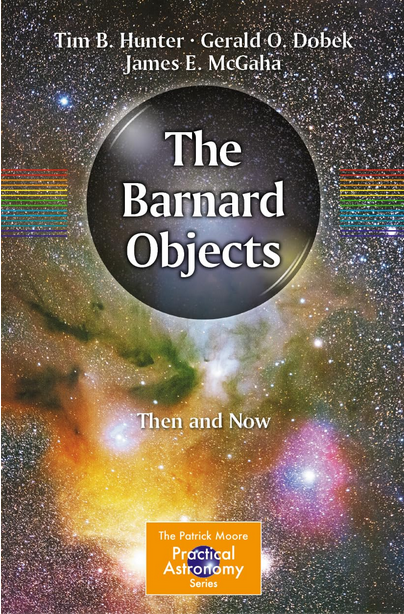
Tonight at 8 p.m. at the meeting of the Grand Traverse Astronomical Society at Northwestern Michigan College’s Rogers Observatory, and on Zoom. Observatory Director Dr. Jerry Dobek will be giving a talk on what he calls dark material. This is from a new book he collaborated on: The Barnard Objects – Then and Now, a look at dark nebulae, comparing E. E. Barnard’s Black and White photographic plates to modern color digital photography. Dark nebulae are clouds of gas and dust seen in the summer Milky Way. After the meeting, at 9 p.m. the society will host a star party to view a rather bright night sky including Saturn. The observatory is located south of Traverse City on Birmley Road between Garfield and Keystone roads. Zoom instructions will be at gtastro (dot) org.
The astronomical event times given are for the Traverse City/Interlochen area of Michigan (EDT, UT –4 hours). They may be different for your location.
Addendum
 Bob Moler's Ephemeris Blog