Ephemeris: 02/12/2024 – Darwin Day
This is Bob Moler with Ephemeris for Darwin Day, Monday, February 12th. Today the Sun will be up for 10 hours and 18 minutes, setting at 6:06, and it will rise tomorrow at 7:46. The Moon, 3 days past new, will set at 9:53 this evening.
Today we commemorate the birthday of Charles Darwin, whose Origins of the Species produced a revolution in biology, that is the Theory of Evolution. Back then, in the 19th century, the Earth was thought to be fairly young. By then geologists had figured out that the Earth was at least millions of years old. Astronomers working on the amount of energy that the Sun put out calculated that if it were made of coal it would burn out in about 3000 years. So there was a definite problem with the age of the Sun and the Earth. With the discovery of radioactivity and the beginnings of Quantum Theory, at the turn of the last century, astronomers and physicists figured out that the conversion of matter into energy, according to Einstein, was energetic enough to fuel the Sun for billions of years. Enough time for evolution to work. In fact the entire universe is evolving!
The astronomical event times given are for the Traverse City/Interlochen area of Michigan (EST, UT –5 hours). They may be different for your location.
Addendum
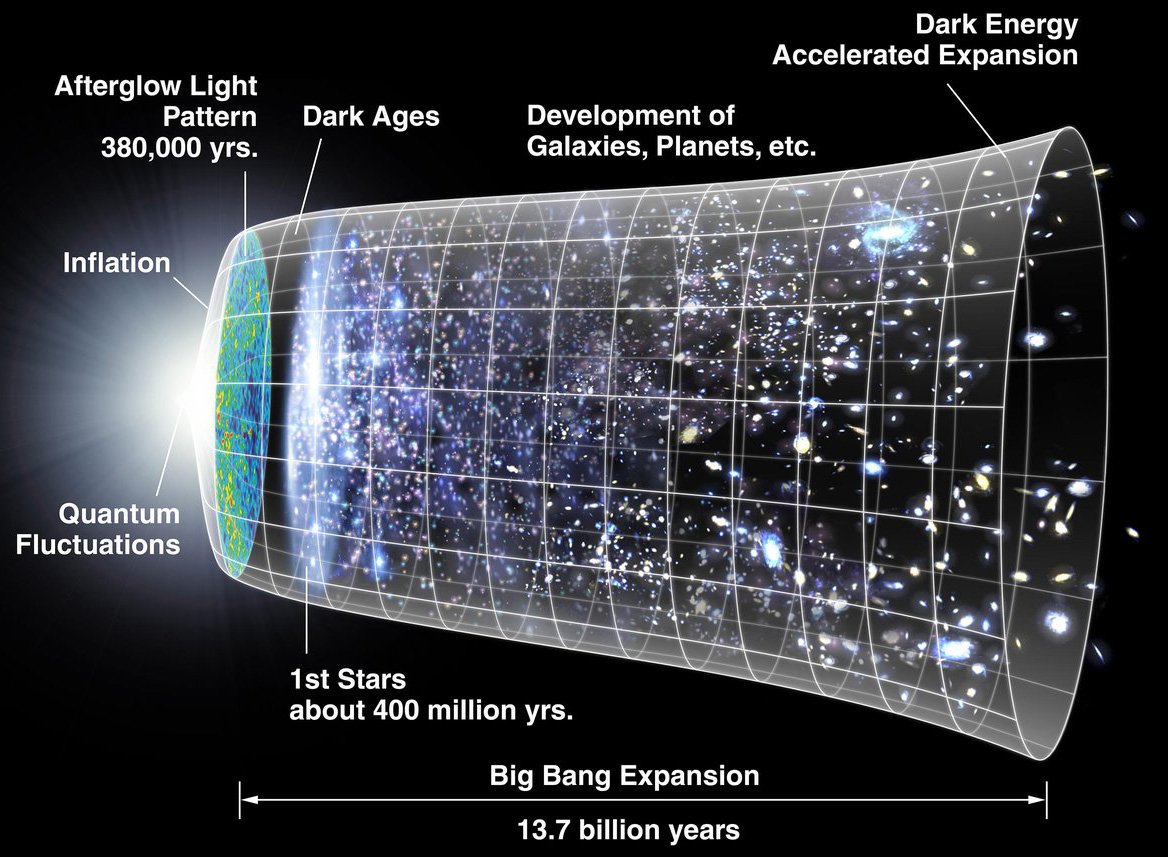
Biology isn’t my thing… too messy. Astronomy is mainly physics and chemistry, with the addition, relatively recently of astrobiology. However, not only living things evolve, the universe itself has been evolving for the last 13.8 billion years from the origin of the Big Bang to the present day.
 Bob Moler's Ephemeris Blog