Ephemeris: 12/16/2024 – The Europa Clipper mission
This is Bob Moler with Ephemeris for Monday, December 16th. Today the Sun will be up for 8 hours and 48 minutes, setting at 5:03, and it will rise tomorrow at 8:14. The Moon, 1 day past full, will rise at 6:09 this evening.
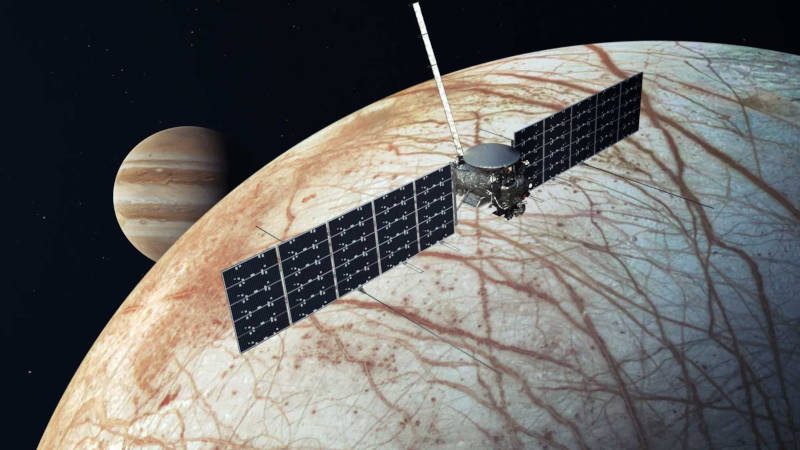
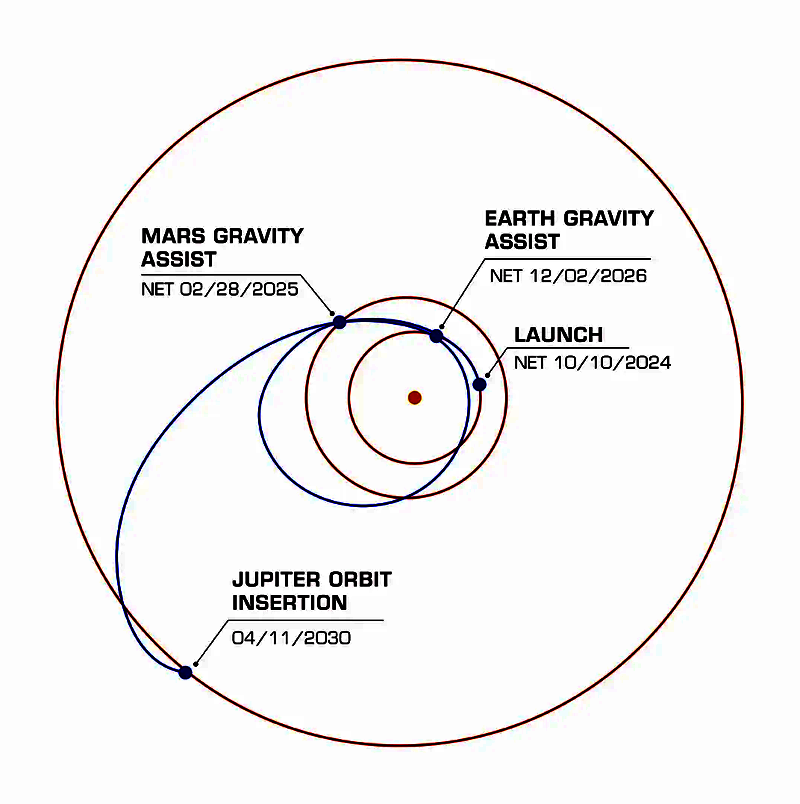
Just two months ago the satellite to closely study Jupiter’s second Galileo moon Europa was launched from Cape Canaveral on a Falcon Heavy rocket. The satellite’s name is Europa Clipper. It was originally scheduled to be launched by the SLS rocket but this rocket which is used for the Artemis program was not going to be ready for the mission so they dropped back to the somewhat less powerful SpaceX Falcon Heavy rocket. Europa Clipper will take 5 1/2 years to travel out to Jupiter with first a gravitational boost from a flyby of Mars and then another one a flyby of Earth to gain enough speed to make it to Jupiter. There it would orbit Jupiter in such a way as to fly by Europa multiple times. Jupiter’s radiation is harsh at Europa’s distance, so the satellite has to get in and get out quickly.
The astronomical event times given are for the Traverse City/Interlochen area of Michigan (EST, UT – 5 hours). Times will be different for other locations.
Addendum
 Bob Moler's Ephemeris Blog