Archive
Ephemeris: 12/24/2024 – Looking at another possibility for the Star of Bethlehem
This is Ephemeris for Christmas Eve, Tuesday, December 24th. Today the Sun will be up for 8 hours and 48 minutes, setting at 5:07, and it will rise tomorrow at 8:18. The Moon, 2 days past last quarter, will rise at 3:10 tomorrow morning.
Many writers of the 2nd and 3rd centuries CE place Jesus’ birth, via Roman events, around 2 BCE. So the Star of Bethlehem could appear several years later than the triple conjunction of Jupiter and Saturn in 7 BCE that’s been popular. In 3 and again in 2 BCE there were star-like conjunctions or apparent joining of the planets Jupiter and Venus against the backdrop of the constellation of Leo the Lion. A lion is related to Judah, son of Jacob, by a blessing the latter gave his 12 sons in Genesis. The first conjunction occurred in August in the morning sky. On June 16th of the next year the two planets got together again, this time in the evening sky, a month or more after Jesus would have been born in the vulnerable spring lambing season when shepherds would most likely be out at night guarding the flocks, not December 25th.
The astronomical event times given are for the Traverse City/Interlochen area of Michigan (EST, UT – 5 hours). Times will be different for other locations.
Addendum
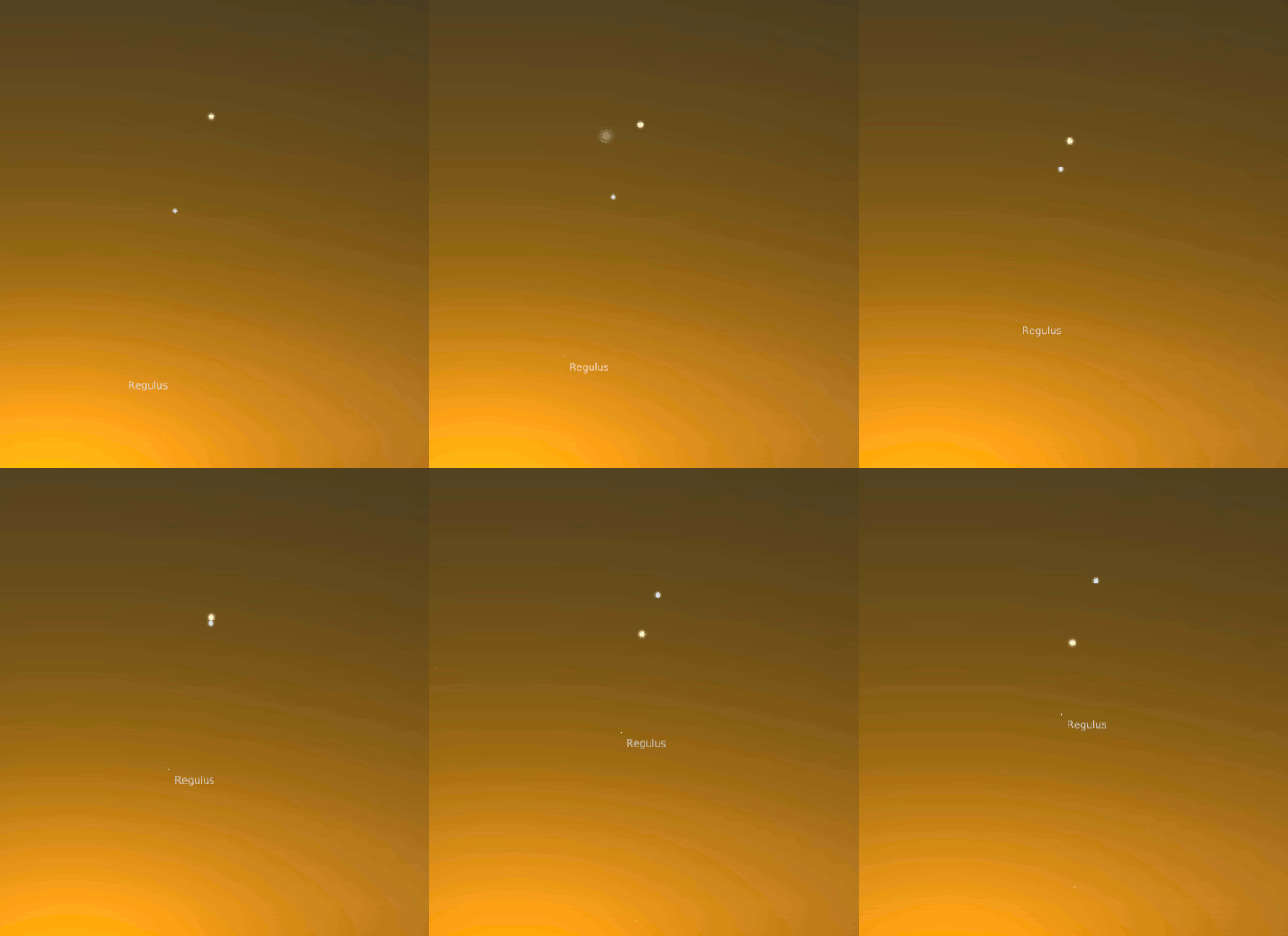
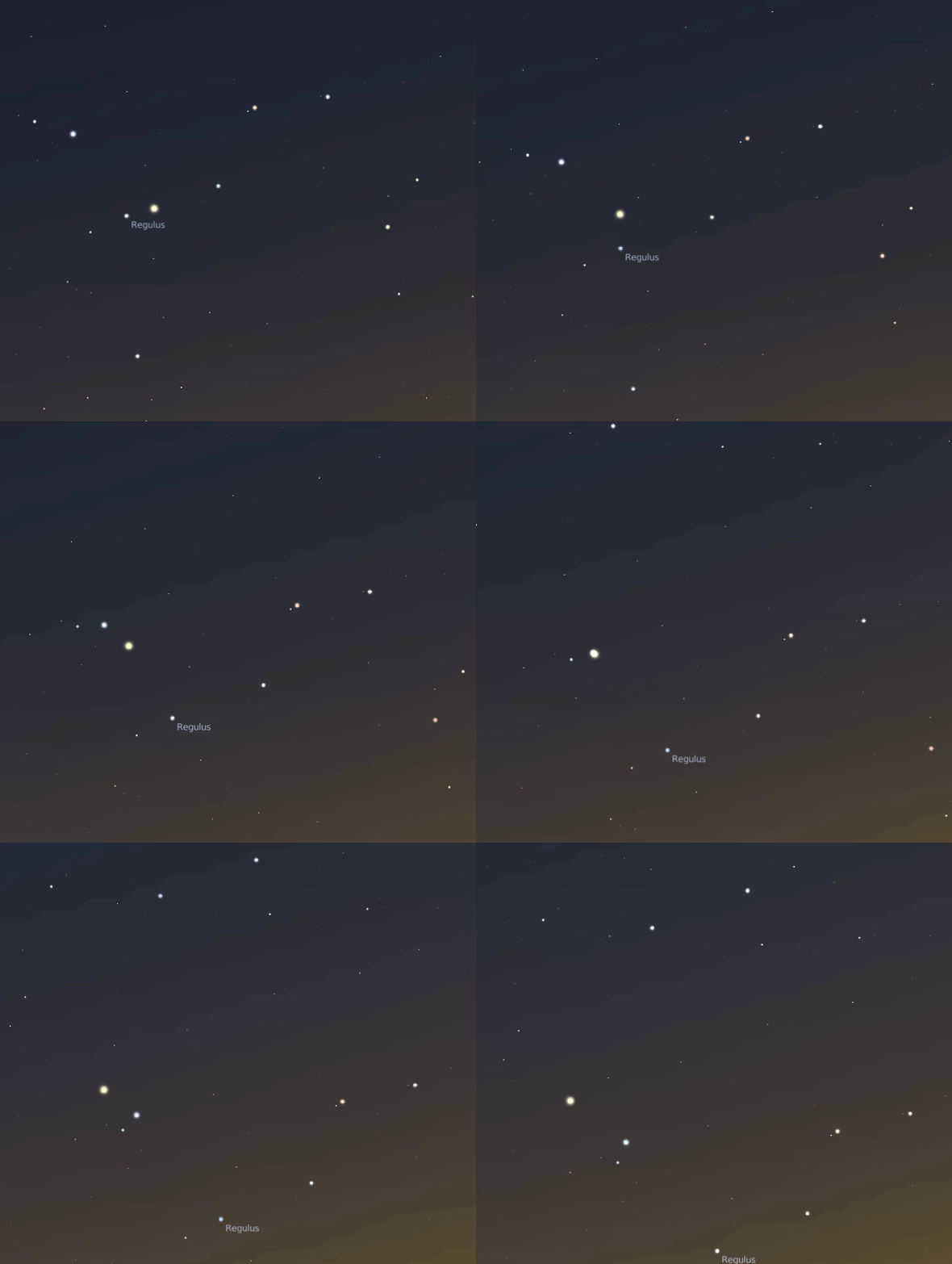
An edited excerpt from this year’s Star of Bethlehem presentation I gave to the Grand Traverse Astronomical Society on December 6th.
The triple conjunction of Jupiter and Saturn in 7 BCE is the generally accepted Star of Bethlehem, with Jesus being born in 6 or 5 BCE and Herod’s death being in 4 BCE after a lunar eclipse. What if the lunar eclipse in question was in 1 BCE? If so, there is that other possibility. It involves the constellation Leo, which is a lion. There is a passage in Genesis in which Jacob, who, by this time, is called Israel, is blessing his sons, each the heads of the twelve tribes of Israel. In Genesis 49 9-10 He compares him to a lion cub, the king of beasts, from whom the leaders of Israel will come. We can make a connection between Judah and the celestial lion, Leo. Let’s take a look at the celestial happenings against the constellation of Leo with Jupiter and Venus in 3 and 2 BCE.
On August 12th of 3 BCE Jupiter and Venus appeared to come together so close as to be separable only in telescopes. This may have been the Star at its rising mentioned to Herod. Could this predawn celestial mating of Jupiter, who the Babylonians saw as the god Marduk and Venus as Ishtar, the goddess of fertility, to bring forth a powerful king? The Magi, I’m pretty sure, would have known that 10 months later, a little longer than the human gestation period, by the way, that the two planets would again come together.
Ten months after the first conjunction of Jupiter and Venus, perhaps as the Magi neared Jerusalem, they saw Jupiter and Venus approaching each other again. Later as they left Herod’s palace on the evening of June 16th, 2 BCE the conjunction was at its tightest. They saw the “Star” again, as Matthew relates. Telescopes, which wouldn’t be invented for another sixteen hundred years, could have seen this extremely close conjunction of Jupiter and Venus. Venus, near its greatest eastern elongation from the Sun, would appear half illuminated. But even to the best naked eye observer, Jupiter and Venus would merge into a single star. Venus was much brighter than Jupiter than it appears here. In fact, it was nearly twelve times brighter, so Jupiter’s added brightness wouldn’t contribute much to the combined brightness. Jupiter would seem to disappear at their closest.
Also, there was a conjunction of Jupiter with the “Little King” star Regulus on September 14th 3 BCE, one or two days after the beginning of the Jewish New Year. Was this another sign that a new King of the Jews would be born? It is actually the first of three conjunctions Jupiter has with Regulus in the next 9 months. Yes, another triple conjunction. Jupiter passed Regulus the second time on February 17, of 2 BCE and for a final time on May 9th. During this time Venus had moved back toward the Sun and entered the evening sky where Jupiter met it once again.
 Bob Moler's Ephemeris Blog