Archive
Ephemeris: 02/11/2025 – Newly discovered asteroid may have our number
This is Ephemeris for Tuesday, February 11th. Today the Sun will be up for 10 hours and 17 minutes, setting at 6:06, and it will rise tomorrow at 7:47. The Moon, 1 day before full, will set at 8:06 tomorrow morning.
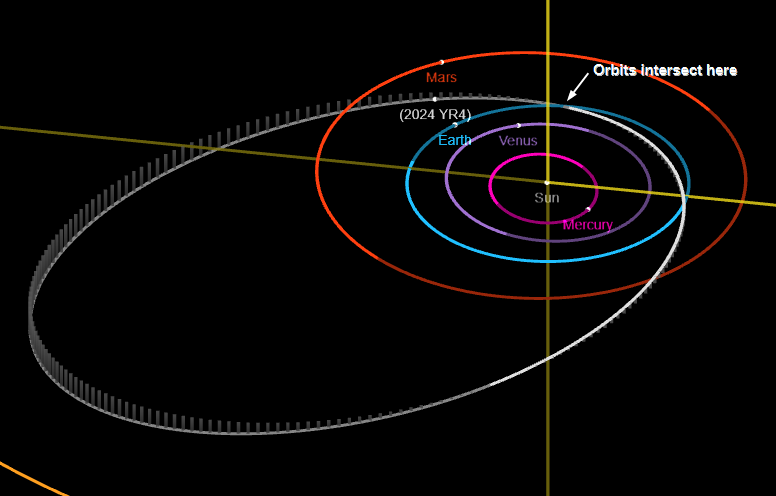
Late last year a tiny asteroid was found because it was close to the Earth and given the designation 2024 YR4. After observing it for a month it was discovered that it had a 1½ % chance of hitting the Earth when it came around again in 2032. Remember the fireball that exploded over Chelyabinsk Russia almost exactly 10 years ago? It exploded high in the air, and caused flying glass injuries to over a thousand people who saw the flash and rushed to the windows to see it when the atmospheric shock wave arrived. This object appears to be about 3 times the size of that object, nearly a football field in diameter, and thus could be 27 times the mass and volume. It’s four year orbit of the Sun will bring it back close to Earth in 2028 for us to get a better look at it and its orbit, and the last chance to alter its orbit.
The astronomical event times given are for the Traverse City/Interlochen area of Michigan (EST, UT – 5 hours). Times will be different for other locations.
Addendum
 Bob Moler's Ephemeris Blog