Archive
Ephemeris: 08/28/2025 – The first stars
This is Ephemeris for Thursday, August 28th. Today the Sun will be up for 13 hours and 25 minutes, setting at 8:26, and it will rise tomorrow at 7:02. The Moon, 3 days before first quarter, will set at 10:23 this evening.
Astronomers think that the first stars that formed after the Big Bang were very different from the stars we see around us today. They are called Population 3* stars. In fact, none of them have survived to this time. Back then there were no heavy elements, just hydrogen and helium. This allowed much more massive stars to form than stars today. The reason is the lack of heavier elements that make the interior of the star to be more opaque. This allows the core’s radiant energy to counteract the gravity of the star’s mass better and limit the stars’ growth. Supermassive stars burn hotter and live much shorter lives, exploding to spew the core contents of heavier elements, enriching the nebulae from which later stars form.
The astronomical event times given in this blog are for the Traverse City/Interlochen area of Michigan (Lat 44.7° N, Long 85.7° W; EDT, UT – 4 hours) unless stated otherwise. Times will be different for other locations.
Addendum
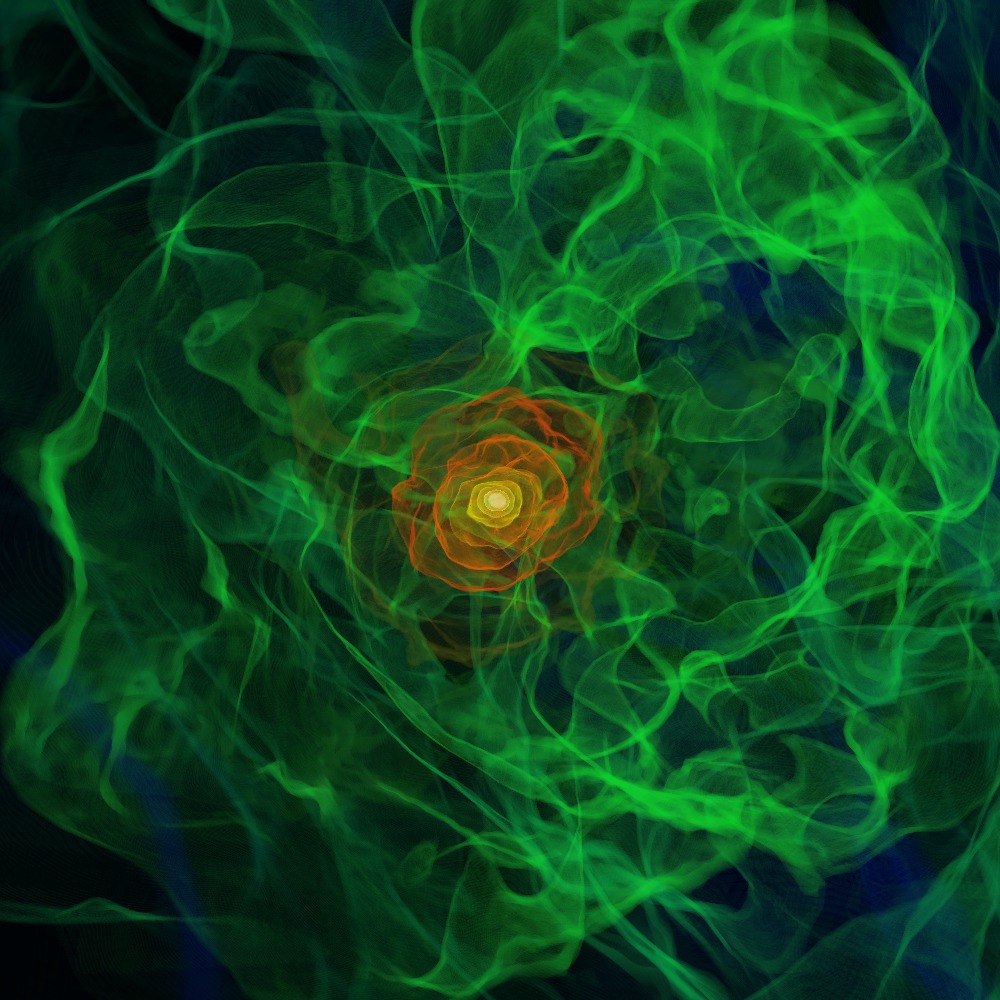
The above illustration comes from an article by Daegene Koh: Population III stars: The Universe’s ultimate reclusive pop stars.
* Stars are grouped into 3 populations based on their order of being recognized. The stars around us are population 1 stars. They have a lot of, what astronomers call, metals in their atmospheres. To an astronomer, when talking about stars, metals are any elements heavier than helium. Older stars we find in globular star clusters or in the centers of galaxies are classed as Population 2. They have lower amounts of metals in their atmosphere. The term for the amount of metals in a star’s atmosphere is called metallicity. Population 3 stars are the stars that are born just after The Big Bang when the universe was filled with just hydrogen and helium with possible tiny amounts of lithium and beryllium. These stars can grow very massive, and live very short lives, which is why we don’t see them anywhere near us. To spot the Population 3 stars we need a time machine. Fortunately we have one, the telescope. In looking back in space we are looking back in time, since the speed of light is finite. And the greatest time machine of all is the James Webb Space Telescope. Astronomers are hoping they can look back far enough to see Population 3 stars. Not individually, I don’t think, they’re too far away for that. But whole galaxies of them, at the dawn of time.
Like I’ve been saying in a whole bunch of contexts… They don’t make them like that anymore!
 Bob Moler's Ephemeris Blog