Archive
Ephemeris: 12/19/2024 – Jupiter’s dark moon Callisto
This is Bob Moler with Ephemeris for Thursday, December 19th. Today the Sun will be up for 8 hours and 48 minutes, setting at 5:04, and it will rise tomorrow at 8:16. The Moon, 3 days before last quarter, will rise at 9:47 this evening.
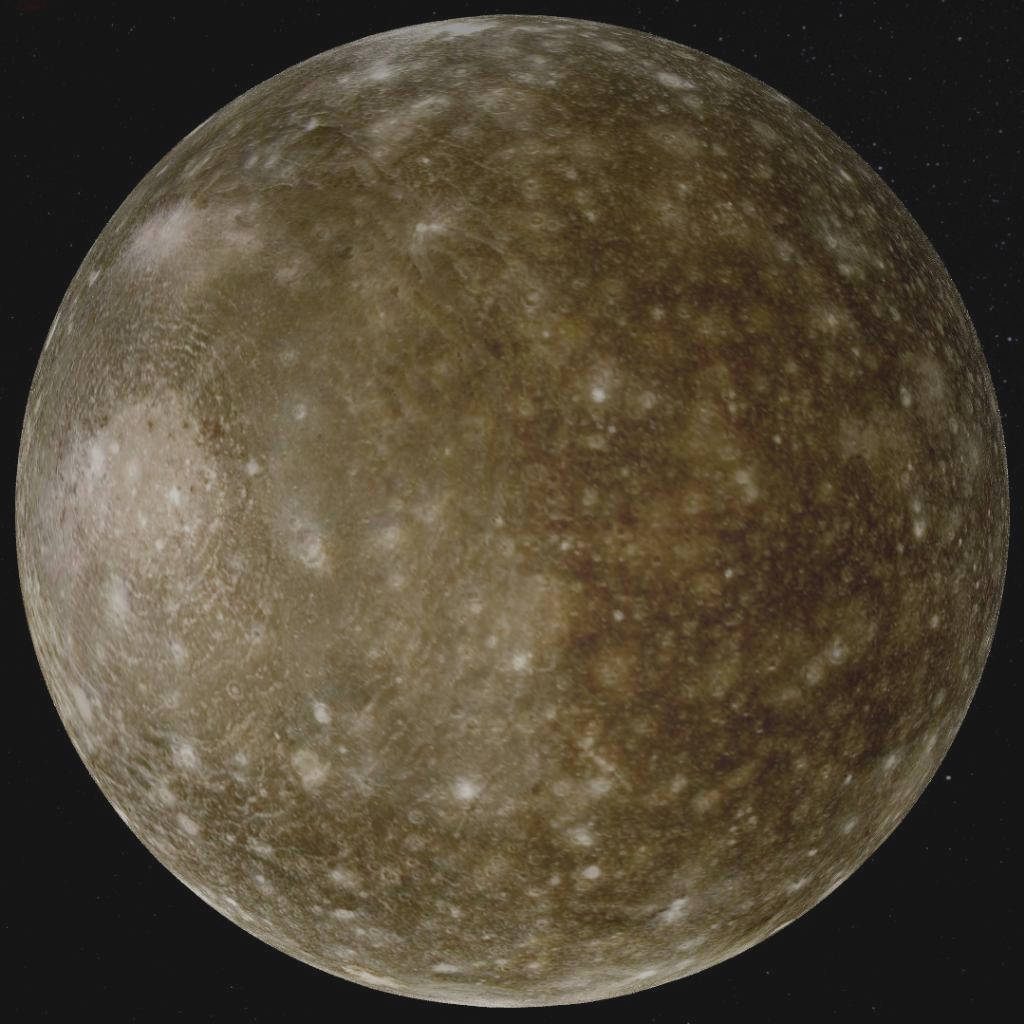
Callisto is the most distant of the Galilean moons from Jupiter, visible in small telescopes or even binoculars. It has the darkest surface of the four moons, and so appears the dimmest, even though it’s the second largest after Ganymede. The largest crater on Callisto is called Valhalla, and it doesn’t look like a crater at all. There’s many concentric, what look like, frozen ripples surrounding it, and it covers a good percentage of the moon’s surface. It is probably the only moon of Jupiter that we could send a crew to, since it’s the farthest from the intense radiation belts of Jupiter. Made of approximately equal parts of water mostly in the form of ice and rock, Callisto probably has a liquid water ocean underneath its icy crust, like Ganymede and Europa.
Addendum
Ephemeris: 12/17/2024 – A closeup look at Ganymede
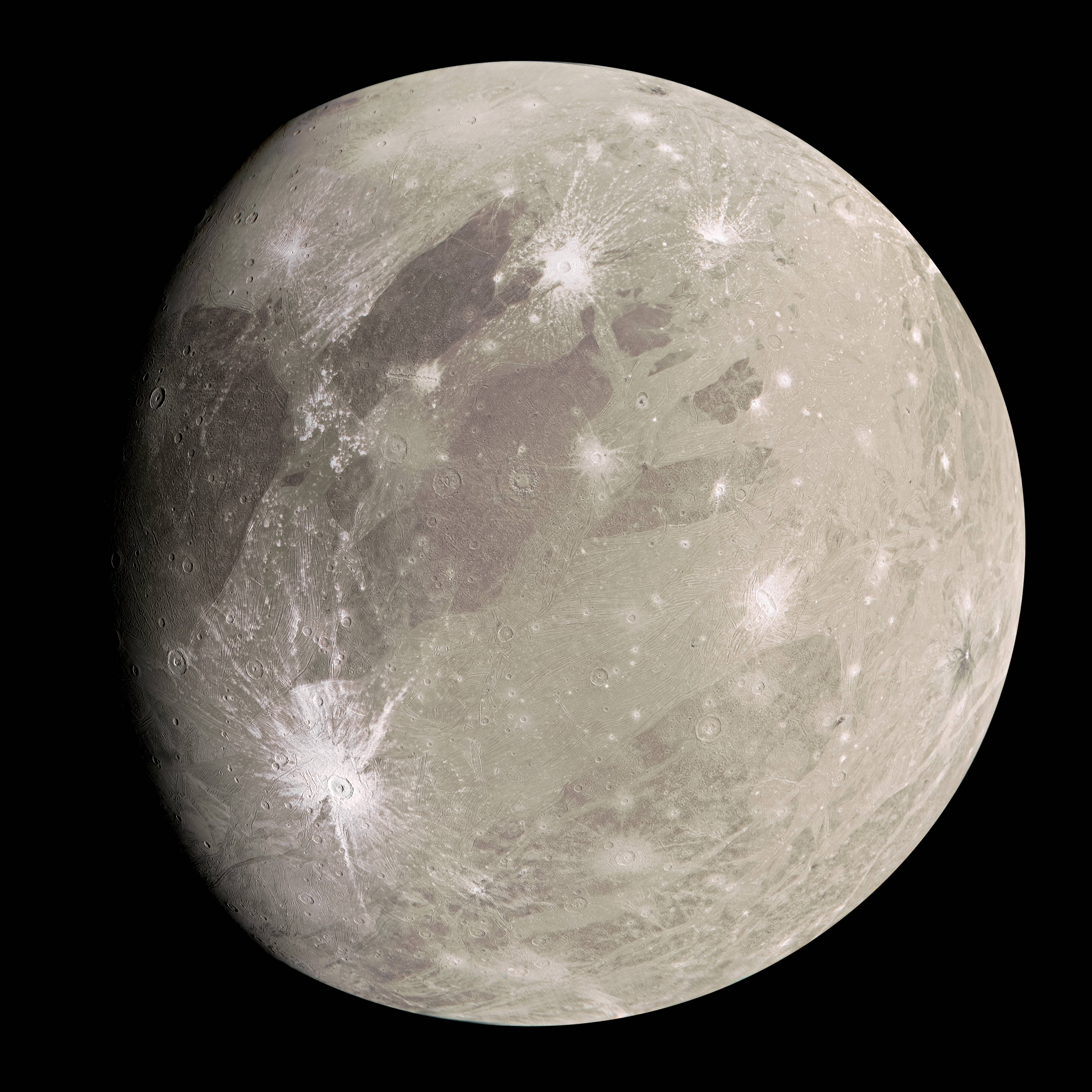
This is Bob Moler with Ephemeris for Tuesday, December 17th. Today the Sun will be up for 8 hours and 48 minutes, setting at 5:03, and it will rise tomorrow at 8:15. The Moon, 2 days past full, will rise at 7:23 this evening. | Ganymede is the largest satellite in the solar system orbiting the largest planet in the solar system, Jupiter. It is 1 1/2 times the diameter of our Moon, and slightly larger than the planet Mercury. It is an icy moon, being about half made-up of water ice and silica. Ganymede appears to have a below surface ocean of water like Europa. And its surface appears to be quite smooth, not as smooth as Europa’s but parts of it are literally devoid of craters for the most part, and many of the craters it does appear to have inner craters in the center which looks quite weird. The Juno spacecraft, still orbiting Jupiter, took some very close images of Ganymede back in 2021 using its relatively simple camera. These were some of the best images of it.
The astronomical event times given are for the Traverse City/Interlochen area of Michigan (EST, UT – 5 hours). Times will be different for other locations.
Addendum
Ephemeris: 12/16/2024 – The Europa Clipper mission
This is Bob Moler with Ephemeris for Monday, December 16th. Today the Sun will be up for 8 hours and 48 minutes, setting at 5:03, and it will rise tomorrow at 8:14. The Moon, 1 day past full, will rise at 6:09 this evening.
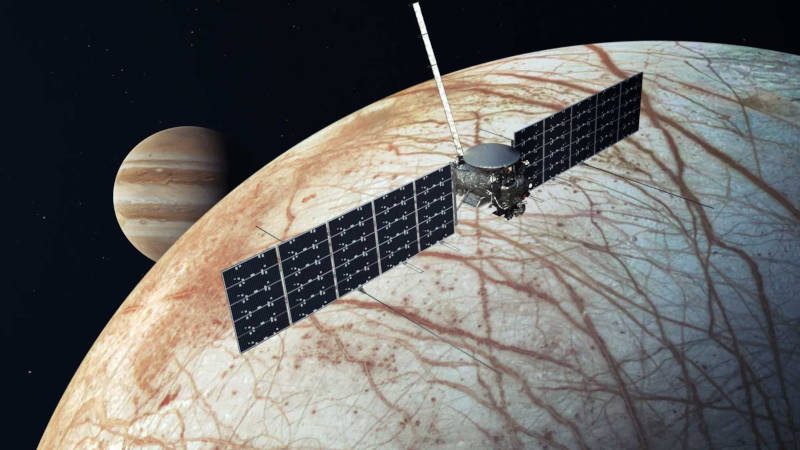
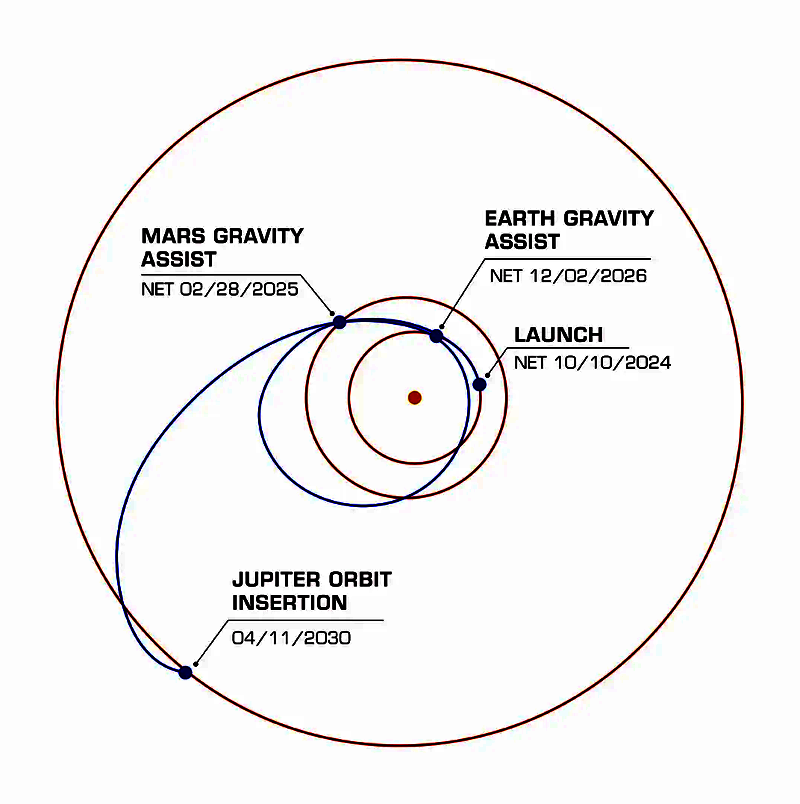
Just two months ago the satellite to closely study Jupiter’s second Galileo moon Europa was launched from Cape Canaveral on a Falcon Heavy rocket. The satellite’s name is Europa Clipper. It was originally scheduled to be launched by the SLS rocket but this rocket which is used for the Artemis program was not going to be ready for the mission so they dropped back to the somewhat less powerful SpaceX Falcon Heavy rocket. Europa Clipper will take 5 1/2 years to travel out to Jupiter with first a gravitational boost from a flyby of Mars and then another one a flyby of Earth to gain enough speed to make it to Jupiter. There it would orbit Jupiter in such a way as to fly by Europa multiple times. Jupiter’s radiation is harsh at Europa’s distance, so the satellite has to get in and get out quickly.
The astronomical event times given are for the Traverse City/Interlochen area of Michigan (EST, UT – 5 hours). Times will be different for other locations.
Addendum
 Bob Moler's Ephemeris Blog