Archive
Ephemeris Extra: Star Party Tomorrow night, 10/21/2023, if it’s clear
Update: 10/21/2023 The Star Party has been canceled due to weather (clouds)
This was the last planned star party at the Sleeping Bear Dunes this year. Look for star parties in 2024. Also, there will be a star party after the Grand Traverse Astronomical Society meetings, November 3rd and December 1st, of course weather permitting, at Northwestern Michigan College’s Joseph H. Rogers Observatory. The observatory is located south of Traverse City on Birmley Road. Meetings start at 8 pm, and are not weather dependent, with observing after (approximately 9 pm) if it’s clear. Topic of the meeting programs: November: A documentary video Jack Newton’s Journey to the Stars. Jack Newton (1942-) is a Canadian amateur astronomer and pioneering astrophotographer. December: Ancient Greek astronomy.
Original Post Below
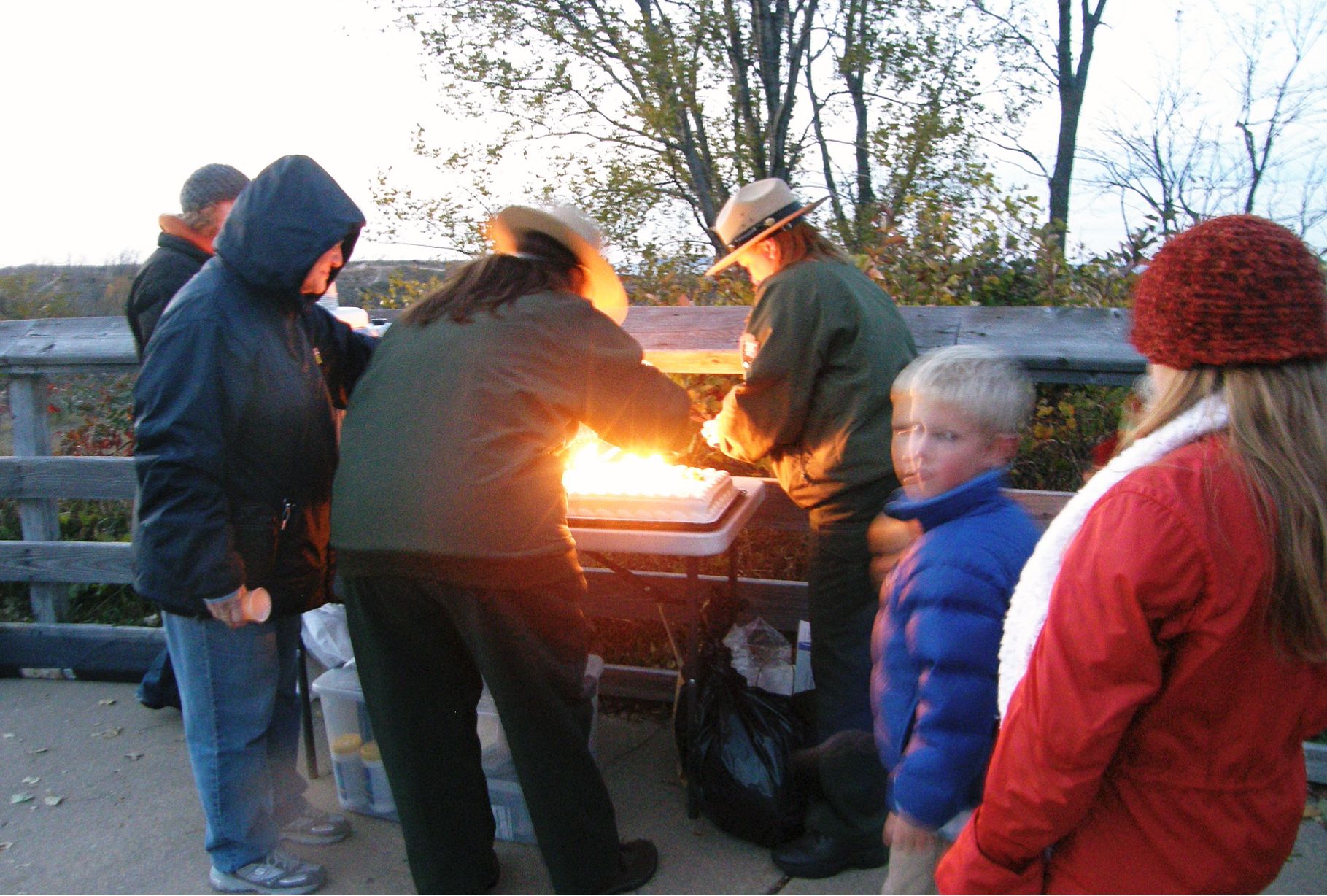
Members of the Grand Traverse Astronomical Society will team up with the park rangers of the Sleeping Bear Dunes National Lakeshore for the last star party of the year celebrating the park’s 53rd anniversary. It will take place at the Dune Climb. Of course, it will only occur if it is clear or partly cloudy. It starts at 4 pm with solar observing using personal and the society’s solar telescopes. Starting at 7 pm it will be dark enough to view the first quarter Moon, followed a bit later with Saturn, and still later with Jupiter. The brighter wonders beyond the solar system will be also be visible later.
09/10/2021 – Ephemeris – Rescheduled virtual Sleeping Bear Dunes/GTAS star party set for tomorrow, Saturday night the 11th
This is Bob Moler with Ephemeris for Friday, September 10th. Today the Sun will be up for 12 hours and 46 minutes, setting at 8:02, and it will rise tomorrow at 7:17. The Moon, 3 days before first quarter, will set at 10:05 this evening.
Tomorrow night the Sleeping Bear Dunes National Lakeshore and the Grand Traverse Astronomical Society (GTAS) will host an online star party starting around 9 pm via the Zoom app available for Android smartphones, iPhones and computers. This is rescheduled from last week due to clouds. Instructions for joining are on the society’s website, gtastro.org. Images will be captured live from Northwestern Michigan College’s Joseph H Rogers Observatory. The images will be pretty much what is seen at the telescope eyepiece, and definitely not Hubble Space Telescope quality, which take weeks or months to process. Visible will be the five-day-old Moon, Venus, Jupiter, Saturn and the wonders of the Milky Way.
The astronomical event times given are for the Traverse City/Interlochen area of Michigan (EDT, UT – 4 hr). They may be different for your location.
Addendum
During the GTAS board meeting, September 3rd, just before the canceled star party, it was decided to hold off the decision on in person star parties until spring of 2022. We’ll follow the state of the pandemic in our area over the winter and see where we stand. Star parties at the Northwestern Michigan College’s Joseph H. Rogers Observatory could start in March. Star parties at the Sleeping Bear Dunes National Lakeshore have in the past started in April.
We may still use imagers on our telescopes to capture celestial objects for display on laptop computers rather than viewing through the eyepiece. The society has two imagers, and the Observatory another. The society’s imagers can be used on society’s and members telescopes. This will solve the problems of having to sanitize telescope eyepieces between observers. At this point, I’m not sure what sanitizing products do to the delicate anti-reflective coatings on eyepieces.
We will also pay more attention to viewing the heavens with the naked eye or binoculars that people may have. Bring your own. Learning the constellations is always the best way to be introduced to astronomy, and the only way, up until 411 years ago. And binoculars are a great first telescope.
04/16/2021 – Ephemeris – Virtual Star Party for the Sleeping Bear Dunes tonight
This is Bob Moler with Ephemeris for Friday, April 16th. Today the Sun will be up for 13 hours and 33 minutes, setting at 8:29, and it will rise tomorrow at 6:54. The Moon, 4 days before first quarter, will set at 1:15 tomorrow morning.
Tonight the Sleeping Bear Dunes National Lakeshore and the Grand Traverse Astronomical Society will hold an online star party this evening starting around 9 pm via the Zoom app available for Android smartphones, iPhones and computers. Instructions for joining are on the society’s website http://www.gtastro.org or the Sleeping Bear Dunes National Lakeshore Facebook page. Images will be captured live, if it’s clear, from Northwestern Michigan College’s Joseph H Rogers Observatory. The images will be pretty much what is seen at the telescope eyepiece, and definitely not Hubble Space Telescope quality, which take days to process. Visible will be the crescent Moon. Then we move out beyond the solar system into our galaxy for star clusters and beyond our galaxy into the distant galaxies of spring skies.
The astronomical event times given are for the Traverse City/Interlochen area of Michigan. They may be different for your location.
Addendum
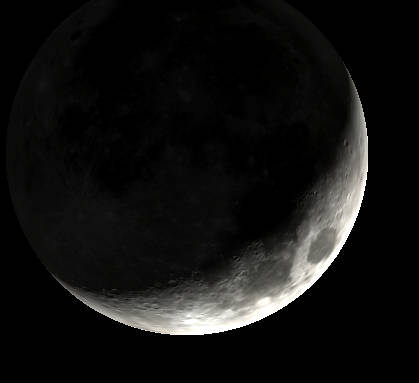
We will be looking also at a few star clusters and out the thin side of our Milky Way Galaxy to lots of other galaxies.
 Bob Moler's Ephemeris Blog