Archive
12/27/2018 – Ephemeris – A look back at some space events of 2018
Ephemeris for Thursday, December 27th. The Sun will rise at 8:19. It’ll be up for 8 hours and 49 minutes, setting at 5:08. The Moon, 2 days before last quarter, will rise at 11:18 this evening.
Lets take a look at some highlights and a low light in space and astronomy from this year. In space on February 6th SpaceX launched their much touted Falcon Heavy rocket on its maiden flight. It was a success and we now have a Tesla orbiting the Sun. The Japanese Hyabusa2 reached its asteroid Ryugu and dropped some robot hoppers on its surface, months later NASA’s OSIRIS-REx encountered its asteroid Bennu. Both spacecraft will orbit their asteroids for a year and retrieve samples for return to Earth. On October 11th A Soyuz rocket carrying a Russian and an American had a failure at launch. The capsule escaped and the two men were rescued unharmed down range. On July 31st Mars came closer to the Earth than at any time since 2003.
The times given are for the Traverse City/Interlochen area of Michigan. They may be different for your location.
Addendum
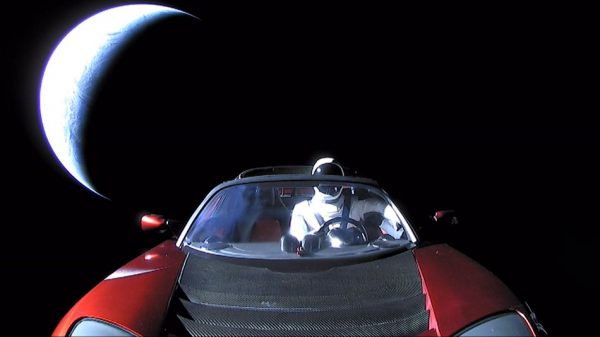
The Falcon Heavy had to launch a dummy mass. Instead of a chunk of iron or a block of concrete, Elon Musk launched his used Tesla roadster with a mannequin dressed in a SpaceX spacesuit. It has a 557 day orbit of the Sun that extends past the orbit of Mars. Credit SpaceX.
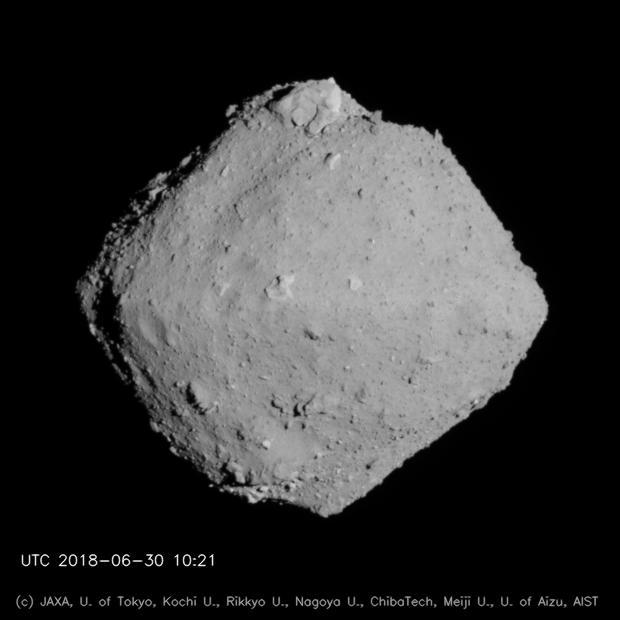
The asteroid Ryugu now orbited by the Japanese Hayabusa2 spacecraft. Ryugu is 3,707 feet (1.13 kilometers) in diameter. It is a Cg carbonaceous asteroid, a rare type. Credit JAXA.
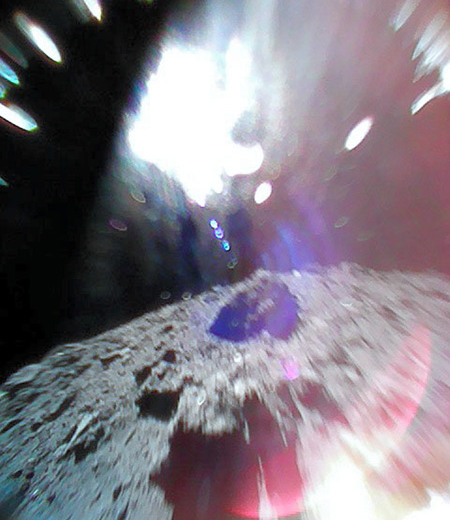
A Hayabusa2 rover captured the surface of Ryugu mid-hop. The motive power for the Hayabusa rovers operated the same way as Mexican jumping beans, by swinging an internal weight. Credit: JAXA.
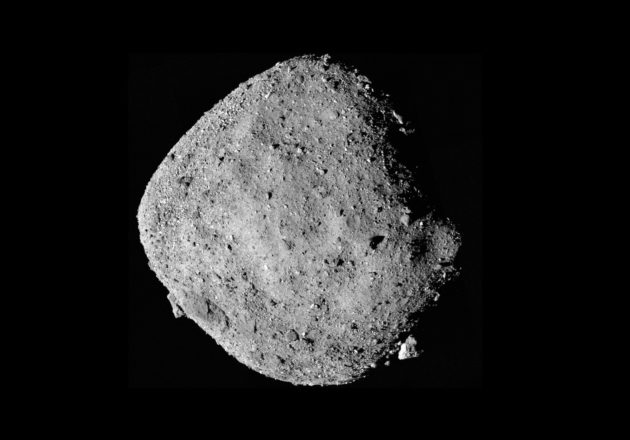
The asteroid Bennu is 861 feet (226.5 meters) in diameter. It is a carbonaceous asteroid. OSIRIS-REx has already discovered water bearing clays on its surface. Credit NASA
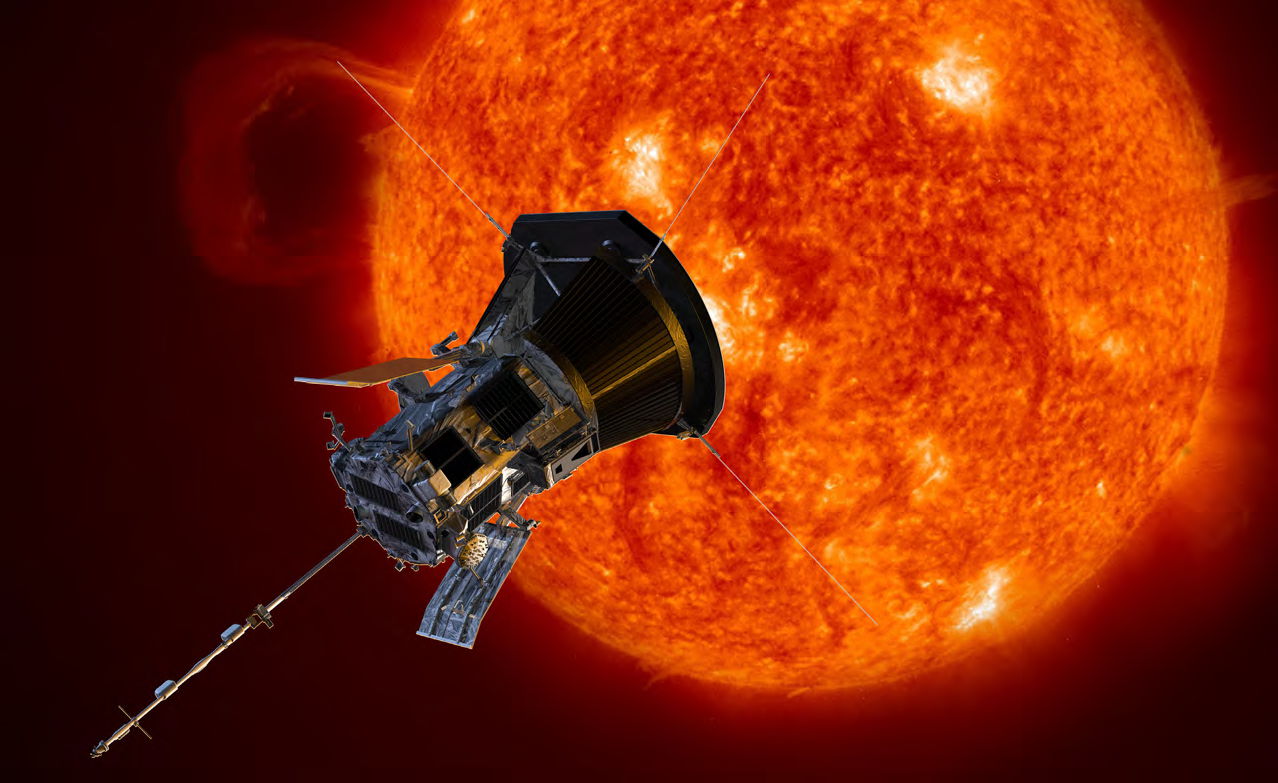
Not mentioned in this program was the Parker Solar Probe., which was launched August 12th. After passing Venus to lose speed, it dropped to 15.4 million miles (24.8 million kilometers) from the center of the Sun on November 6th. It will orbit he Sun two more times until it can catch Venus again to lower its perihelion again. Over 7 years it will use Venus 6 more times to drop its perihelion to only 4.29 million miles (6.9 million kilometers) from the center of the Sun Artist’s visualization credit: NASA Johns Hopkins APL.-Steve Gribben
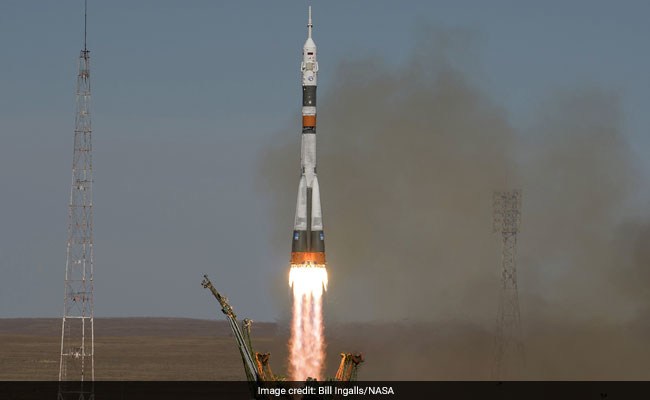
This is the launch of Soyuz MS-10 spacecraft. When the stage 1 boosters were jettisoned, one of the hit the core stage. The Soyuz performed an abort, saving the crew of a Russian and an American. Credit Bill Ingalls / NASA.
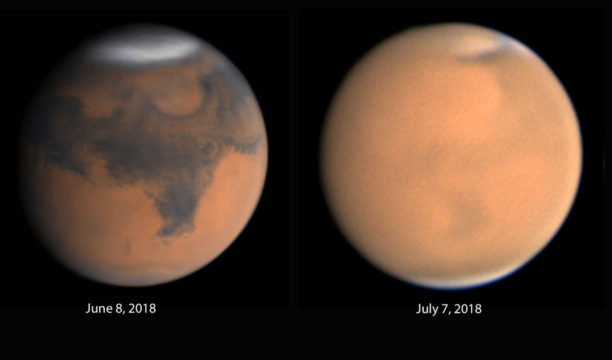
The viewing of Mars at its closest approach to the Earth on July 31st, the closest since the record-breaking close approach in 2003 was hampered by a global dust storm. It has apparently killed the solar powered Opportunity rover, which had been operating on the Martian surface since 2004. Credit: Damian Peach / Chilescope team (left), Christophe Pellier.
 Bob Moler's Ephemeris Blog