Archive
06/29/2023 – Ephemeris – Learning about the Sun – sunspots
This is Ephemeris for Thursday, June 29th. Today the Sun will be up for 15 hours and 32 minutes, setting at 9:32, and it will rise tomorrow at 6:00. The Moon, 3 days past first quarter, will set at 3:10 tomorrow morning.
The face of the Sun is populated, from time to time, with dark spots, simply called sunspots. It is rare that a sunspot or sunspot group is large enough to see with eclipse glasses. Sunspots normally form in groups, and are called active regions, because they are sites of solar flares, explosions that would put the world’s entire nuclear arsenals to shame in a single explosion. The bright ball of the Sun that is sometimes called a surface is called the photosphere, a region of the Sun, where the gases are of low enough density so the transportation of energy from the Sun’s core changes from convection to radiation. It is within this convective region that magnetic fields form that cool the gas, making it darker, by restricting their movement.
The astronomical event times given are for the Traverse City/Interlochen area of Michigan (EDT, UT –4 hours). They may be different for your location.
Addendum
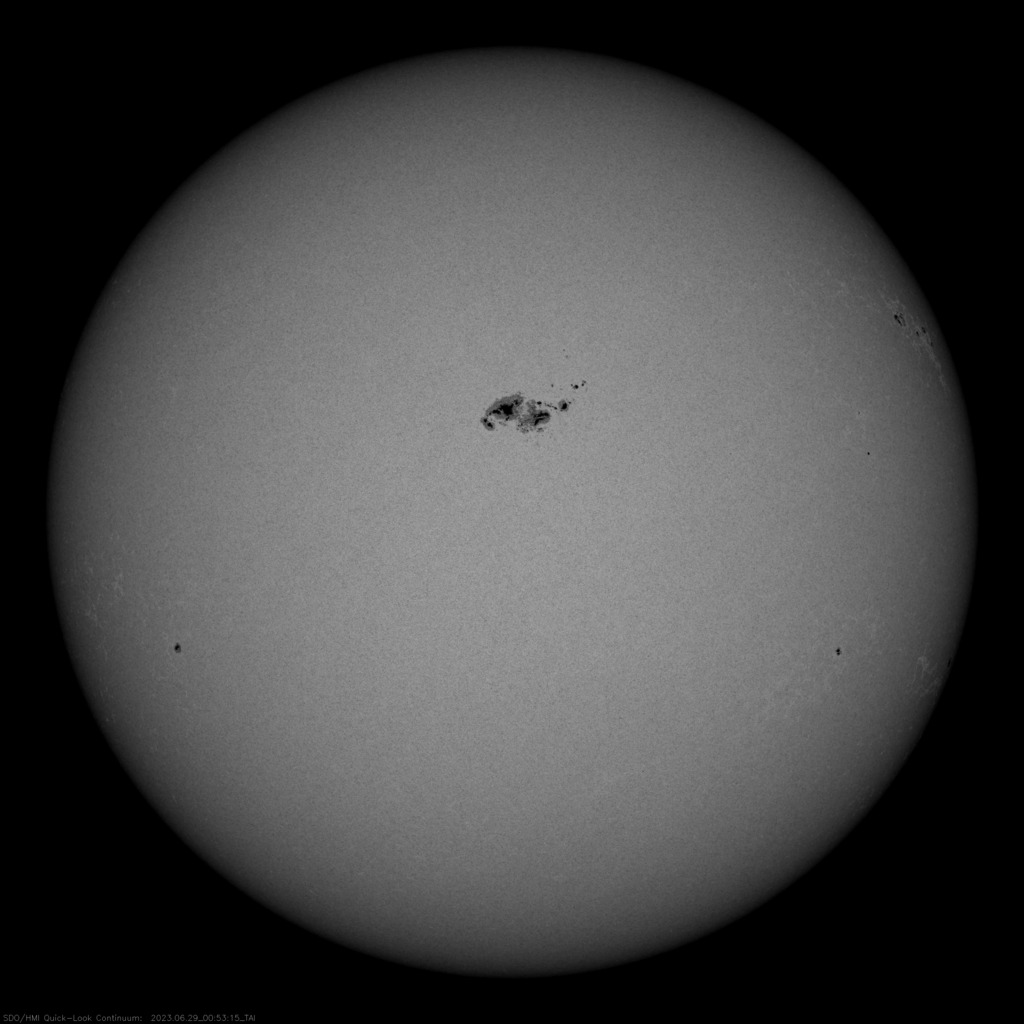
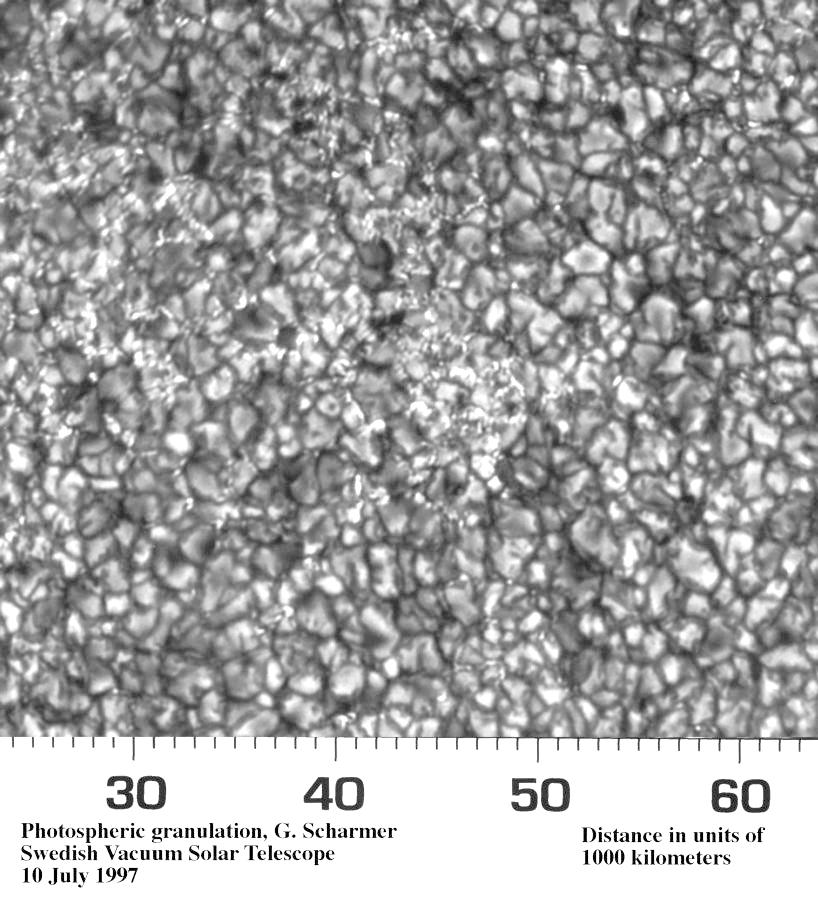
Other features of the photosphere are faculae (plural of facula), brighter areas of the photosphere, often associated with or are a precursor to sunspots. Faculae are best seen near the Sun’s limb (edge), as can be seen above. If the photosphere doesn’t appear smooth, that’s because it isn’t. The photosphere lies atop the convective zone of the Sun. The photosphere is populated by the tops of convection cells called granules, approximately 600 miles, or 1,000 kilometers wide and last only about 20 minutes.
 Bob Moler's Ephemeris Blog