Archive
Ephemeris: 01/03/2025 – GTAS Telescope Clinic tonight
This is Ephemeris for Friday, January 3rd. The Sun will rise at 8:20. It’ll be up for 8 hours and 55 minutes, setting at 5:15. The Moon, 3 days before first quarter, will set at 9:37 this evening.
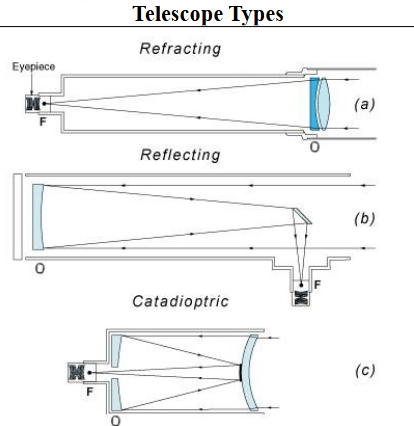
Did you or someone in your family get a telescope for Christmas, or have one in a closet or attic because you don’t know how to put it together or how to operate it? Or maybe you are trying to figure out which one to buy. Well, tonight’s your night. The Grand Traverse Astronomical Society (GTAS) will host the annual Telescope Clinic starting at 8 pm at Northwestern Michigan College’s Rogers Observatory. Professor Jerry Dobek will demonstrate the types of telescopes and how to use them. He and other members may be able to help particular problems by seeing participants telescopes, so “bring ‘em if you’ve got ‘em.” This is interesting to say the least. Go to gtastro.org for information and a Zoom link for the meeting.
The astronomical event times given are for the Traverse City/Interlochen area of Michigan (EST, UT – 5 hours). Times will be different for other locations.
Addendum
01/06/2023 – Ephemeris – Telescope Clinic tonight at the Grand Traverse Astronomical Society Meeting tonight
This is Ephemeris for Friday, January 6th. Today the Sun will be up for 8 hours and 57 minutes, setting at 5:17, and it will rise tomorrow at 8:19. The Moon, at full today, will rise at 4:47 this evening.
The Grand Traverse Astronomical Society will hold their monthly meeting tonight with their annual Telescope Clinic, at 8 pm at Northwestern Michigan College’s Rogers Observatory. This is a chance to bring in that new Christmas telescope or even that old telescope gathering dust in the attic to learn how to use it. The society telescope experts will help in instruction and, if need be, adjustments to make the telescope work properly. In the past few years, the society has donated telescopes to public libraries in the region for patrons to check out and use. This is another way in which to learn to use a telescope and enjoy the sky at night. The observatory is located south of Traverse City on Birmley Road, south of Hammond, and between Garfield and Keystone roads. There will, if it’s clear after the meeting, be a star party or observing period using the observatory telescopes.
The astronomical event times given are for the Traverse City/Interlochen area of Michigan (EST, UT –5 hours). They may be different for your location.
Addendum
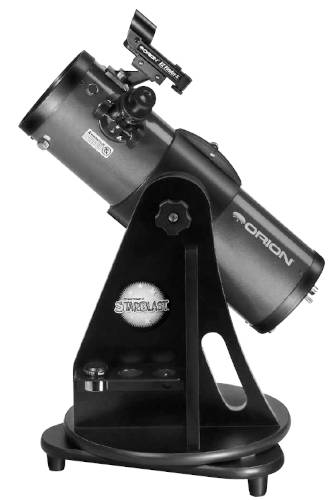
This is the type of telescope that the GTAS is donating to local libraries to lend out. The telescope can be set up on a table. The device on top is a red-dot finder. Looking through it will place a red dot on the object it’s pointed to. It has no magnification of its own. The telescope has a 4.5 inch diameter mirror, which produces a brighter image than the skinny refractor telescopes sold in most stores. The telescope eyepiece is a zoom type, so there is no need to remove it or change eyepieces to change magnification. The magnification range is from approximately 20 to 60 times (power). This is plenty for most objects in the sky, including the Moon, Jupiter and Saturn. Mars is a challenge for even the largest of amateur astronomer’s telescopes. Even then it’s best seen for a few months every 26 months.
The GTAS has a library telescope program where they donate small telescopes to local libraries to lend out. These are small tabletop telescopes with a 4.5 inch aperture. The telescope type is that invented by Sir Isaac Newton. In a telescope, magnification is secondary and usually variable. The real power of a telescope is light gathering power, the ability to gather in light to see objects too dim to be seen with the naked eye. Also, a telescope’s ability to see fine detail is tied to the telescope’s aperture or diameter of its primary mirror or lens. That’s not magnification, but the ability to use higher power to produce crisp images, rather than fuzzy ones.
 Bob Moler's Ephemeris Blog