Archive
01/21/2021 -Ephemeris – The Perseverance rover is less than a month from landing on Mars
This is Ephemeris for Thursday, January 21st. Today the Sun will be up for 9 hours and 24 minutes, setting at 5:36, and it will rise tomorrow at 8:11. The Moon, 1 day past first quarter, will set at 2:40 tomorrow morning.
The Mars Perseverance Rover is approaching the Red Planet. In a bit less than a month, on February 18th it will plunge into the martian atmosphere to land near an ancient river delta in the 28 mile (45 kilometer) wide crater Jezero. The dramatic entry-descent-and-landing or EDL is what the Jet Propulsion Laboratory, that built and manages the rover, calls Seven Minutes of Terror due to the complexity of the landing process and the fact that they will be bystanders at that point. By the time they receive confirmation that the encapsulated rover has hit the top of the martian atmosphere it would have already landed, or crashed on the martian surface. It will take over 11 minutes for signals to reach us from Mars that day.
The event times given are for the Traverse City/Interlochen area of Michigan. They may be different for your location.
Addendum

Delta of ancient river that flowed into a lake in the Jezero crater. This is a false color imaging highlighting mineral types. Credit NASA.
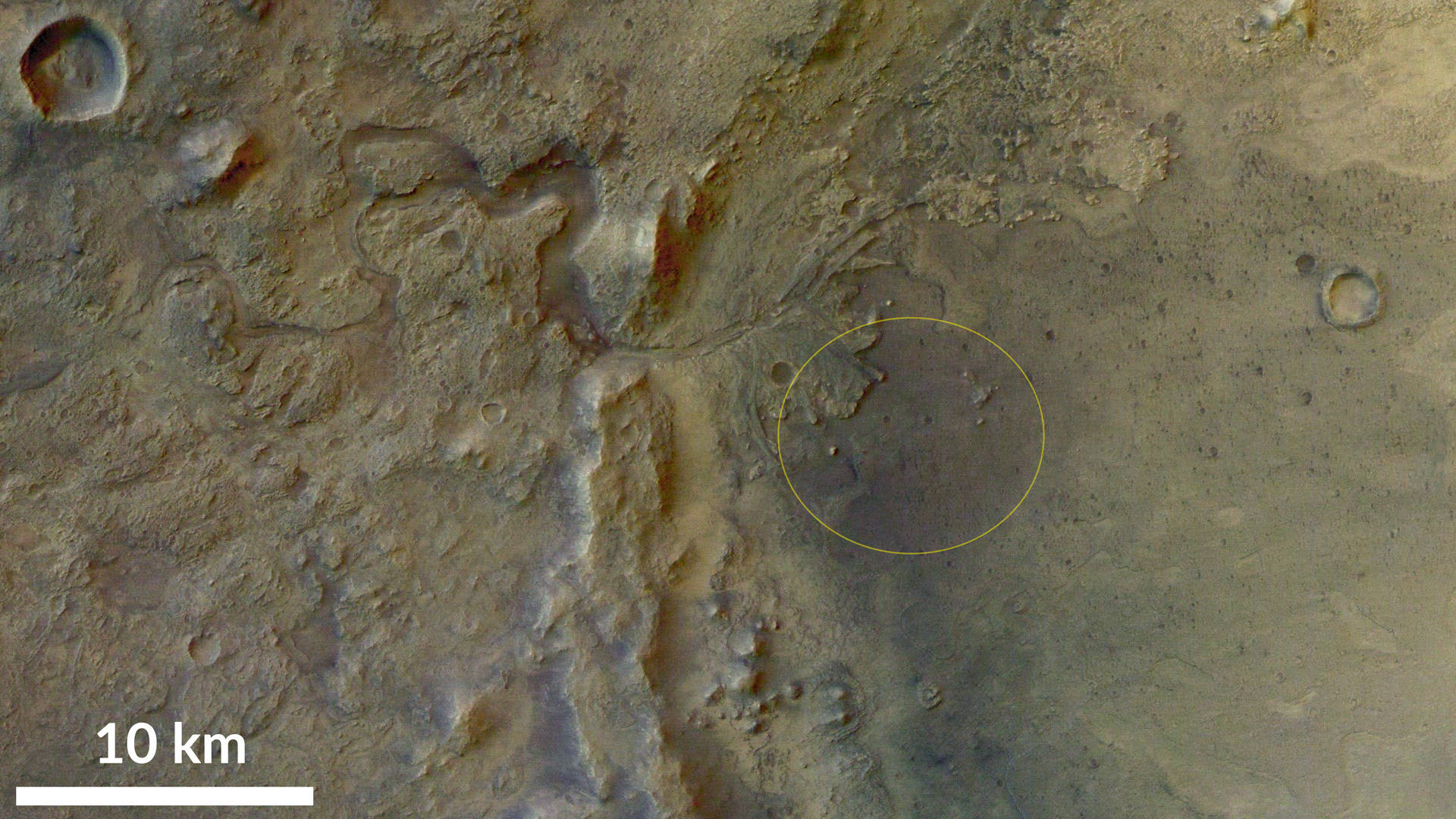
Mars Perseverance Rover’s planned landing ellipse partially overlapping the dried up river delta. Credit: NASA/JPL.
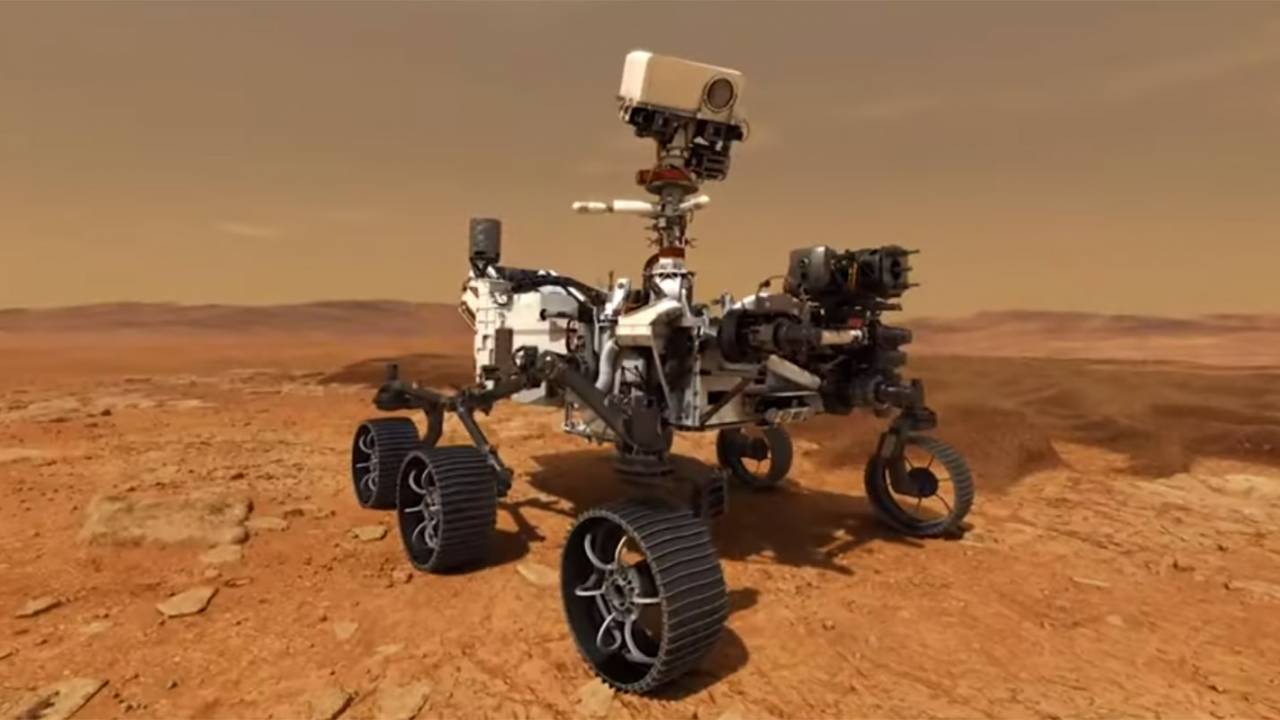
Mars 2020 Rover “Perseverance” destined for the martian crater Jezero.
05/08/2020 – Ephemeris – A look at Mars 2020 Endurance Rover’s target crater: Jezero
This is Ephemeris for Friday, May 8th. Today the Sun will be up for 14 hours and 34 minutes, setting at 8:56, and it will rise tomorrow at 6:21. The Moon, 1 day past full, will rise at 10:43 this evening.
The Mars 2020 Rover will be launched on July 17th or thereabouts to land at the crater Jezero* on the Red Planet. What’s the big deal about Jezero? In very early Martian history the crater was filled with water with a river flowing into it. What’s left is a dry river delta. The landing ellipse target for the rover will land it near the leading edge of that delta. Spectral analysis from the Mars Reconnaissance Orbiter has detected clays that can contain, on Earth, fossils of single celled organisms. The rover is not equipped with a powerful enough microscope to detect them so they will be cached to be returned to the Earth sometime in the future as one of its objectives. Scientists believe that Mars was friendly for life for only a billion years or so.
The event times given are for the Traverse City/Interlochen area of Michigan. They may be different for your location.
Addendum
Jezero is pronounced like the biblical character Jezebel.
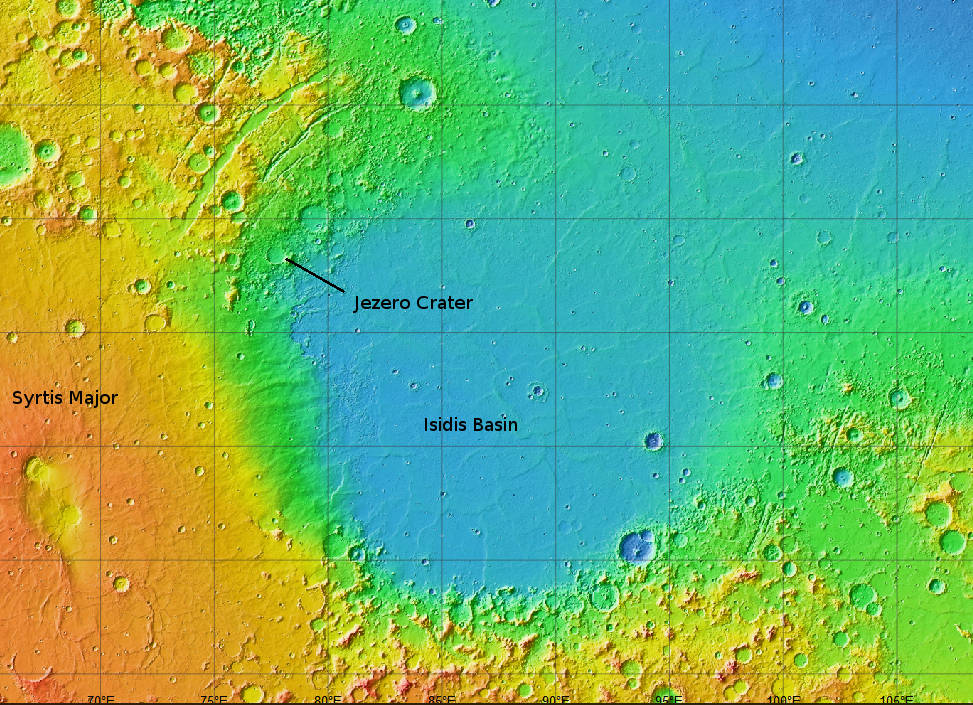
Jezero Crater on a map by the Mars Orbiter Laser Altimeter (MOLA) instrument on the Mars Global Surveyor spacecraft (1996-2006). Colors code by altitude (blue-low to red-high). Click on the image to enlarge. Credit NASA/JPL.
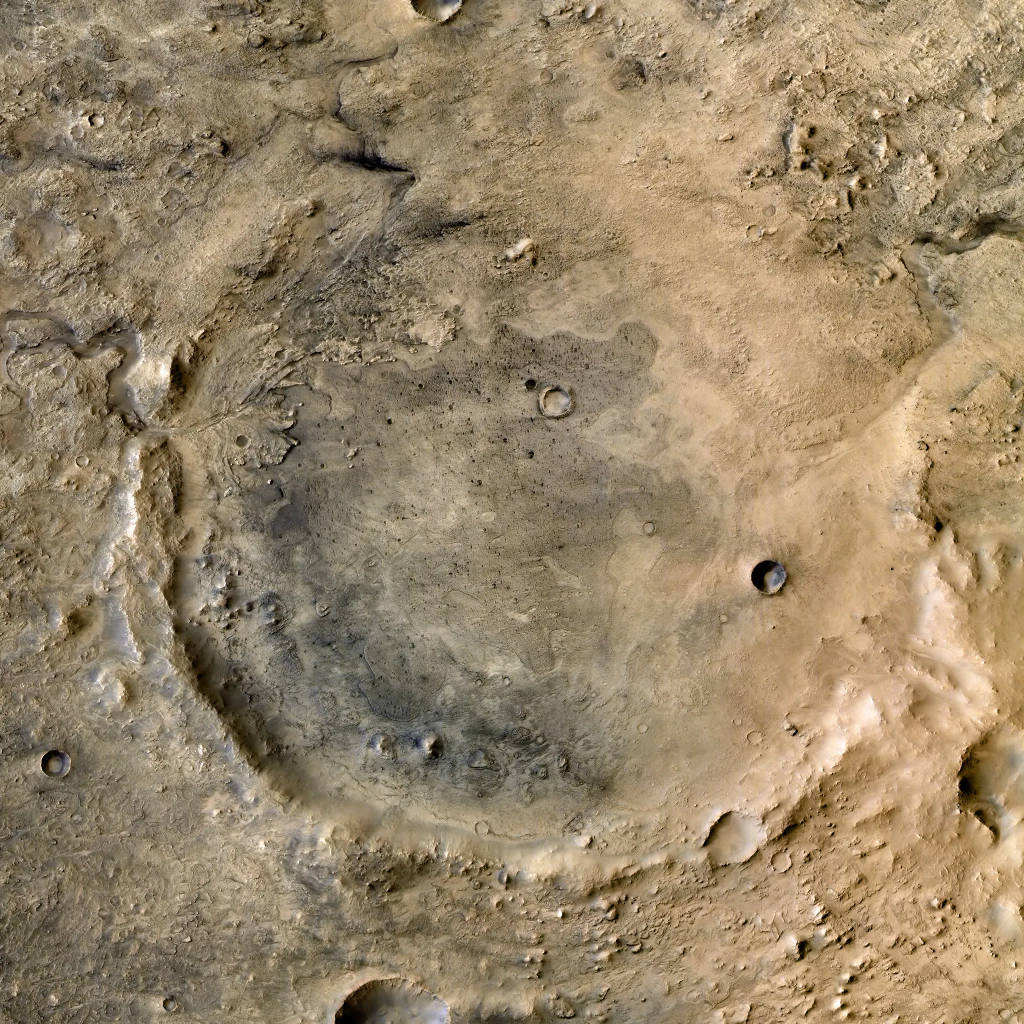
The Jezero crater from the European Space Agency’s Mars Express Orbiter. Jezero is 30.4 miles (49.0 km) in diameter. Note the river delta on the left (west) forming a lake with an outlet on the right. Click on the image to enlarge. Credit: NASA/JPL/MSSS/ESA.
Mars Endurance Rover’s planned landing ellipse partially overlapping the dried up river delta. Click on the image to enlarge. Credit: NASA/JPL.
Delta of ancient river that flowed into a lake in the Jezero crater. Color coded based on minerals present. Click on the image to enlarge. Credit NASA.
05/07/2020 – Ephemeris – JPL and NASA preparing a return to Mars via rover and helicopter
This is Ephemeris for Thursday, May 7th. Today the Sun will be up for 14 hours and 32 minutes, setting at 8:55, and it will rise tomorrow at 6:22. The Moon, at full today, will rise at 9:26 this evening.
The Endurance Mars Rover will be launched on or after July 17th. To land on Mars February 18th next year. It has until August 5th to launch. That’s a 20 day launch window. Miss that and it’s a wait of approximately 26 months for the next launch window when the Earth and Mars get into the proper relative positions again. The target of the rover is Jezero crater at the edge of a large Martian feature that can be seen in small telescopes called Syrtis Major. Syrtis Major is cooler sounding than what it means in Latin… The Great Swamp*. Anyway, Jezero crater itself is named after a Bosnian town in 2007 by the International Astronomical Union which named interesting features on Mars after earthly towns. What’s so interesting about Jezero? The answer tomorrow.
* There’s no water there. It’s actually a volcanic plain, maybe a low shield volcano.
The event times given are for the Traverse City/Interlochen area of Michigan. They may be different for your location.
Addendum
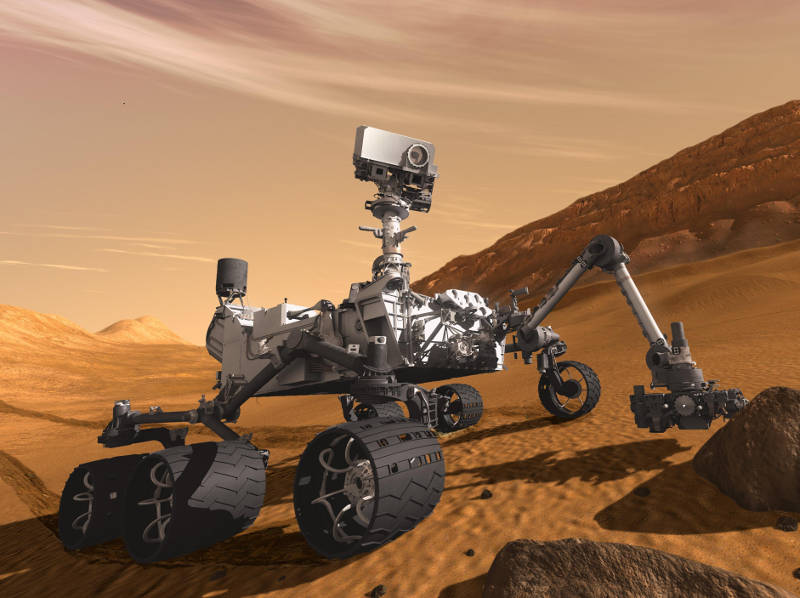
Artist rendition of the Mars 2020 “Endurance” Rover. Credit NASA.

Artist’s concept of the Mars Helicopter “Ingenuity”. Credit: NASA/JPL-Caltech.
Jezero Crater on a map by the Mars Orbiter Laser Altimeter (MOLA) instrument on the Mars Global Surveyor spacecraft (1996-2006). Colors code by altitude (blue-low to red-high). Click on the image to enlarge. I’ll have a closer look tomorrow. Credit NASA/JPL with my labels.
 Bob Moler's Ephemeris Blog