Archive
02/26/2018 – Ephemeris – The Falcon Heavy, a game changer
Ephemeris for Monday, February 26th. The Sun will rise at 7:25. It’ll be up for 11 hours and 1 minute, setting at 6:26. The Moon, half way from first quarter to full, will set at 5:52 tomorrow morning.
It’s been 20 days since SpaceX launched their massive Falcon Heavy rocket. Basically three Falcon 9’s strapped together, it’s now the most powerful rocket now in service, whose payload mass to orbit was only exceeded by the Saturn V Moon rocket of the Apollo days. Where the Saturn 5 was more than a billion dollars to launch and the Space Launch System (SLS) now being built with a similar price tag, a Falcon Heavy launch is supposed to be less than 100 million dollars. The next version of the Falcon 9, Block 5, should be powerful enough to launch astronauts to the space station, the original task for the Falcon Heavy. This may mean that the Falcon Heavy may have a short life span. This is because the next rocket is coming off the drawing boards, or rather CAD programs, the BFR, the Mars rocket will be even more powerful and reusable. However the low price tag of a Falcon Heavy launch may be too inexpensive to pass up, even for NASA for heavy satellites of deep solar system missions
The times given are for the Traverse City/Interlochen area of Michigan. They may be different for your location.
Addendum
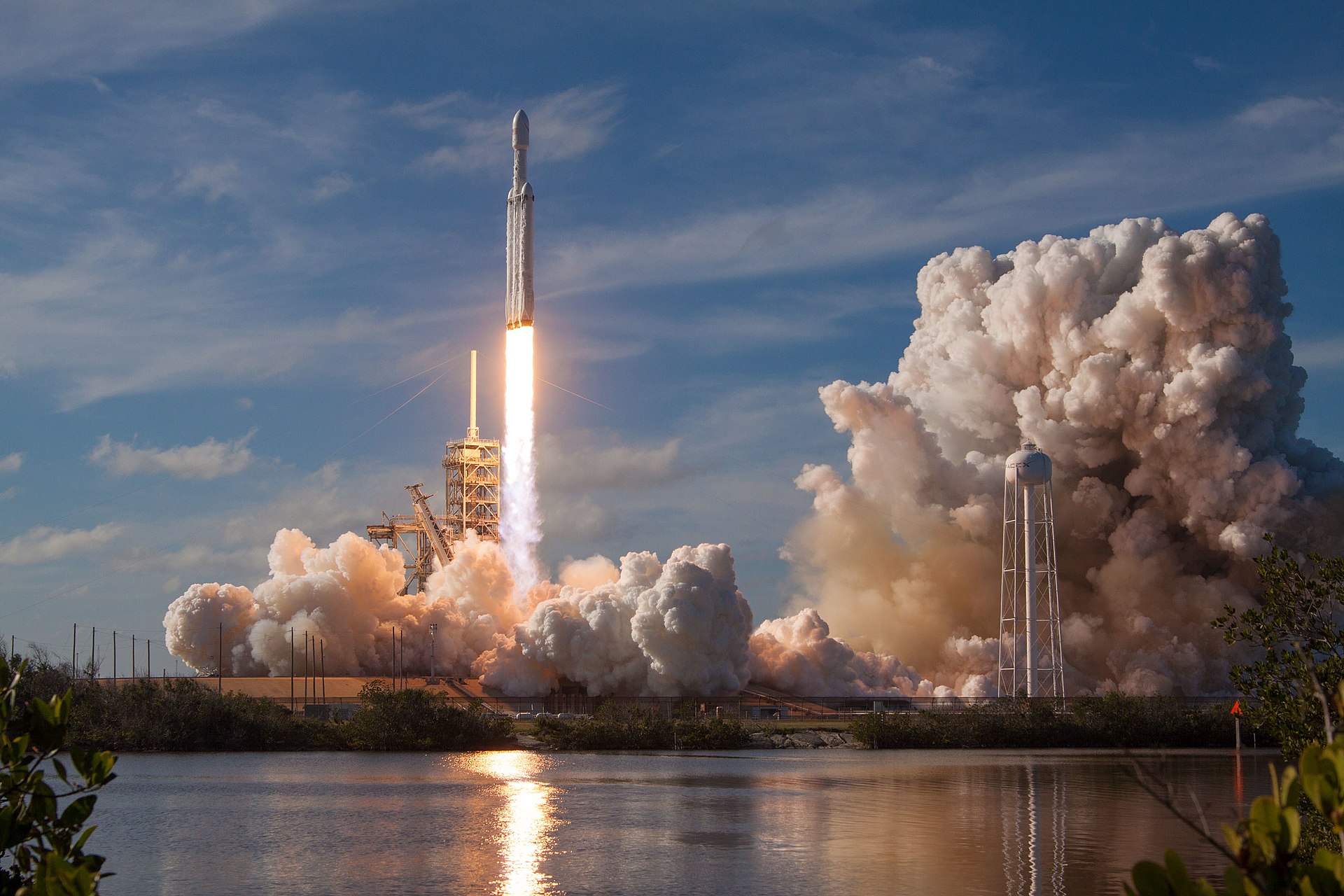
Test launch of the Falcon Heavy, as it clears the tower on February 6, 2018. Click on the image to enlarge. Credit: SpaceX.
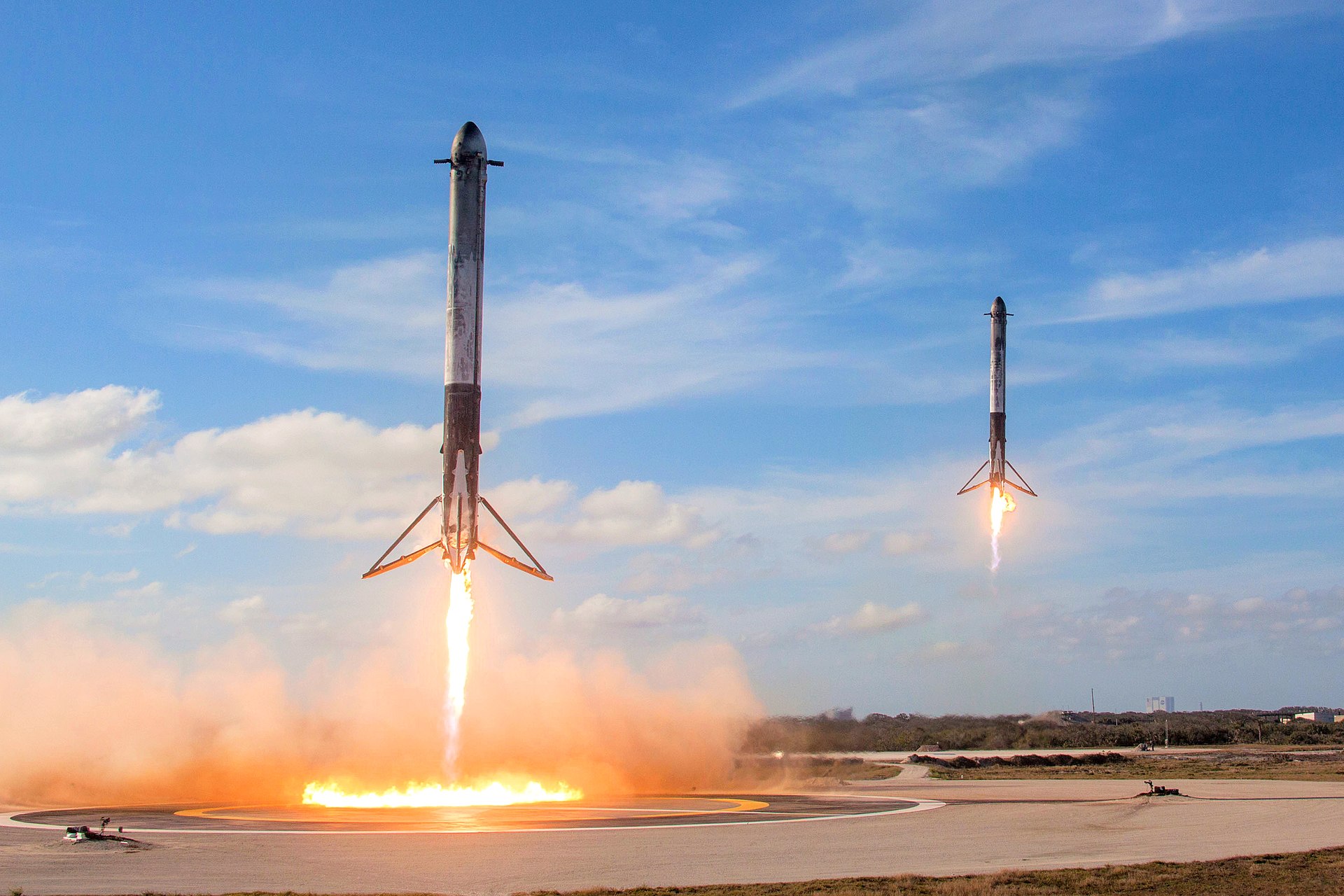
The side boosters landing back at the Cape. Click on the image to enlarge. Credit: SpaceX.
04/04/2017 – Ephemeris – First relaunch and recovery of a rocket booster
Ephemeris for Tuesday, April 4th. The Sun will rise at 7:17. It’ll be up for 12 hours and 56 minutes, setting at 8:14. The Moon, 1 day past first quarter, will set at 4:24 tomorrow morning.
Last Thursday SpaceX launched a communications satellite, SES-10 toward geostationary orbit using a used Falcon 9 first stage booster, that landed last April. To them it’s not a used rocket but a flight proven booster. Elon Musk, SpaceX CEO is not going to try launch this booster a third time, but will give it to the Cape Kennedy Visitors Center. Re-usability is the key, according to Musk to his plans to get to Mars and to possibly reduce the cost of getting payloads into orbit by as much as 30% than his already lowest prices in the industry. Besides landing the booster on their automated drone ship, they were able to recover the two halves of the fairing that protects a satellite as it ascends through the atmosphere.
Times are for the Traverse City/Interlochen area of Michigan. They may be different for your location.
Addendum
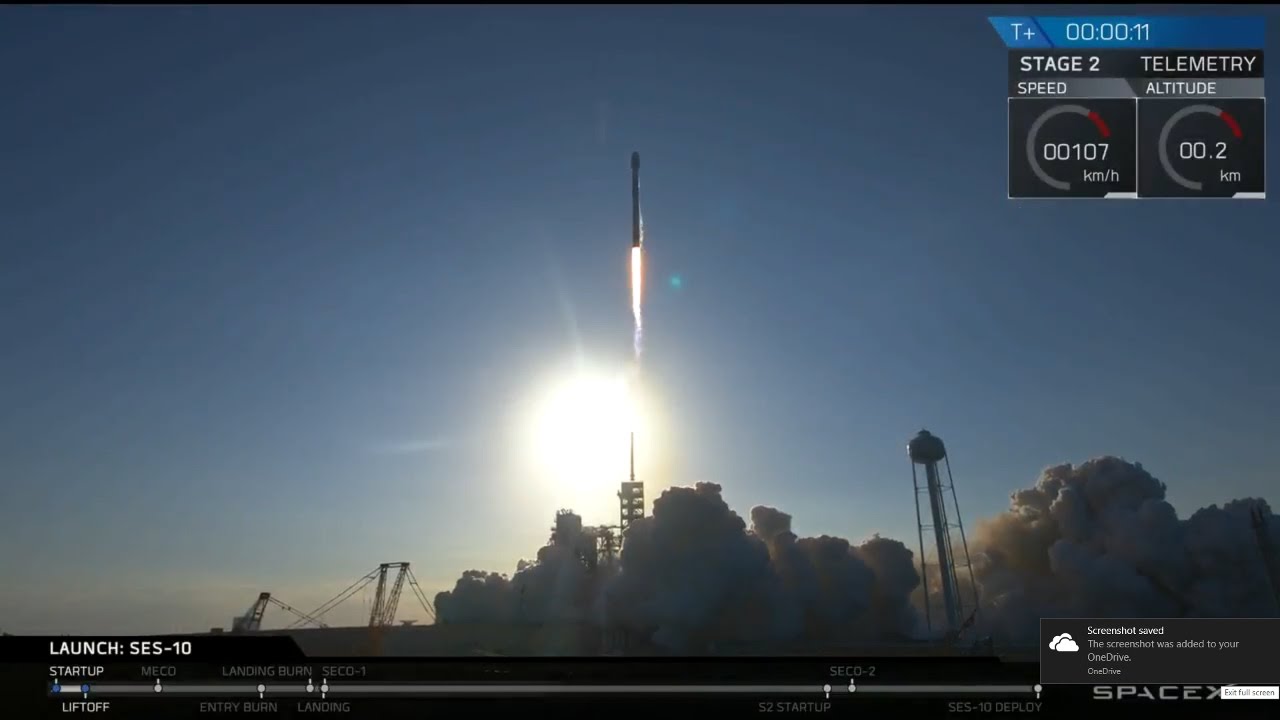
The second launching of this particular booster with the SES-10 satellite. Credit SpaceX video feed.
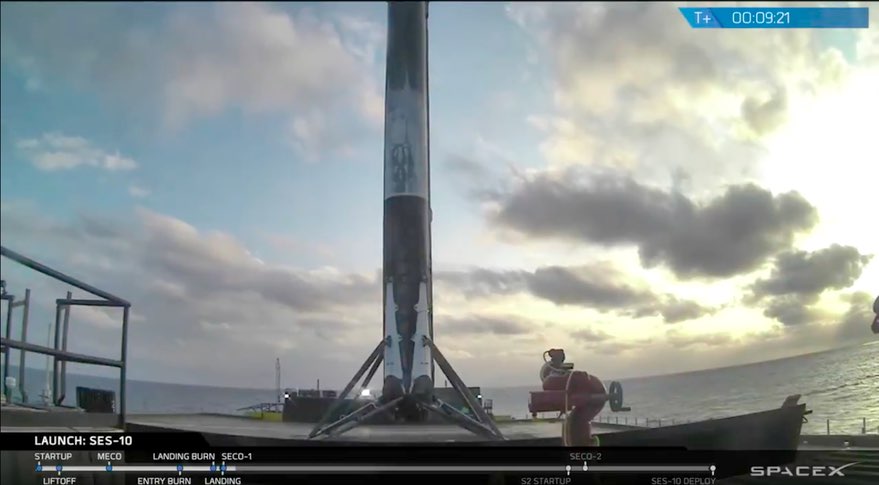
The video feed cut out during the landing of the booster, but the next shot was of the booster standing upright on the drone ship. Credit SpaceX video feed.
10/17/2016 – Ephemeris – Elon Musk’s vision of how he’ll colonize Mars
Ephemeris for Monday, October 17th. The Sun will rise at 8:01. It’ll be up for 10 hours and 52 minutes, setting at 6:53. The Moon, 1 day past full, will rise at 8:21 this evening.
On September 27th Elon Musk announced his plans to send people to Mars, hopefully by 2024. He explained in detail how he would do it. He made an hour-long presentation at the International Astronautical Congress meeting in Mexico, which can be seen on the Internet at spacex.com. Also there is a shorter animation of how he expects to do it. He expects to send hundreds of people at a time into Earth orbit. The booster would return to the launch pad and another second stage with fuel loaded on top of it to be launched again on the next orbit to refuel the manned stage before sending it to Mars. Robotic missions would be sent before to set up the infrastructure for the Mars Base. I’m somewhat skeptical, but all great adventures start with a dream.
Times are for the Traverse City/Interlochen area of Michigan. They may be different for your location.
Addendum

New colonists looking out at the Martian landscape. Credit: Screen cap from SpaceX video.
Short 5 minute video: https://youtu.be/0agVZwux1Hs
Full address to the International Astronautical Congress meeting: https://youtu.be/IAZ-Xbn5hr0
09/15/2016 – Ephemeris – SpaceX has an explosion in its Falcon 9 second stage
Ephemeris for Thursday, September 15th. The Sun will rise at 7:22. It’ll be up for 12 hours and 30 minutes, setting at 7:52. The Moon, 1 day before full, will set at 7:01 tomorrow morning.
The rocket company SpaceX had one of its Falcon 9 Rockets explode as it was being fueled for a test firing to check out its booster engines on September first. The second stage, which was being loaded with fuel exploded. Even if a tank had been ruptured, there should be no ignition source to cause the explosion. Unfortunately the satellite, AMOS-6 a communications satellite destined for geosynchronous orbit, was already mounted on the rocket, and can be seen falling off the rocket just after the explosion. This is the second failure of a Falcon 9. In June of last year a helium tank inside the liquid oxygen tank in the second stage broke loose and ruptured the tank, while still being boosted by the first stage. It took a few seconds after the rupture before the fuel ignited causing the explosion that ended the mission. SpaceX has issued a request for videos or anything that might shed light on the latter accident.
Times are for the Traverse City/Interlochen area of Michigan. They may be different for your location.
Addendum
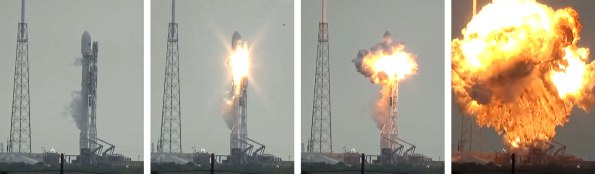
A sequence of photographs of the Falcon 9 explosion. Credit: US Launch Report.
04/21/2016 – Ephemeris – Up up and a way my beautiful balloon*
Ephemeris for Thursday, April 21st. The Sun rises at 6:47. It’ll be up for 13 hours and 48 minutes, setting at 8:36. The Moon, 1 day before full, will set at 7:16 tomorrow morning.
The successful launch of the SpaceX Falcon 9 spacecraft and the Dragon module marked the returned SpaceX to supplying the International Space Station after its failure last June. Besides the great achievement of landing the first stage of the Falcon on a barge, it delivered the Bigelow Aerospace BEAM inflatable module to the ISS. It’s already been attached to the station and will be inflated next month. Bigelow already has two inflatable satellites in orbit: Genesis I and II launched in 2006 and 2007 and though retired, are still in orbit. Inflatable spacecraft offer maximum volume for minimum weight. If the tests on the space station prove the concept, the Mars manned spacecraft may feature an inflatable living module.
Times are for the Traverse City/Interlochen area of Michigan. They may be different for your location.
*Apologies to the 5th Dimension and Bigelow Aerospace.
Addendum
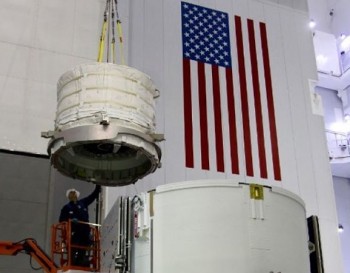
The BEAM module being loaded in the Dragon Trunk. Credit NASA / SpaceX.
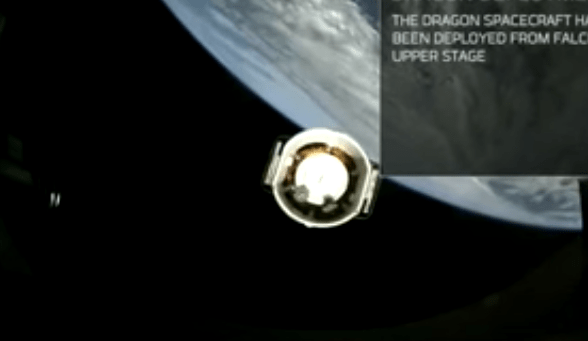
Dragon separating from the Falcon second stage with the BEAM module seen in the Dragon trunk. From a SpaceX/NASA video.
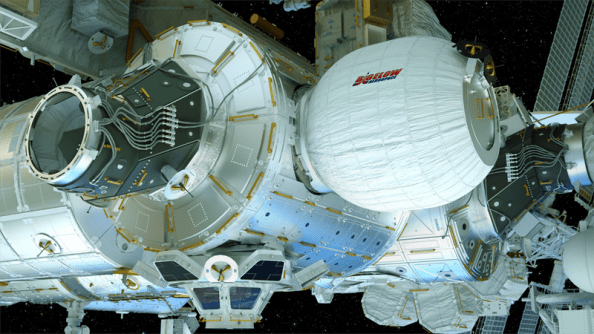
What the BEAM module will look like when attached to the ISS and inflated. Credit NASA.
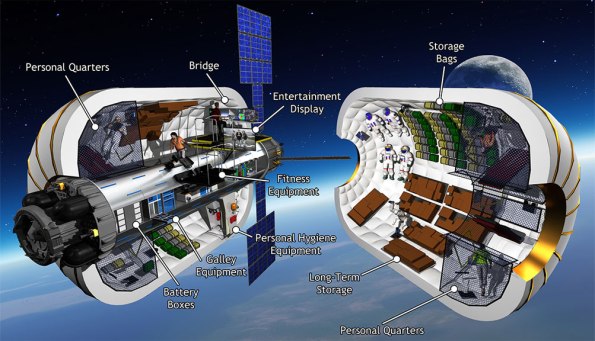
Cutaway view of the Bigelow Aerospace B330 Expandable Space Habitat. They are contracting with United Launch Alliance to send it into orbit. It will have 330 cubic meters of volume. Credit Bigelow Aerospace.
12/29/2015 – Ephemeris – Some space triumphs of 2015
Ephemeris for Tuesday, December 29th. The Sun will rise at 8:19. It’ll be up for 8 hours and 50 minutes, setting at 5:10. The Moon, half way from full to last quarter, will rise at 9:58 this evening.
This past year had several important events. Perhaps the biggest was the flyby of Pluto and its moons July 14th By the New Horizons spacecraft. The transmission of data and images will continue for most of 2016, but what has been revealed has been spectacular if puzzling. In other space news Blue Origin landed their New Shepard rocket vertically after sending it straight up 60 miles. In June the SpaceX Falcon 9 blew up while attempting to send its 7th resupply Dragon capsule to the International Space Station. Eight days ago The Falcon 9 returned to flight orbiting 11 satellites for Orbocomm, and flew the booster from over 100 miles up and 100 miles out over the Atlantic to land upright on its designated landing pad back at the cape.
Times are for the Traverse City/Interlochen area of Michigan. They may be different for your location.
Addendum
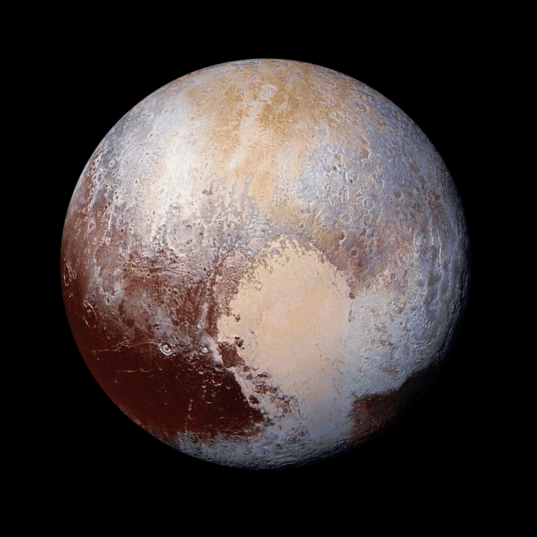
Enhanced color portrait of Pluto by the New Horizons spacecraft. Credit: NASA/JHUAPL/SwRI.

Blue Origin New Shepard rocket, with landing legs expended about to land. Credit: Blue Origin.
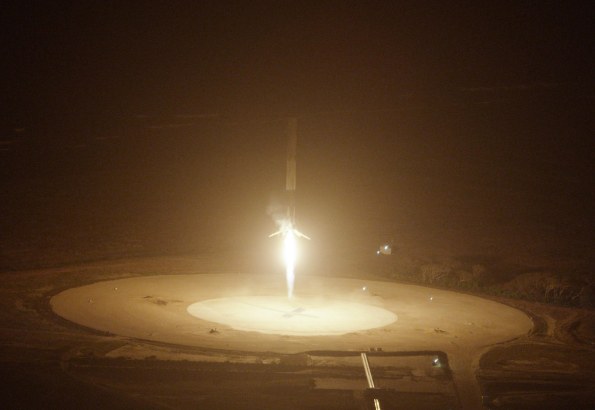
First stage of the SpaceX Falcon 9 descending on its center rocket engine to the center of the main landing pad at Cape Canaveral. Credit: SpaceX.
These weren’t the only highlights of 2015. Having only 45 seconds to devote to the story, I picked the three most important events. I consider the reuseability of rockets to be the Holy Grail of reducing the cost to access to space. The Space Shuttle was a partial, but ultimately failed solution. SpaceX had the most difficult task in refurbishment and reuse because the first stage had to endure a supersonic reentry, though it didn’t need a heat shield. We’ll have to see if the cost of recycling rocket boosters is cheaper than building one from scratch.
02/23/2015 – Ephemeris – The Launch of the DSCOVR satellite
Ephemeris for Monday, February 23rd. The sun will rise at 7:30. It’ll be up for 10 hours and 51 minutes, setting at 6:22. The moon, 2 days before first quarter, will set at 12:24 tomorrow morning.
On Wednesday the 11th the DSCOVR satellite was launched to a special point between the Earth and the Sun called the Lagrangian point 1 or the Earth-Sun L1 point. It’s a point of gravitational equilibrium between the Earth and the Sun, about a million miles sun-ward of the Earth, or four times the distance of the Moon. It will take the craft over 100 days to get there, which it will slowly orbit. It will act as an early warning sentinel, replacing the aging ACE spacecraft. It will give us about an hour’s warning of incoming coronal mass ejections or CMEs erupting from the Sun. It also has an earth pointing camera with various filters pointed to the full earth and occasionally the far side of the new Moon.
Times are for the Traverse City/Interlochen area of Michigan. They may be different for your location.
Addendum
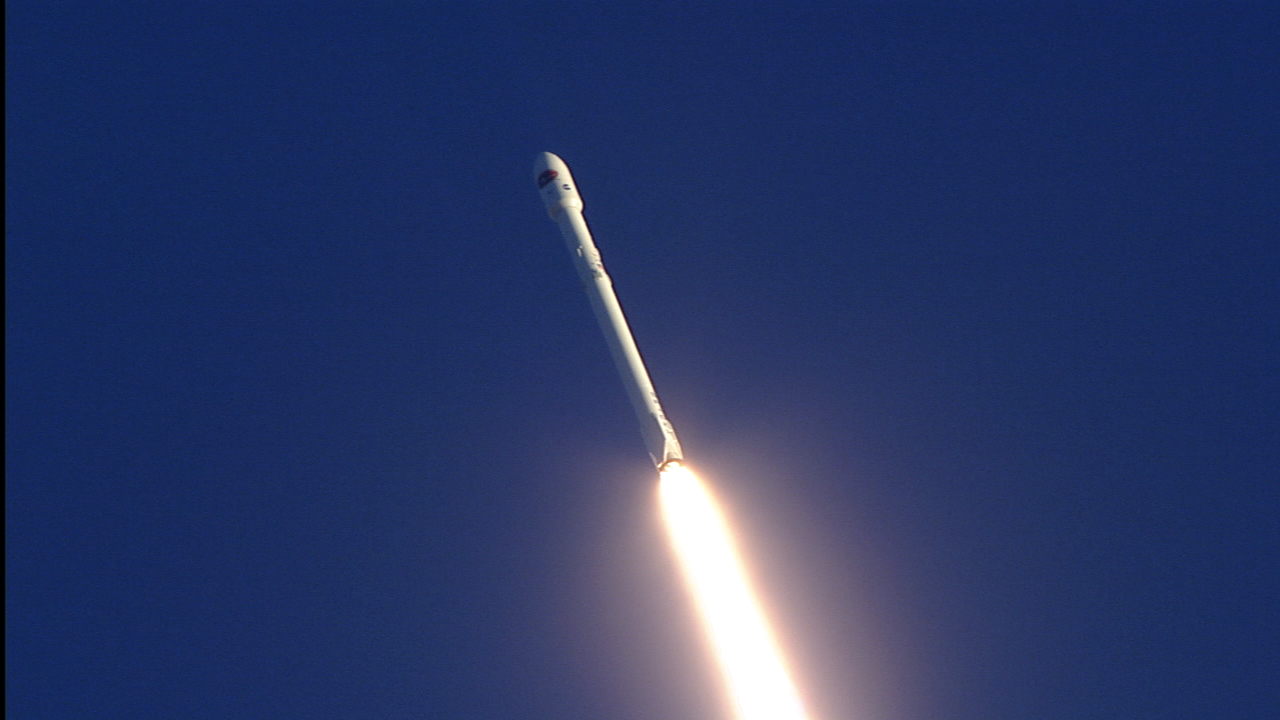
SpaceX Falcon 9 V1.1 first stage burns to launch DSCOVR to the Earth-Sun L1 point. Credit: NASA. Click to enlarge.
Click to enlarge
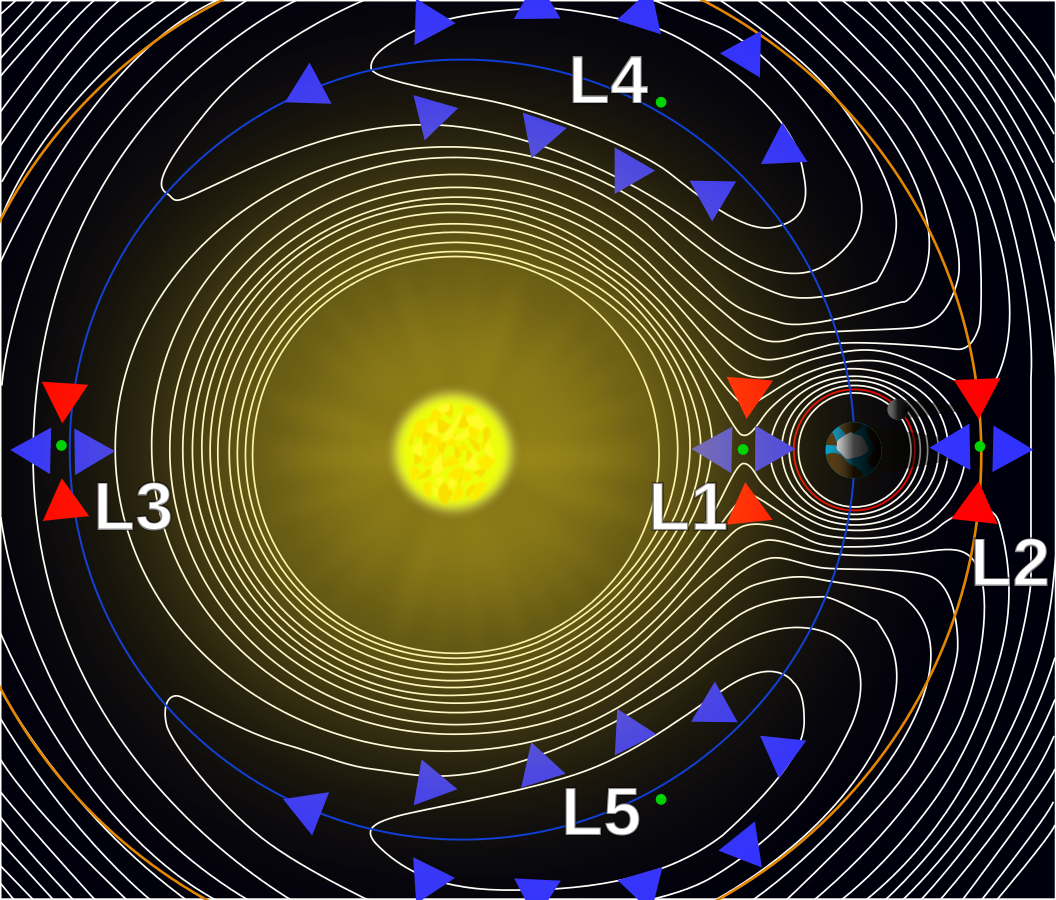
Earth-Sun Lagrangian Points. Source: Wikimedia Commons, Xander89. Click to enlarge.
07/12/11 – Ephemeris – Dim prospects for the James Webb Space Telescope
Tuesday, July 12th. Today the sun will be up for 15 hours and 18 minutes, setting at 9:27. The moon, 3 days before full, will set at 4:24 tomorrow morning. Tomorrow the sun will rise at 6:09.
The US House Appropriation Committee is planning to cancel the Jame Webb Space Telescope. This follow on to the wildly successful Hubble Space Telescope, is, like its predecessor over budget and behind schedule. The Webb will gather over 6 times the light as the Hubble, and operate in the infrared where the action is in astronomy now a days. As it is currently funded the Webb telescope might not be launched by 2018. They are cutting NASA’s budget by 1.6 billion dollars and want to mandate instead the development of a heavy lift rocket, for which there is no immediate use. As it is the commercial SpaceX company supposedly can upgrade their current Falcon 9 rocket to a Falcon Heavy quicker and cheaper than NASA can produce their heavy rocket.
* Times are for the Traverse City/Interlochen area of Michigan. They may be different for your location.
Addendum

Artist's view of the James Webb Space Tellescope. Courtesy NASA.

Artist's conception of the Falcon Heavy rocket. Courtesy SpaceX.
 Bob Moler's Ephemeris Blog