Archive
Ephemeris: 12/23/2024 – What was the Star of Bethlehem? Part 1
This is Ephemeris for Monday, December 23rd. Today the Sun will be up for 8 hours and 48 minutes, setting at 5:06, and it will rise tomorrow at 8:18. The Moon, 1 day past last quarter, will rise at 2:05 tomorrow morning.
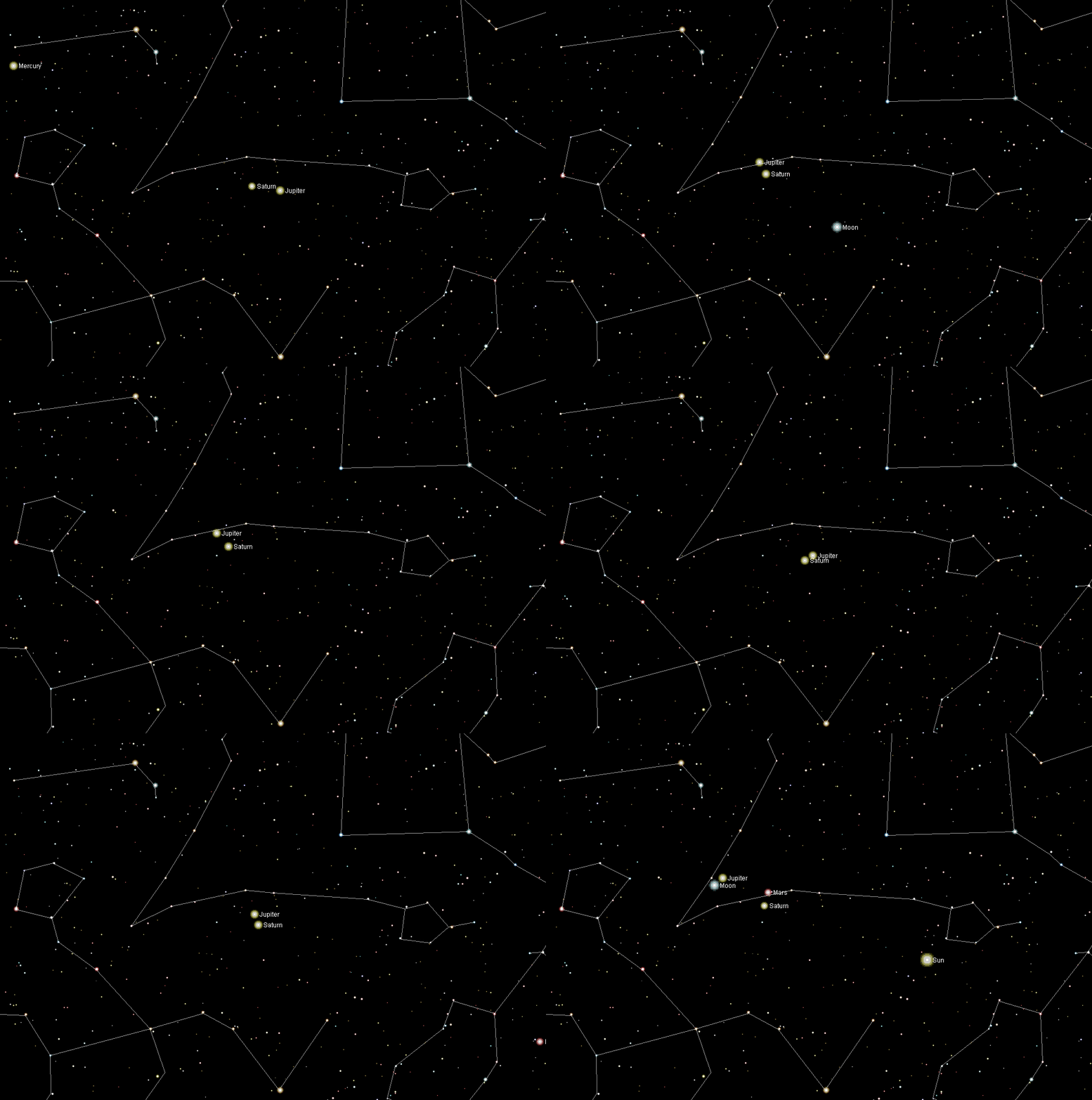
The most popular solution to what the Star of Bethlehem may have been, is a triple conjunction of Jupiter and Saturn that occurred in 7 BCE, where Jupiter passed Saturn three times in a few months time. So the event should more probably be called a celestial sign, rather than a star. The conjunction occurred against the constellation of Pisces the fish which was thought to represent the Jews or whoever lived in that area. Such a series of conjunctions against a particular zodiacal constellation would occur only about once every 800 to 900 years. Triple conjunctions aren’t super rare, if you don’t care which constellation it’s happening in front of. We had one in 1981, but it was against the constellation of Virgo.
The astronomical event times given are for the Traverse City/Interlochen area of Michigan (EST, UT – 5 hours). Times will be different for other locations.
Addendum
Ephemeris: 12/22/2023 – Jupiter and Venus as the Star of Bethlehem
This is Ephemeris for Friday, December 22nd. Today the Sun will be up for 8 hours and 48 minutes, setting at 5:05, and it will rise tomorrow at 8:17. The Moon, 3 days past first quarter, will set at 4:53 tomorrow morning.
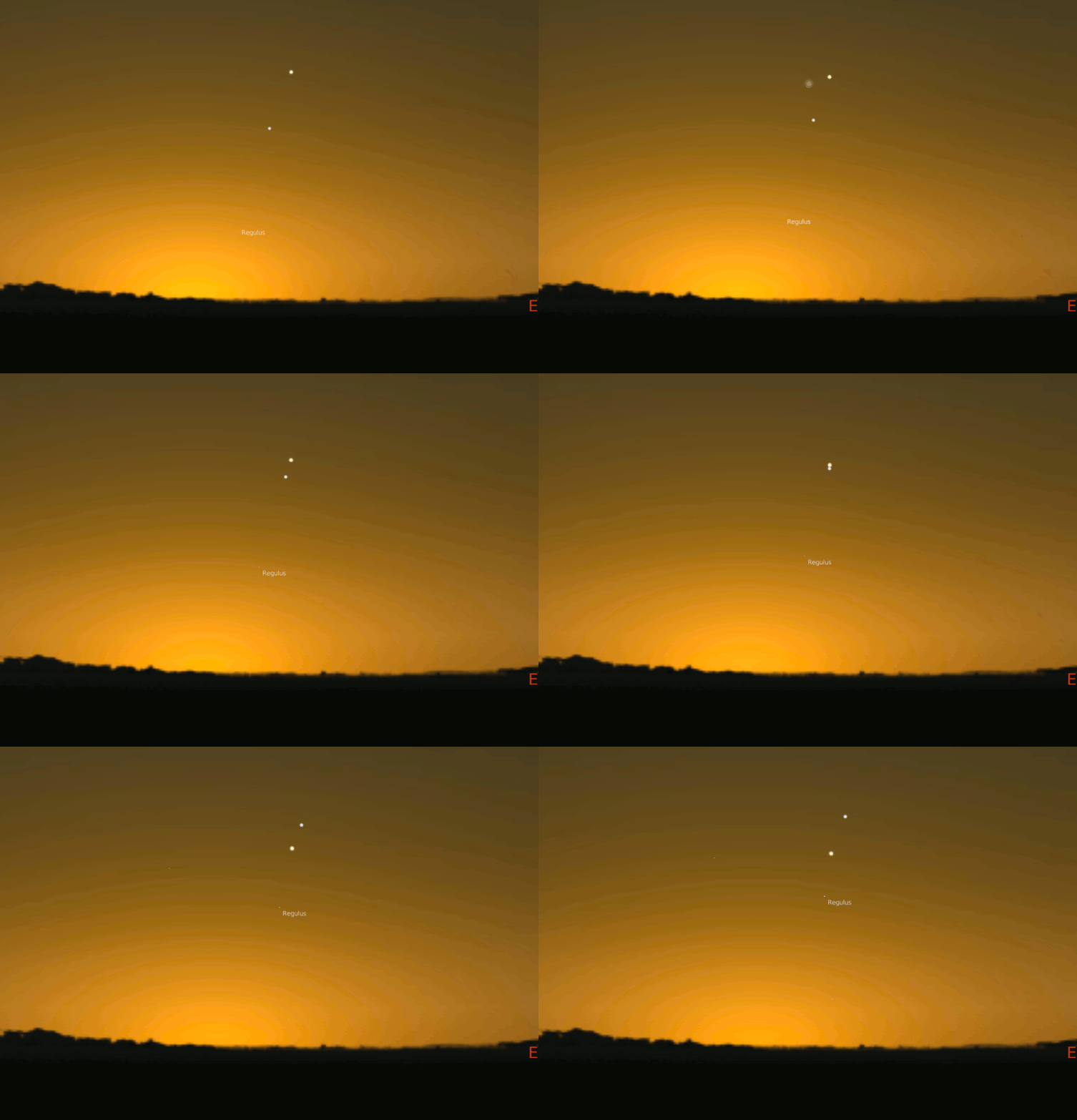
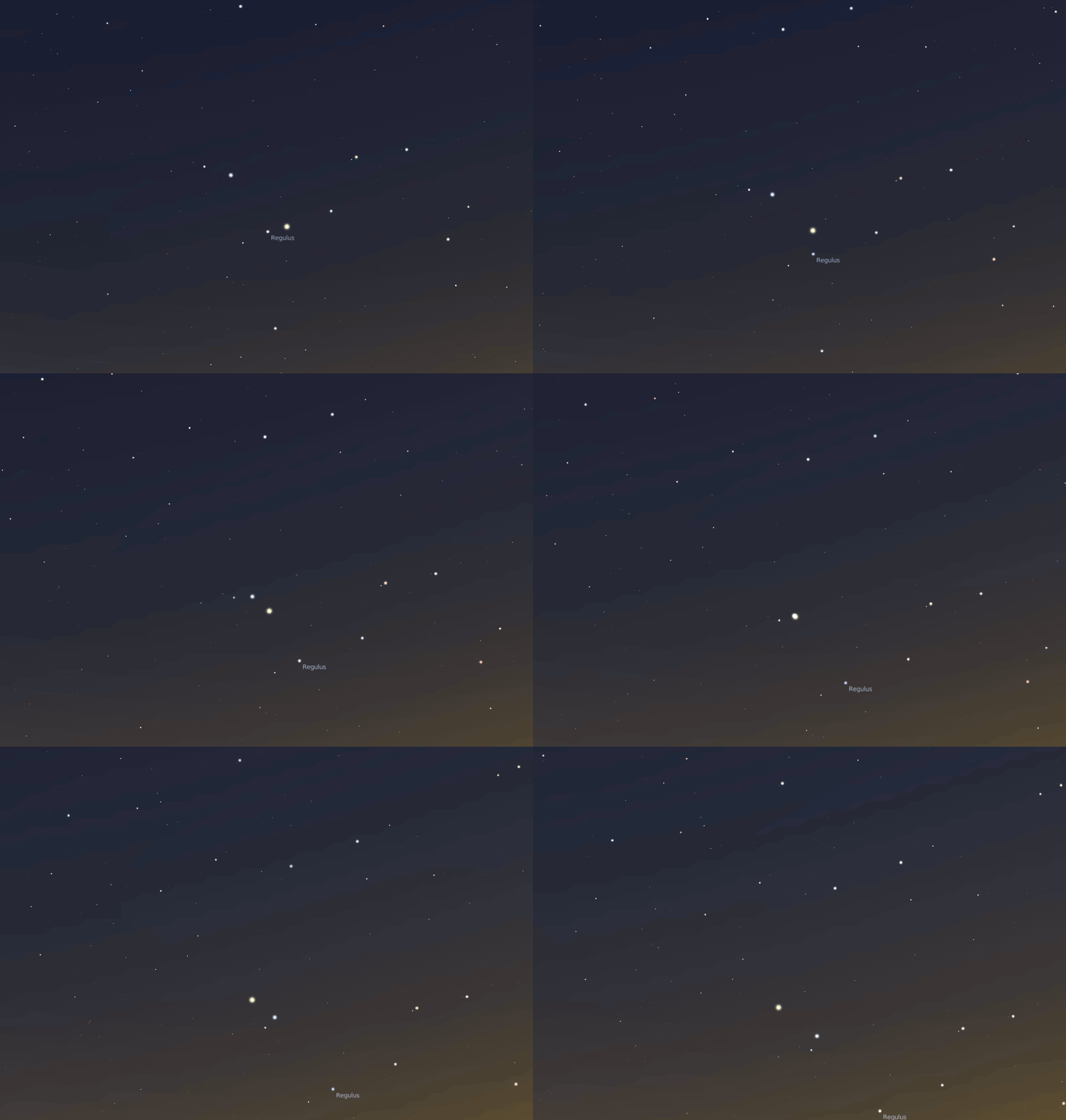
Many writers of the 2nd and 3rd centuries AD place Jesus’ birth around 2 BC, which had to be before Herod the Great’s death, which I suggest was in 1 BC marked by a total lunar eclipse. So the Star of Bethlehem could appear several years later than the triple conjunction of Jupiter and Saturn in 7 BC that’s been popular. In 3 and again in 2 BC there were star-like conjunctions or apparent joining of the planets Jupiter and Venus against the backdrop of the constellation of Leo the Lion. A lion is related to Judah, son of Jacob by a blessing the latter gave his 12 sons in Genesis. The first conjunction occurred in August of 3 BC in the morning sky. On June 16th of the next year the two planets got together again, this time in the evening sky, a month or more after Jesus would have been born in the lambing season of spring.
The astronomical event times given are for the Traverse City/Interlochen area of Michigan (EST, UT –5 hours). They may be different for your location.
Addendum
12/25/2020 – Ephemeris – Did the “Star” of Bethlehem appear in 3 BC and again in 2 BC?
Merry Christmas, this is Bob Moler with Ephemeris for Christmas Day, Friday, December 25th. Today the Sun will be up for 8 hours and 48 minutes, setting at 5:07, and it will rise tomorrow at 8:19. The Moon, halfway from first quarter to full, will set at 4:53 tomorrow morning.
Many writers of the 2nd and 3rd centuries AD place Jesus’ birth around 2 BC, which had to be before Herod the Great’s death, which I suggest was in 1 BC marked by to a total lunar eclipse. In 3 and again in 2 BC there were star-like conjunctions or apparent joinings of the planets Jupiter and Venus against the backdrop of the constellation of Leo the Lion. A lion is related to Judah, son of Jacob by a blessing the latter gave his 12 sons in Genesis. The first conjunction occurred in August of 3 BC in the morning sky. In June the next year the two planets got together again, this time in the evening sky, just after Jesus would have been born in the lambing season of spring.
The event times given are for the Traverse City/Interlochen area of Michigan. They may be different for your location.
Addendum
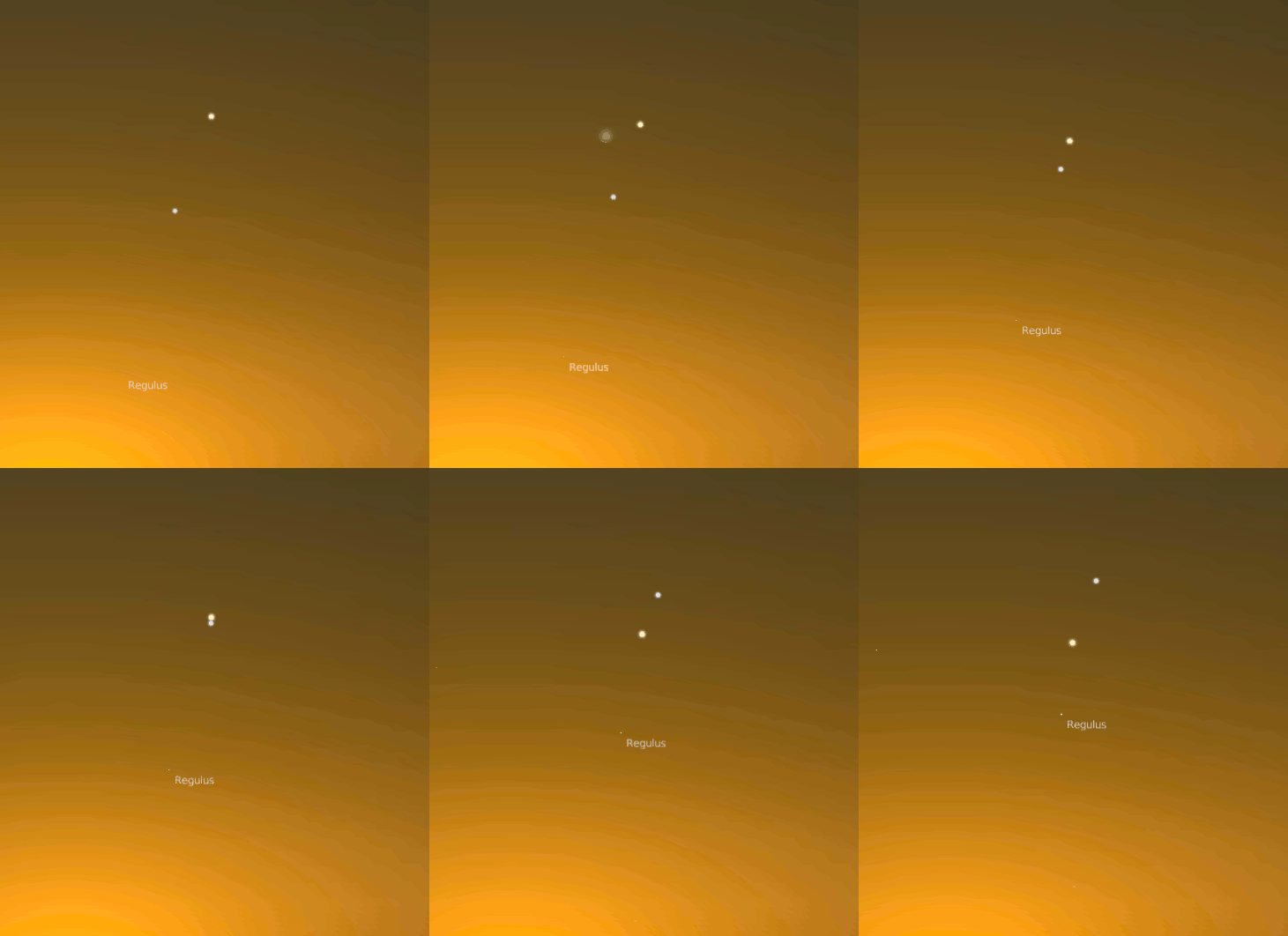
Here is an animation created using Stellarium of Jupiter and Venus, the brighter of the two seeming to coalesce on August 12, 3 BC in the early morning twilight. The ghostly image popping up in the second frame is the thin crescent Moon showing earth shine. Created using Stellarium and GIMP.
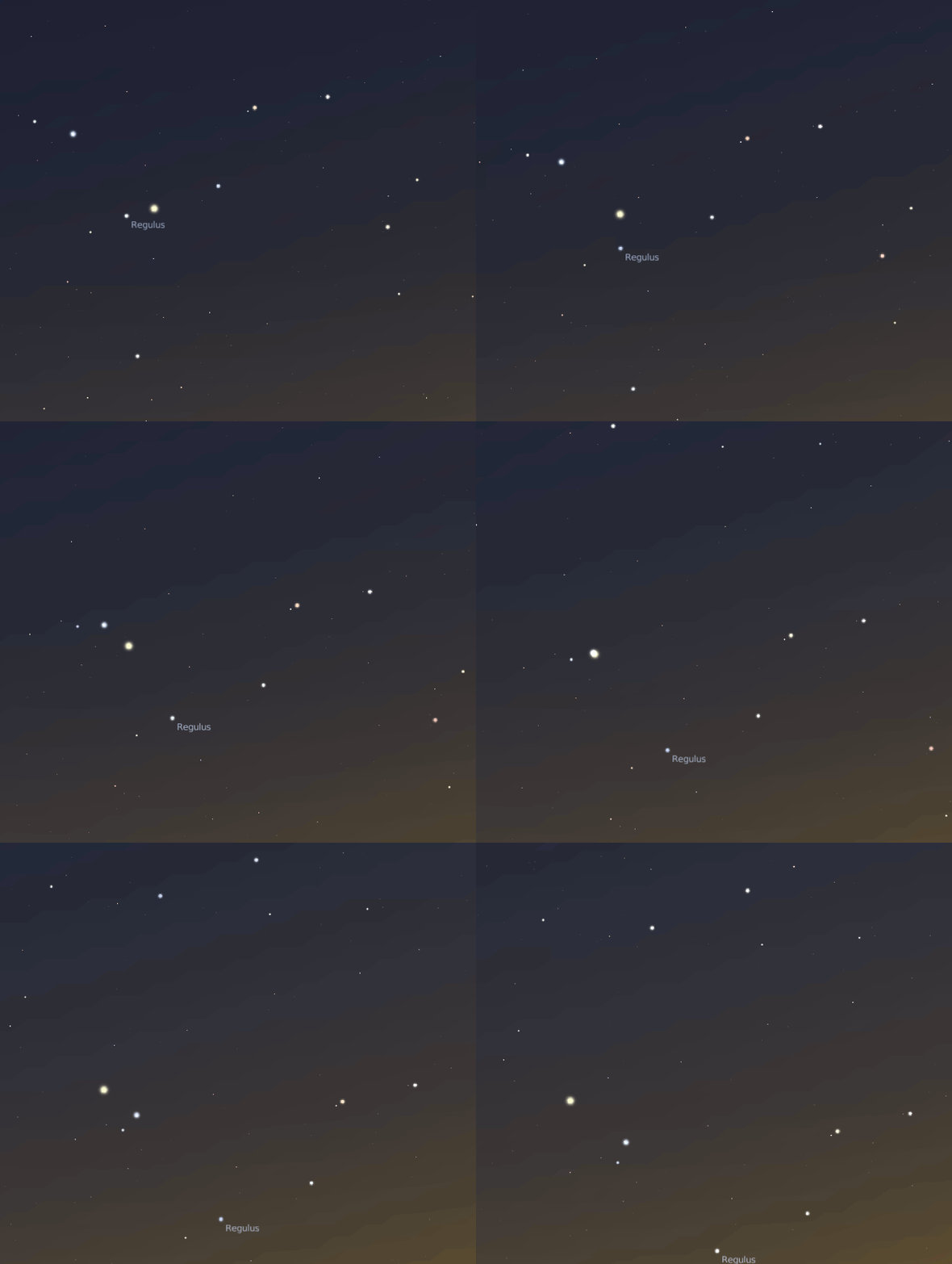
On June 16th 2 BC, this time in the evening, Venus and Jupiter seem to coalesce as one, at least to the naked eye. Regulus (The Little King star) is the brightest star in Leo the lion. To the upper right of it is the Sickle, the front part of the lion and his head and mane. Created using Stellarium and GIMP.
 Bob Moler's Ephemeris Blog