Archive
09/01/2017 – Ephemeris – Far flung astronomers return to share their reports of the eclipse
Ephemeris for Friday, September 1st. The Sun will rise at 7:05. It’ll be up for 13 hours and 13 minutes, setting at 8:18. The Moon, 3 days past first quarter, will set at 3:16 tomorrow morning.
Tonight’s meeting of the Grand Traverse Astronomical Society will be a real treat. The far-flung members of the society on eclipse day nearly two weeks ago will bring back their treasures of experiences, pictures and videos from the path of totality from Oregon, Missouri and Tennessee. We’ll also have some wonderful images from the Society’s former president who had to leave the area to become an airline pilot. The meeting will be at 8 p.m. at Northwestern Michigan’s Joseph H. Rogers Observatory, located south of Traverse City, on Birmley Road, accessible from either Garfield or Keystone Roads. After the meeting there will be a star party to view Saturn and the wonders of the summer Milky Way.
The times given are for the Traverse City/Interlochen area of Michigan. They may be different for your location.
Addendum
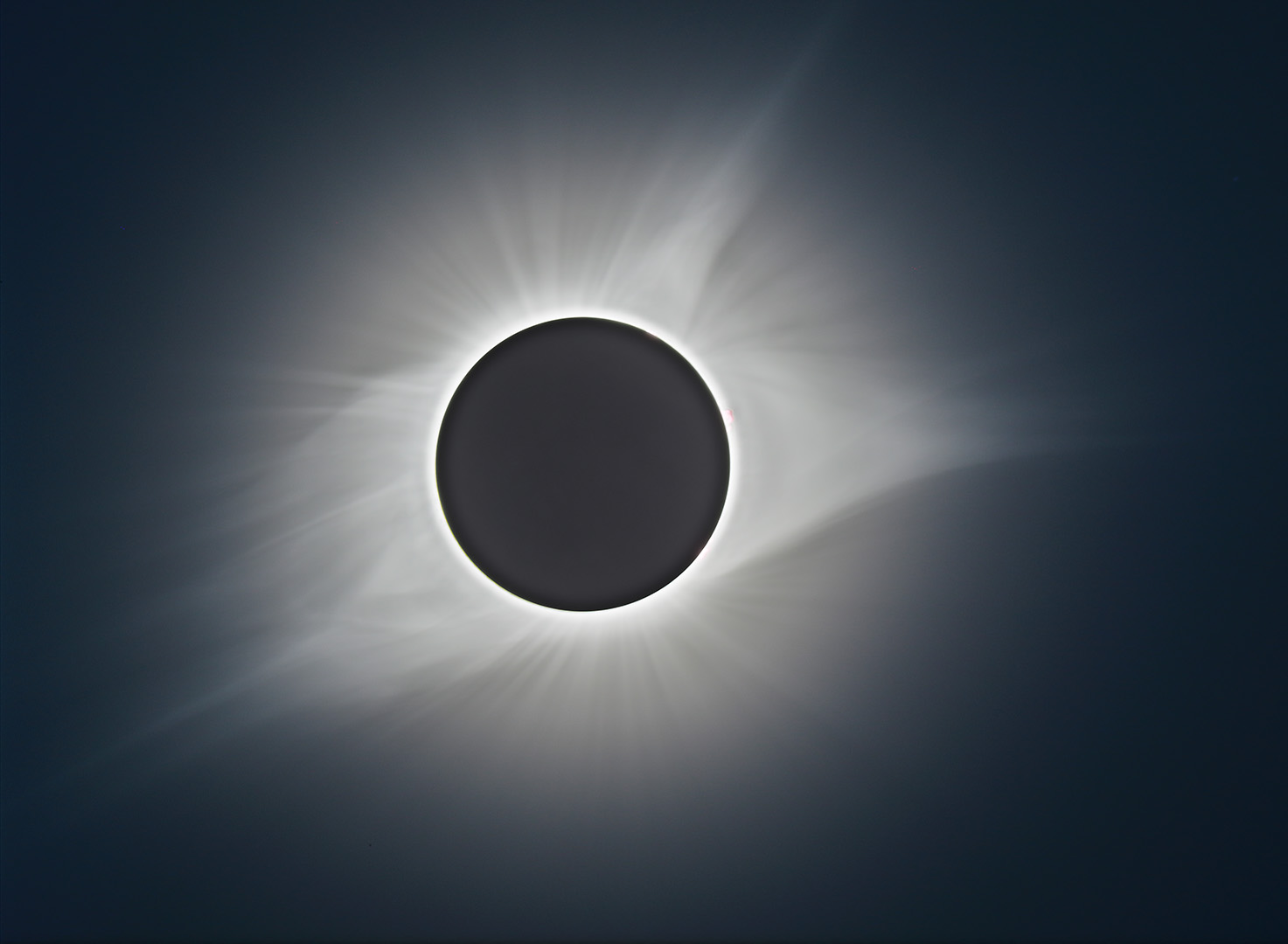
A composite image of something like 70 exposures of the Sun’s corona taken by Scott Anttila, former president of the GTAS. This and others of his images will be displayed, along with the stories and photographs from other members.
08/29/2017 – Ephemeris – My excellent eclipse adventure
Ephemeris for Tuesday, August 29th. The Sun will rise at 7:01. It’ll be up for 13 hours and 22 minutes, setting at 8:23. The Moon, at first quarter today, will set at 12:56 tomorrow morning.
This is the first program I’ve recorded since viewing the total solar eclipse 8 days ago. My daughter, youngest granddaughter and I ended up at the Howard County Fairgrounds just outside Fayette, Missouri at an event run by the University of Missouri Extension Service. There wasn’t a big crowd there and the travel there was pretty clear, since it was in the early morning. The day started fairly clear, but became cloudy. Telephoto photography was out, but I made a video of the time around totality that was quite fascinating showing the Moon’s shadow going over. The inner corona of the Sun was visible at totality. The story is on this blog here as an Ephemeris Extra posting for last Thursday, including the videos. Friday I’ll tell where you can learn more.
The times given are for the Traverse City/Interlochen area of Michigan. They may be different for your location.
08/01/2017 – Ephemeris – A look at the busy month of August in astronomy
Ephemeris for Tuesday, August 1st. The Sun rises at 6:29. It’ll be up for 14 hours and 38 minutes, setting at 9:07. The Moon, 2 days past first quarter, will set at 2:21 tomorrow morning.
Let’s look ahead at the month of August in the skies. Daylight hours will decrease from 14 hours and 38 minutes today to 13 hours 16 minutes on the 31st. The altitude of the sun at local noon, that is degrees of angle above the horizon will decrease from 63 degrees today to just over 53 degrees on the 31st. The Perseid meteor shower will reach its peak on the evening of the 12th. However the bright waning gibbous moon will rise just after 11:30 for a very short dark sky viewing period. The big event this month will be the total solar eclipse that will be visible from all 50 of the United States and total for a narrow strip of land stretching from Oregon to South Carolina. That will occur on the afternoon of Monday the 21st.
The times given are for the Traverse City/Interlochen area of Michigan. They may be different for your location.
Addenda
August Evening Star Chart
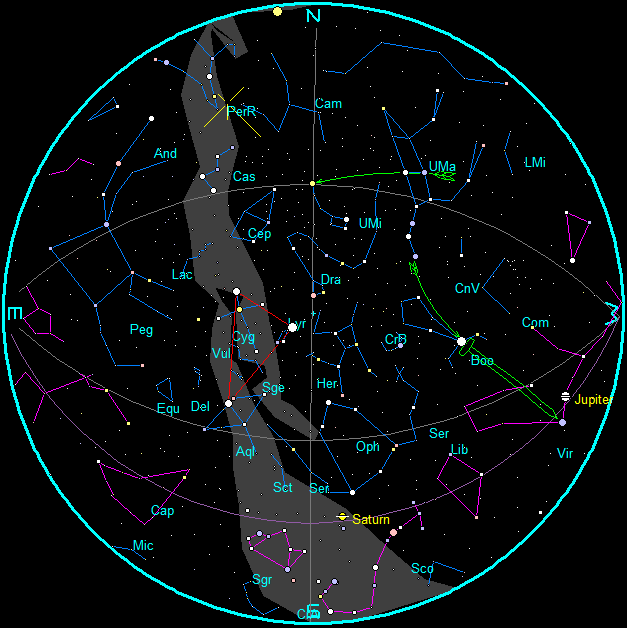
Star Chart for August 2017 (10 p.m. August 15, 2017). Created using my LookingUp program. Click on image to enlarge.
The planets and stars are plotted for the 15th at 10 p.m. EDT in the evening and 5 a.m. for the morning chart. These are the chart times. Note that Traverse City is located approximately 45 minutes behind our time meridian. (An hour 45 minutes behind our daylight saving time meridian. during EDT and 45 minutes behind our daylight standard time meridian. during EST). To duplicate the star positions on a planisphere you may have to set it to 1 hour 45 minutes (Daylight Time) or 45 minutes (Standard Time) earlier than the current time if you are near your time meridian.
Note the chart times of 10 p.m. and 5 a.m. are for the 15th. For each week before the 15th add ½ hour. For each week after the 15th subtract ½ hour. The planet positions are updated each Wednesday on this blog.
August Morning Star Chart
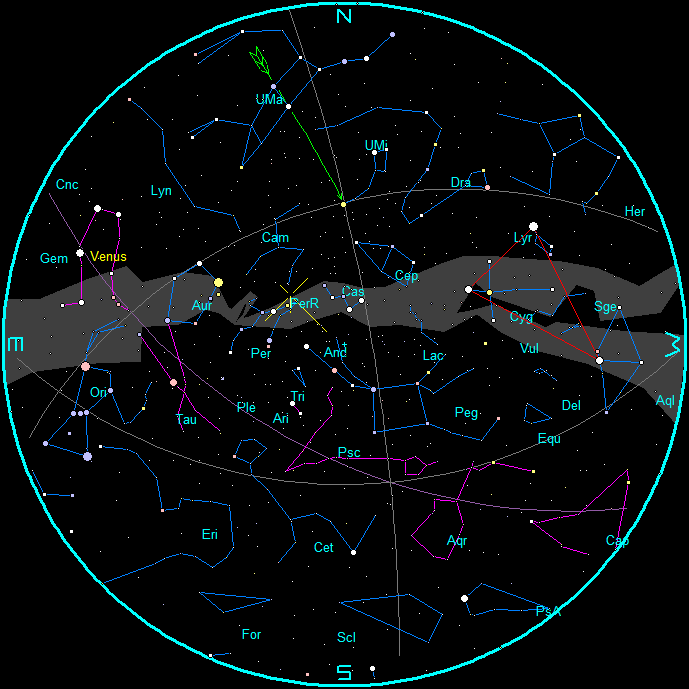
Star Chart for August 2017 mornings based on 5 a.m. August 15th. Created using my LookingUp program. Click on image to enlarge.
For a list of constellation names to go with the abbreviations click here.
- Pointer stars at the front of the bowl of the Big Dipper point to Polaris the North Star
- Leaky Big Dipper drips on Leo
- Follow the arc of the handle of the Big Dipper to the star Arcturus,
- Then follow the Spike to Spica
- The Summer Triangle is in red
- PerR is the Perseid Meteor Shower radiant
Evening nautical twilight ends at 10:26 p.m. EDT on the 1st, decreasing to 9:30 p.m. EDT on the 31st.
Evening astronomical twilight ends at 11:15 p.m. EDT on the 1st, decreasing to 10:09 p.m. EDT on the 31st.
Morning astronomical twilight starts at 4:30 a.m. EDT on the 1st, and increasing to 5:24 a.m. EDT on the 31st.
Morning nautical twilight starts at 5:19 a.m. EDT on the 1st, and increasing to 6:03 a.m. EDT on the 31st.
NASA Calendar of Planetary Events
Date        Time    Event
Aug 01  Tu          Venus: 38.4° W
    02  We  1:55 pm Moon Apogee: 405000 km
    03  Th  3:31 am Moon-Saturn: 3.8° S
    04  Fr  2:17 pm Moon South Dec.: 19.4° S
    07  Mo  2:11 pm Full Moon
    07  Mo  2:22 pm Partial Lunar Eclipse (Not visible from here)
    08  Tu  6:56 am Moon Descending Node
    12  Sa  2:35 pm Perseid Shower: ZHR = 90
    14  Mo  9:15 pm Last Quarter
    16  We  2:39 am Moon-Aldebaran: 0.4° S
    18  Fr  2:50 am Moon North Dec.: 19.4° N
    18  Fr  9:14 am Moon Perigee: 366100 km
    19  Sa 12:45 am Moon-Venus: 2.3° N
    20  Su  3:15 am Moon-Beehive: 3.2° N
    21  Mo  6:34 am Moon Ascending Node
    21  Mo  2:26 pm Total Solar Eclipse
    21  Mo  2:30 pm New Moon
    25  Fr  9:00 am Moon-Jupiter: 3.7° S
    26  Sa  4:32 pm Mercury Inferior Conj.
    29  Tu  4:13 am First Quarter
    30  We  7:25 am Moon Apogee: 404300 km
    30  We 10:23 am Moon-Saturn: 3.9° S
    31  Th 10:03 pm Moon South Dec.: 19.4° S
Sep 01  Fr          Venus: 31.7° W
Sky Events Calendar by Fred Espenak and Sumit Dutta (NASA’s GSFC),
http://eclipse.gsfc.nasa.gov/SKYCAL/SKYCAL.html
If you go to the above site you can print out a list like the above for the entire year
or calendar pages for your time zone.
August Rising and Setting Events
LU                  Ephemeris of Sky Events for Interlochen/TC
August, 2017    Local time zone: EDT
+-----------------------------------------------------------------------+
| DATE |  SUN     SUN  DAYLIGHT|   TWILIGHT*    |MOON  RISE OR    ILLUM |
|      |  RISE    SET    HOURS |  END    START  |PHASE SET** TIME FRACTN|
+=======================================================================+
|Tue  1| 06:29a  09:08p  14:38 | 10:23p  05:13a |      Set  02:21a   72%|
|Wed  2| 06:30a  09:06p  14:36 | 10:21p  05:15a |      Set  03:00a   80%|
|Thu  3| 06:31a  09:05p  14:34 | 10:20p  05:16a |      Set  03:43a   87%|
|Fri  4| 06:32a  09:04p  14:31 | 10:18p  05:18a |      Set  04:32a   93%|
|Sat  5| 06:33a  09:02p  14:29 | 10:16p  05:19a |      Set  05:26a   97%|
+------+-----------------------+----------------+-----------------------+
|Sun  6| 06:34a  09:01p  14:26 | 10:15p  05:21a |      Set  06:24a   99%|
|Mon  7| 06:36a  09:00p  14:23 | 10:13p  05:22a |Full  Rise 09:01p  100%|
|Tue  8| 06:37a  08:58p  14:21 | 10:11p  05:24a |      Rise 09:35p   98%|
|Wed  9| 06:38a  08:57p  14:18 | 10:09p  05:25a |      Rise 10:06p   95%|
|Thu 10| 06:39a  08:55p  14:16 | 10:07p  05:27a |      Rise 10:36p   89%|
|Fri 11| 06:40a  08:54p  14:13 | 10:06p  05:28a |      Rise 11:06p   81%|
|Sat 12| 06:41a  08:52p  14:10 | 10:04p  05:30a |      Rise 11:36p   72%|
+------+-----------------------+----------------+-----------------------+
|Sun 13| 06:43a  08:51p  14:08 | 10:02p  05:31a |      Rise 12:09a   62%|
|Mon 14| 06:44a  08:49p  14:05 | 10:00p  05:33a |L Qtr Rise 12:46a   51%|
|Tue 15| 06:45a  08:48p  14:02 | 09:58p  05:34a |      Rise 01:28a   39%|
|Wed 16| 06:46a  08:46p  13:59 | 09:56p  05:36a |      Rise 02:16a   28%|
|Thu 17| 06:47a  08:44p  13:57 | 09:54p  05:37a |      Rise 03:13a   18%|
|Fri 18| 06:49a  08:43p  13:54 | 09:52p  05:39a |      Rise 04:16a   10%|
|Sat 19| 06:50a  08:41p  13:51 | 09:50p  05:40a |      Rise 05:24a    4%|
+------+-----------------------+----------------+-----------------------+
|Sun 20| 06:51a  08:39p  13:48 | 09:48p  05:42a |      Rise 06:35a    1%|
|Mon 21| 06:52a  08:38p  13:45 | 09:47p  05:43a |New   Set  08:44p    0%|
|Tue 22| 06:53a  08:36p  13:42 | 09:45p  05:44a |      Set  09:18p    2%|
|Wed 23| 06:54a  08:34p  13:39 | 09:43p  05:46a |      Set  09:49p    6%|
|Thu 24| 06:56a  08:33p  13:37 | 09:41p  05:47a |      Set  10:18p   12%|
|Fri 25| 06:57a  08:31p  13:34 | 09:39p  05:49a |      Set  10:46p   20%|
|Sat 26| 06:58a  08:29p  13:31 | 09:37p  05:50a |      Set  11:15p   28%|
+------+-----------------------+----------------+-----------------------+
|Sun 27| 06:59a  08:27p  13:28 | 09:35p  05:52a |      Set  11:46p   37%|
|Mon 28| 07:00a  08:26p  13:25 | 09:33p  05:53a |      Set  12:19a   47%|
|Tue 29| 07:01a  08:24p  13:22 | 09:31p  05:54a |F Qtr Set  12:56a   56%|
|Wed 30| 07:03a  08:22p  13:19 | 09:29p  05:56a |      Set  01:38a   65%|
|Thu 31| 07:04a  08:20p  13:16 | 09:27p  05:57a |      Set  02:24a   74%|
+-----------------------------------------------------------------------+
* Nautical Twilight
** Moonrise or moonset, whichever occurs between sunset and sunrise
03/27/2017 – Ephemeris – 5 more new moons before the Great American Total Solar Eclipse!
Ephemeris for Monday, March 27th. The Sun will rise at 7:32. It’ll be up for 12 hours and 31 minutes, setting at 8:04. The Moon is new today, and won’t be visible.
The Moon will be officially new at 10:57 this evening. Later this year there will occur at total solar eclipse visible from a narrow path the crosses the United States from Oregon to South Carolina. It will cross the cities of Casper Wyoming, Kansas City, just south of St Louis, Carbondale, Illinois; Nashville, Columbia and Charleston South Carolina. Carbondale is about the closest spot to us at about 600 miles. We will see about 75-80 percent of the Sun blocked by the Moon here in northern Michigan. The is generally a solar eclipse about every six new moons, the exception is an occasional solar eclipse on two consecutive new moons, except they will occur in opposite polar regions and are rarely total. The Moon’s orbit is tilted by 5° to the Sun’s path. This time the Moon is way south of the Sun.
Times are for the Traverse City/Interlochen area of Michigan. They may be different for your location.
Addendum
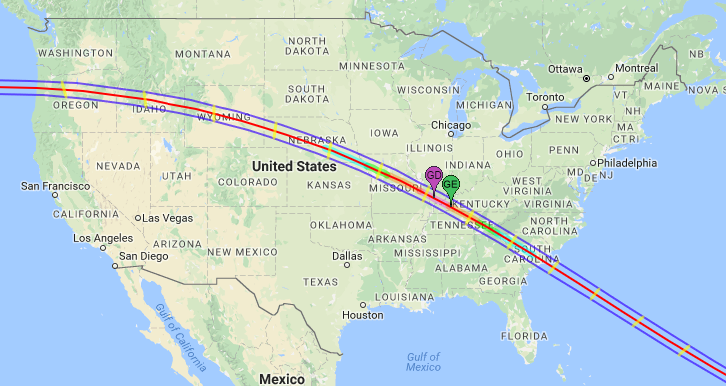
A screen cap of the map showing the path of totality of the August 21, 2017 total solar eclipse from NASA’s eclipse page. Credit: NASA and Google Maps.
The points are GE greatest eclipse, path width 71.27 miles (114.7 km); and GD greatest duration of totality, 2 minutes and 40.2 seconds.
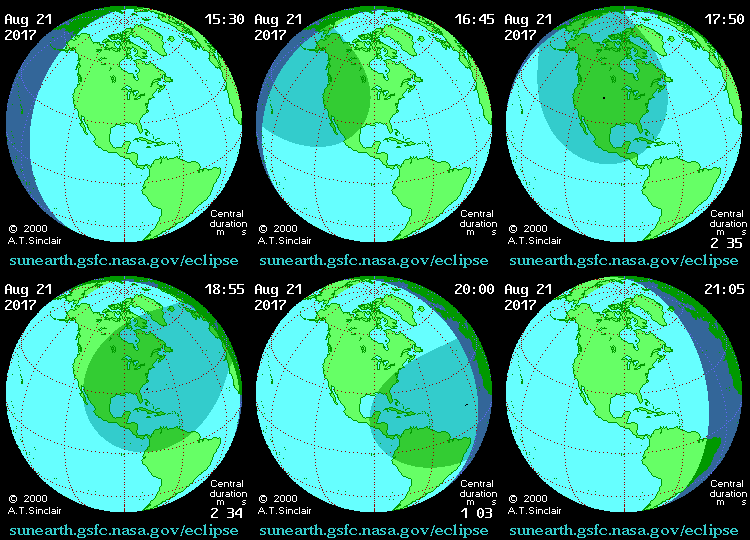
An animation of the Moon’s shadow as it will cross the Earth’s surface August 21, 2017. Credit A.T. Sinclair/NASA
NASA’s Eclipse page: https://eclipse2017.nasa.gov/
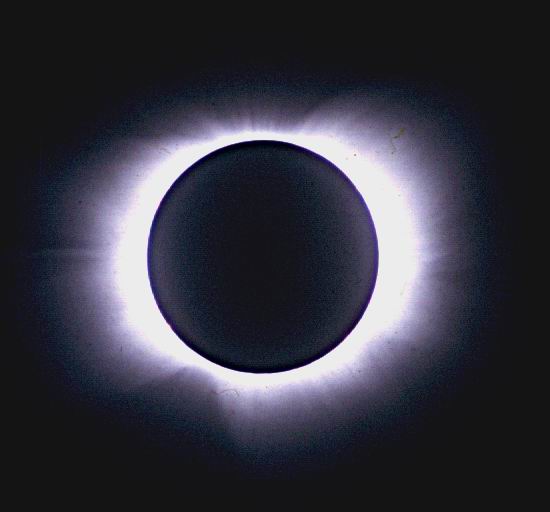
The solar corona displayed during the July 10, 1072 total solar eclipse from Prince Edward Island. Credit Bob Moler.
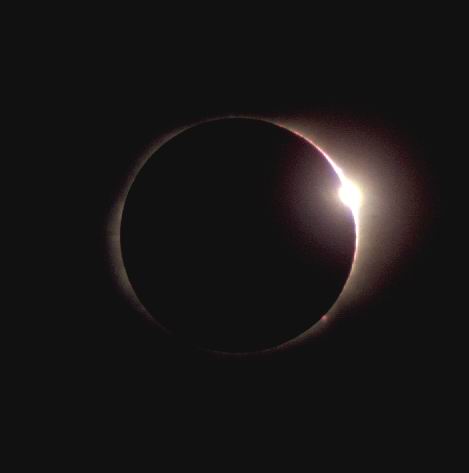
Diamond ring at the end of totality of the total solar eclipse July 10, 1972. Credit Bob Moler.
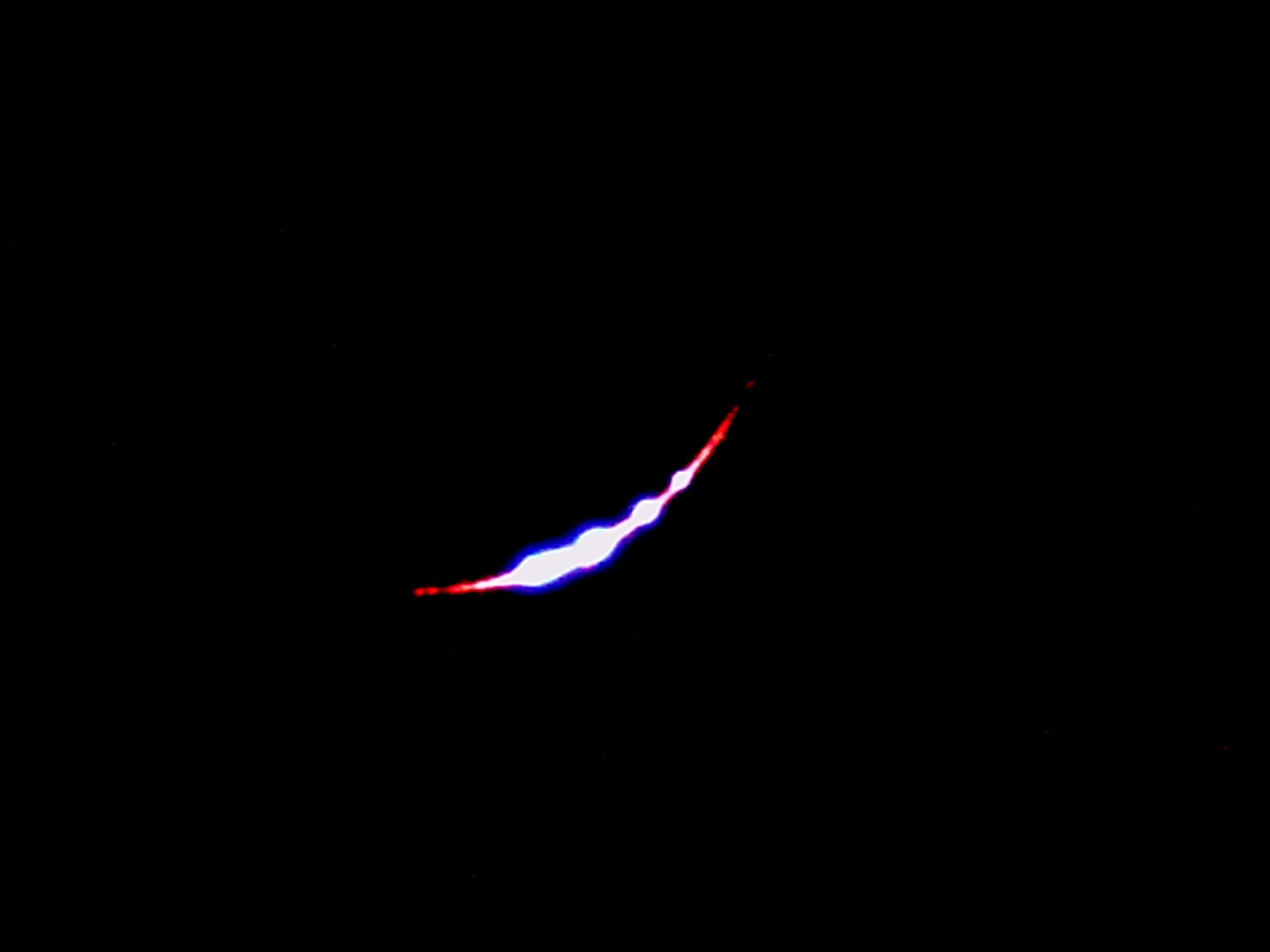
Baily’s Beads – sunlight streaming through the valleys at the edge of the Moon at the end of totality, March 7, 1970, outside Bladenboro NC. Credit Bob Moler.
On May 5th, I’ll be giving a talk about the upcoming total solar eclipse. How to enjoy its partial phases here and along the path of totality.
02/27/2017 – Ephemeris – The Great American Eclipse, August 21, 2017
Ephemeris for Monday, February 27th. The Sun will rise at 7:22. It’ll be up for 11 hours and 5 minutes, setting at 6:28. The Moon, 1 day past new, will set at 7:52 this evening.
We didn’t get a chance to see yesterday’s annular eclipse of the Sun, since it occurred mostly in the South Atlantic Ocean. But it’s a wake up call for those of us who chase the Moon’s shadow, that the Great American Eclipse is a bit less than 6 months away. August 21st to be exact. Here in northern Michigan the Sun will be 75% or so covered by the Moon at peak. For me it’s 100% or nothing. The path where the Sun will be totally eclipsed will run from Oregon to South Carolina. I’ve seen totality four times from 1963 to 1979 and accumulated 8 ½ minutes of time basking under the shade of the Moon. Well not basking, for those were hectic magical times, not to be missed. And come hell or high water I will strive to add another 2 plus minutes to that total.
Times are for the Traverse City/Interlochen area of Michigan. They may be different for your location.
Addendum
A screen cap of the map showing the path of totality of the August 21, 2017 total solar eclipse from NASA’s eclipse page. Credit: NASA and Google Maps.
NASA’s Eclipse page: https://eclipse2017.nasa.gov/
03/08/2016 – Ephemeris – View tonight’s total solar eclipse on the Internet
Ephemeris for Tuesday, March 8th. The Sun will rise at 7:07. It’ll be up for 11 hours and 33 minutes, setting at 6:40. The Moon is new today, and won’t be visible.
Today’s new moon has a bonus, it will produce a total solar eclipse. Not for us, but for Indonesia, some islands of Micronesia, and across the Pacific Ocean. We do have a shot at seeing it, however. NASA and the The Exploratorium has sent an expedition to the Woleai Atoll near the point of the greatest eclipse, allowing over 4 minutes of totality. So if it’s clear there NASA and the Exploratorium will have Web and TV feeds. There will be two feeds, An educational feed running from 8 to 9 p.m. covering the heart of the eclipse and a telescope only feed covering the entire eclipse running from 7 to 10:15 p.m. For NASA TV go to NASA.gov and click on NASA TV. The other place to go is exploratorium.edu and you can’t miss it.
Times are for the Traverse City/Interlochen area of Michigan. They may be different for your location.
Addendum
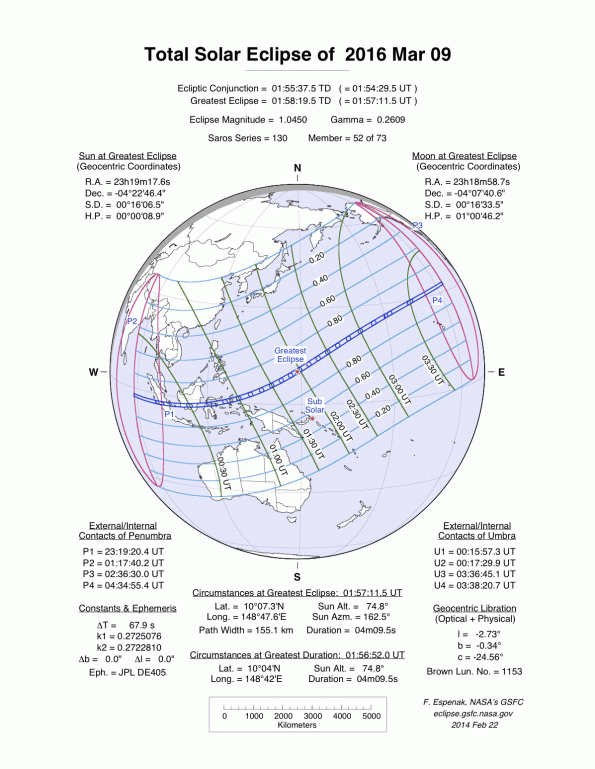
Eclipse chart for the March 9, 2016 total solar eclipse. Credit NASA/GSFC/Fred Espenak.
These are my photographs from prior eclipses that will give one feel as to what an eclipse looks like. The corona will be visible the whole time of totality. The diamond ring and Baily’s Beads will be visible for only a few seconds at the end of totality. They are generally not seen as totality starts because filters will stay on the equipment until totality actually starts.
The solar corona displayed during the July 10, 1072 total solar eclipse from Prince Edward Island. Credit Bob Moler.
Diamond ring at the end of totality of the total solar eclipse July 10, 1972. Credit Bob Moler.
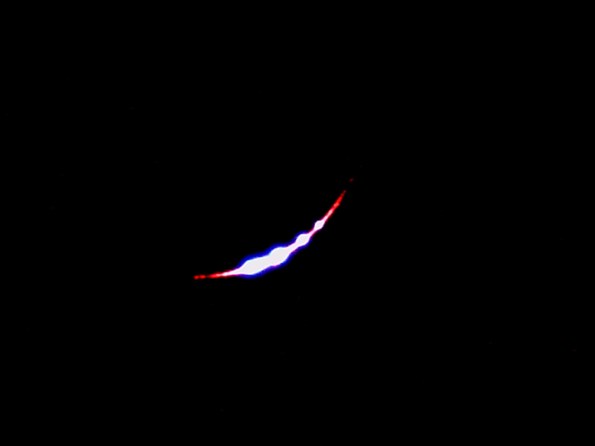
Baily’s Beads at the end of totality of the March 7, 1970 total solar eclipse from Bladenboro, NC. Credit: Bob Moler.
03/19/2015 – Ephemeris – A remarkable solar eclipse tomorrow, however we, in the US, won’t see it.
Ephemeris for Thursday, March 19th. The Sun will rise at 7:48. It’ll be up for 12 hours and 5 minutes, setting at 7:53. The Moon, 1 day before new, will rise at 7:50 tomorrow morning.
There will be a rare solar eclipse tomorrow. The bad news is that it won’t be visible from here. Be that as it may, it is total for a circle of ocean near Greenland, and because tomorrow is also the vernal equinox the it is also sunrise at the north pole. As it happens the path of the eclipses totality tracks to the north pole, so the eclipse, partial and total will be visible from there. I’m not sure how long it’s been since an eclipse totality was visible at the pole on an equinox. The next solar eclipse visible from the United States will be on August 21, 2017. This is an eclipse, whose path of totality crosses the continental United States. In about 2 weeks we’ll have a lunar eclipse whose first stages can be seen from northern Michigan in morning twilight.
Times are for the Traverse City/Interlochen area of Michigan. They may be different for your location.
Addendum
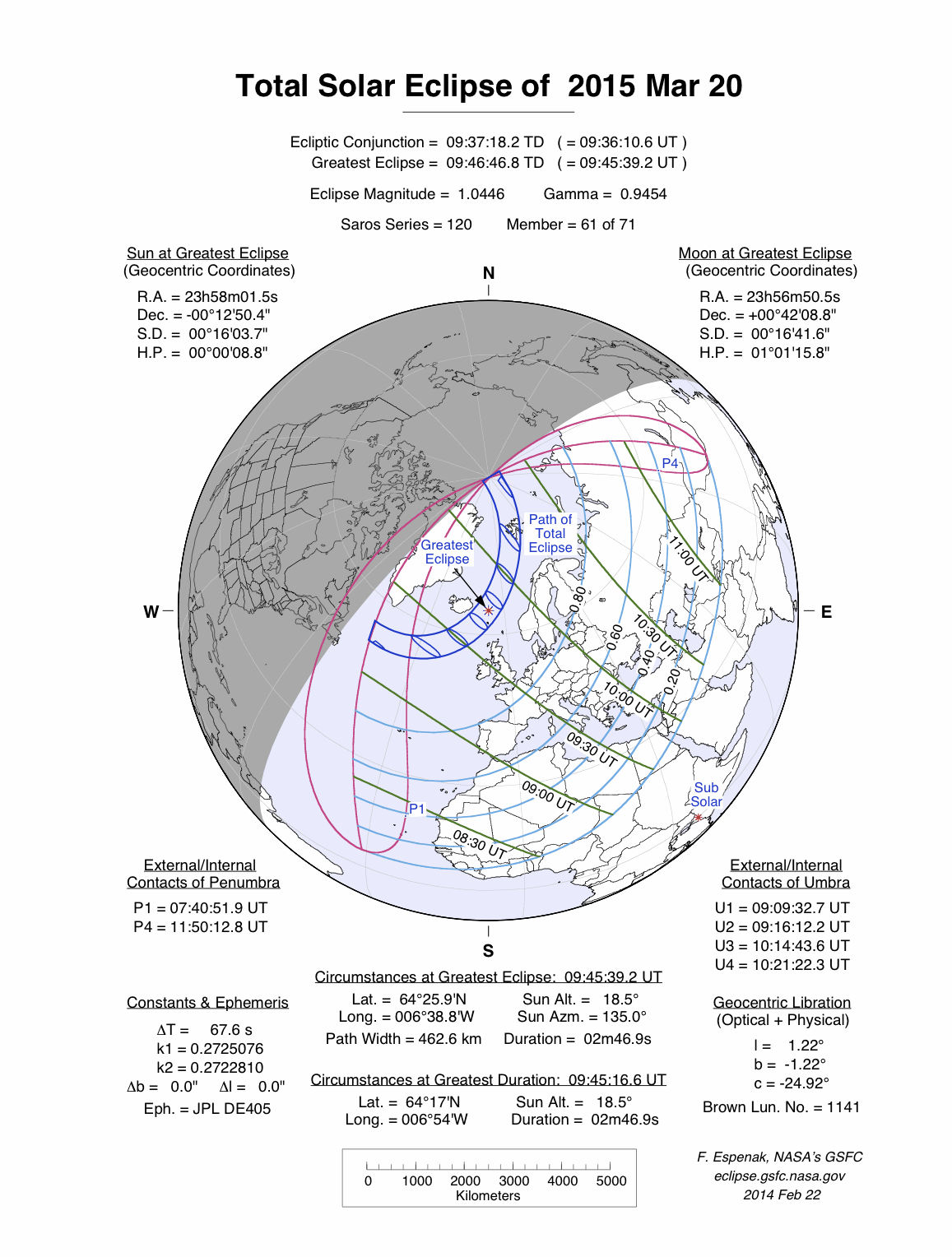
Pertinent section of the March 20, 2015 total solar Eclipse map. Click on image above for the entire image. Credit: Fred Espenak, NASA’s GSFC.
 Bob Moler's Ephemeris Blog