08/16/2017 – Ephemeris – Looking for the whereabouts of the bright planets
Ephemeris for Wednesday, August 16th. The Sun rises at 6:46. It’ll be up for 13 hours and 59 minutes, setting at 8:45. The Moon, 2 days past last quarter, will rise at 2:16 tomorrow morning.
Let’s take our weekly look at the bright planets. Jupiter is sinking in the west-southwest as it gets dark in the evening. The bright blue-white star Spica, which pales in comparison to Jupiter, is seen left of it. Jupiter is moving eastward towards Spica now. It will pass north of Spica on September 11th. Jupiter will set at 10:50 p.m. Saturn can now be seen in the south as evening twilight fades. The reddish star Antares is off to the right of Saturn. Saturn’s rings are spectacular in telescopes. It will set at 1:52 a.m. In the morning sky, brilliant Venus will rise at 3:48 a.m. and be visible until about 6:15 tomorrow morning. Mars and Mercury are now too close to the Sun for us to see, unless the moon completely covers the Sun for you next Monday.
The times given are for the Traverse City/Interlochen area of Michigan. They may be different for your location.
Addendum
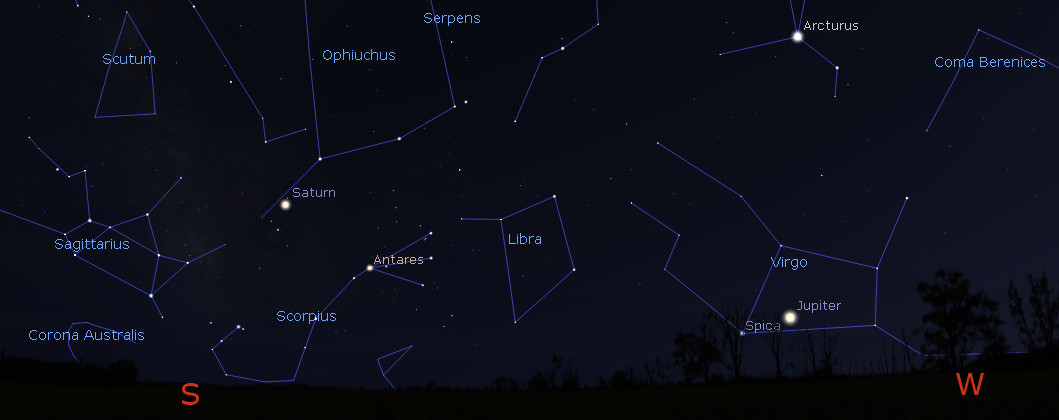
Jupiter and Saturn and southern summer constellations at 10 p.m. August 17, 2017. Created using Stellarium.
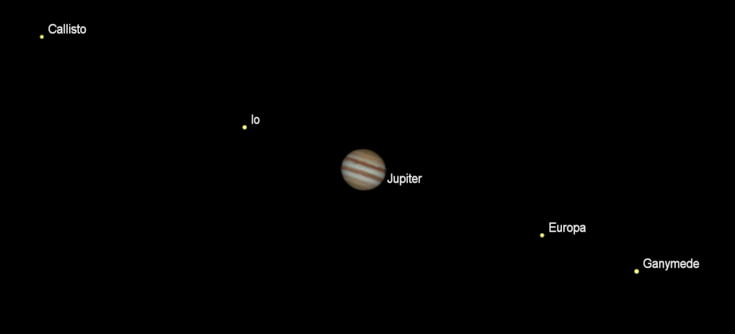
Jupiter and its moons at 10 p.m. August 16, 2017. Created using Cartes du Ciel (Sky Charts).
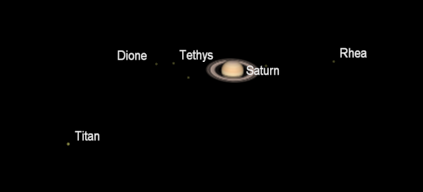
Saturn and its brightest moons overnight August 16/17, 2017. Created using Cartes du Ciel (Sky Charts).
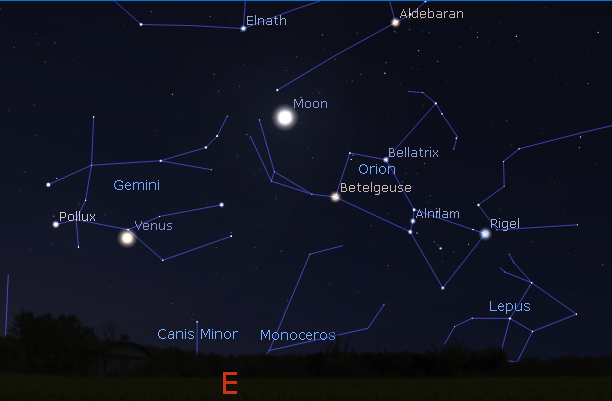
The Moon and Venus at 5:30 a.m. August 17, 2017. Created using Stellarium.
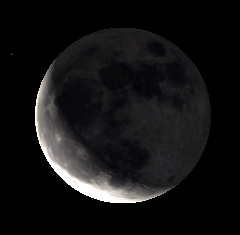
The Moon as it might be seen in binoculars at 5:30 p.m. August 17, 2017. Created using Stellarium.
Venus is becoming almost to small to view its gibbous shape in telescopes. It’s disk is only 13 seconds of arc in diameter, smaller than Saturn’s disk, so I’m discontinuing showing it’s disk.
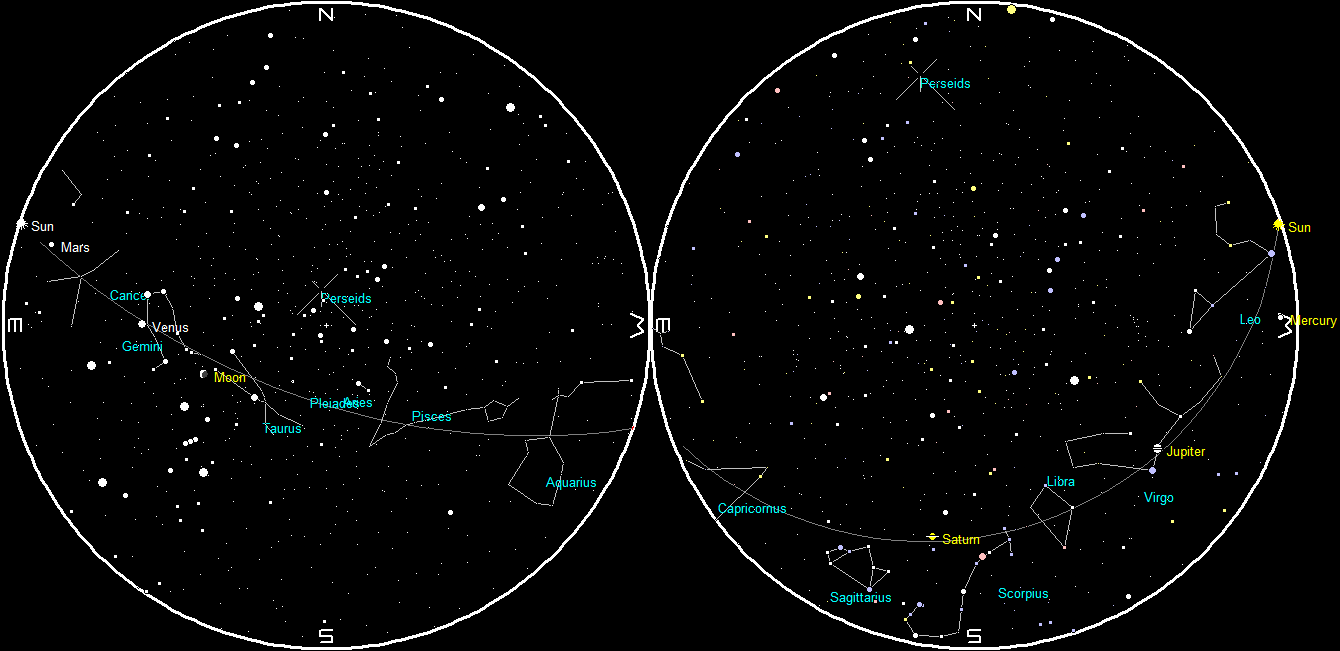
Planets at sunset and sunrise of a single night starting with sunset on the right on August 16, 2017. The night ends on the left with sunrise on August 17. Click on the image to enlarge. Created using my LookingUp program.
-
August 16, 2017 at 1:00 am08/16/2017 – Ephemeris – Looking for the whereabouts of the bright planets – MeasurementDataBases for Industry & Science
 Bob Moler's Ephemeris Blog