Archive
Ephemeris: 09/30/2026 – Taking our weekly look at the whereabouts of the naked-eye planets
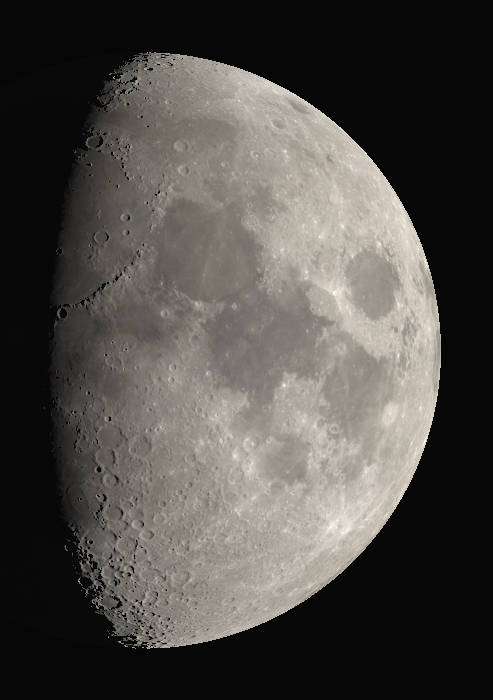
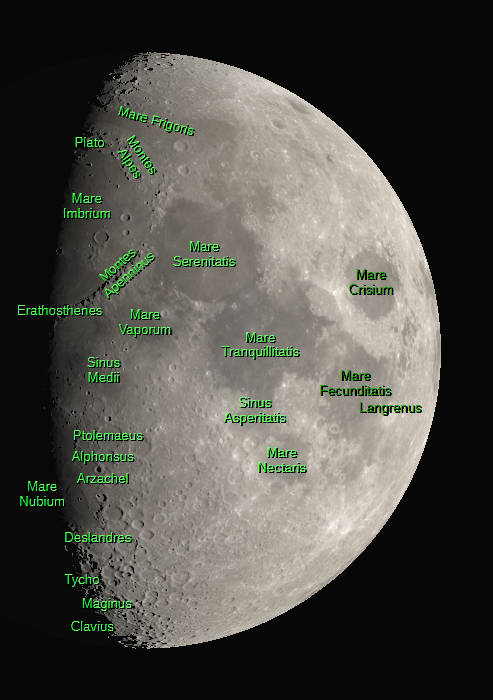
This is Ephemeris for Wednesday, September 30th. Today the Sun will be up for 11 hours and 45 minutes, setting at 7:25, and it will rise tomorrow at 7:40. The Moon, 3 days before last quarter, will rise at 9:14 this evening.
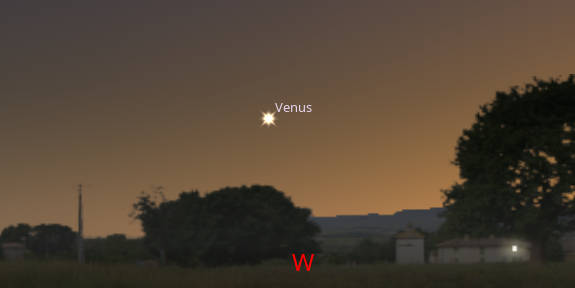
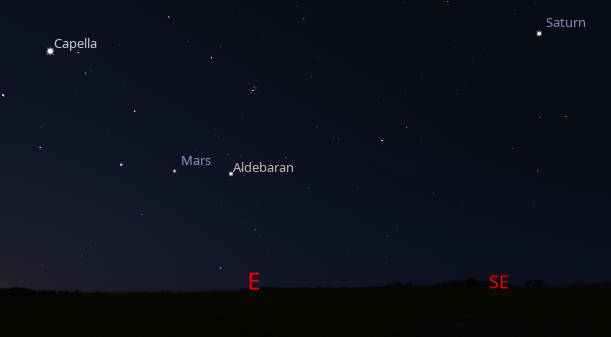
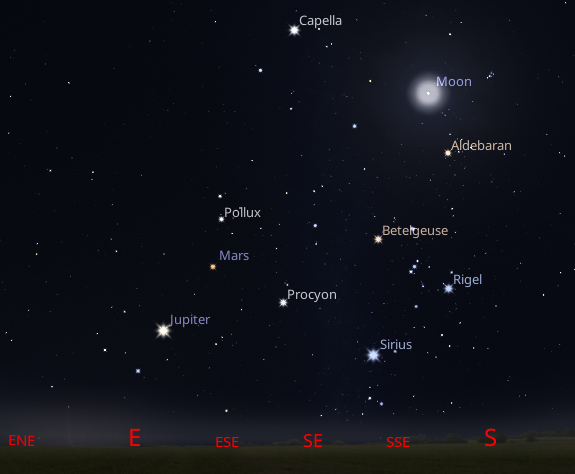
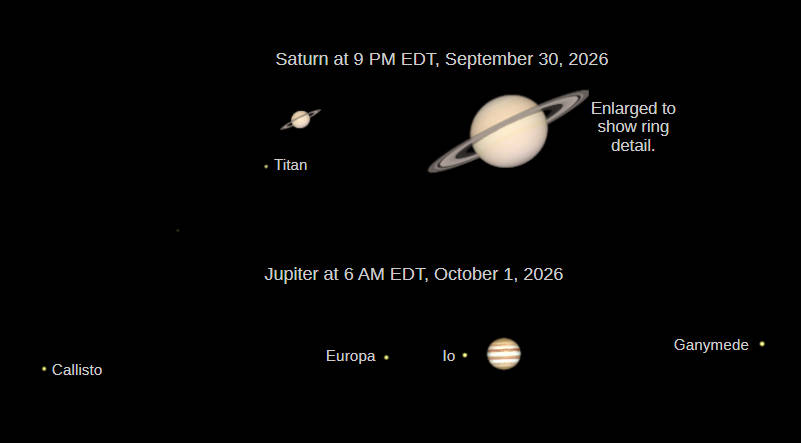
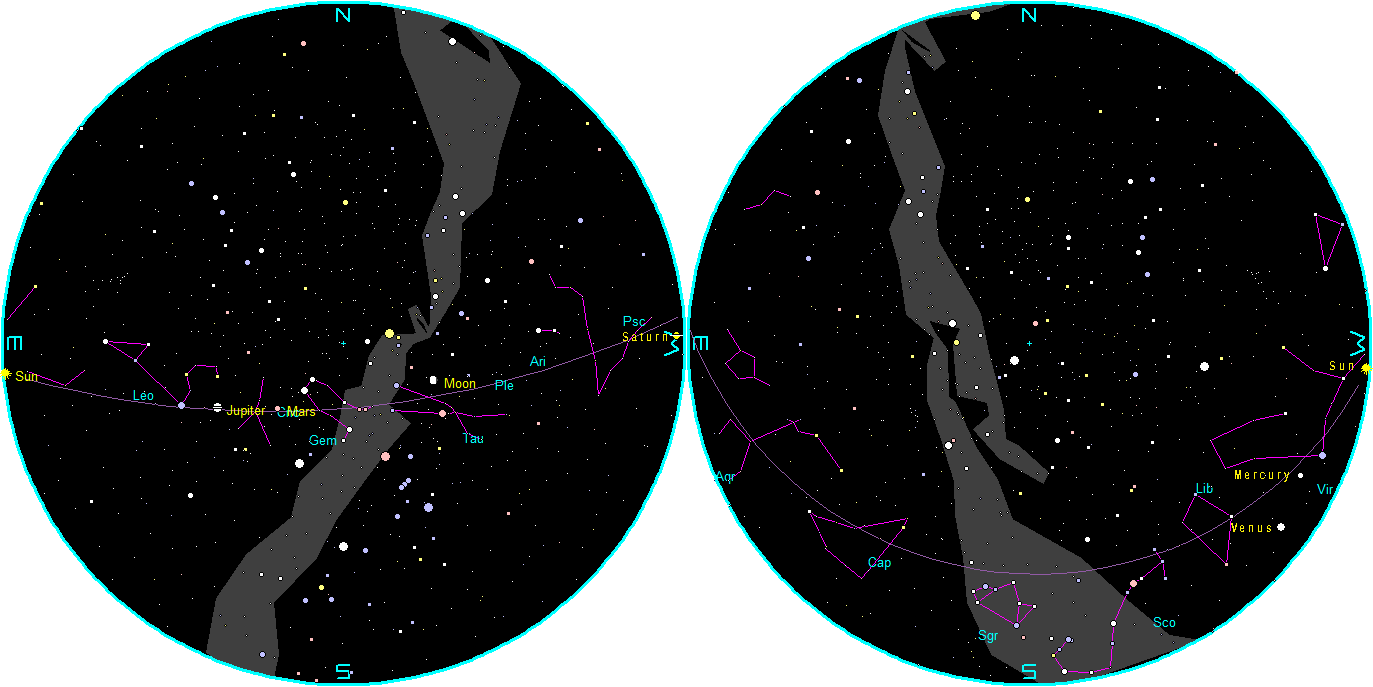
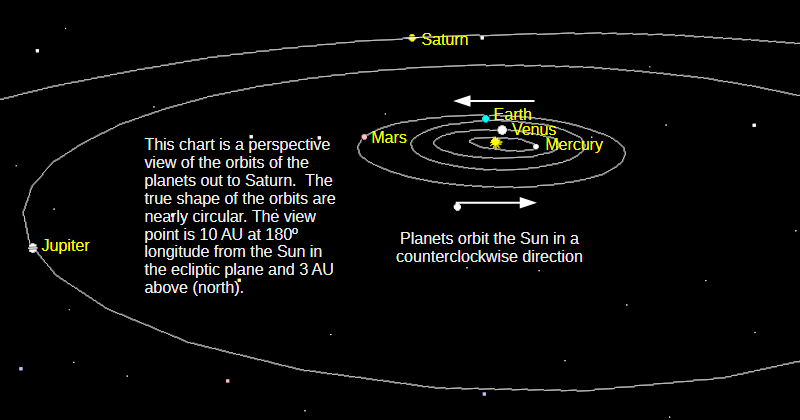
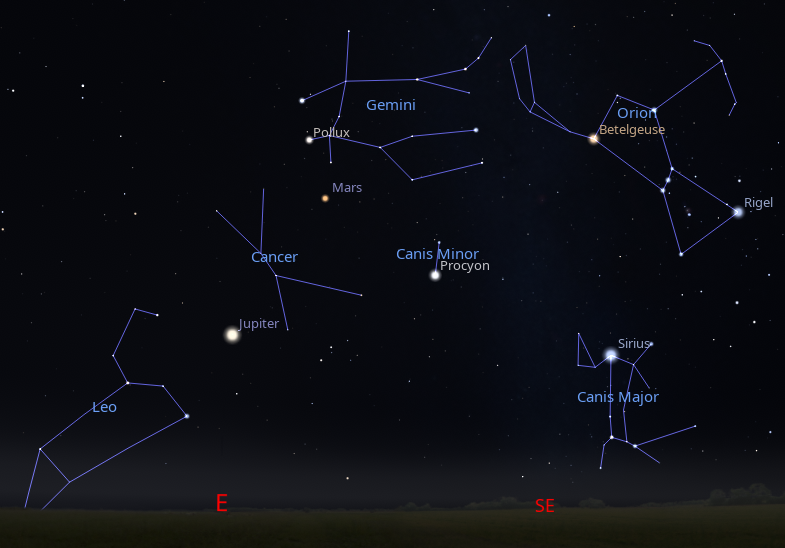
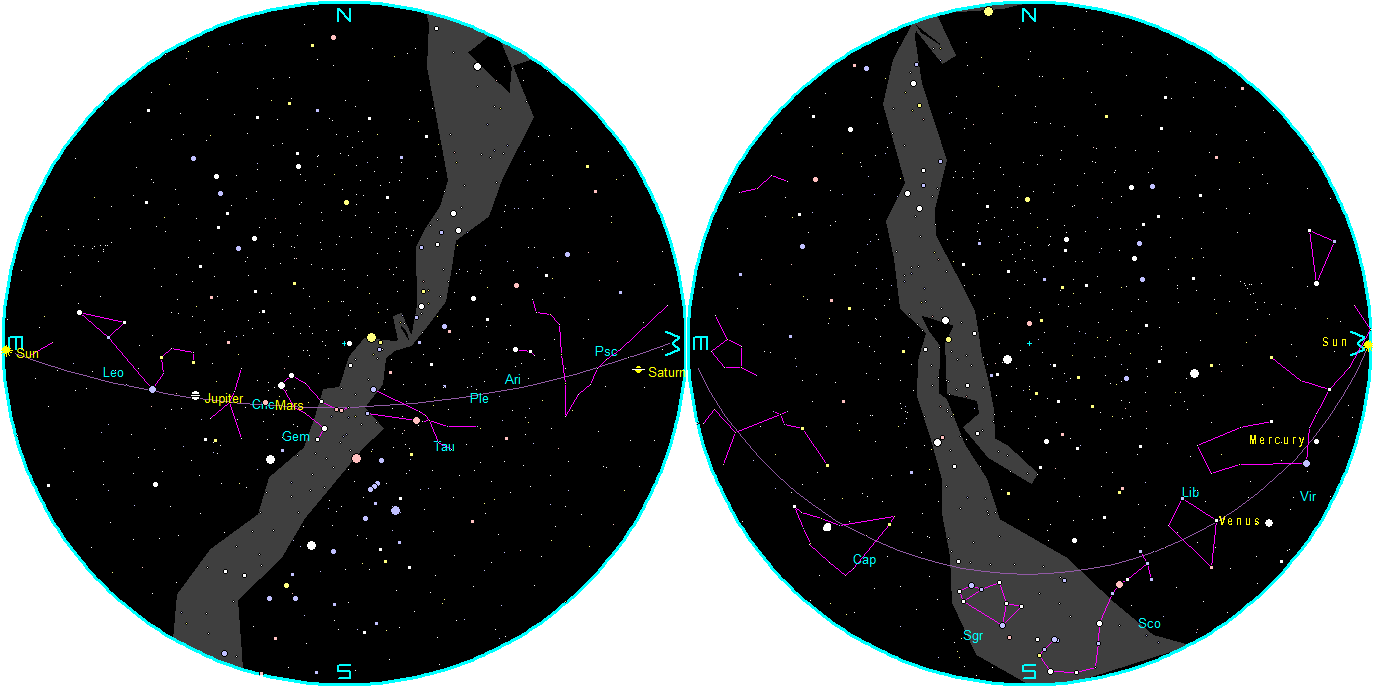
Let’s take our weekly look at the whereabouts of the naked-eye planets. Venus, now is too close to the horizon at sunset to easily spot. At sunset Venus will be only 4º above the horizon at sunset and will set at 7:52 PM. We will await its dramatic reappearance in the morning sky by early November. Saturn will be in the eastern sky as it gets dark. It is the brightest starlike object low in that direction. It will be below the four stars that make large distinctive pattern, that marks the body of Pegasus the flying horse, called the Great Square. At 6 AM, Jupiter and Mars will in the east. Jupiter is brightest and while red Mars will be above and just below and nearly in line with Castor and Pollux of Gemini.
The astronomical event times given in this blog are for the Traverse City/Interlochen area of Michigan (Lat 44.7° N, Long 85.7° W; EDT, UT – 4 hours) unless stated otherwise. Times will be different for other locations.
Addendum
Ephemeris: 09/23/2026 – Where did Venus go?
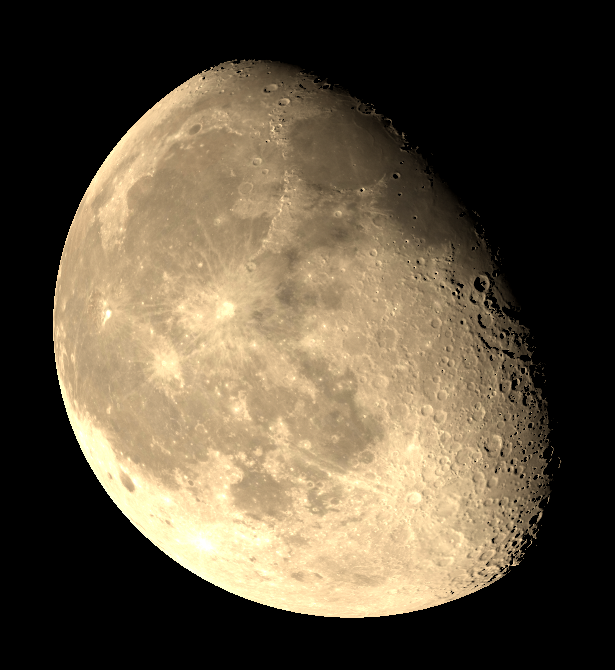
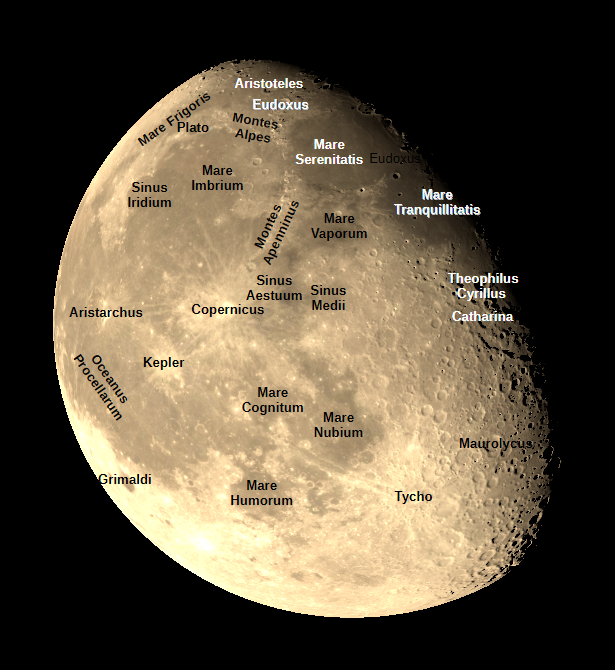
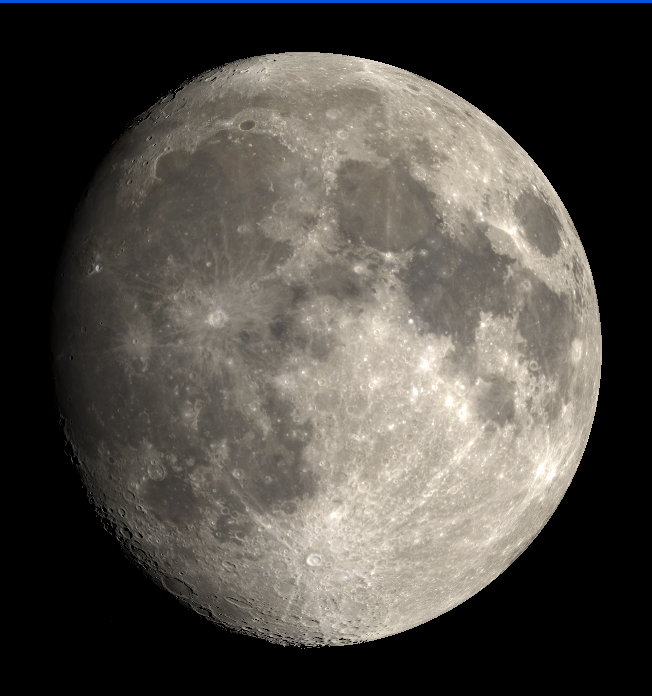
This is Ephemeris for Wednesday, September 23rd. Today the Sun will be up for 12 hours and 6 minutes, setting at 7:38, and it will rise tomorrow at 7:32. The Moon, 3 days before full, will set at 5:08 tomorrow morning.
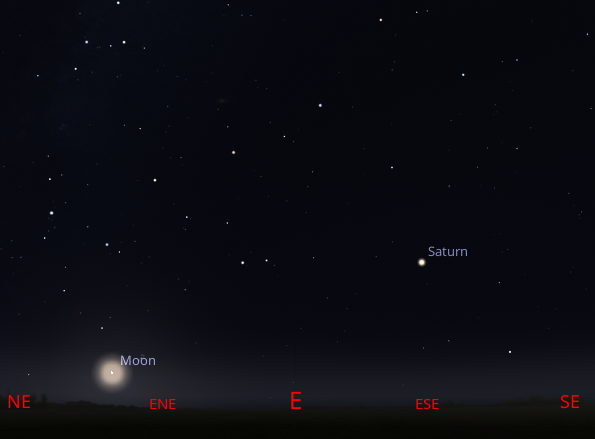
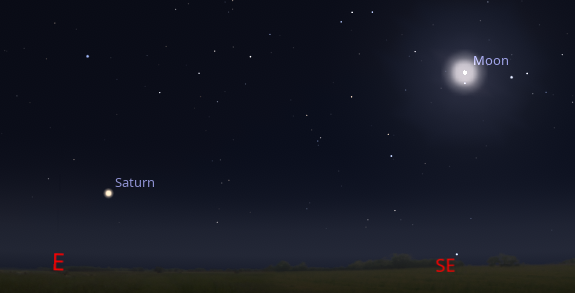
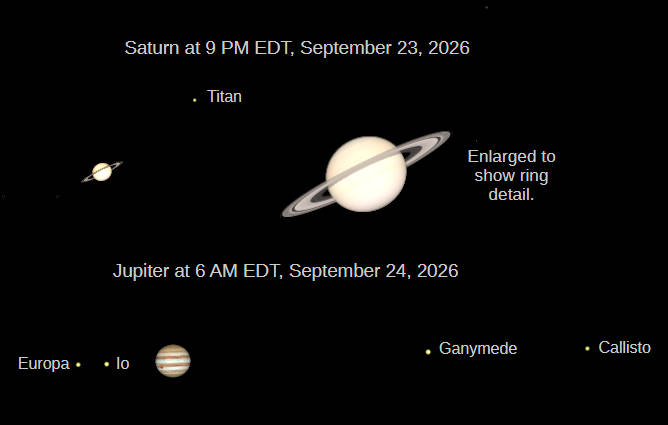
Let’s take our weekly look at the whereabouts of the naked-eye planets. Venus, now is too close to the horizon at sunset to easily spot. At sunset Venus will be only 5º above the horizon at sunset and will set at 8:25 PM. We will await its dramatic reappearance in the morning sky in early November. Saturn will be in the eastern sky as it gets dark. It is the brightest starlike object low in that direction. It will be below the four stars that make large distinctive pattern, that marks the body of Pegasus the flying horse, called the Great Square of Pegasus. At 6 AM, Jupiter will be due east. Jupiter is brightest and lowest while Mars will be just below and nearly in line with Castor and Pollux of Gemini.
The astronomical event times given in this blog are for the Traverse City/Interlochen area of Michigan (Lat 44.7° N, Long 85.7° W; EDT, UT – 4 hours) unless stated otherwise. Times will be different for other locations.
Addendum
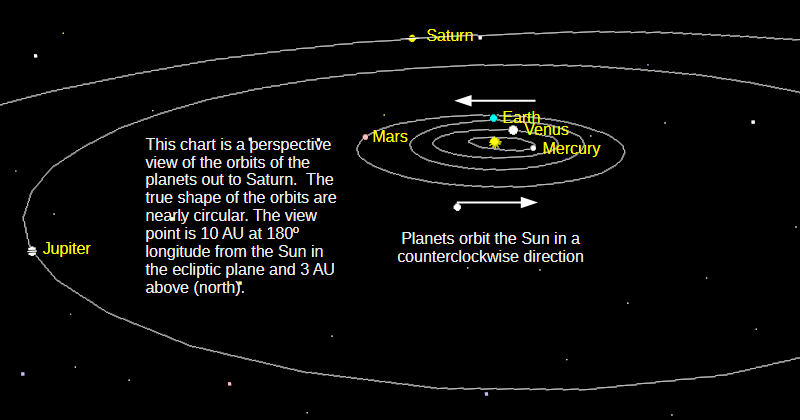
Ephemeris: 09/16/2026 – Taking our weekly look at the whereabouts of the naked-eye planets
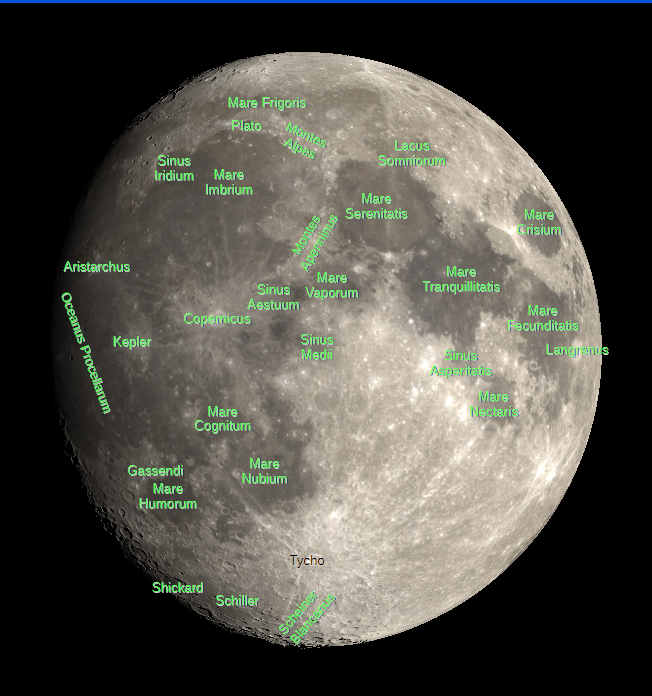
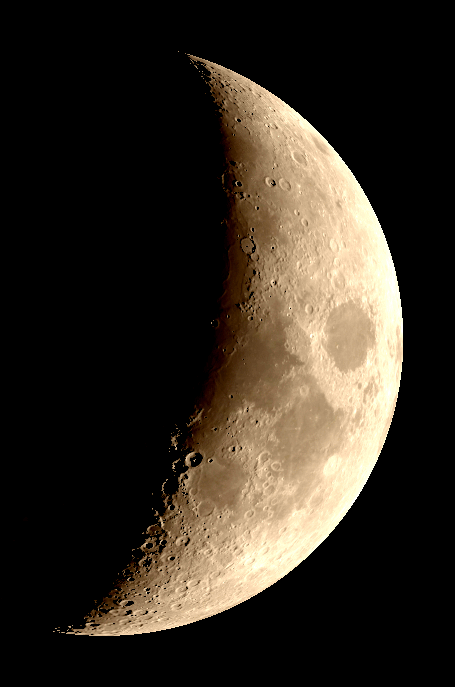
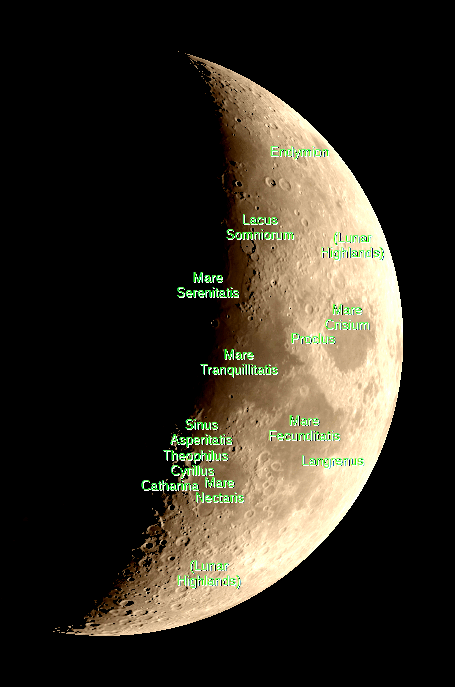
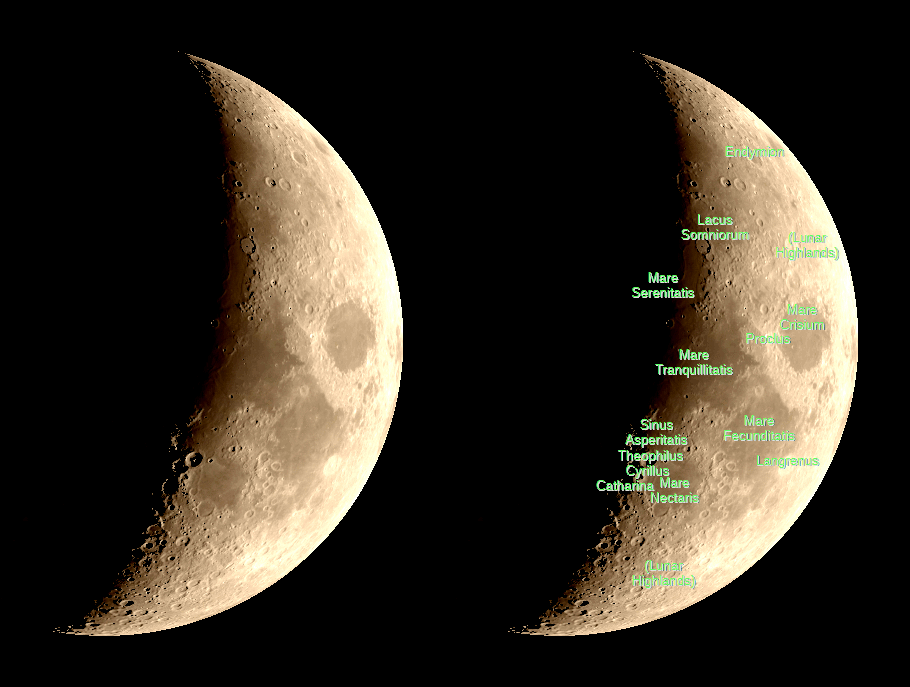
This is Ephemeris for Wednesday, September 16th. Today the Sun will be up for 12 hours and 28 minutes, setting at 7:51, and it will rise tomorrow at 7:24. The Moon, 2 days before first quarter, will set at 10:08 this evening.
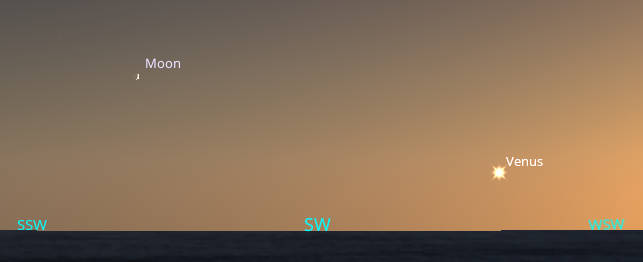
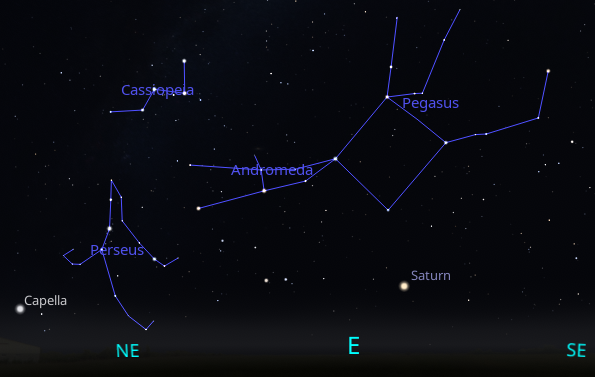
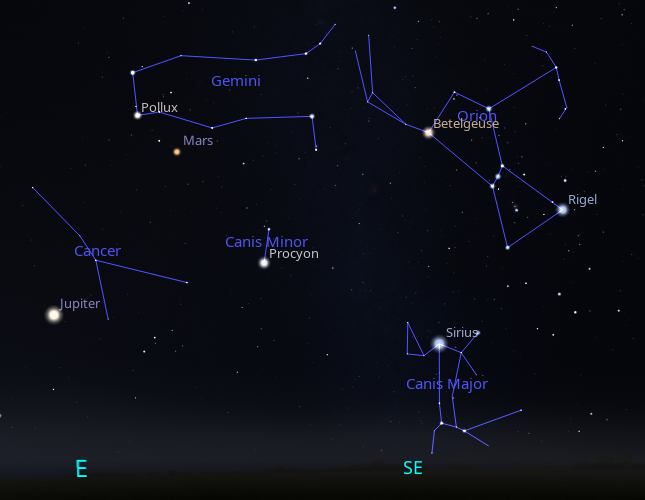
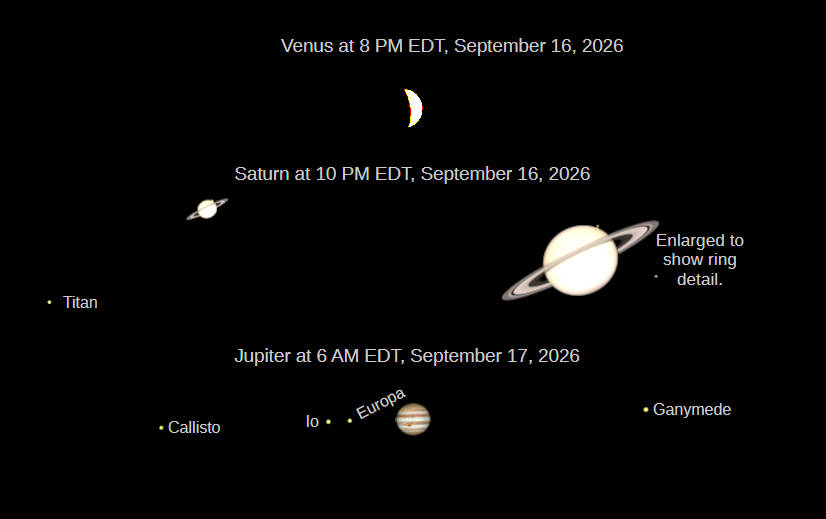
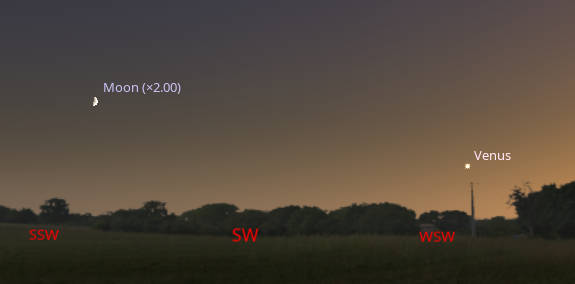
Let’s take our weekly look at the whereabouts of the naked-eye planets. By 8:15 tonight, about a half-hour after sunset, Venus will be spotted very low in the west southwestern sky with the moon above and to the left. Though at a 41º angle from the sun, it’ll only be 4º above the horizon then. A telescope will show a small crescent disk of the planet. It is now rapidly approaching earth in its orbit, at 41.2 million miles (66.3 mil km) away from us. Venus is becoming an ever decreasing crescent as its apparent diameter grows in telescopes. Saturn will rise at 8:47 PM in the east. At 6 AM, Mars and Jupiter will be in the east. Jupiter is brightest and lowest while Mars is just below and right of Pollux, the brightest star in Gemini.
The astronomical event times given in this blog are for the Traverse City/Interlochen area of Michigan (Lat 44.7° N, Long 85.7° W; EDT, UT – 4 hours) unless stated otherwise. Times will be different for other locations.
Addendum
Ephemeris: 09/02/2026 – Taking our weekly look at the whereabouts of the naked-eye planets
This is Ephemeris for Wednesday, September 2nd. Today the Sun will be up for 13 hours and 11 minutes, setting at 8:17, and it will rise tomorrow at 7:07. The Moon, 2 days before last quarter, will rise at 10:33 this evening.
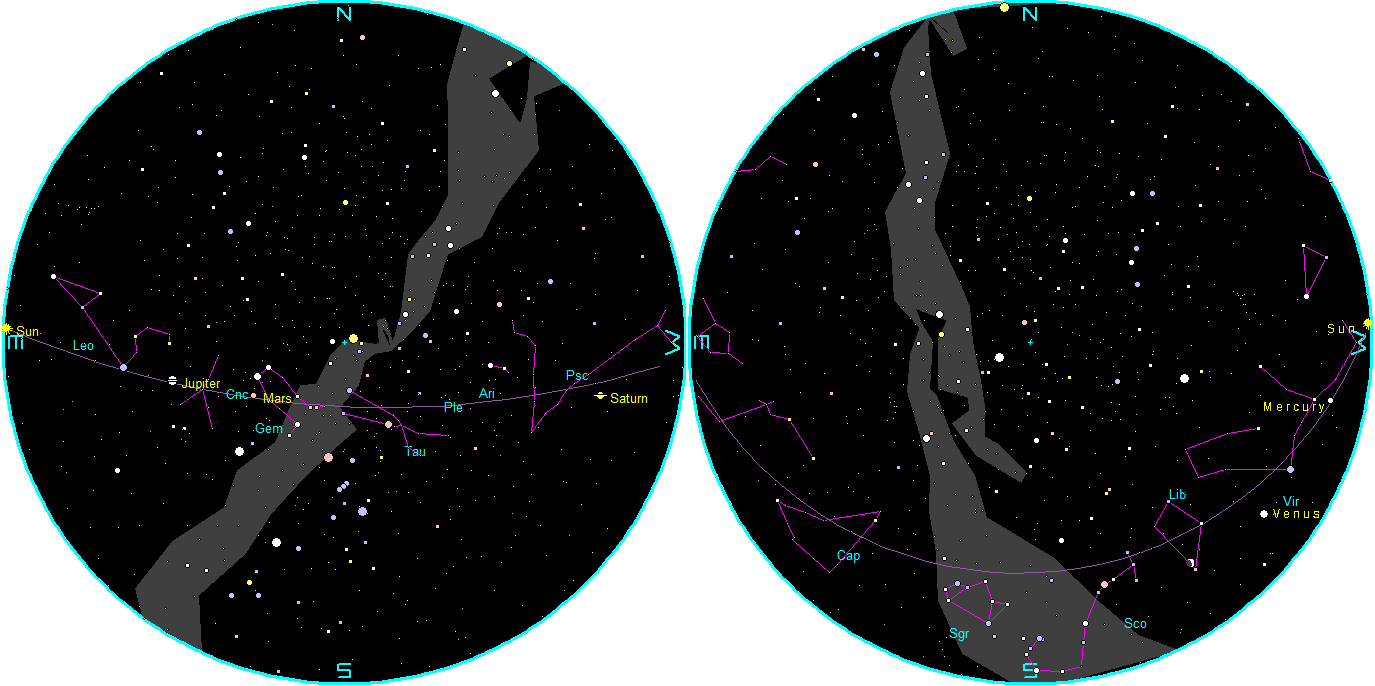
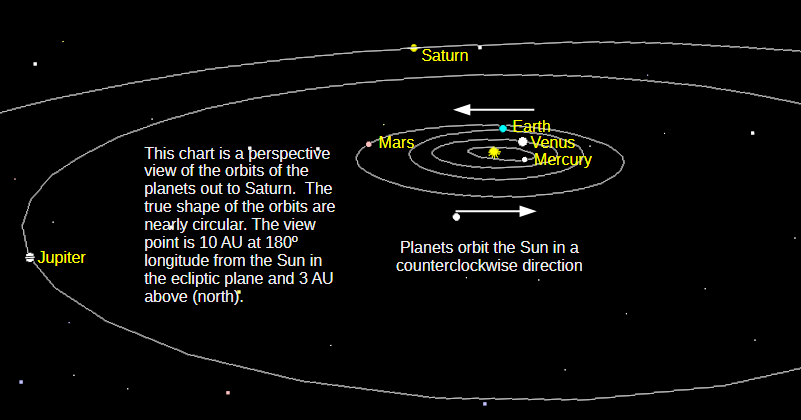
Let’s take our weekly look at the whereabouts of the naked-eye planets. By 8:45 PM tonight, a nearly a half-hour after sunset, Venus will be spotted low in the west southwestern sky. Though at a 44º angle from the sun, it’ll only be 6º above the horizon then. A telescope will show a small crescent disk of the planet. It is now rapidly approaching earth in its orbit, at 50.8 million miles (81.8 mil km) away from us. Venus is becoming an ever decreasing crescent as its apparent diameter grows in telescopes. At 6 AM, Saturn will be alone in the southwest, while Mars and Jupiter will be in the east. Jupiter is brightest and lowest while Mars has the competition of brighter stars in Gemini.
The astronomical event times given in this blog are for the Traverse City/Interlochen area of Michigan (Lat 44.7° N, Long 85.7° W; EDT, UT – 4 hours) unless stated otherwise. Times will be different for other locations.
Addendum
Ephemeris: 08/26/2026 – Taking our weekly look at the whereabouts of the naked-eye planets
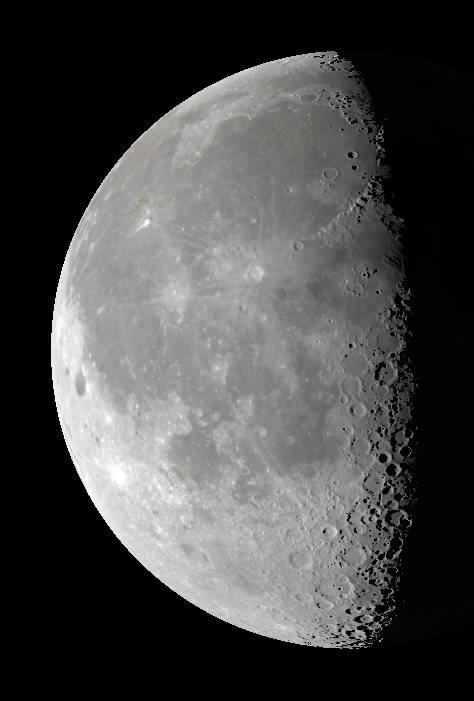
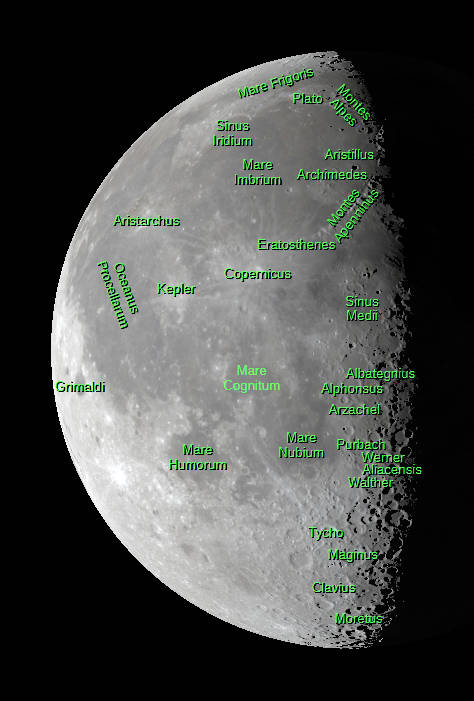
This is Bob Moler with Ephemeris for Wednesday, August 26th. Today the Sun will be up for 13 hours and 31 minutes, setting at 8:30, and it will rise tomorrow at 6:59. The Moon, 2 days before full, will set at 6:15 tomorrow morning.
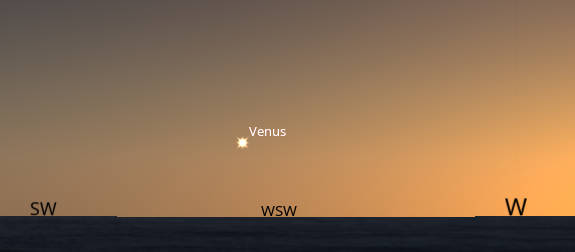
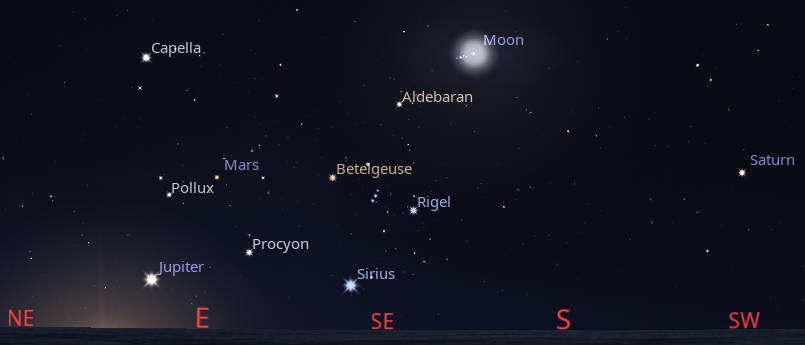
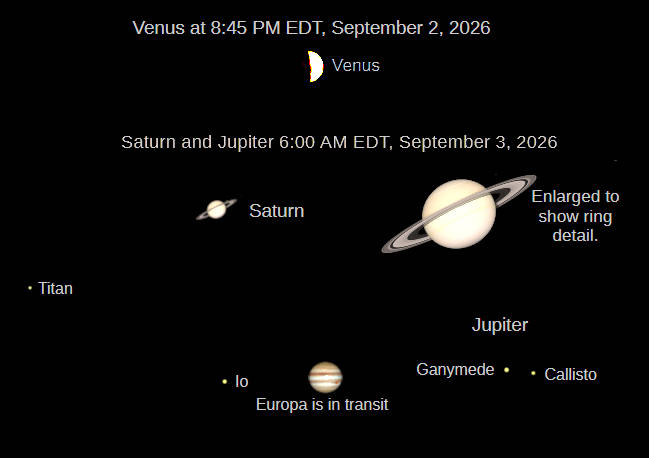
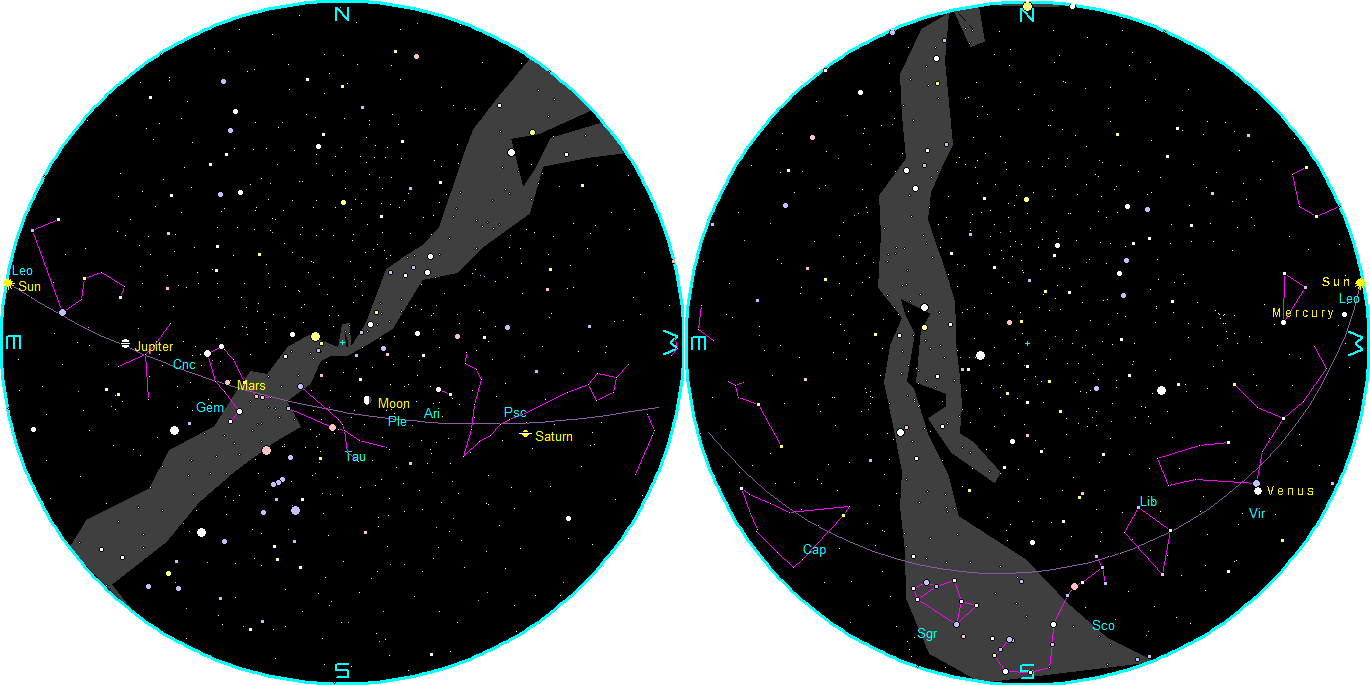
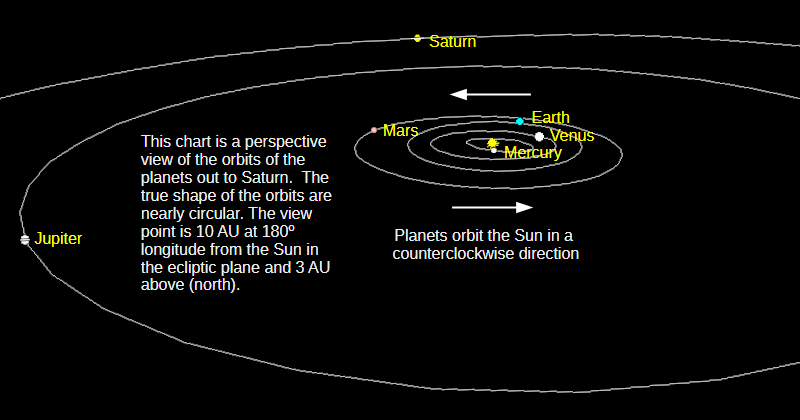
Let’s take our weekly look at the whereabouts of the naked-eye planets. By 9 PM tonight, a half-hour after sunset, Venus will be easily spotted in the west southwestern sky. A telescope will show a small, fat crescent disk of Venus. It is now rapidly approaching earth in its orbit, at 55.8 million miles (89.9 million kilometers) away from us. Venus’ phase is becoming an ever decreasing crescent as its apparent diameter grows in telescopes. At 6 AM, Saturn, Mars and Jupiter will be visible in the southwest, east and east northeast respectively. Saturn is the brightest “star” in its part of the sky, while Mars has the competition of brighter stars, and two brighter red stars of the coming winter evenings, while Jupiter outshines them all.
The astronomical event times given in this blog are for the Traverse City/Interlochen area of Michigan (Lat 44.7° N, Long 85.7° W; EDT, UT – 4 hours) unless stated otherwise. Times will be different for other locations.
Addendum



Ephemeris: 08/19/2026 – Taking a weekly look at the whereabouts of the naked-eye planets
This is Ephemeris for Wednesday, August 19th. Today the Sun will be up for 13 hours and 51 minutes, setting at 8:41, and it will rise tomorrow at 6:51. The Moon, at first quarter today, will set at 11:35 this evening.
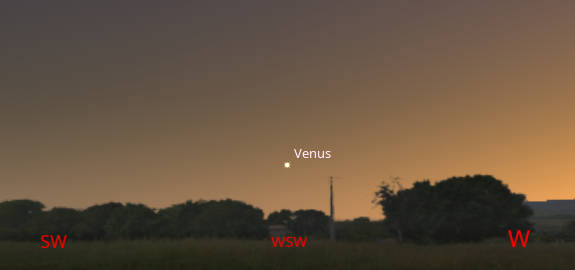
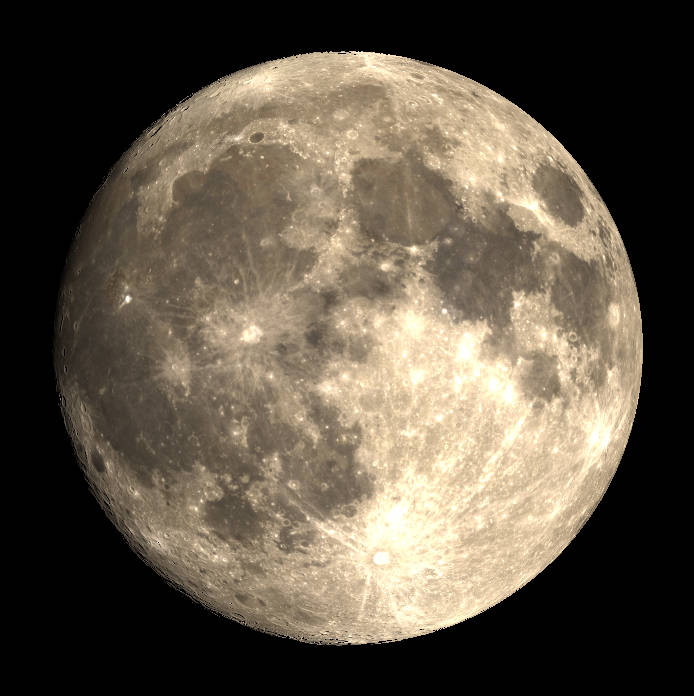
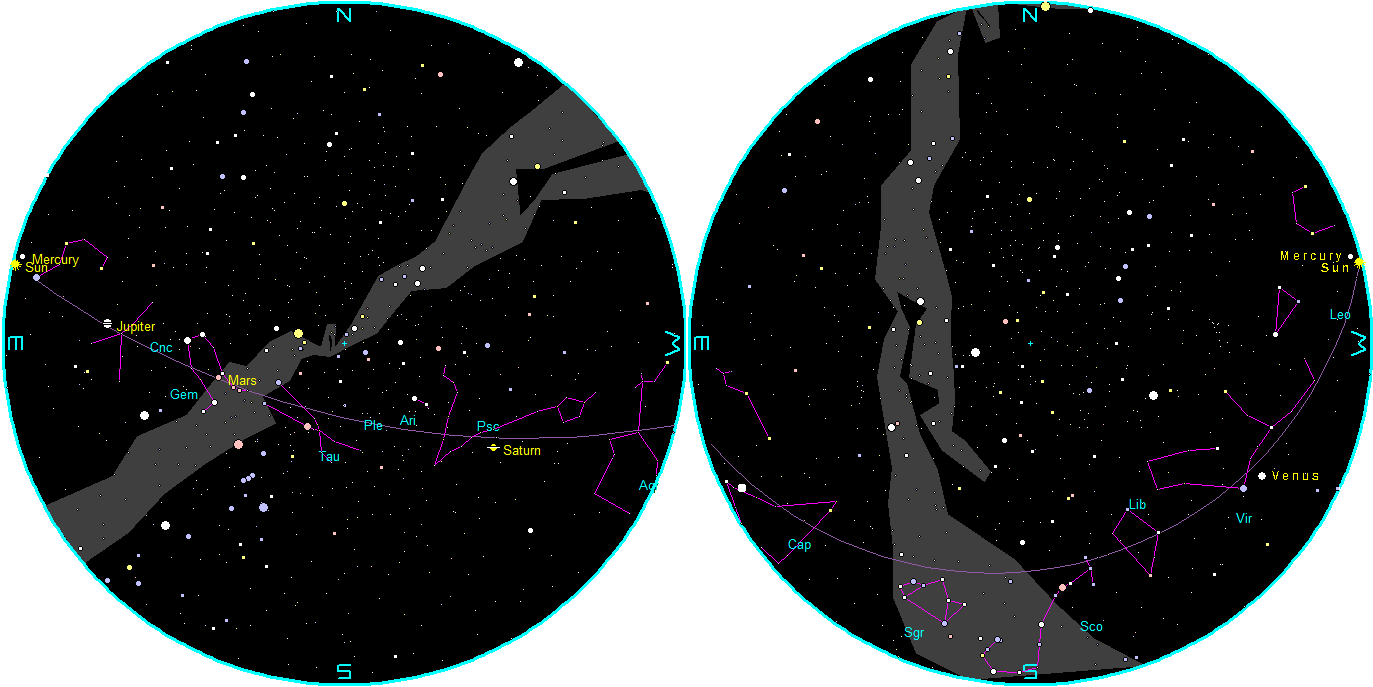
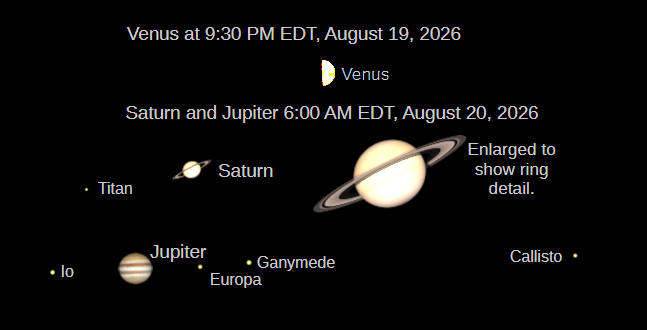
Let’s take our weekly look at the whereabouts of the naked-eye planets. By 9:15 PM tonight, a bit over a half-hour after sunset, Venus will be easily spotted in the western sky. A telescope will show a small, nearly half illuminated disk of Venus. It is now rapidly approaching earth in its orbit, at 60.9 million miles (98.1 mil km) away from us. Venus phase is turning into an ever decreasing crescent as its apparent diameter grows in telescopes. At 6 AM, Saturn, Mars and Jupiter will be visible in the south southwest, southeast and east respectively. Saturn is the brightest “star” in its part of the sky, while Mars has the competition of brighter stars, and two brighter red stars of the coming winter evenings. Jupiter is brightest of all.
The astronomical event times given in this blog are for the Traverse City/Interlochen area of Michigan (Lat 44.7° N, Long 85.7° W; EDT, UT – 4 hours) unless stated otherwise. Times will be different for other locations.
Addendum
Ephemeris: 08/12/2026 – Eclipses, meteors and planets, oh my!
This is Ephemeris for Wednesday, August 12th. Today the Sun will be up for 14 hours and 11 minutes, setting at 8:53, and it will rise tomorrow at 6:42. The Moon is new today, and won’t be visible.
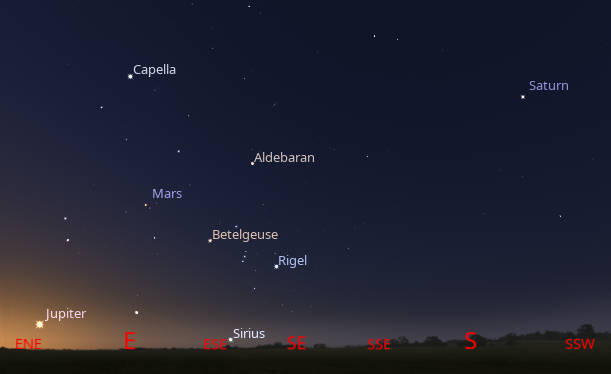
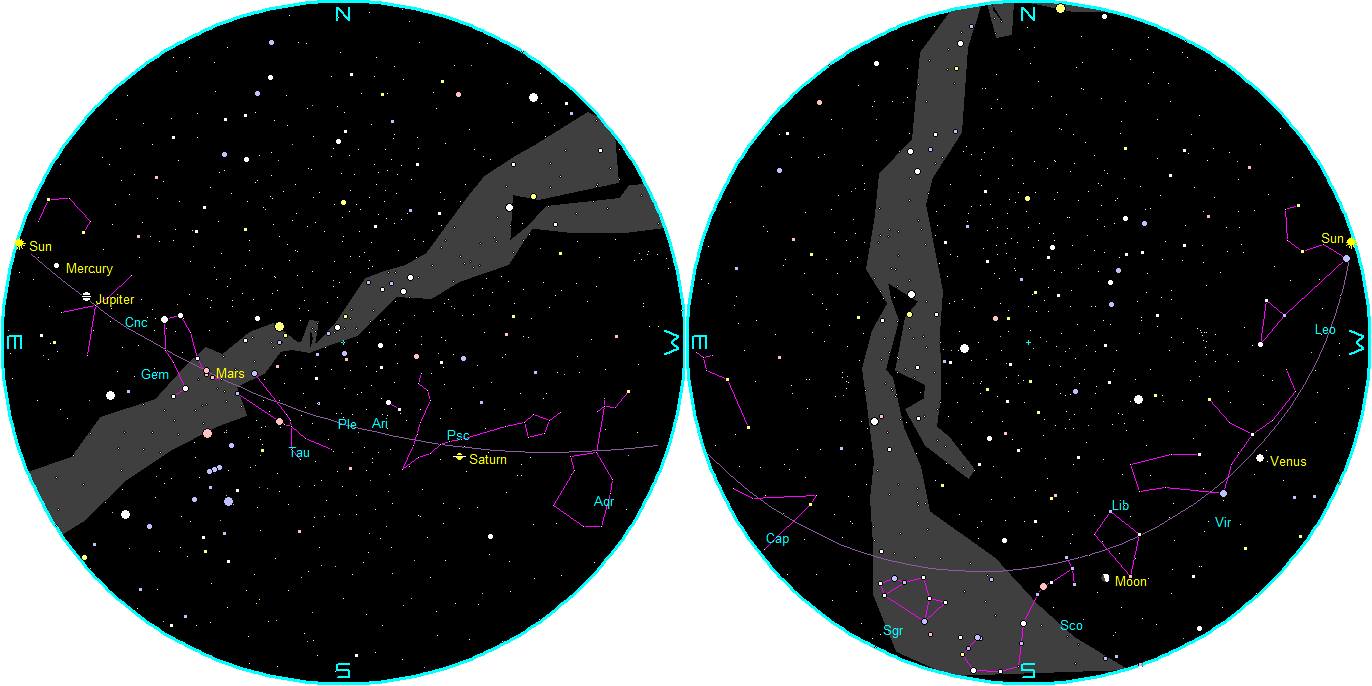
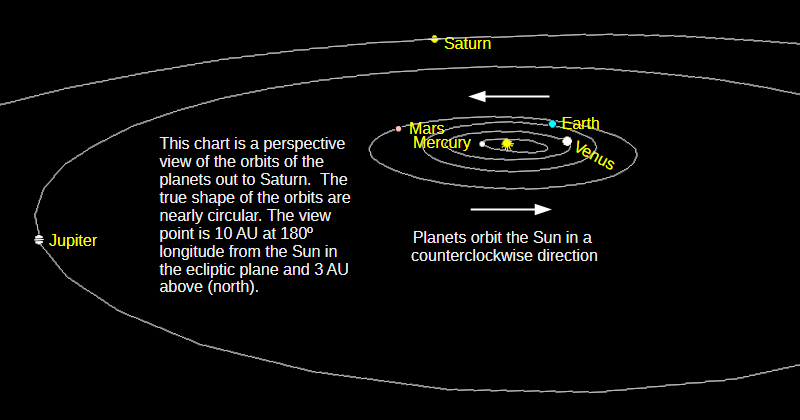
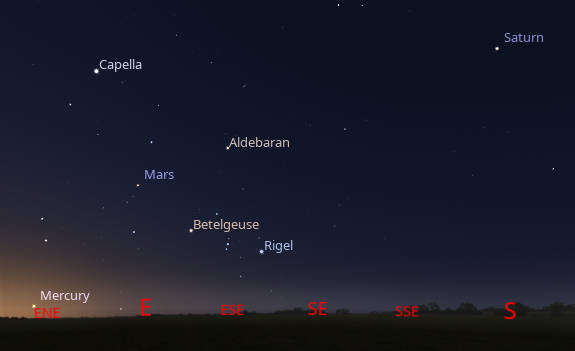
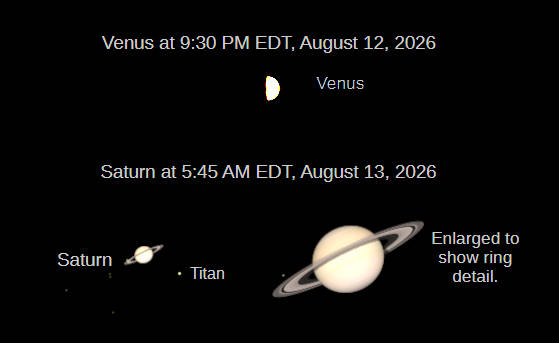
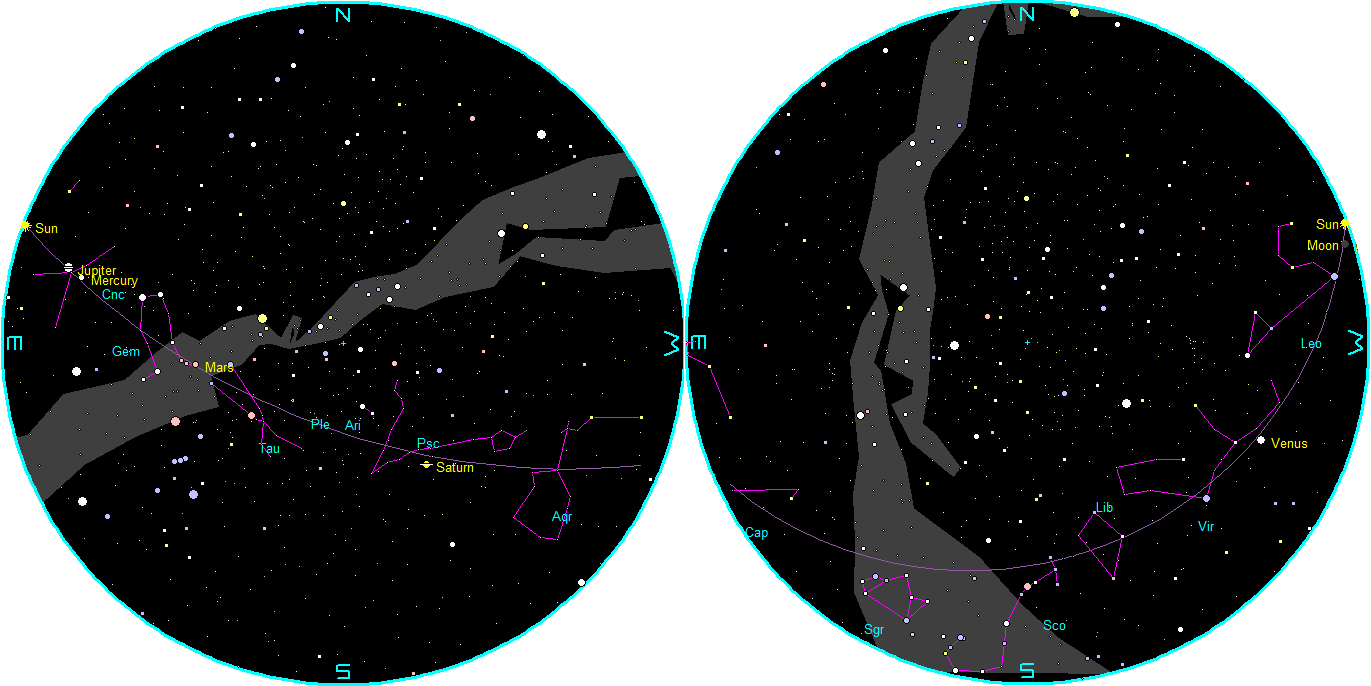
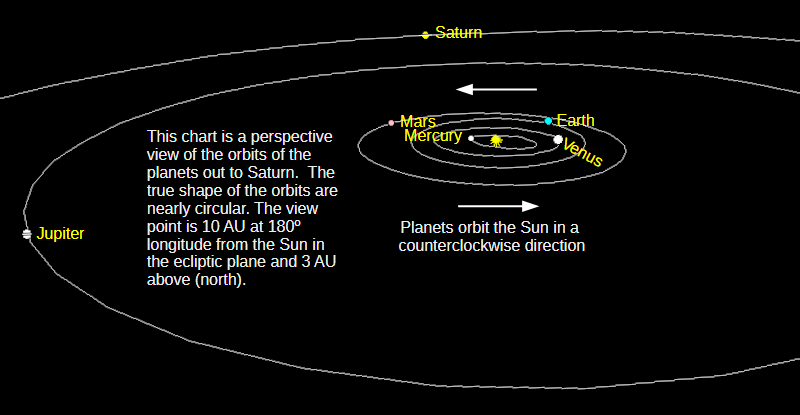
Today’s a double header of astronomical events with a slight eclipse of the sun from around 12:51 to 2:04 this afternoon for Northern Michigan, and the peak of the Perseid meteor shower tonight. Also our weekly look at the naked eye planets. Venus is our brilliant evening star low in the west after sunset. This Saturday Venus will achieve it’s greatest angular separation from the sun. It will then rapidly close the distance to the sun in 2 1/2 months. It will actually be moving around and between the earth and the sun growing a larger but thinner crescent in telescopes. In the morning, Saturn and Mars will be visible in the southeast and east respectively. Mars is competing with the brighter stars of winter, including the orange Aldebaran, and the red giant star Betelgeuse.
The astronomical event times given in this blog are for the Traverse City/Interlochen area of Michigan (Lat 44.7° N, Long 85.7° W; EDT, UT – 4 hours) unless stated otherwise. Times will be different for other locations.
Addendum
More on the solar eclipse here.
More on the Perseid meteor shower here.
Ephemeris: 08/05/2026 – Taking our weekly look at the whereabouts of the naked-eye planets
This is Ephemeris for Wednesday, August 5th. Today the Sun will be up for 14 hours and 29 minutes, setting at 9:03, and it will rise tomorrow at 6:34. The Moon, at last quarter today, will rise at 11:57 this evening.
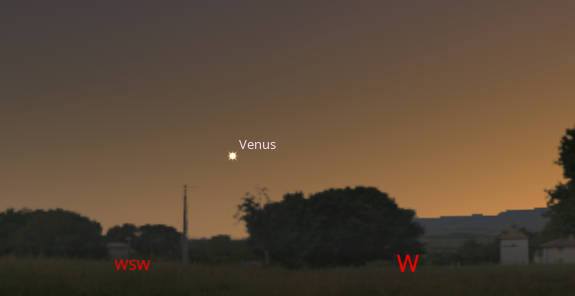
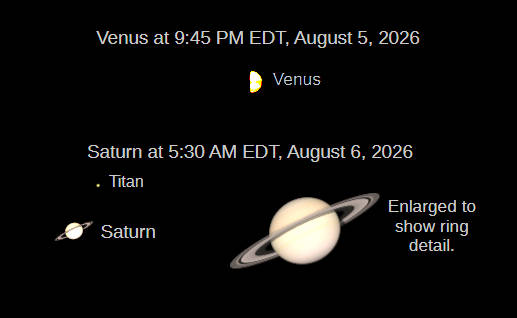
Let’s take our weekly look at the whereabouts of the naked-eye planets. By 9:45 PM tonight, almost three-quarters of an hour after sunset, Venus will be easily spotted in the western sky. A telescope will show a tiny gibbous disc of Venus. It is now closer than the Sun, at 71.3 million miles (114.9 mil km) away from us. We are 10 days from Venus greatest elongation east from the sun of 45.9 degrees. It’s within a degree of that now. In the morning, Saturn, Mars and even Mercury will be visible in the southeast and east respectively. Mars is competing with the brighter stars of winter, including the orange Aldebaran, and the red giant star Betelgeuse. The Earth is now chasing down Mars, which will be closest to the Earth and opposite the sun in the sky next February.
The astronomical event times given in this blog are for the Traverse City/Interlochen area of Michigan (Lat 44.7° N, Long 85.7° W; EDT, UT – 4 hours) unless stated otherwise. Times will be different for other locations.
Addendum

Ephemeris: 07/29/2026 – Taking our weekly look at the whereabouts of the naked-eye planets
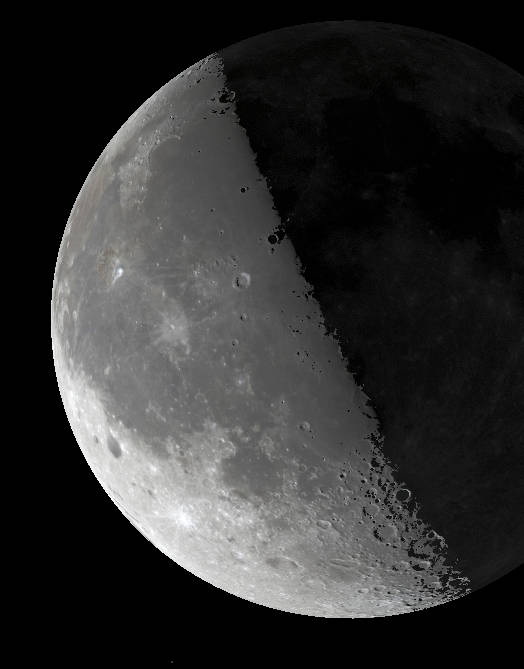
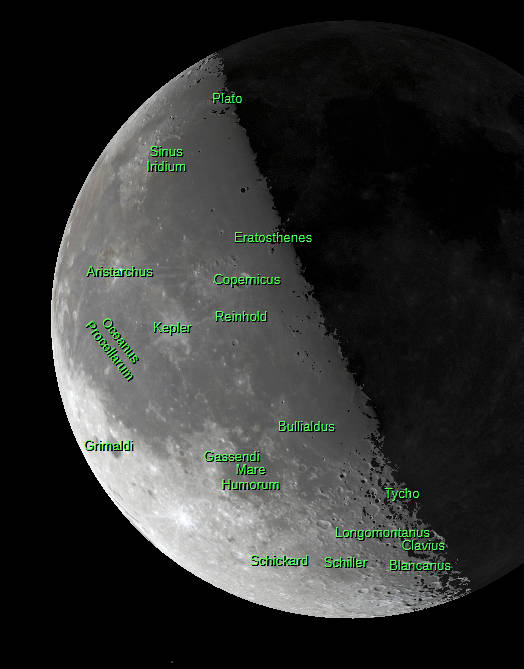
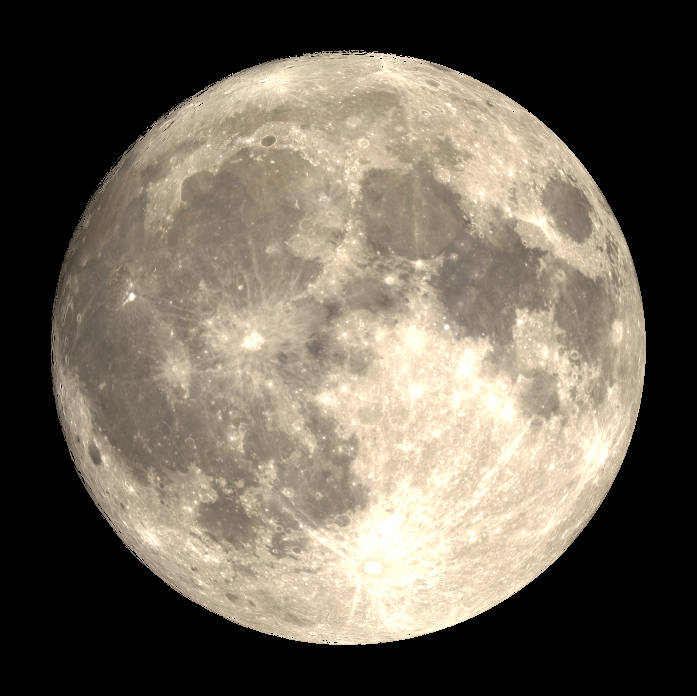
This is Ephemeris for Wednesday, July 29th. Today the Sun will be up for 14 hours and 46 minutes, setting at 9:12, and it will rise tomorrow at 6:26. The Moon, at full today, will rise at 9:30 this evening.
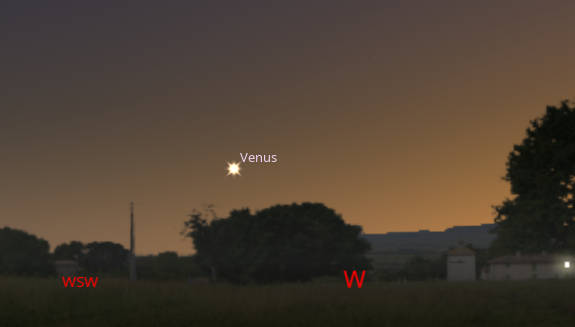
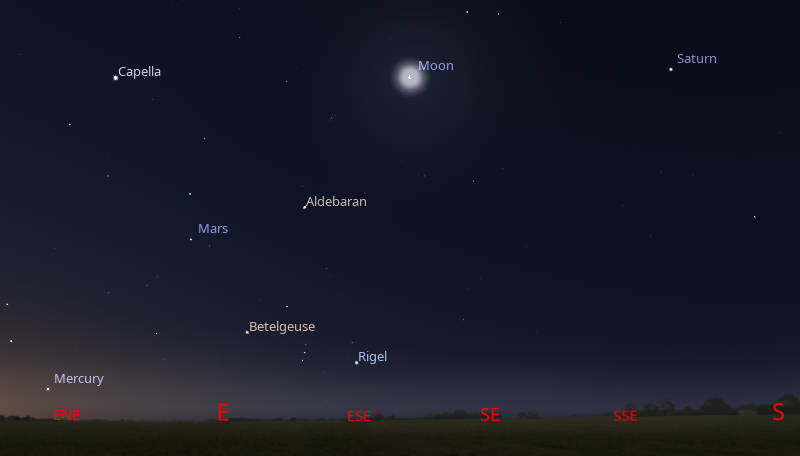
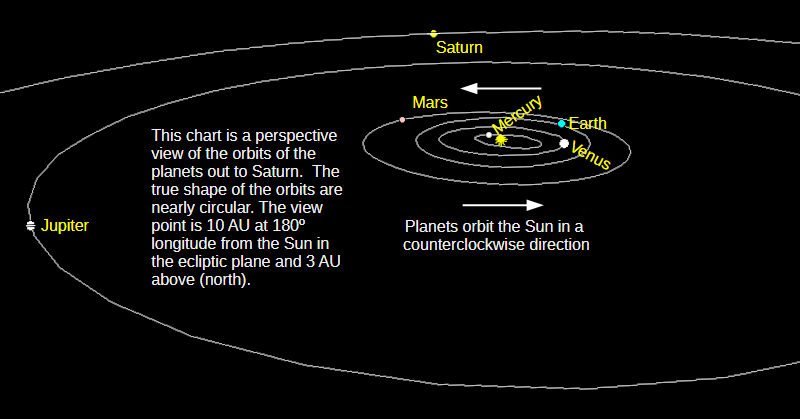
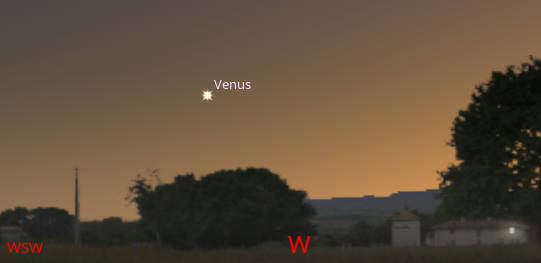
Let’s take our weekly look at the whereabouts of the naked-eye planets. By 9:45 PM tonight, a bit over a half-hour after sunset, Venus will be easily spotted in the western sky. A telescope will show a tiny gibbous disc of Venus. It is now closer than the Sun, at 76.5 million miles (123.3 mil km) away from us. We are 18 days from Venus greatest elongation east from the sun of 45.9 degrees. It’s within a degree of that now. In the morning, Saturn and Mars will be visible in the southeast and east respectively. Mars is competing with the brighter stars of winter, including the orange Aldebaran, and the red giant star Betelgeuse. The Earth is now chasing down Mars, which will be closest to the Earth and opposite the sun in the sky next February.
The astronomical event times given in this blog are for the Traverse City/Interlochen area of Michigan (Lat 44.7° N, Long 85.7° W; EDT, UT – 4 hours) unless stated otherwise. Times will be different for other locations.
Addendum
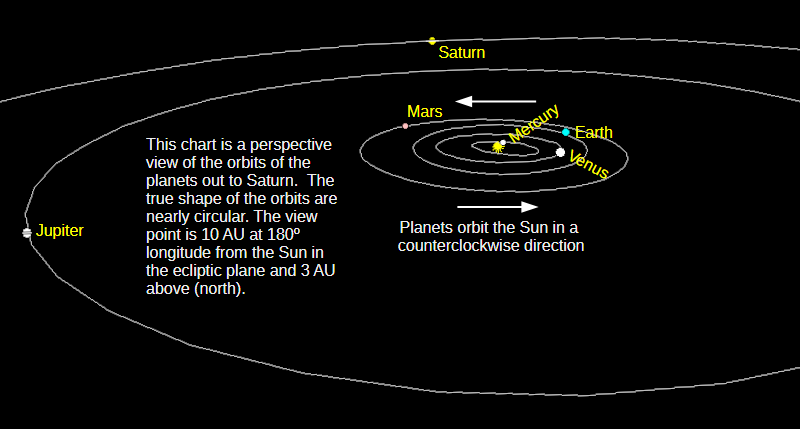
Ephemeris: 07/22/2026 – Taking our weekly look at the whereabouts of the naked-eye planets
This is Ephemeris for Pi Approximation Day, Wednesday, July 22nd, that is 22/7ths. Today the Sun will be up for 15 hours and 1 minute, setting at 9:19, and it will rise tomorrow at 6:19. The Moon, 1 day past first quarter, will set at 1:04 tomorrow morning.
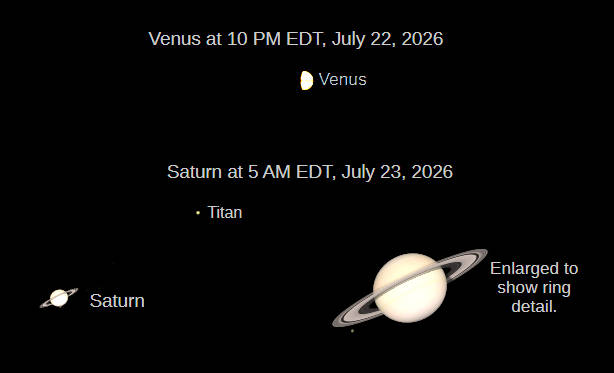
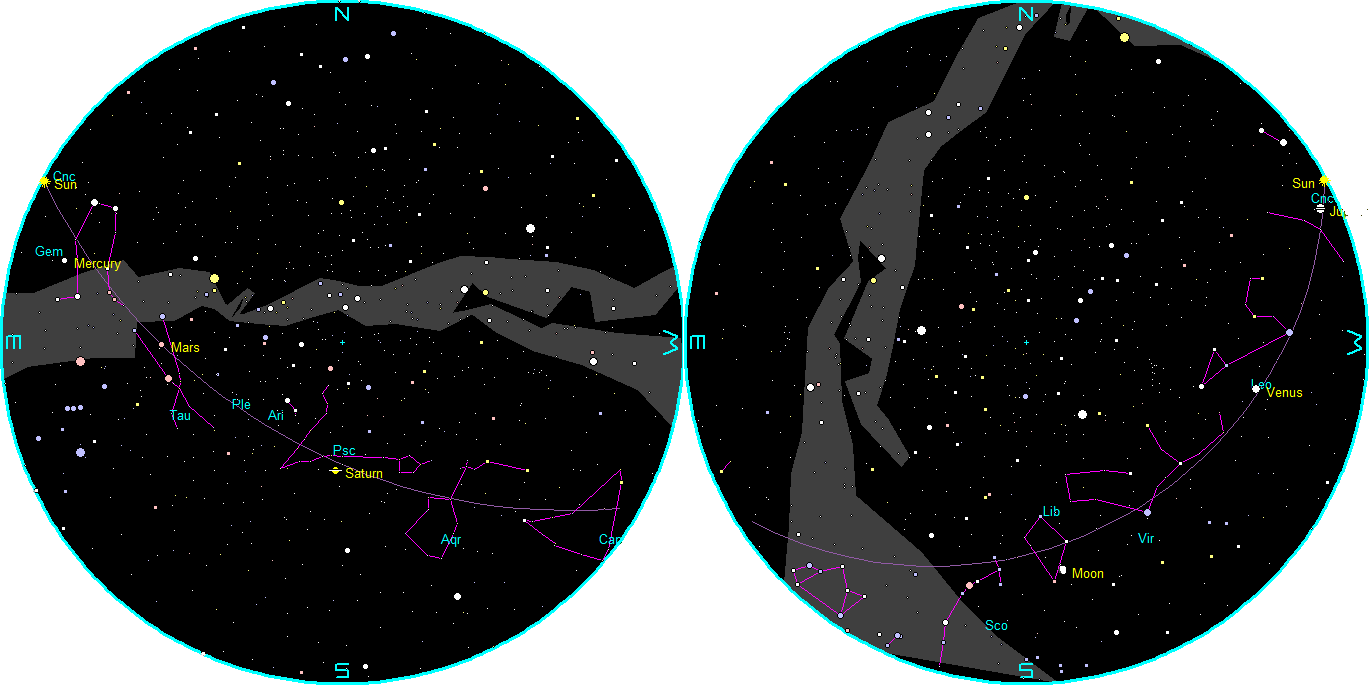
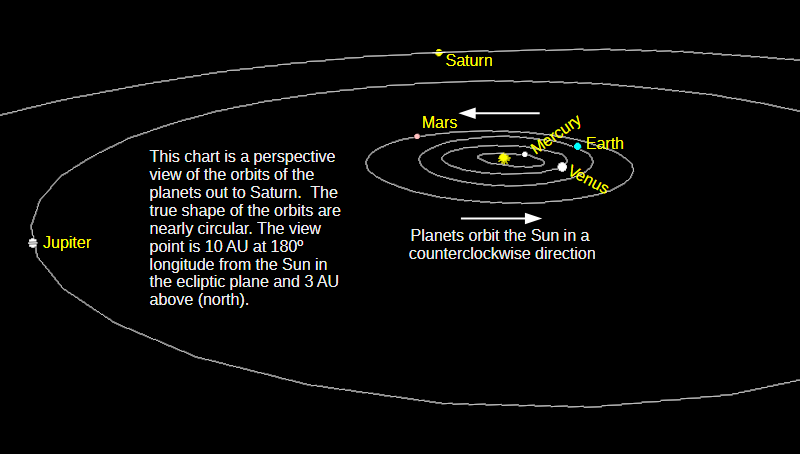
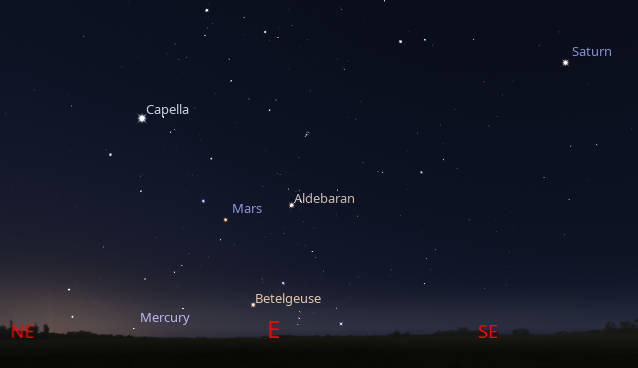
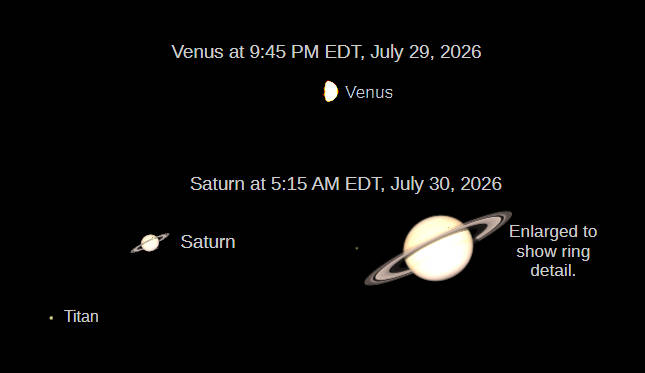
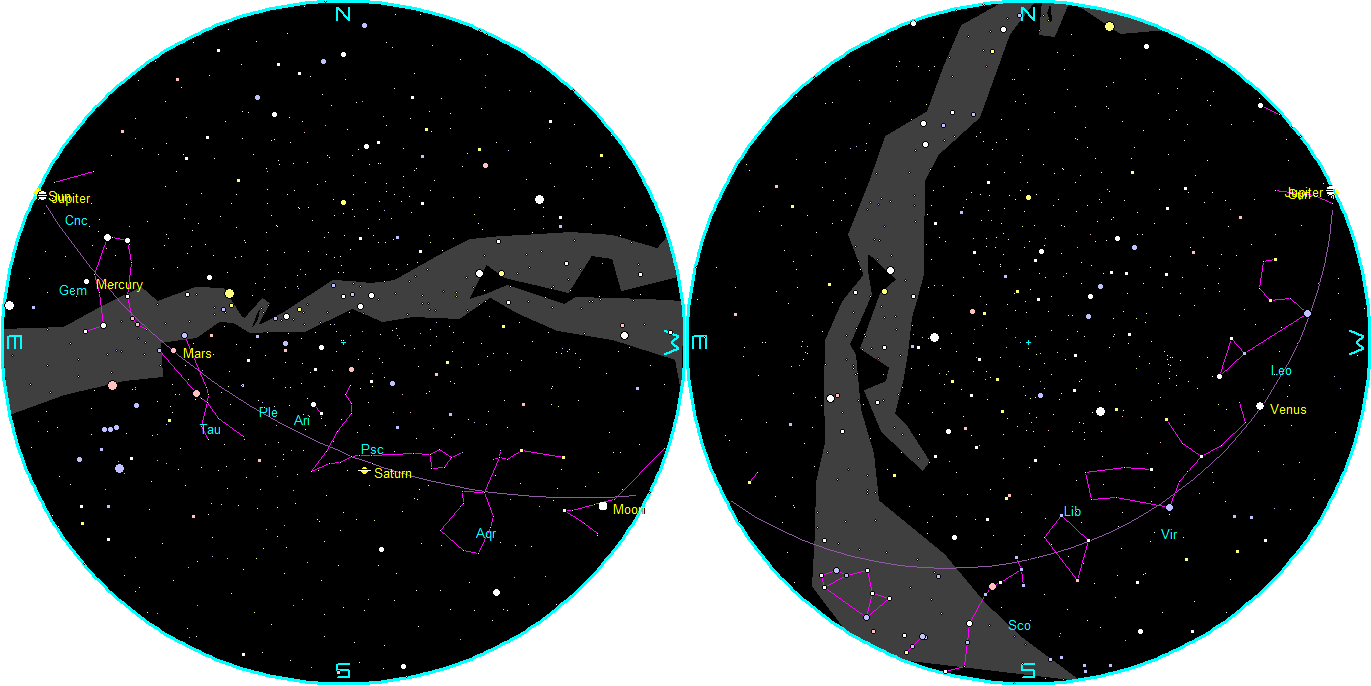
Let’s take our weekly look at the whereabouts of the naked-eye planets. By 9:45 PM tonight, nearly a half-hour after sunset, Venus will be easily spotted in the western sky. A telescope will show a tiny gibbous disc of Venus. It is now closer than the Sun, at 81.8 million miles (131.6 mil km) away from us. Over the next nearly 3 months it will be moving closer to us and becoming much larger. In the morning, Saturn and Mars will be visible, in the southeast and east respectively. The Earth is now chasing down Mars, and later this year the launch window will open to send spacecraft to the Red Planet. Mars will be closest to the Earth and opposite the sun in the sky next February.
The astronomical event times given in this blog are for the Traverse City/Interlochen area of Michigan (Lat 44.7° N, Long 85.7° W; EDT, UT – 4 hours) unless stated otherwise. Times will be different for other locations.
Addendum