09/28/2020 – Ephemeris – A new sunspot cycle has started
This is Bob Moler with Ephemeris for Monday, September 28th. Today the Sun will be up for 11 hours and 50 minutes, setting at 7:27, and it will rise tomorrow at 7:38. The Moon, 3 days before full, will set at 5:06 tomorrow morning.
Word has come down from NOAA, the National Oceanic and Atmospheric Administration that the new solar or sunspot cycle has definitely started as of last December. The length of a sunspot cycle is about 11 years and may vary in length from one cycle to the next. The peak in sunspot numbers isn’t expected until 2025. The intensity of the cycle, that is numbers of sunspots around peak are expected to be about the same as the last cycle, about 150 observed daily. Each cycle is different and not really wholly predictable. Fewer spots means fewer solar flares and coronal mass ejections and less worry for satellite owners and power companies, and fewer displays of the northern lights for us.*
The event times given are for the Traverse City/Interlochen area of Michigan. They may be different for your location.
Addendum
* I didn’t have time to add that we will have more cosmic rays penetrate the heliosphere, the magnetic bubble that protects us from damaging particles produced by high energy events in the universe. We’re at a solar minimum now, so cosmic ray flux is high. With a weak sunspot or solar activity cycle cosmic ray flux will not dip too much.
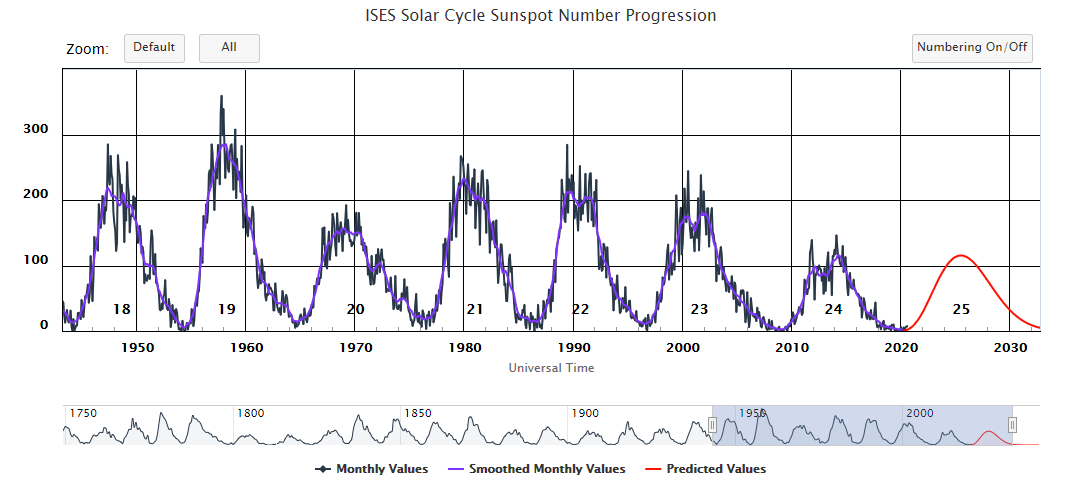
Sunspot numbers from solar cycle 19 to the prospective cycle 25. Credit: NOAA NWS Space Weather Prediction Center https://www.swpc.noaa.gov/products/solar-cycle-progression
I came of age, astronomically speaking, during cycle 19, the most active peak since the 1779. I saw quite a few displays of the aurora borealis (northern lights) from Grand Rapids, MI 140 miles south from where I now live.
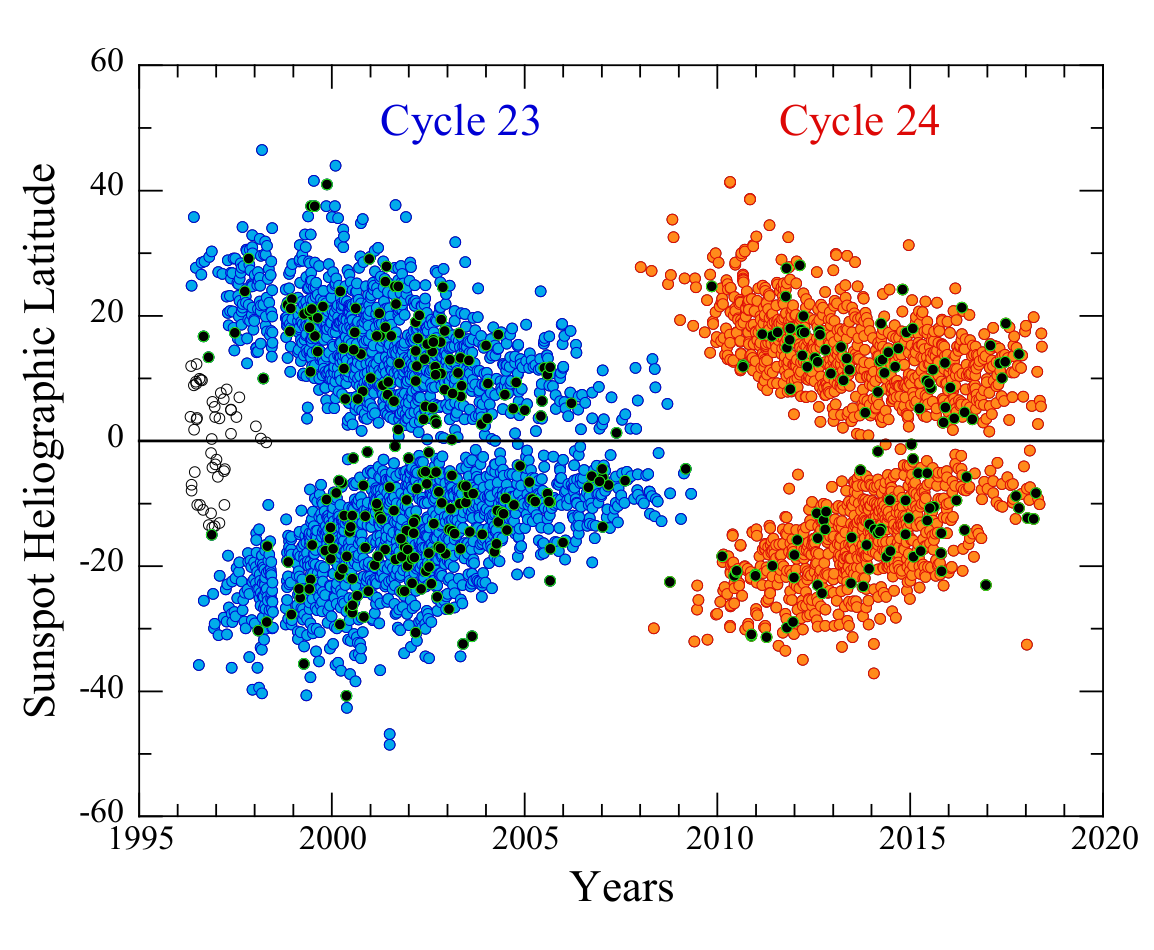
Sunspot butterfly diagram for solar cycles 23 and 24. Sunspots of a new cycle begin to appear at a relatively high latitude on the Sun. Sunspots of the old cycle form close to the equator. There is some overlap of spots from the old cycle seen at the same time as spots from the new cycle.
At one of 2019 summer’s Sun party at Sleeping Bear Dunes National Lakeshore we saw a high latitude sunspot popping up as a precursor to cycle 25. We watched two solar flares from the spot in our hydrogen alpha solar telescopes that afternoon, ejecting short term filaments of hydrogen. It was cool watching it in real time.
 Bob Moler's Ephemeris Blog