Archive
Ephemeris: 09/08/2026 – Where is the Sun heading to?
This is Ephemeris for Tuesday, September 8th. Today the Sun will be up for 12 hours and 52 minutes, setting at 8:06, and it will rise tomorrow at 7:14. The Moon, 2 days before new, will rise at 5:18 tomorrow morning.
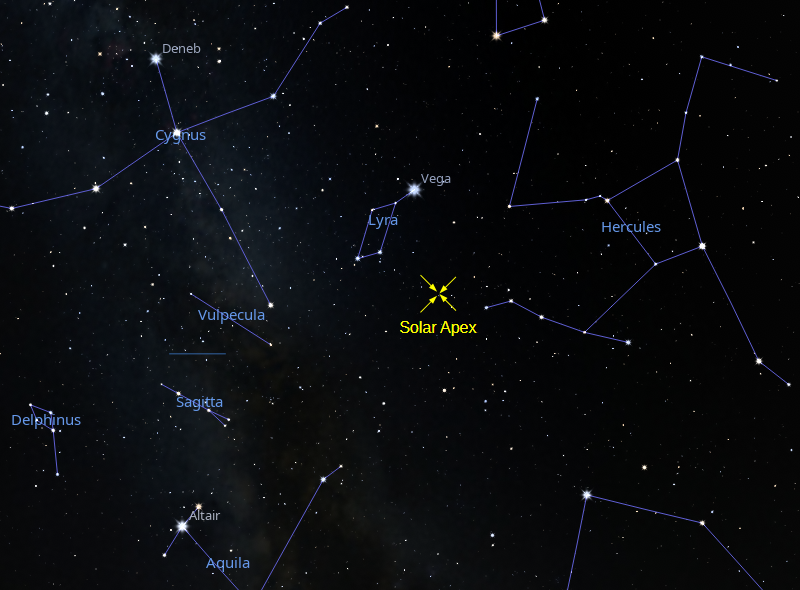
We know that the Earth orbits the sun, but where is the sun going? The sun orbits the center of the Milky Way moving something like 137 miles (220 kilometers) per second in the direction of Cygnus the Swan. It takes about 200 to 250 million years to orbit the center of the galaxy. However, the sun has a motion with respect to the general flow of stars in our neighborhood orbiting the center of the galaxy. Where the sun is heading is it called the solar apex. That point is it just a little bit south of the star Vega which is high in the south in the evening. Vega is the brightest star of this Summer Triangle, which includes Altair to the southeast and Deneb to the east. The sun’s motioned towards the apex that is about 8 miles (13 kilometers) per second.
The astronomical event times given in this blog are for the Traverse City/Interlochen area of Michigan (Lat 44.7° N, Long 85.7° W; EDT, UT – 4 hours) unless stated otherwise. Times will be different for other locations.
Addendum
Ephemeris: 07/03/2025 – The Sun is farthest away today
This is Bob Moler with Ephemeris for Thursday, July 3rd. Today the Sun will be up for 15 hours and 29 minutes, setting at 9:31, and it will rise tomorrow at 6:03. The Moon, 1 day past first quarter, will set at 1:36 tomorrow morning.
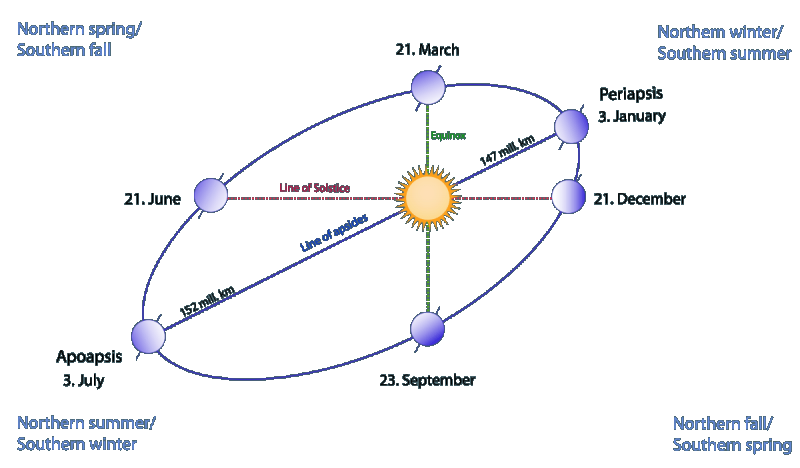
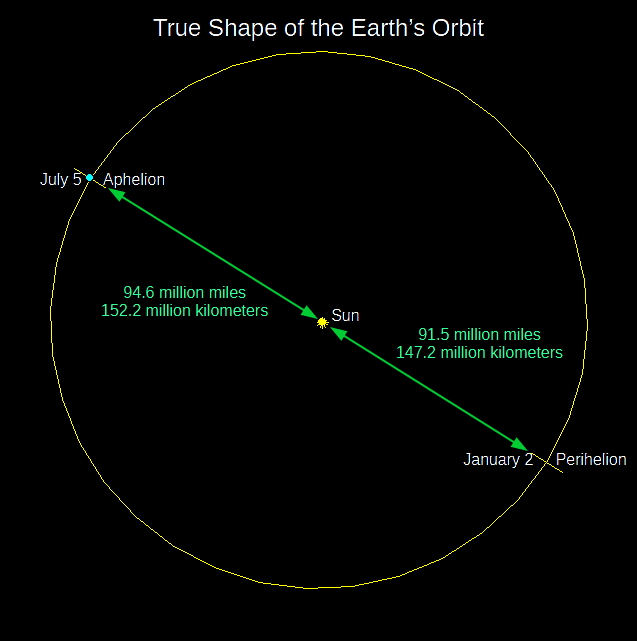
This afternoon at 5:59 PM, the Earth will reach aphelion from the Sun, the farthest it gets from it during the year. Earth will be 94 and a half million miles away from the Sun, a bit farther than our normal 93 million. In a planet’s orbit of the Sun, the Earth is no exception, it moves slowest when farthest from the Sun than when it’s nearest. It doesn’t make much difference in the amount of heat we get from the Sun being only 1½% farther than average. But it makes summer the longest season at 94 days, versus winter’s 89 days. OK, I know it doesn’t feel like it here in Northern Michigan, but count the days between each solstice and the next equinox.
The astronomical event times given in this blog are for the Traverse City/Interlochen area of Michigan (Lat 44.7° N, Long 85.7° W; EDT, UT – 4 hours) unless stated otherwise. Times will be different for other locations.
Addendum
Ephemeris: 11/01/2024 – Grand Traverse Astronomical Society Meeting tonight
This is Ephemeris for Friday, November 1st. The Sun will rise at 8:21. It’ll be up for 10 hours and 9 minutes, setting at 6:30. The Moon is new today, and won’t be visible.
The Grand Traverse Astronomical Society will host its November meeting tonight at 8:00 PM at Northwestern Michigan College’s Joseph H Rogers Observatory. This will be an unstructured meeting, and a good time for anyone interested to ask knowledgeable members anything about the sky or, since Christmas is coming, about what kind of telescope to buy. Afterward, about 9 PM if it’s clear, there will be viewing of the heavens through the observatory’s telescopes, featuring Saturn, Jupiter and the wonders of the Milky Way, including nebulae, open and globular star clusters, containing hundreds to hundreds of thousands of stars. The observatory is located on Birmley Rd. South of Traverse City between Garfield and Keystone roads.
The astronomical event times given are for the Traverse City/Interlochen area of Michigan (EDT, UT – 4 hours). Times will be different for other locations.
Addendum
One of the discussion items will be the currently active sun in how it affects the earth.
Ephemeris: 07/26/2024 – View the Sun from the Sleeping Bear Dunes tomorrow
Sorry, I’ve posted this a bit late.
This is Ephemeris for Friday, July 26th. Today the Sun will be up for 14 hours and 51 minutes, setting at 9:14, and it will rise tomorrow at 6:24. The Moon, 1 day before last quarter, will rise at 12:03 tomorrow morning.
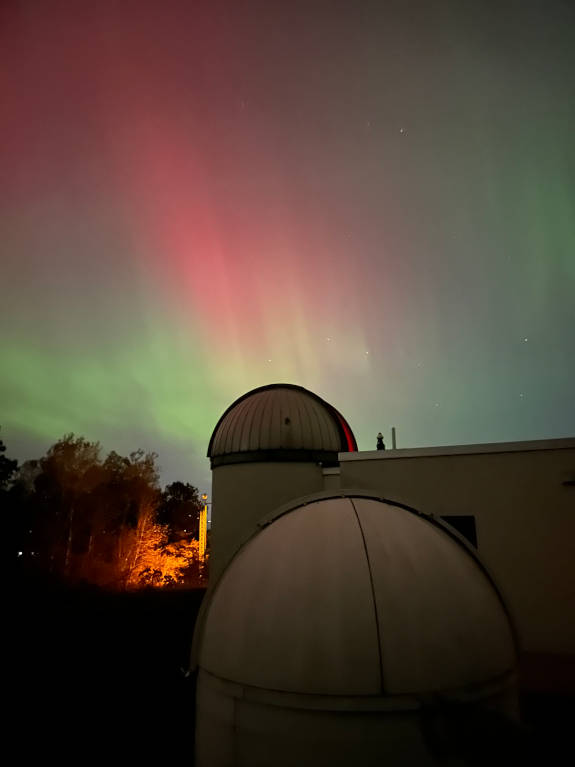
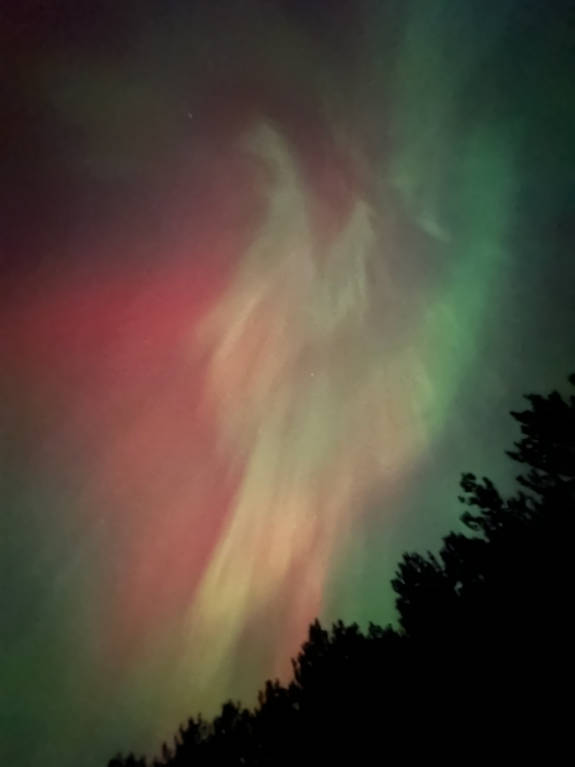
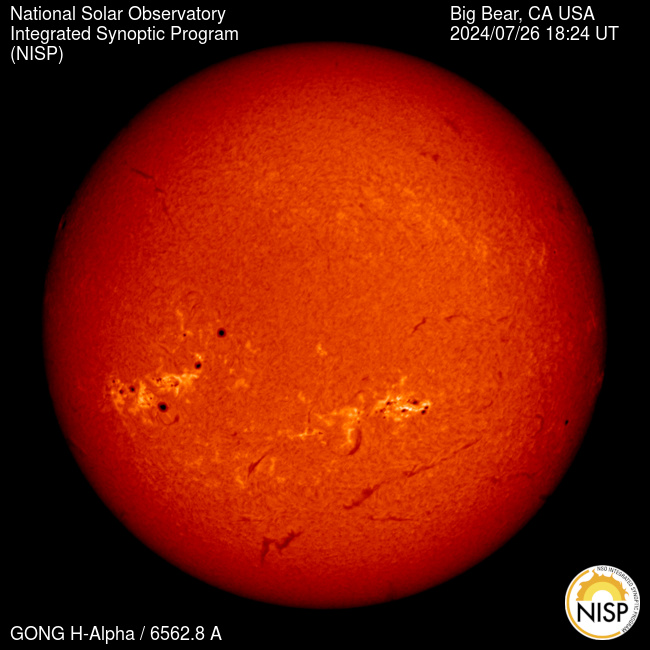
Tomorrow, Saturday, July 27th there will be solar viewing at the Sleeping Bear Dunes National Lakeshore, at the Dune Climb from 3 to 6 PM. Park Rangers will be joined by members of the Grand Traverse Astronomical Society with their specially filtered telescopes to view the sun safely. This is a period of great solar activity. Remember the Northern Lights of last month? Solar filtered telescopes will safely view the surface of the sun, called the photosphere and sunspots, while the society also has two special solar telescopes with which to view the layer of gas above the surface called the chromosphere and prominences which look like flames coming off the chromosphere. This is the last of the two solar observing opportunities this summer.
The astronomical event times given are for the Traverse City/Interlochen area of Michigan (EDT, UT–4 hours). They may be different for your location.
Addendum
Ephemeris: 07/04/2024 – The Earth at aphelion
This is Ephemeris for Independence Day, Thursday, July 4th. Today the Sun will be up for 15 hours and 27 minutes, setting at 9:31, and it will rise tomorrow at 6:03. The Moon, 1 day before new, will rise at 5:10 tomorrow morning.
Tomorrow morning at 1:59 AM , actually overnight tonight, the Earth will reach aphelion from the Sun, the farthest it gets from it during the year. Earth will be 94 and a half million miles away from the Sun, a bit farther than our normal 93 million. In a planet’s orbit of the Sun, the Earth is no exception, it moves slowest when farthest from the Sun than when it’s nearest. It doesn’t make much difference in the amount of heat we get from the Sun being only 1 1/2% farther than average. But it makes summer the longest season at 94 days, versus winter’s 89 days. OK, I know it doesn’t feel like it here in Northern Michigan, but count the days between each solstice and the next equinox.
The astronomical event times given are for the Traverse City/Interlochen area of Michigan (EDT, UT–4 hours). They may be different for your location.
Addendum
Ephemeris: 06/28/2024 – Solar viewing at Sleeping Bear Dunes tomorrow
This is Ephemeris for Friday, June 28th. Today the Sun will be up for 15 hours and 32 minutes, setting at 9:32, and it will rise tomorrow at 6:00. The Moon, at last quarter today, will rise at 1:37 tomorrow morning.
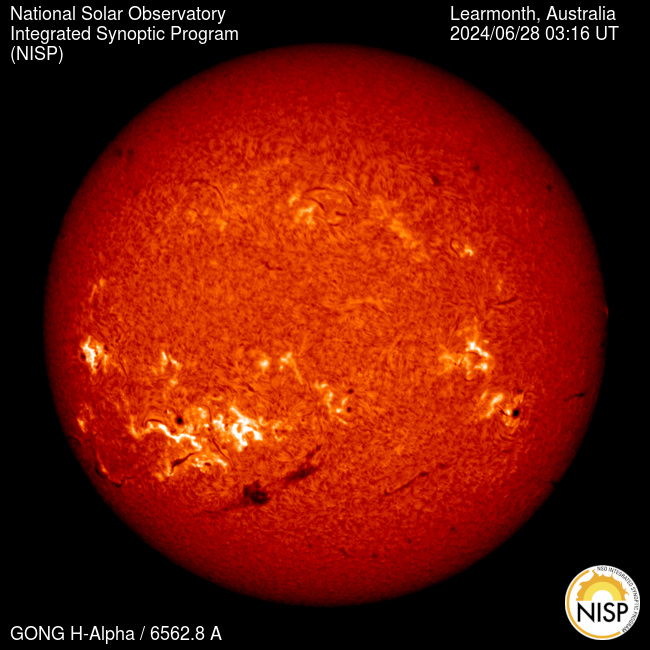
Tomorrow, Saturday, June 29th there will be solar viewing at the Sleeping Bear Dunes National Lakeshore, at the Dune Climb from 3 to 6 PM. Park Rangers will be joined by members of the Grand Traverse Astronomical Society with their specially filtered telescopes to view the Sun safely. This is a period of great solar activity. Remember the Aurora Borealis of a few weeks ago. Solar filtered telescopes will safely view the surface of the sun, called the photosphere and sunspots, while the society also has two special solar telescopes with which to view the layer of gas above the surface called the chromosphere and prominences which look like flames coming off the chromosphere. This is one of two solar observing opportunities this summer.
The astronomical event times given are for the Traverse City/Interlochen area of Michigan (EDT, UT–4 hours). They may be different for your location.
Addendum
Ephemeris: 05/20/2024 – Sunspots
This is Ephemeris for Monday, May 20th. Today the Sun will be up for 15 hours and 1 minute, setting at 9:10, and it will rise tomorrow at 6:07. The Moon, 3 days before full, will set at 4:52 tomorrow morning.
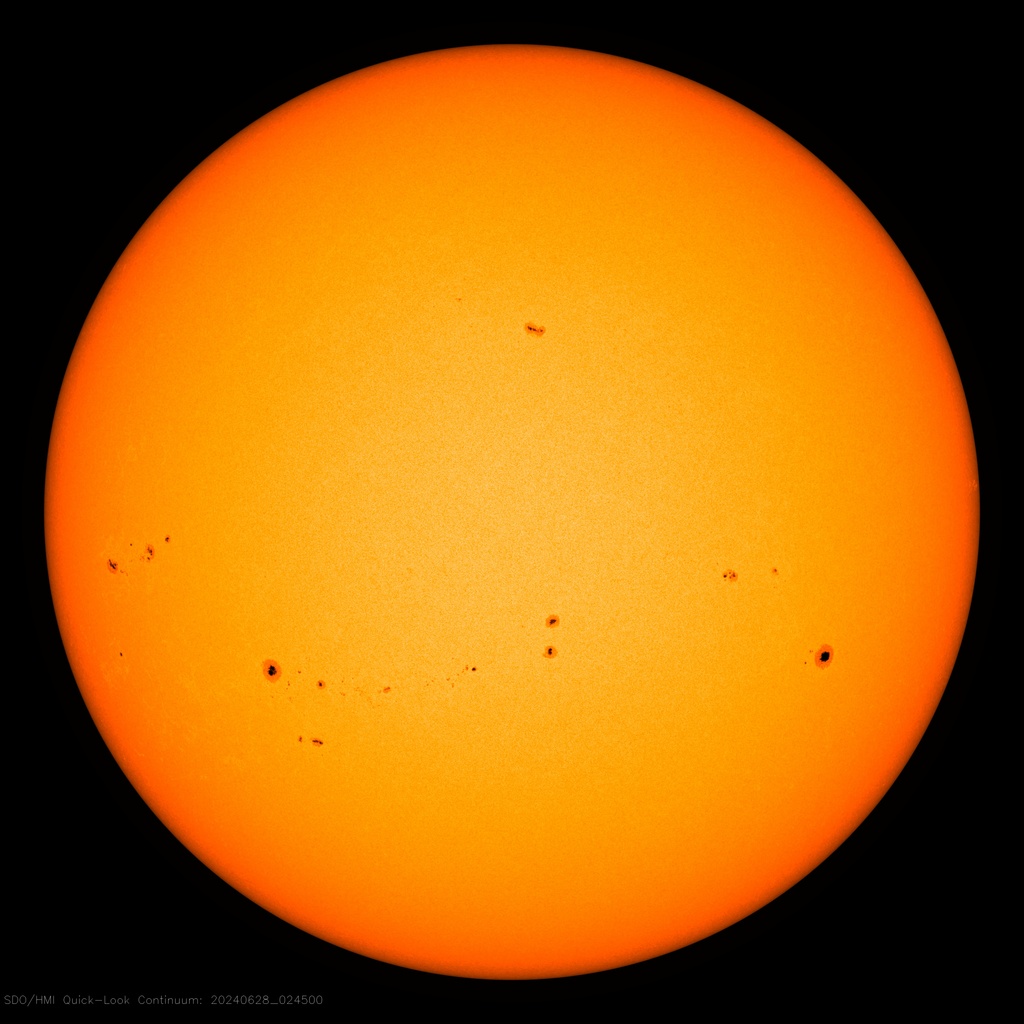
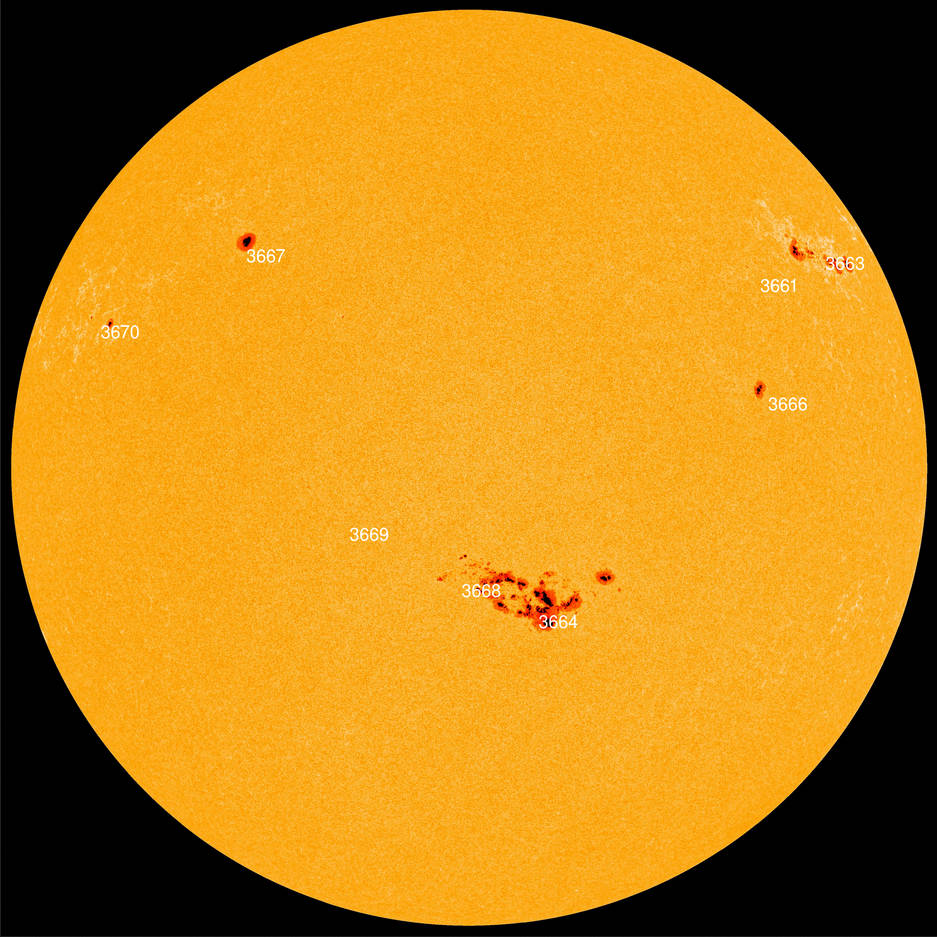
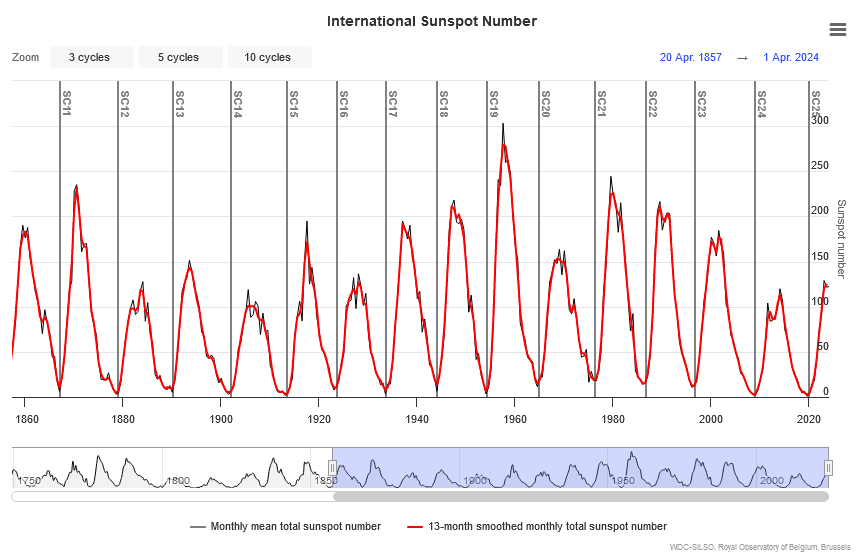
As can be seen with the northern light display more than a week ago that the Sun is becoming more active. It’s because particles, mostly protons, from the Sun in the form of the solar wind and enhancements in the solar wind called coronal mass ejections, tangle with the Earth’s magnetic field and stream through the upper atmosphere. The activity on the Sun is signaled by the ebb and flow of the number of dark spots called sunspots. Individual sunspots or sunspot groups only last for, maybe, a couple of weeks. They’re caused by the magnetic fields being generated in the Sun causing the gas to cool a bit and making them darker. Sunspot numbers ebb flow in a period of about 11 years, called a sunspot cycle. This sunspot cycle is reaching a higher peak than expected.
The astronomical event times given are for the Traverse City/Interlochen area of Michigan (EDT, UT–4 hours). They may be different for your location.
Addendum
07/06/2023 – Ephemeris – Today the Earth is farther from the Sun than anytime this year
This is Ephemeris for Thursday, July 6th. Today the Sun will be up for 15 hours and 26 minutes, setting at 9:30, and it will rise tomorrow at 6:04. The Moon, halfway from full to last quarter, will rise at 12:16 tomorrow morning.
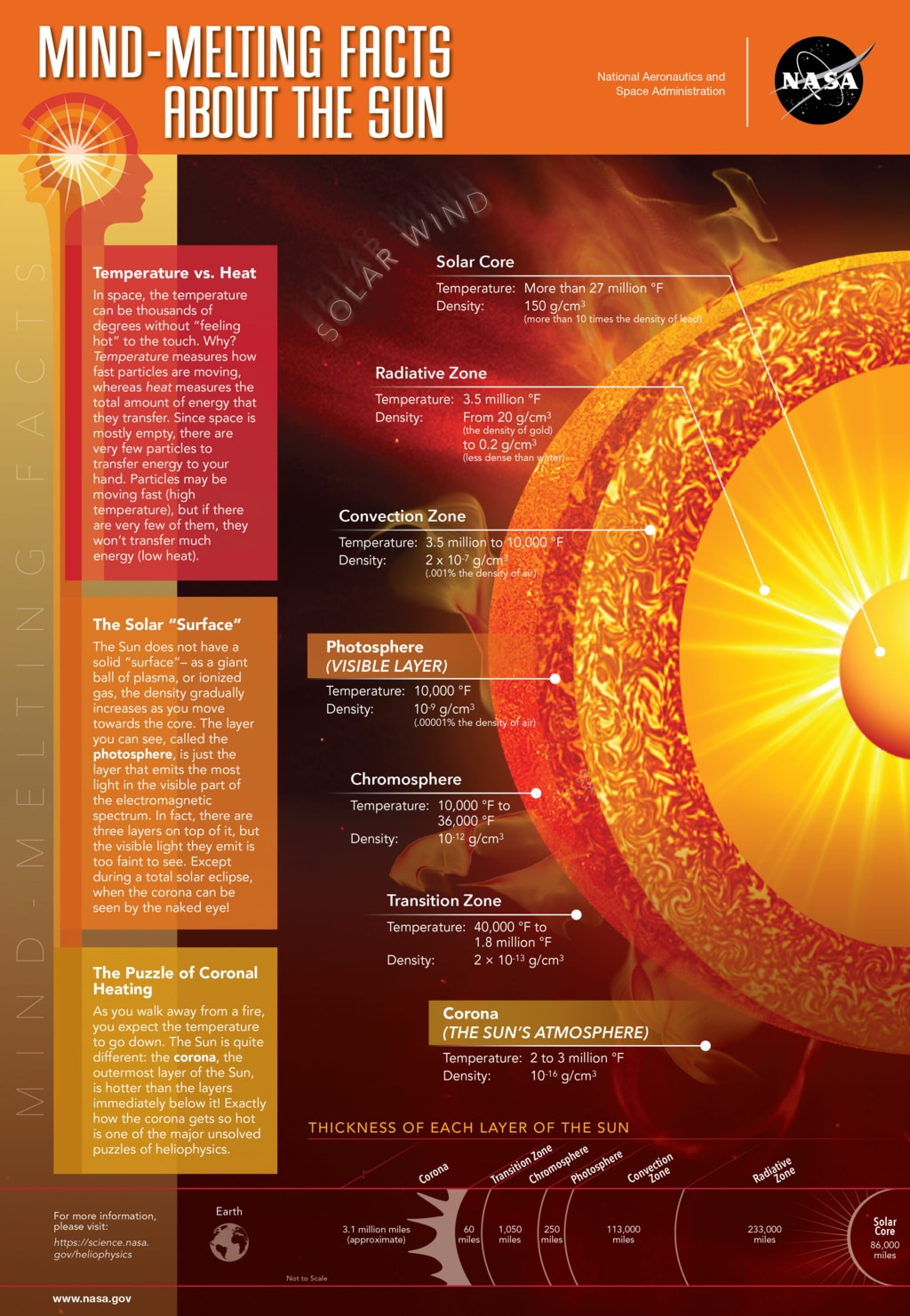
Today, the Sun is at its farthest distance from the Earth. It’s called aphelion. The exact time actually occurred at 4:59 this morning at a distance of 94 and a half million miles away. Because of the gravitational pull of the Moon and planets on the Earth, especially Jupiter and Venus and gravitational pull of the planets, especially Jupiter on the Sun, the aphelion and perihelion, the closest date in January don’t occur on the same date or same distance every year. The date wanders by a day or two each year. The entire distance variation of the Earth from the Sun is plus or minus 1.5 million miles (2.4 million kilometers) over the year, makes summer the longest season by a few days because the Earth moves slower when farther from the Sun, than when it is nearer.
The astronomical event times given are for the Traverse City/Interlochen area of Michigan (EDT, UT –4 hours). They may be different for your location.
Note: Apoapsis and Periapsis are generic terms for the farthest and nearest points in an orbit to the central body. For a body orbiting the Sun, it’s aphelion and perihelion. For a satellite of the Earth, it’s apogee and perigee.
06/27/2023 – Ephemeris – Preparing to view the upcoming solar eclipses safely
This is Ephemeris for Tuesday, June 27th. Today the Sun will be up for 15 hours and 33 minutes, setting at 9:32, and it will rise tomorrow at 5:59. The Moon, 1 day past first quarter, will set at 2:21 tomorrow morning.
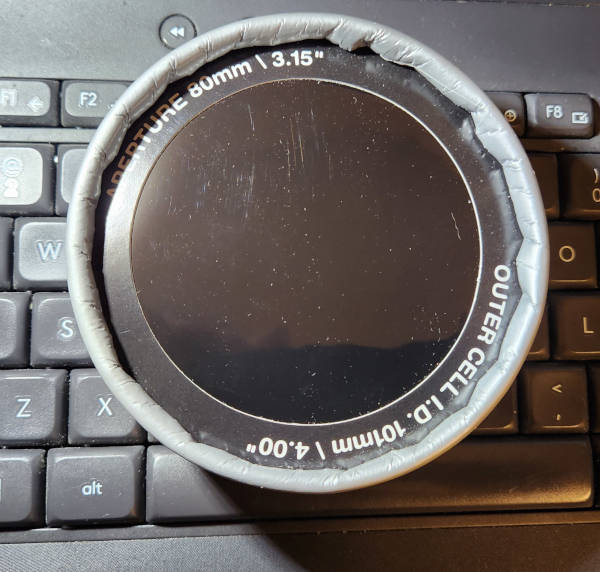
In preparation for the two solar eclipses that will be visible in North America in the next 10 months, I’m going to spend some time describing what the Sun is, and how it appears to us. First point: Never look at the Sun without proper and approved filters. Inexpensive eclipse glasses work fine for the partial phase of a solar eclipse. However, most features, like sunspots, are generally too small to be seen with them. Do not use these glasses with binoculars or a telescope. The plastic filters will melt through in a fraction of a second. Glass filters can shatter from the heat. The only safe solar filter for telescopes is one placed in front of the telescope tube, so it’s only exposed to ambient light and heat. If confused, just ask your local amateur astronomer.
The astronomical event times given are for the Traverse City/Interlochen area of Michigan (EDT, UT –4 hours). They may be different for your location.
Addendum

01/17/2023 – Ephemeris – The Sun is getting active again
/
This is Ephemeris for Tuesday, January 17th. Today the Sun will be up for 9 hours and 15 minutes, setting at 5:30, and it will rise tomorrow at 8:14. The Moon, 3 days past last quarter, will rise at 5:11 tomorrow morning.
The Sun is getting active again, there are a lot of sunspots on the sun today. The sunspot number which isn’t really a count of the sunspots on the face of the Sun, but it’s sort of a weighted average was 177 yesterday, which is a really high number even for the last few sunspot cycle peaks, and we haven’t reached the peak yet. You can find this number on the website called spaceweather.com. These sunspots cannot be seen with solar eclipse glasses that we had for the last eclipse back in 2017 because they are too small, even though they are much larger than the Earth. For the most part it would require a telescope with an approved solar filter in front to see them or go to that aforementioned website to see a daily picture from them.
The astronomical event times given are for the Traverse City/Interlochen area of Michigan (EST, UT –5 hours). They may be different for your location.
Addendum
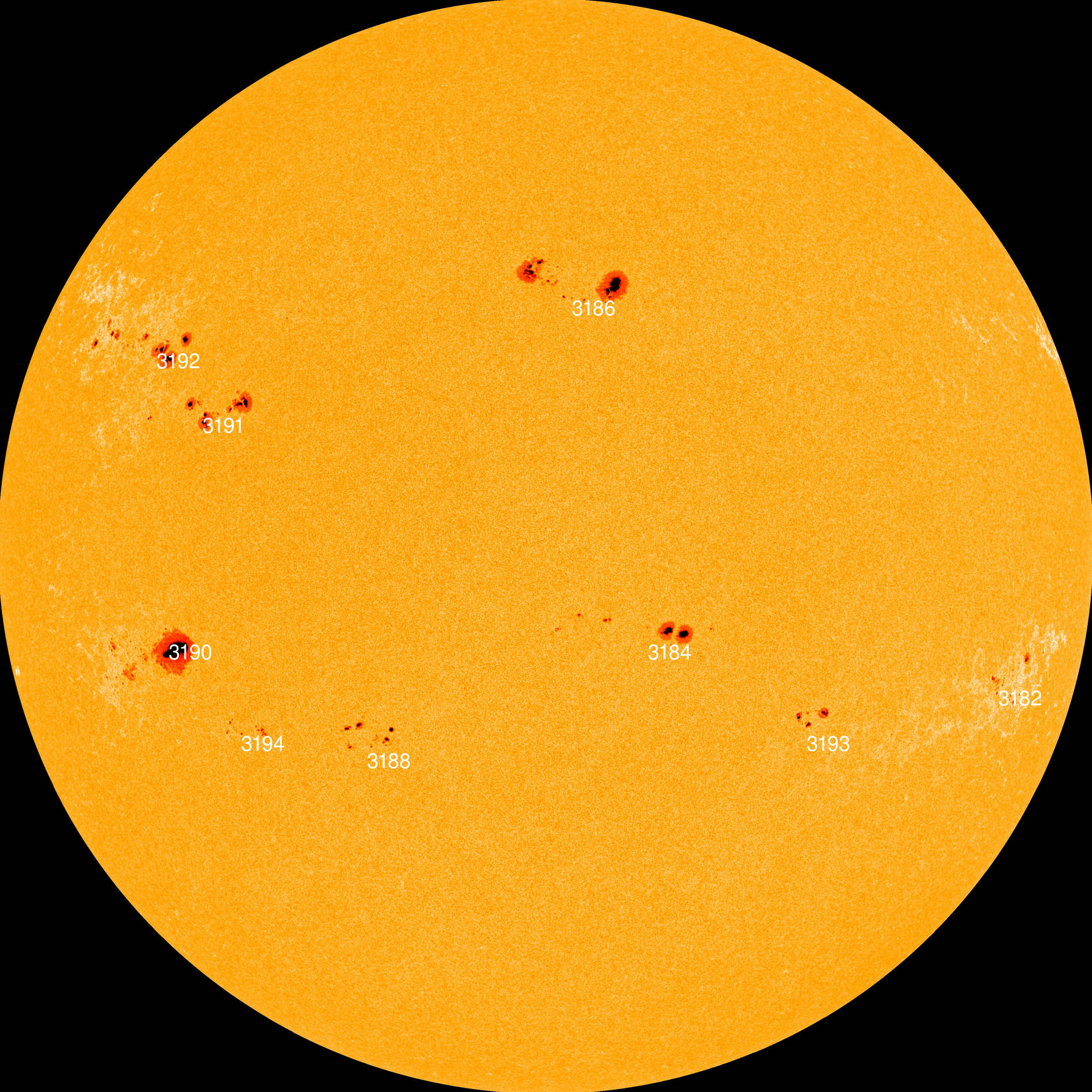
This image, from NOAA’s Solar Dynamics Observatory (SDO) downloaded last night, shows a many spotted Sun. The sunspot number by this time was up to 186. Sunspot groups are numbered as active regions. The most active region is AR 3190. Click on the image to enlarge it. Credit: NOAA’s SDO via spaceweather.com.

