06/05/2023 – Ephemeris – Venus was it’s farthest apparent distance from the Sun yesterday
This is Ephemeris for Monday, June 5th. Today the Sun will be up for 15 hours and 25 minutes, setting at 9:24, and it will rise tomorrow at 5:58. The Moon, 2 days past full, will rise at 11:47 this evening.
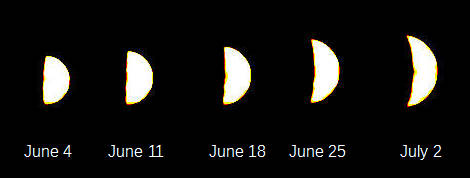
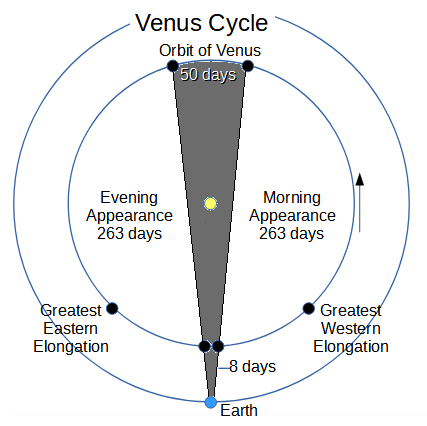
Yesterday, Venus was as far away from the Sun as it gets in this evening appearance of Venus. The event is called greatest eastern elongation, meaning it’s as far to the east of the Sun as it gets. Both Venus and Mercury have these events, because they orbit the Sun inside of the Earth’s orbit, they never stray far from the Sun. In less than two and a half months, Venus will leave the evening sky, pass between the Earth and Sun in inferior conjunction, and enter the morning sky. Until then Venus will get larger in telescopes and become a thinner and thinner crescent, as we see more of its night side and less of its day side. By mid July, Venus should appear large enough to see its tiny crescent in a pair of binoculars.
The astronomical event times given are for the Traverse City/Interlochen area of Michigan (EDT, UT –4 hours). They may be different for your location.
Addendum
 Bob Moler's Ephemeris Blog