Archive
Ephemeris: 09/30/2026 – Taking our weekly look at the whereabouts of the naked-eye planets
This is Ephemeris for Wednesday, September 30th. Today the Sun will be up for 11 hours and 45 minutes, setting at 7:25, and it will rise tomorrow at 7:40. The Moon, 3 days before last quarter, will rise at 9:14 this evening.
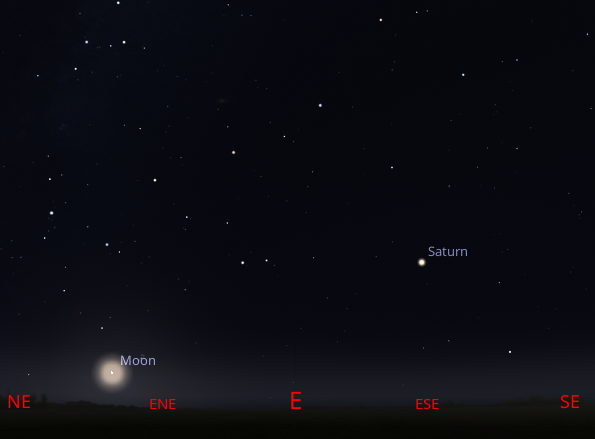
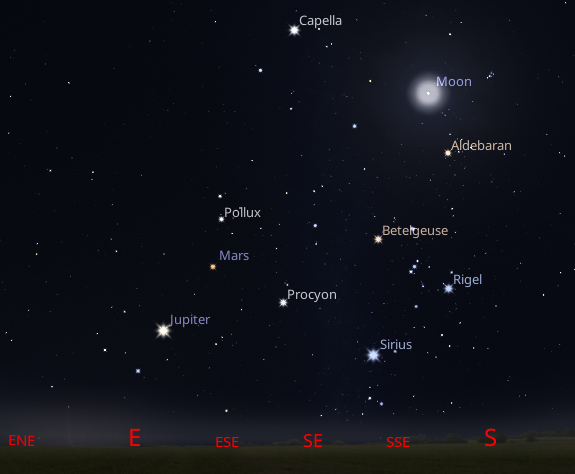
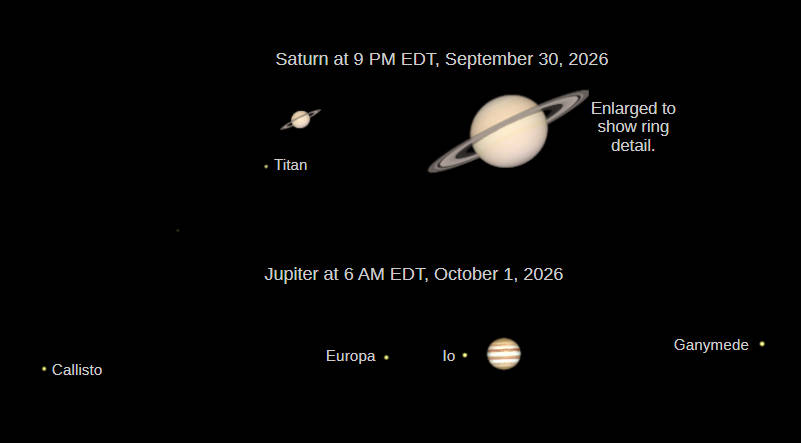
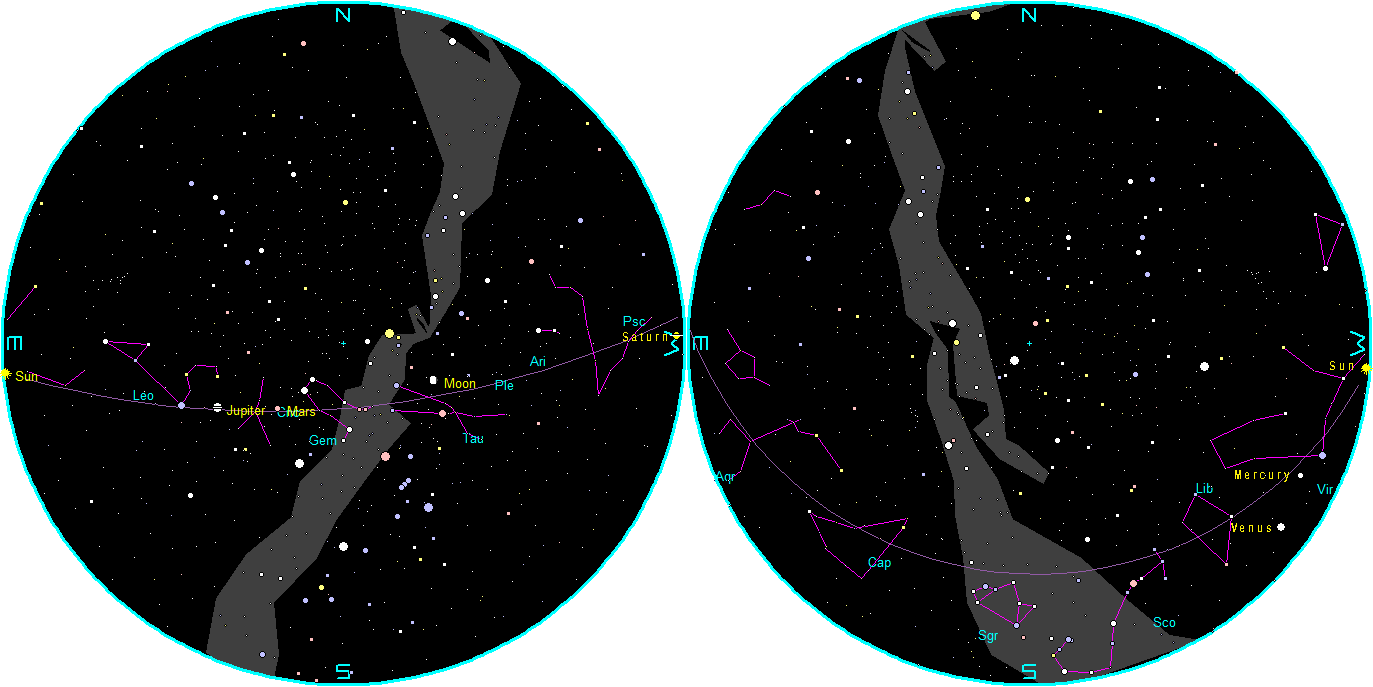
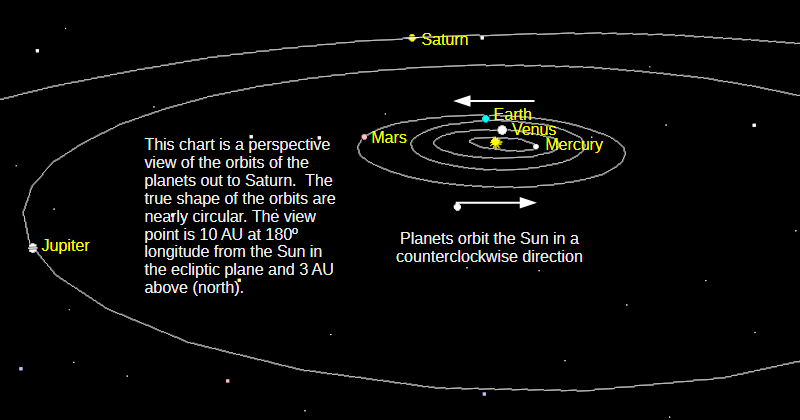
Let’s take our weekly look at the whereabouts of the naked-eye planets. Venus, now is too close to the horizon at sunset to easily spot. At sunset Venus will be only 4º above the horizon at sunset and will set at 7:52 PM. We will await its dramatic reappearance in the morning sky by early November. Saturn will be in the eastern sky as it gets dark. It is the brightest starlike object low in that direction. It will be below the four stars that make large distinctive pattern, that marks the body of Pegasus the flying horse, called the Great Square. At 6 AM, Jupiter and Mars will in the east. Jupiter is brightest and while red Mars will be above and just below and nearly in line with Castor and Pollux of Gemini.
The astronomical event times given in this blog are for the Traverse City/Interlochen area of Michigan (Lat 44.7° N, Long 85.7° W; EDT, UT – 4 hours) unless stated otherwise. Times will be different for other locations.
Addendum
Ephemeris: Finding Andromeda and the great galaxy within
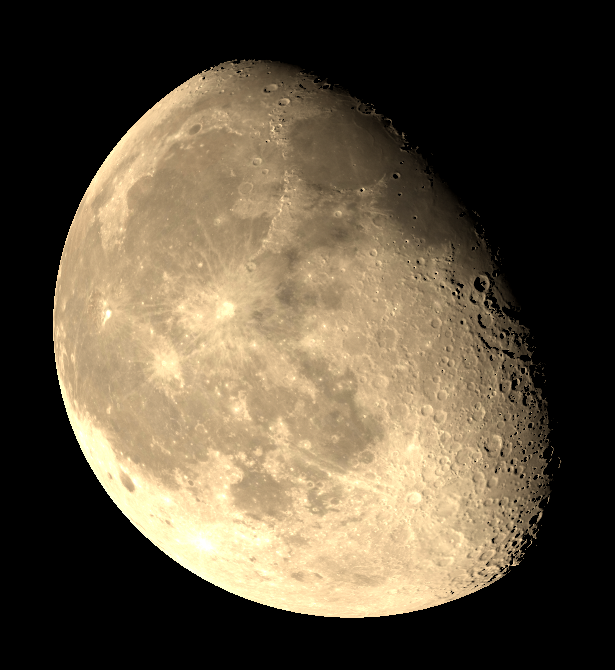
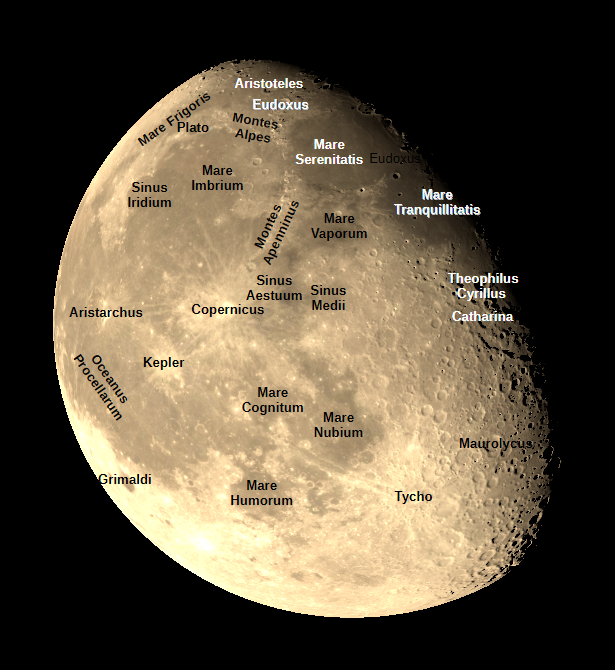
This is Ephemeris for Tuesday, September 29th. Today the Sun will be up for 11 hours and 48 minutes, setting at 7:26, and it will rise tomorrow at 7:39. The Moon, 3 days past full, will rise at 8:35 this evening.
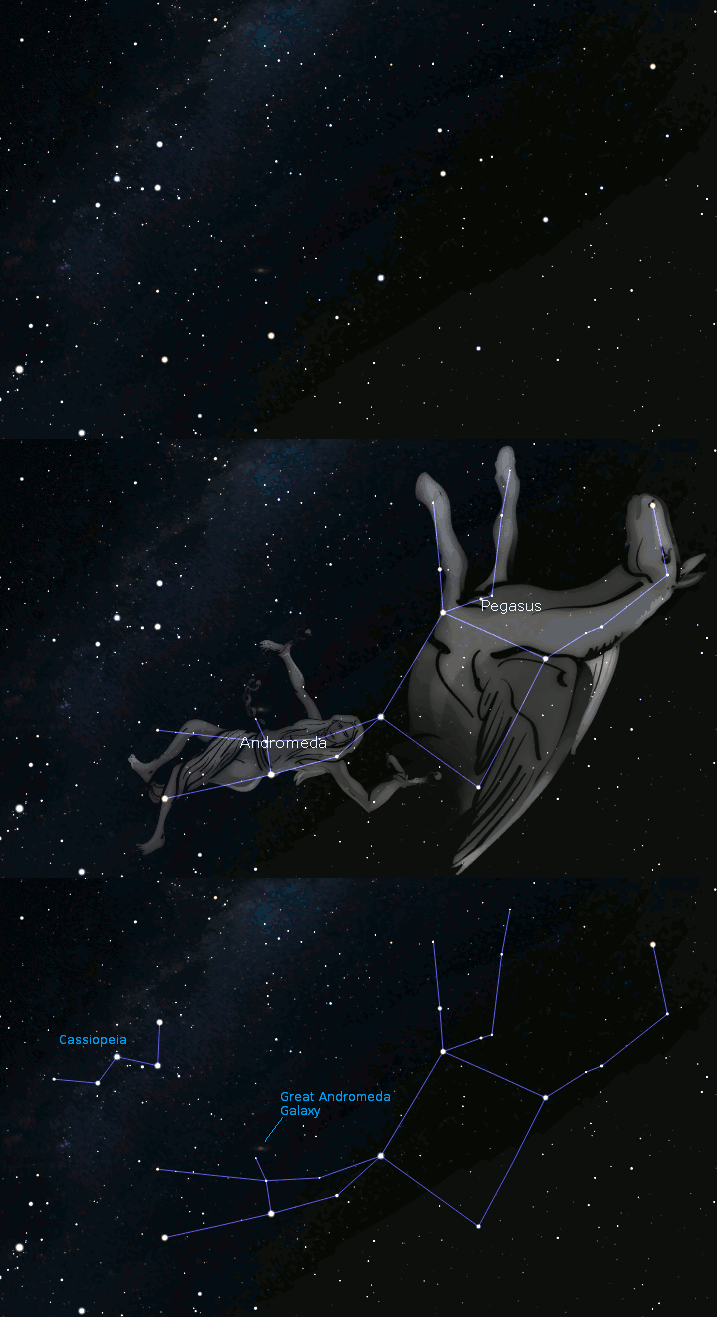
For at least the last thousand or so years a fuzzy spot in the constellation of Andromeda has been known. It was known as the Great Andromeda Nebula until a little over 100 years ago. Nebula means cloud, and it belonged to the Milky Way. At that time it was finally recognized as another Milky Way just like ours. So the word to call it was galaxy, a word that’s related to milk. It looks to be among the stars of Andromeda, but it’s far beyond the stars that we make the constellation of Andromeda. Current estimates place it at about two and a half million light years away, well beyond the stars that we see in Andromeda that range to only a few thousand light years distance. It could collide with our galaxy in about 4 billion years or so.
The astronomical event times given in this blog are for the Traverse City/Interlochen area of Michigan (Lat 44.7° N, Long 85.7° W; EDT, UT – 4 hours) unless stated otherwise. Times will be different for other locations.
Addendum
Ephemeris: 09/23/2026 – Where did Venus go?
This is Ephemeris for Wednesday, September 23rd. Today the Sun will be up for 12 hours and 6 minutes, setting at 7:38, and it will rise tomorrow at 7:32. The Moon, 3 days before full, will set at 5:08 tomorrow morning.
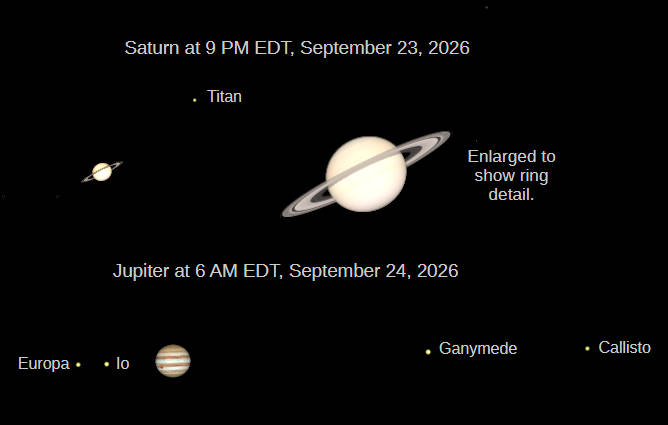
Let’s take our weekly look at the whereabouts of the naked-eye planets. Venus, now is too close to the horizon at sunset to easily spot. At sunset Venus will be only 5º above the horizon at sunset and will set at 8:25 PM. We will await its dramatic reappearance in the morning sky in early November. Saturn will be in the eastern sky as it gets dark. It is the brightest starlike object low in that direction. It will be below the four stars that make large distinctive pattern, that marks the body of Pegasus the flying horse, called the Great Square of Pegasus. At 6 AM, Jupiter will be due east. Jupiter is brightest and lowest while Mars will be just below and nearly in line with Castor and Pollux of Gemini.
The astronomical event times given in this blog are for the Traverse City/Interlochen area of Michigan (Lat 44.7° N, Long 85.7° W; EDT, UT – 4 hours) unless stated otherwise. Times will be different for other locations.
Addendum
Ephemeris: 09/18/2026 – The Moon will be lower than the winter solstice Sun tonight
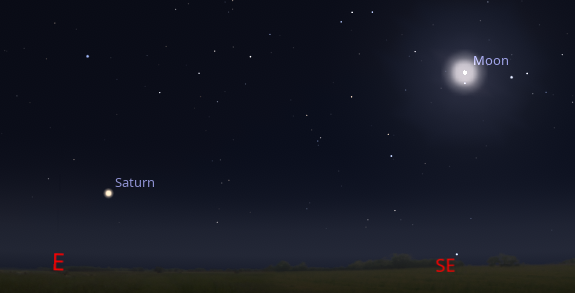
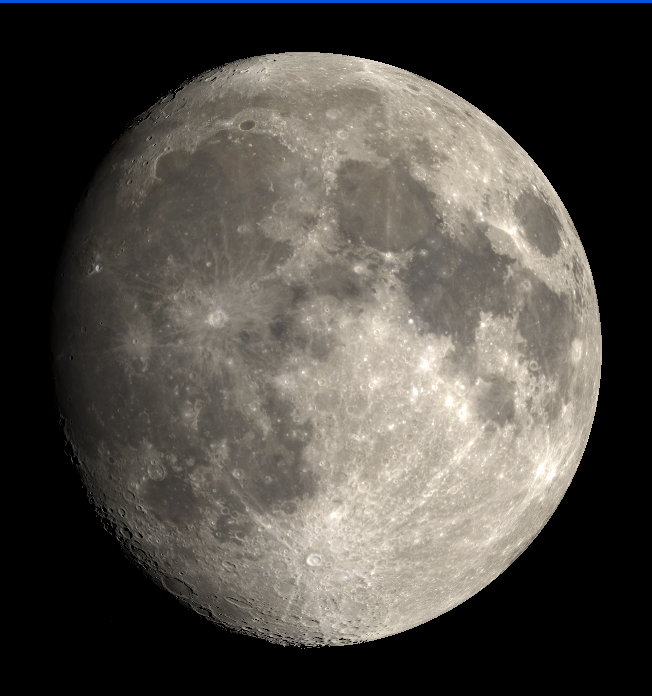
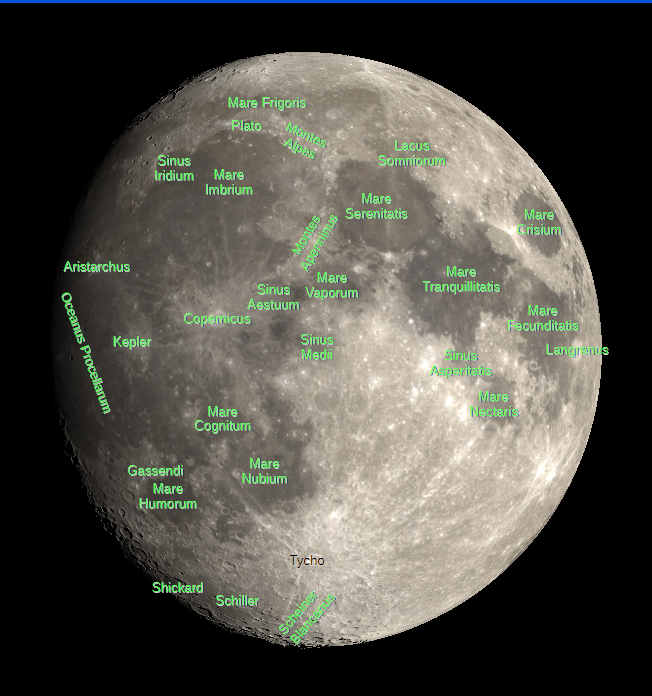
This is Ephemeris for Friday, September 18th. Today the Sun will be up for 12 hours and 22 minutes, setting at 7:47, and it will rise tomorrow at 7:26. The Moon, at first quarter today, will set at 11:40 this evening.
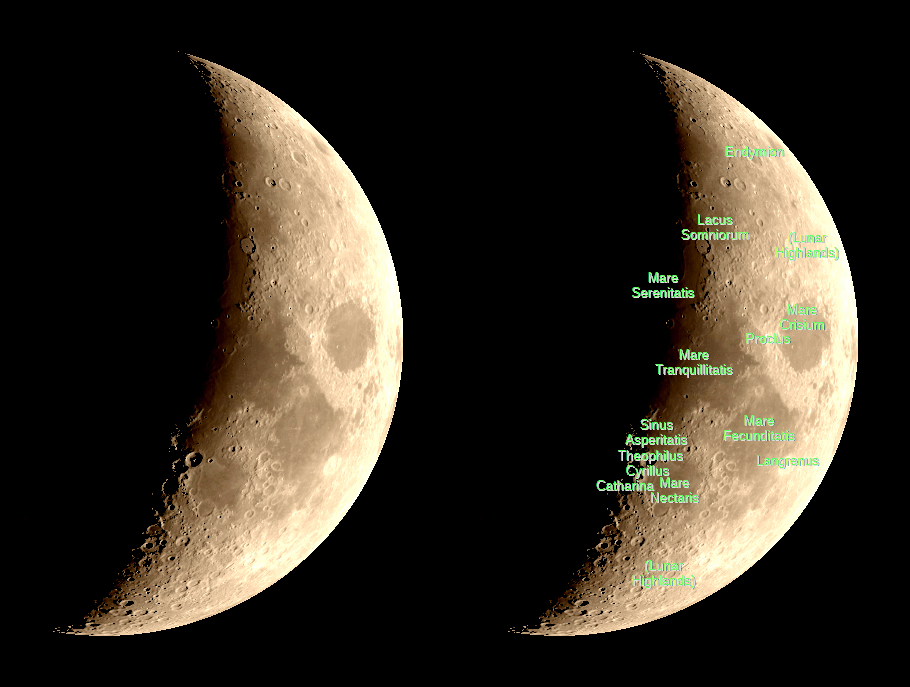
Tonight’s first quarter moon will appear low in the southern sky at its highest at about 11 minutes before sunset tonight. The moon is in the part of the sky where the sun will be on the first day of winter, December 21st at it’s lowest and the moon will be even lower tonight. For us, in Northern Michigan that’s 15 degrees, or one and a half times the width of a fist held at arms length. The moon, though, is even lower than the sun will be that day. The sun will be 22º above the southern horizon that day, a bit more than two fist widths above the southern horizon. I talk a lot about angles on this program, because measuring angles is what astronomers did before the invention of the telescope. A telescope allows better precision, among other attributes.
The astronomical event times given in this blog are for the Traverse City/Interlochen area of Michigan (Lat 44.7° N, Long 85.7° W; EDT, UT – 4 hours) unless stated otherwise. Times will be different for other locations.
Addendum
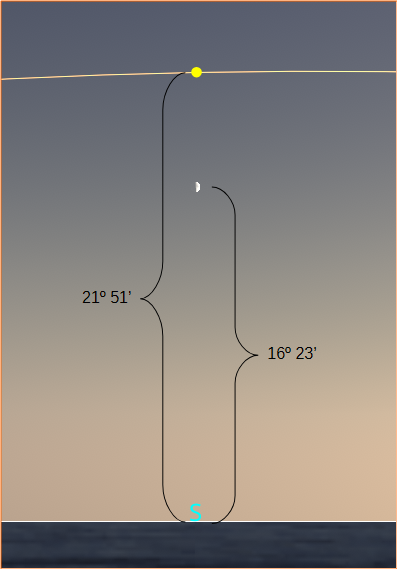
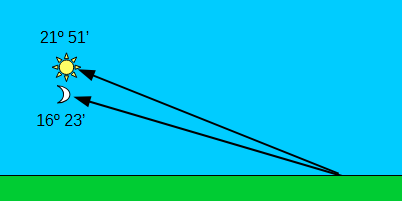
As readers of this blog may have surmised, I’m facinated by angles in the sky.
Ephemeris: 09/16/2026 – Taking our weekly look at the whereabouts of the naked-eye planets
This is Ephemeris for Wednesday, September 16th. Today the Sun will be up for 12 hours and 28 minutes, setting at 7:51, and it will rise tomorrow at 7:24. The Moon, 2 days before first quarter, will set at 10:08 this evening.
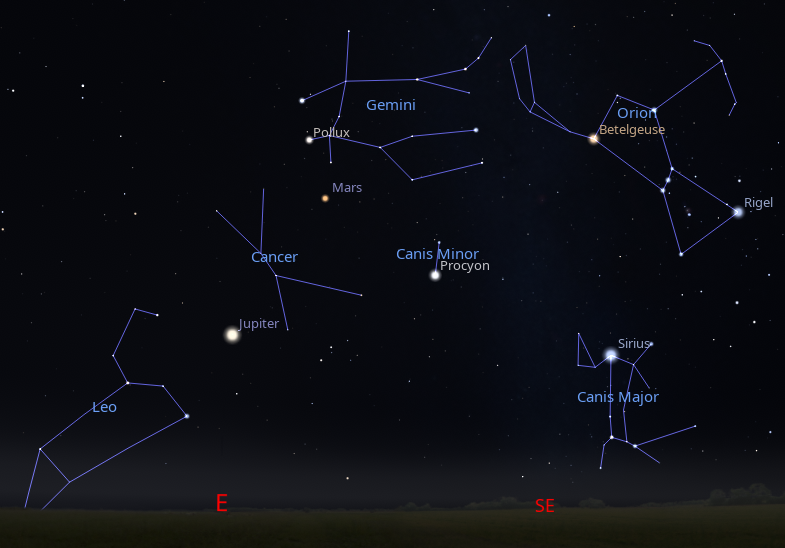
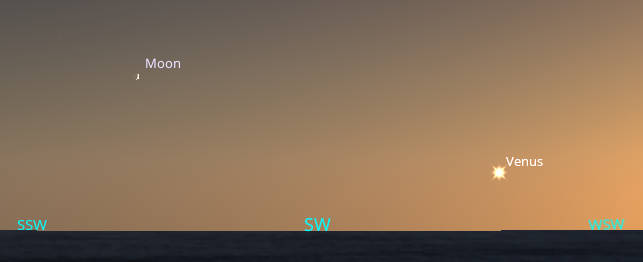
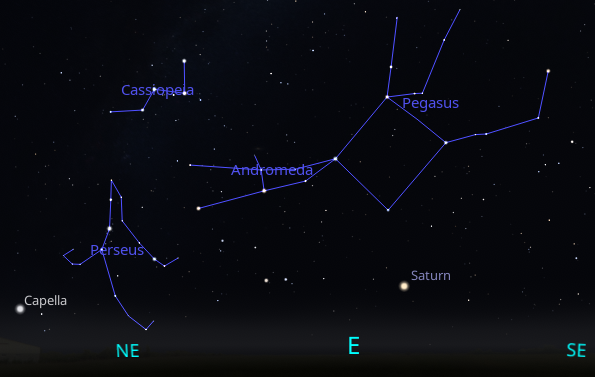
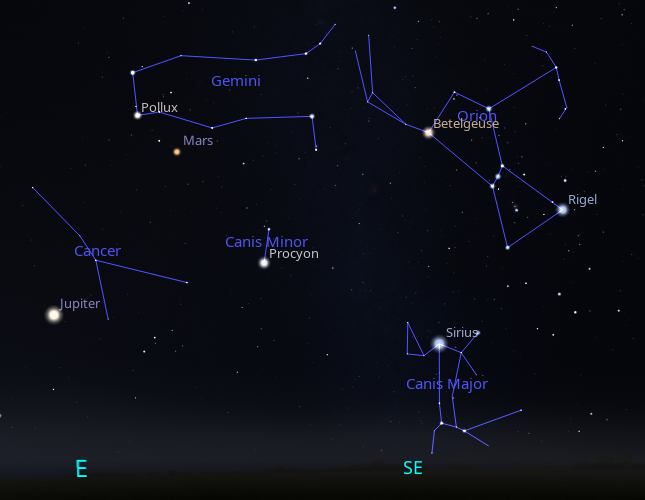
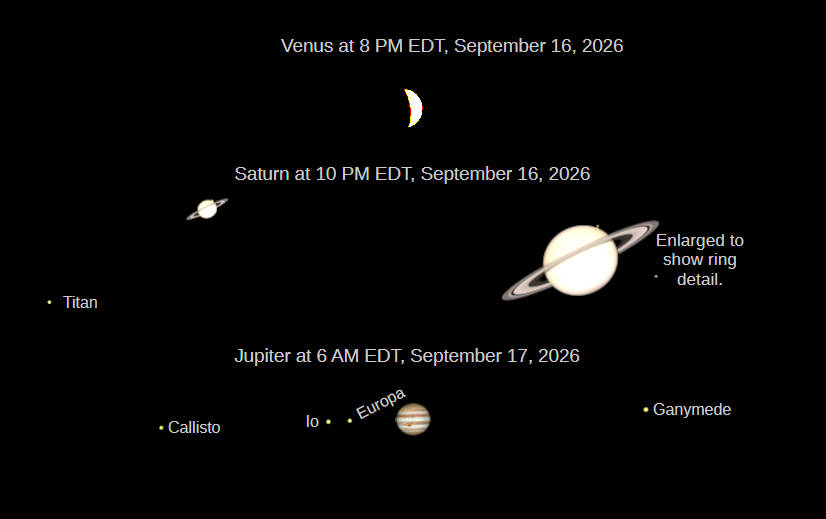
Let’s take our weekly look at the whereabouts of the naked-eye planets. By 8:15 tonight, about a half-hour after sunset, Venus will be spotted very low in the west southwestern sky with the moon above and to the left. Though at a 41º angle from the sun, it’ll only be 4º above the horizon then. A telescope will show a small crescent disk of the planet. It is now rapidly approaching earth in its orbit, at 41.2 million miles (66.3 mil km) away from us. Venus is becoming an ever decreasing crescent as its apparent diameter grows in telescopes. Saturn will rise at 8:47 PM in the east. At 6 AM, Mars and Jupiter will be in the east. Jupiter is brightest and lowest while Mars is just below and right of Pollux, the brightest star in Gemini.
The astronomical event times given in this blog are for the Traverse City/Interlochen area of Michigan (Lat 44.7° N, Long 85.7° W; EDT, UT – 4 hours) unless stated otherwise. Times will be different for other locations.
Addendum
Ephemeris: 09/15/2026 – Two small but interesting constellations in and near the Summer Triangle
This is Ephemeris for Tuesday, September 15th. Today the Sun will be up for 12 hours and 31 minutes, setting at 7:53, and it will rise tomorrow at 7:22. The Moon, 3 days before first quarter, will set at 9:34 this evening.
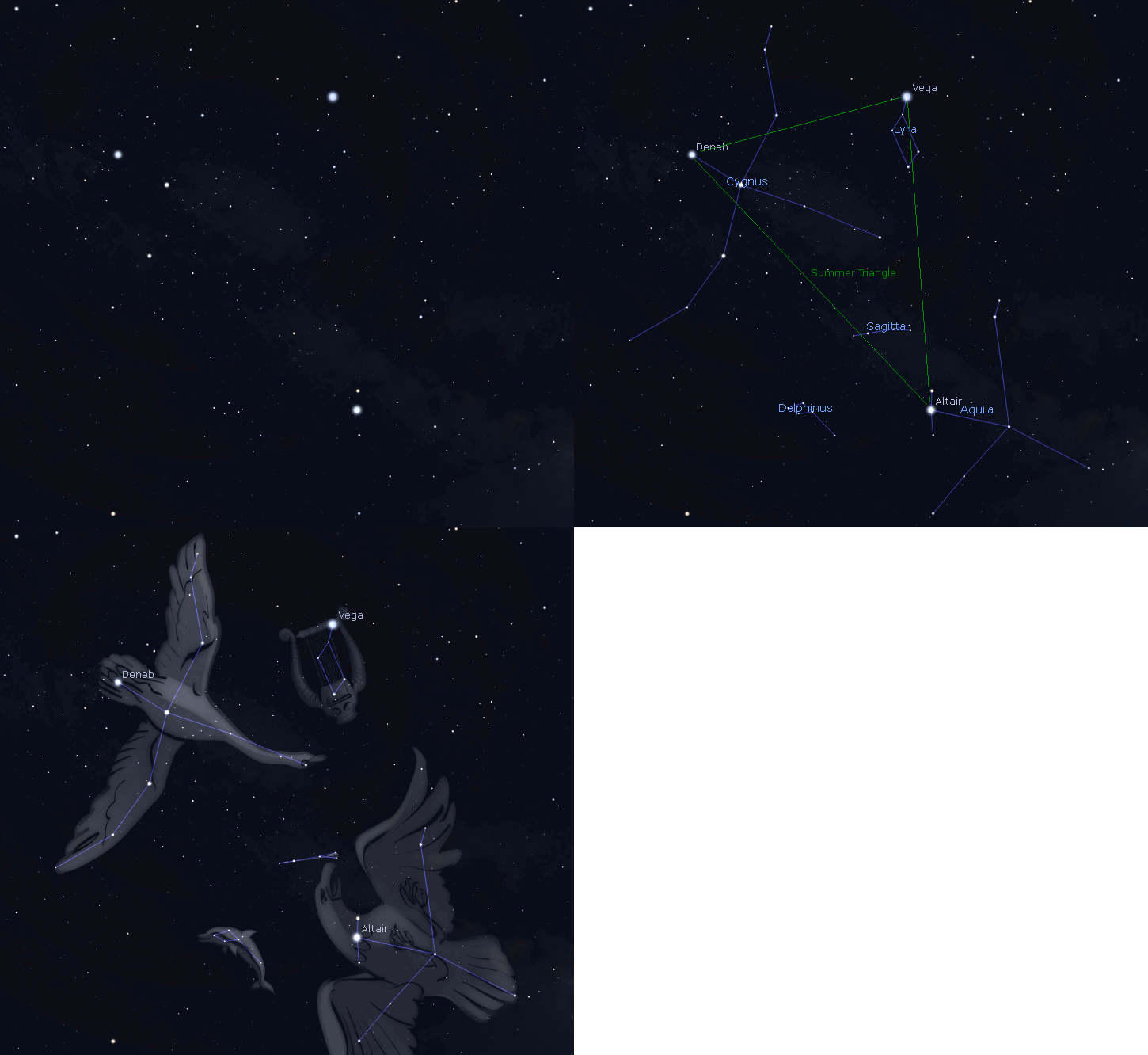
There are two small constellations in and near the Summer Triangle of bright stars. Both are near Altair the bottom star of the triangle in the south. The first is Delphinus the dolphin to the left of Altair. Delphinus is made-up of a small squished box of stars with another star below. It does look a dolphin leaping out of the water. The legendary Greek poet Arion, according to myth, was rescued by a dolphin. Also the little squished box is an asterism called Job’s Coffin, though no one knows the origin of that name. The second constellation is above Altair, and within the Summer Triangle. It is called Sagitta the arrow. The stars do line up to look like a short arrow. It’s supposed to represent Cupid’s dart.
The astronomical event times given in this blog are for the Traverse City/Interlochen area of Michigan (Lat 44.7° N, Long 85.7° W; EDT, UT – 4 hours) unless stated otherwise. Times will be different for other locations.
Addendum
Ephemeris: 09/10/2026 – Finding Pegasus the winged horse of Greek myth
This is Ephemeris for Thursday, September 10th. Today the Sun will be up for 12 hours and 46 minutes, setting at 8:02, and it will rise tomorrow at 7:17. The Moon is new today, and won’t be visible.
Saturn is low in the eastern sky at 10 PM. This is the brightest “star” in that direction. Above Saturn is the Great Square of Pegasus, a large, nearly perfect square of stars, standing on one corner. This is the front part of the body of Pegasus the flying horse. He’s climbing to the upper right, following the rotation of the sky. But it’s flying upside down, having its neck and head extend from the rightmost star of the square. From the top star are his forelegs extend. From the leftmost star extend two curved lines of stars which may look like hind legs, but belong to another constellation, Andromeda the Princess. Pegasus’ wings are not seen in the stars. Pegasus is part of a Greek myth, which has been made into two movies, both titled Clash of the Titans. But no actual Titans were used in the movies. All gods and godesses in the movie were their decendents.
The astronomical event times given in this blog are for the Traverse City/Interlochen area of Michigan (Lat 44.7° N, Long 85.7° W; EDT, UT – 4 hours) unless stated otherwise. Times will be different for other locations.
Addendum
Ephemeris: 09/03/2026 – Finding the North American Nebula
This is Ephemeris for Thursday, September 3rd. Today the Sun will be up for 13 hours and 8 minutes, setting at 8:15, and it will rise tomorrow at 7:08. The Moon, 1 day before last quarter, will rise at 11:15 this evening.
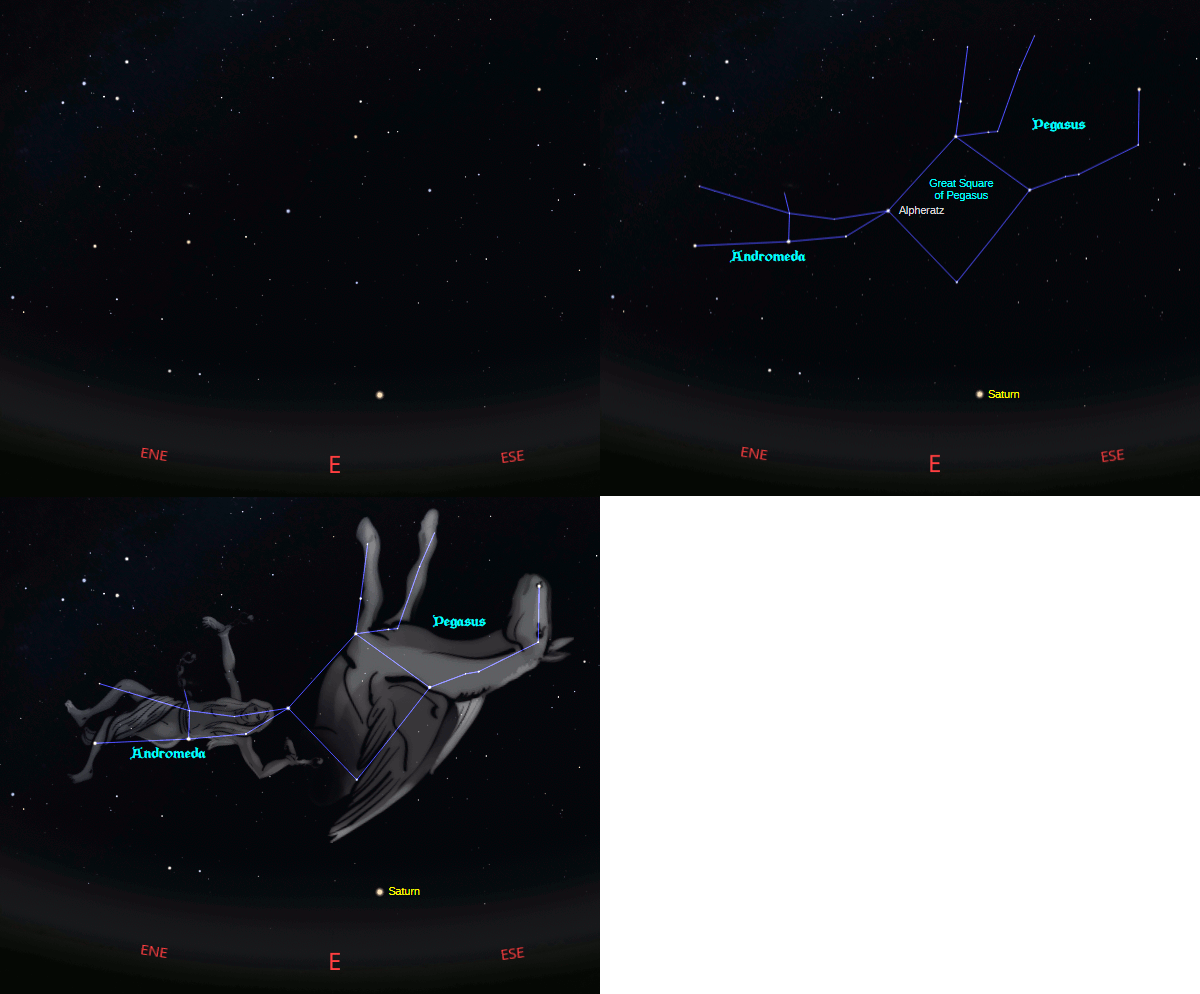
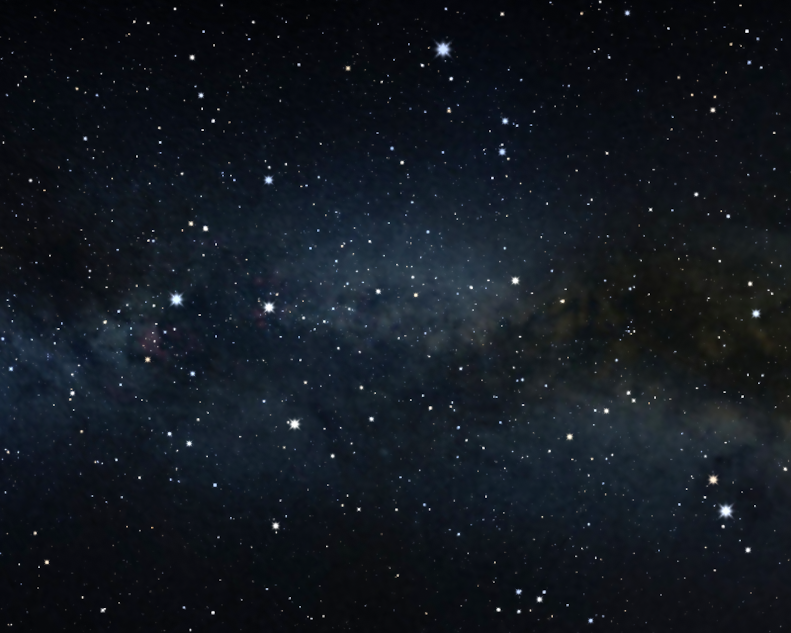
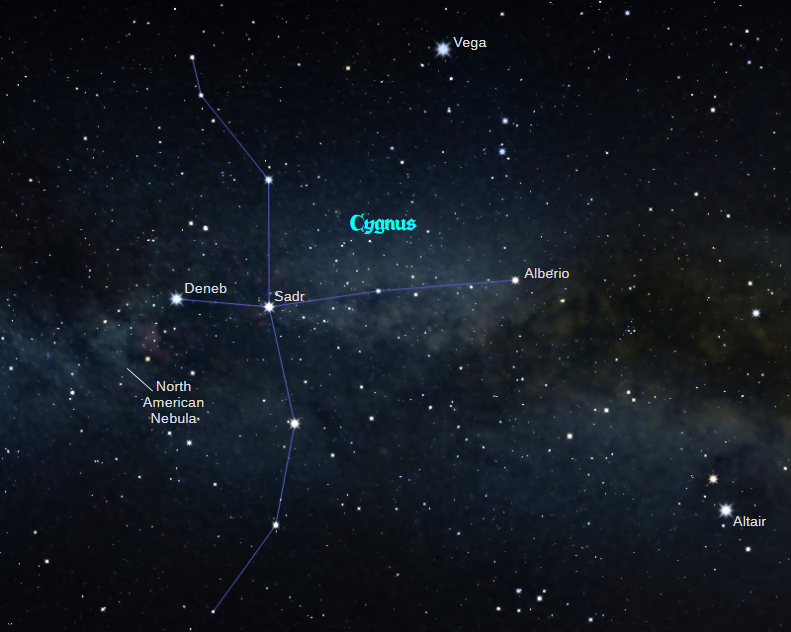
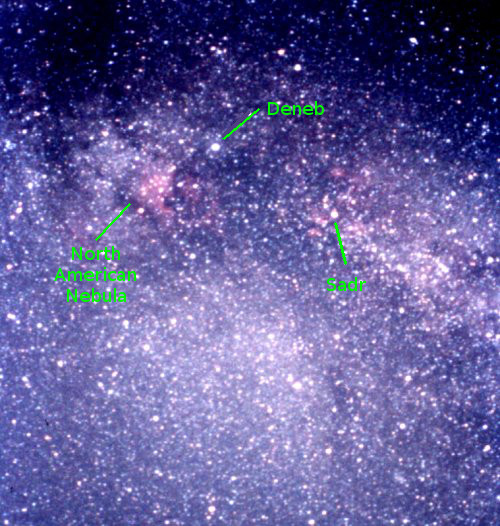
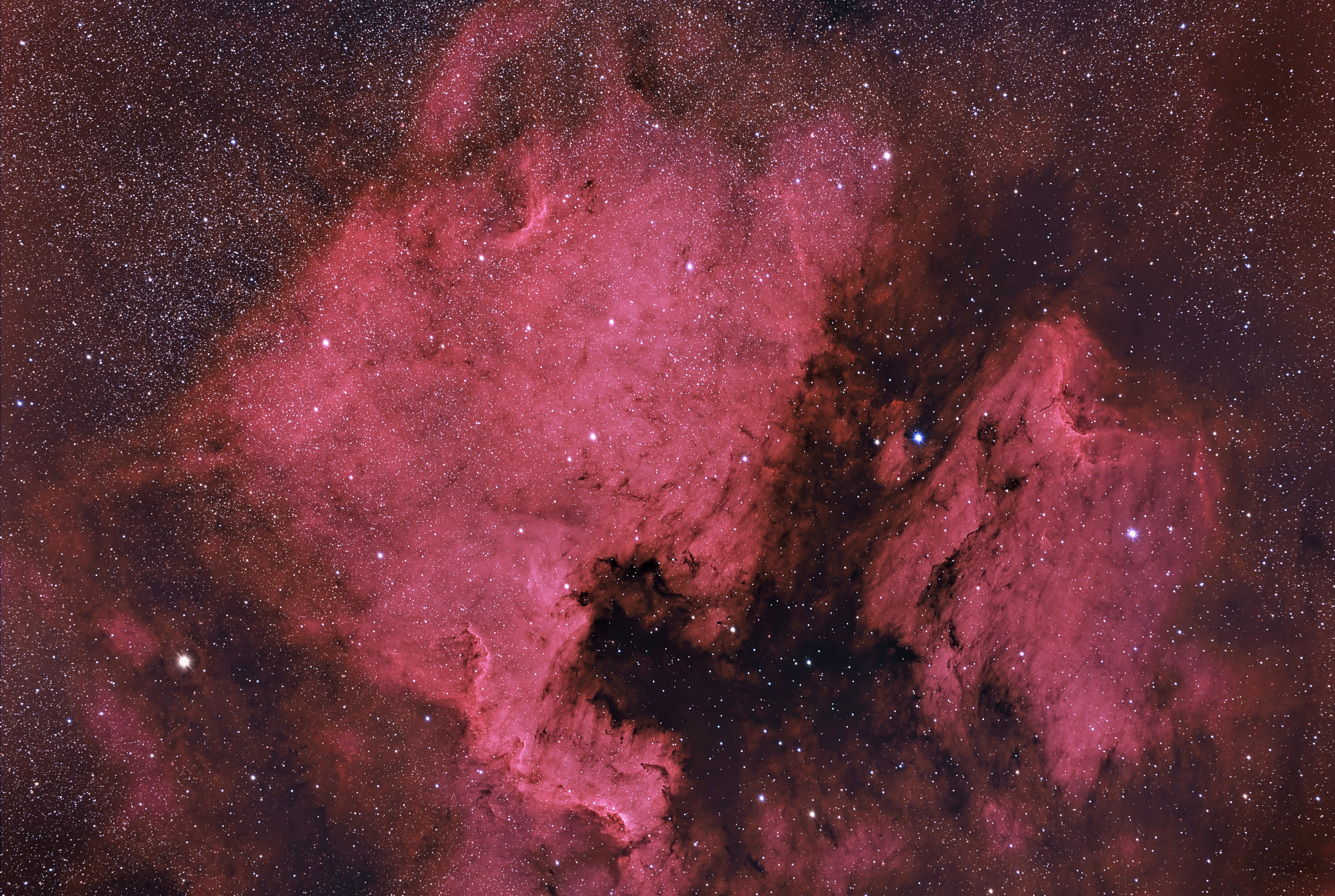
Most of what we see in the Milky Way are just masses of stars, but there are bright clouds of gas, or to name them properly: emission nebulae. These bright clouds are areas of star formation. It is the ultraviolet light from young massive stars that light up the clouds they were formed from. A bright one, easily visible in binoculars, is just about overhead at 10 p.m. Called the North American Nebula, a glow, that in photographs is shaped much like our continent, is just east of the star Deneb which is practically overhead in the evening. Deneb is the northernmost star of the Summer Triangle, and brightest star in Cygnus the swan or Northern Cross. There are many other nebulae in the Milky Way, visible in binoculars and small telescopes. Many enjoyable hours can be spent sweeping the Milky Way for nebulae and star clusters.
The astronomical event times given in this blog are for the Traverse City/Interlochen area of Michigan (Lat 44.7° N, Long 85.7° W; EDT, UT – 4 hours) unless stated otherwise. Times will be different for other locations.
Addendum
Ephemeris: 09/02/2026 – Taking our weekly look at the whereabouts of the naked-eye planets
This is Ephemeris for Wednesday, September 2nd. Today the Sun will be up for 13 hours and 11 minutes, setting at 8:17, and it will rise tomorrow at 7:07. The Moon, 2 days before last quarter, will rise at 10:33 this evening.
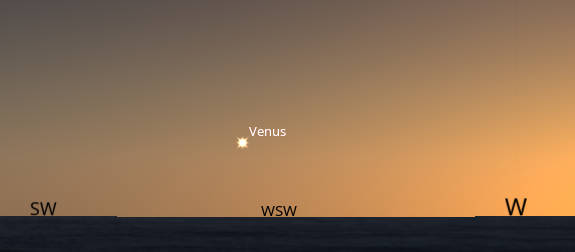
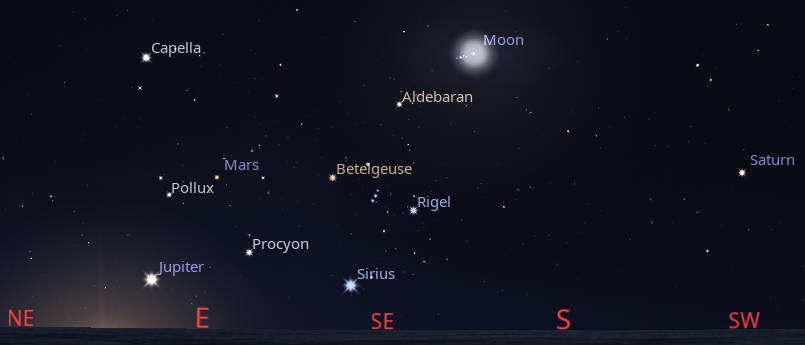
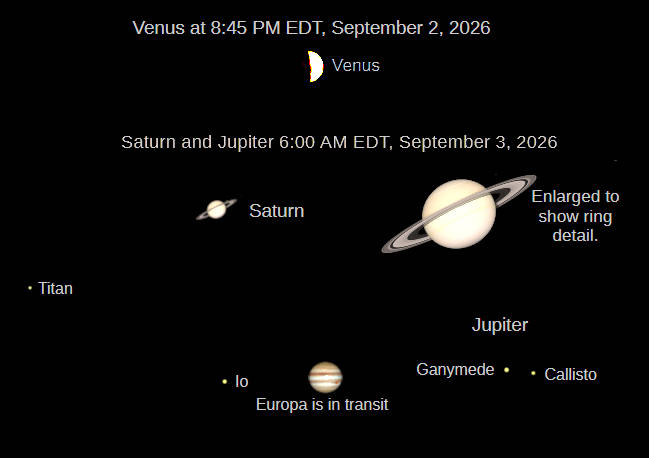
Let’s take our weekly look at the whereabouts of the naked-eye planets. By 8:45 PM tonight, a nearly a half-hour after sunset, Venus will be spotted low in the west southwestern sky. Though at a 44º angle from the sun, it’ll only be 6º above the horizon then. A telescope will show a small crescent disk of the planet. It is now rapidly approaching earth in its orbit, at 50.8 million miles (81.8 mil km) away from us. Venus is becoming an ever decreasing crescent as its apparent diameter grows in telescopes. At 6 AM, Saturn will be alone in the southwest, while Mars and Jupiter will be in the east. Jupiter is brightest and lowest while Mars has the competition of brighter stars in Gemini.
The astronomical event times given in this blog are for the Traverse City/Interlochen area of Michigan (Lat 44.7° N, Long 85.7° W; EDT, UT – 4 hours) unless stated otherwise. Times will be different for other locations.
Addendum
Ephemeris: 09/01/2026 – Previewing September skies
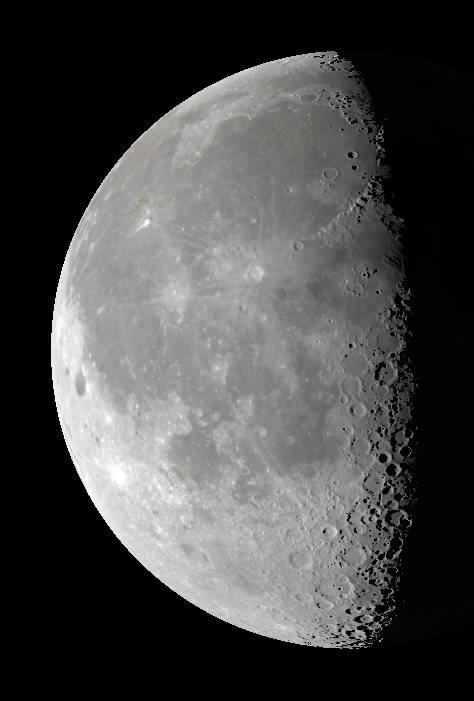
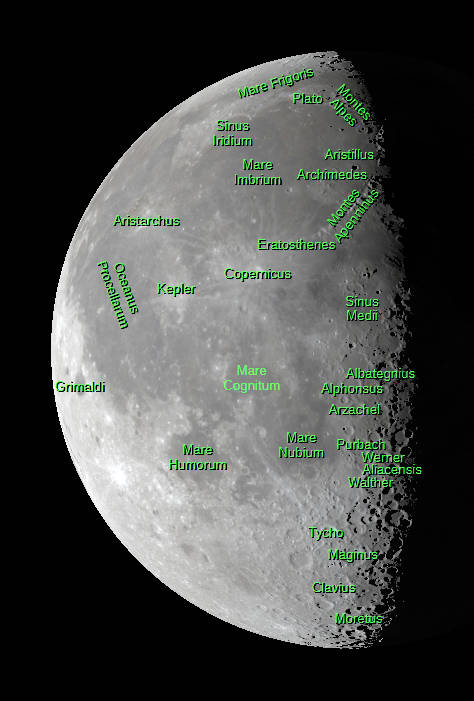
This is Bob Moler with Ephemeris for Tuesday, September 1st. Today the Sun will be up for 13 hours and 14 minutes, setting at 8:19, and it will rise tomorrow at 7:06. The Moon, 3 days before last quarter, will rise at 10:00 this evening.
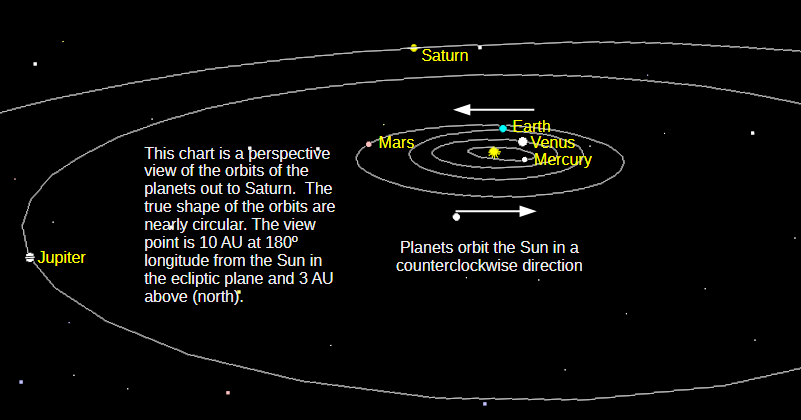
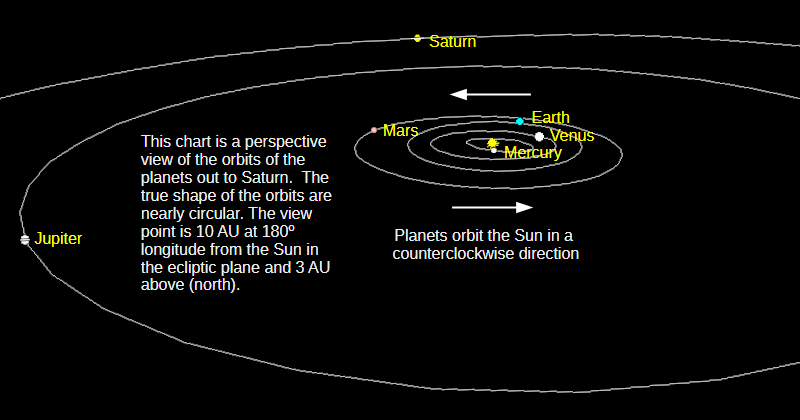
Let’s look at the skies for the month of September, a transition month between summer and autumn. The Sun will be moving at its greatest speed in its retreat to the south. Daylight hours in the Interlochen/Traverse City area and will drop from 13 hours and 14 minutes today to 11 hours 45 minutes on the 30th. The altitude of the Sun above the southern horizon at local noon will be 54 degrees today, and will descend to 42 degrees on the 30th. The season of summer is getting short, so enjoy it while you can. Summer ends and autumn begins at 8:06 p.m. with the autumnal equinox on September 22nd. The Harvest Moon will occur on the 26th, being the closest full moon to the autumnal equinox.
The astronomical event times given in this blog are for the Traverse City/Interlochen area of Michigan (Lat 44.7° N, Long 85.7° W; EDT, UT – 4 hours) unless stated otherwise. Times will be different for other locations.
Addendum
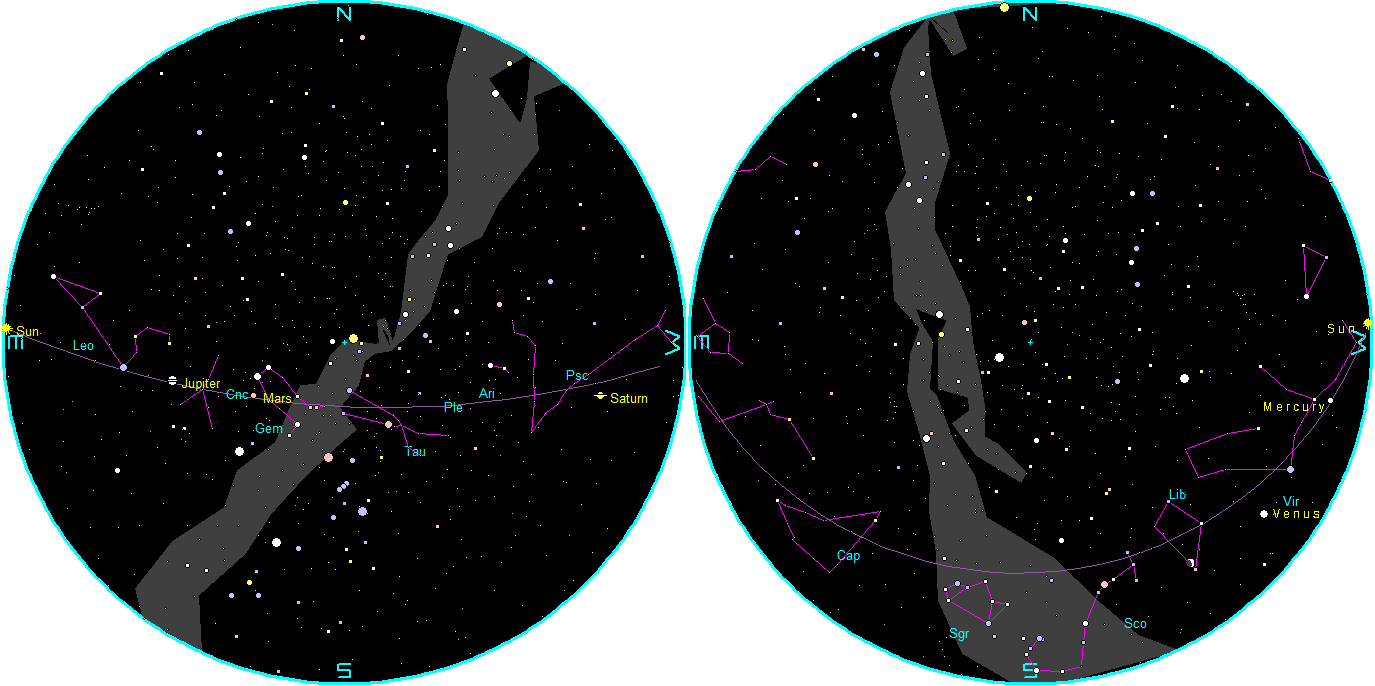
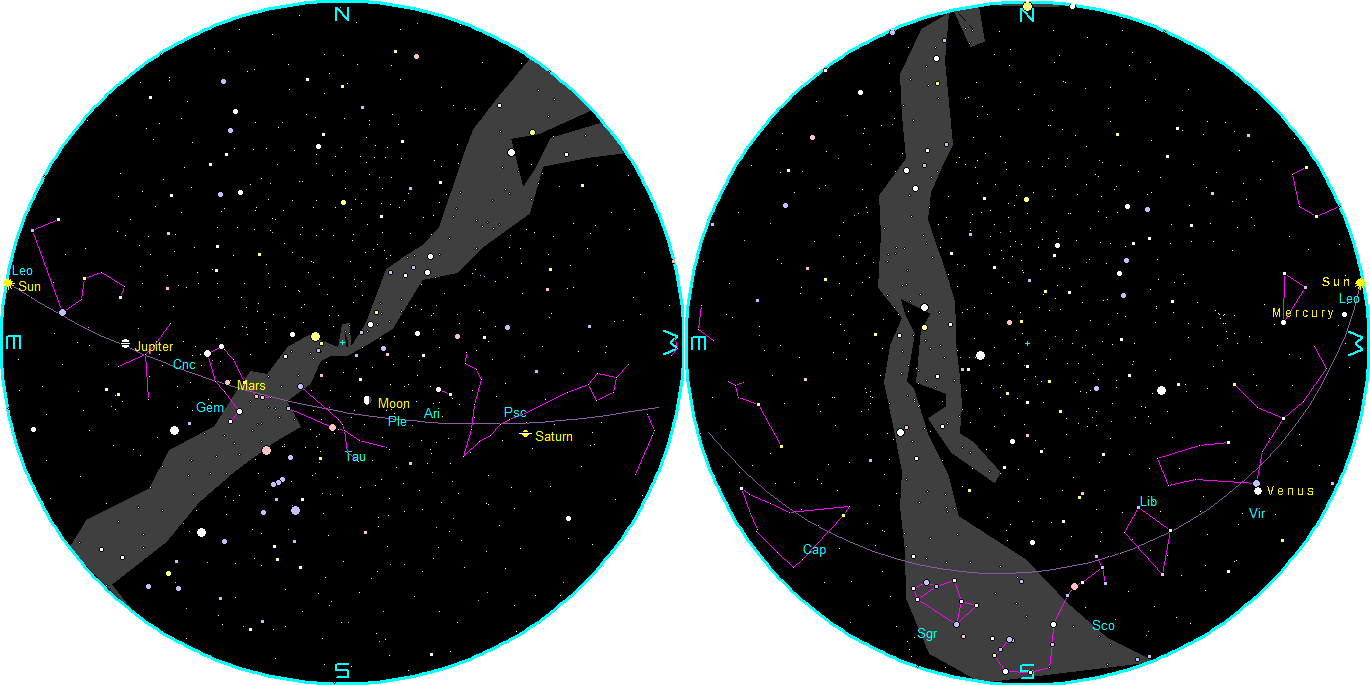
September Evening Star Chart
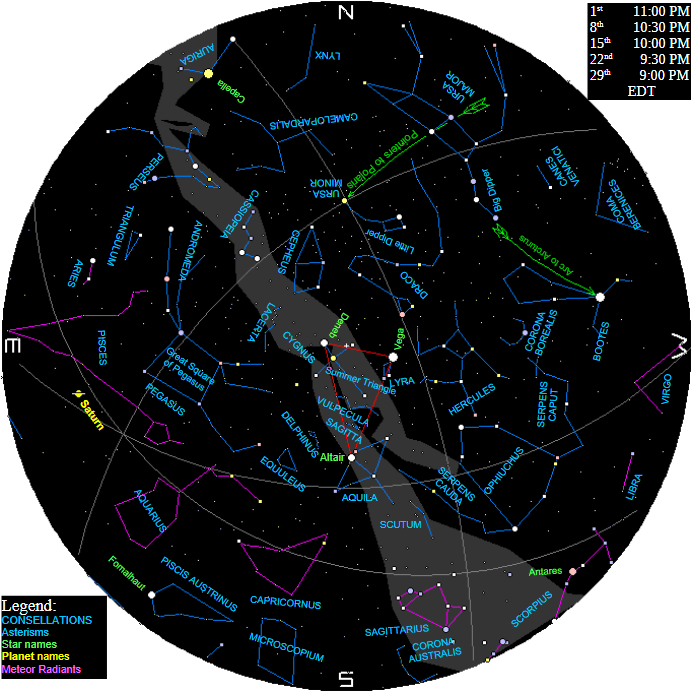
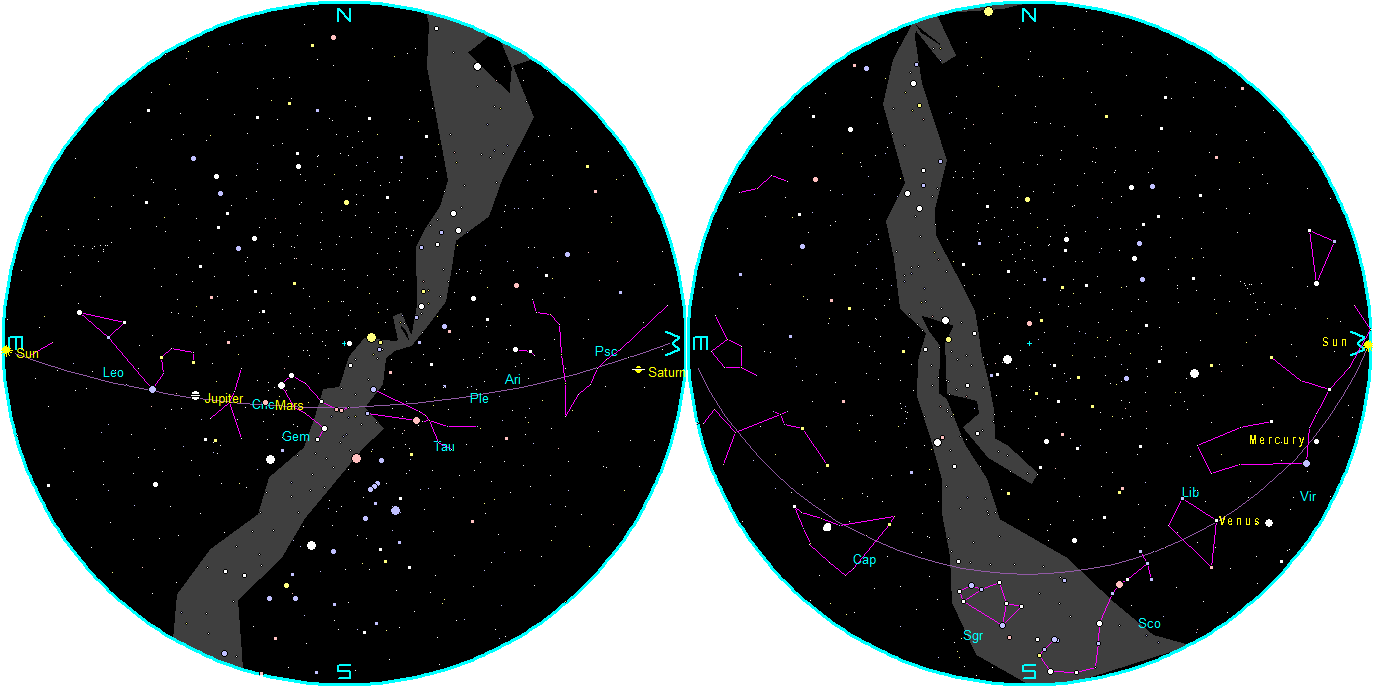
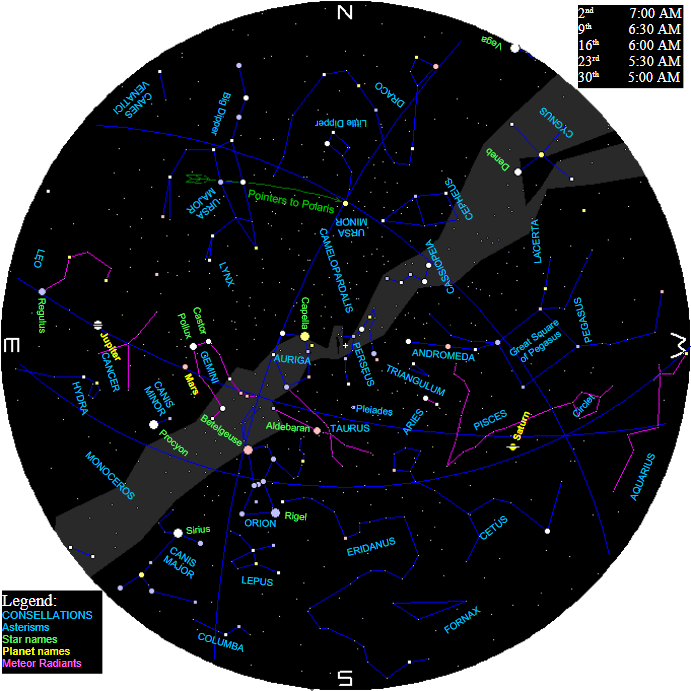
The planets and stars are plotted for the 15th at 10 p.m. EDT in the evening and 6 a.m. for the morning chart. These are the chart times. Note that Traverse City is located approximately 45 minutes behind our time meridian, West 75° longitude. (An hour 45 minutes behind our daylight saving time meridian during EDT). To duplicate the star positions on a planisphere you may have to set it to 1 hour 45 minutes earlier than the current time.
September Morning Star Chart
Twilight Limits, Nautical and Astronomical
| EDT | |||||||
| Morning | Twilight | Evening | Twilight | Dark | Night | Moon | |
| Date | Astro. | Nautical | Nautical | Astro. | Start | End | Illum. |
| 2026-09-01 | 5h22m | 6h00m | 21h29m | 22h07m | – | – | 73% |
| 2026-09-02 | 5h24m | 6h02m | 21h27m | 22h05m | 22h05m | 22h33m | 63% |
| 2026-09-03 | 5h25m | 6h03m | 21h25m | 22h03m | 22h03m | 23h16m | 52% |
| 2026-09-04 | 5h27m | 6h05m | 21h23m | 22h00m | 22h00m | – | 40% |
| 2026-09-05 | 5h28m | 6h06m | 21h21m | 21h58m | 21h58m | 0h11m | 29% |
| 2026-09-06 | 5h30m | 6h07m | 21h19m | 21h56m | 21h56m | 1h20m | 19% |
| 2026-09-07 | 5h32m | 6h09m | 21h17m | 21h54m | 21h54m | 2h37m | 11% |
| 2026-09-08 | 5h33m | 6h10m | 21h15m | 21h51m | 21h51m | 3h58m | 5% |
| 2026-09-09 | 5h35m | 6h11m | 21h13m | 21h49m | 21h49m | 5h18m | 1% |
| 2026-09-10 | 5h36m | 6h13m | 21h11m | 21h47m | 21h47m | 5h36m | 0% |
| 2026-09-11 | 5h38m | 6h14m | 21h09m | 21h45m | 21h45m | 5h38m | 1% |
| 2026-09-12 | 5h39m | 6h15m | 21h07m | 21h43m | 21h43m | 5h39m | 5% |
| 2026-09-13 | 5h40m | 6h17m | 21h05m | 21h41m | 21h41m | 5h40m | 11% |
| 2026-09-14 | 5h42m | 6h18m | 21h03m | 21h38m | 21h38m | 5h42m | 18% |
| 2026-09-15 | 5h43m | 6h19m | 21h01m | 21h36m | 21h36m | 5h43m | 26% |
| 2026-09-16 | 5h45m | 6h20m | 20h59m | 21h34m | 22h08m | 5h45m | 35% |
| 2026-09-17 | 5h46m | 6h22m | 20h57m | 21h32m | 22h50m | 5h46m | 44% |
| 2026-09-18 | 5h48m | 6h23m | 20h55m | 21h30m | 23h40m | 5h48m | 53% |
| 2026-09-19 | 5h49m | 6h24m | 20h53m | 21h28m | – | 5h49m | 63% |
| 2026-09-20 | 5h50m | 6h25m | 20h51m | 21h26m | 0h39m | 5h50m | 72% |
| 2026-09-21 | 5h52m | 6h27m | 20h49m | 21h24m | 1h43m | 5h52m | 80% |
| 2026-09-22 | 5h53m | 6h28m | 20h47m | 21h22m | 2h50m | 5h53m | 87% |
| 2026-09-23 | 5h54m | 6h29m | 20h45m | 21h20m | 3h59m | 5h54m | 93% |
| 2026-09-24 | 5h56m | 6h31m | 20h43m | 21h18m | 5h08m | 5h56m | 97% |
| 2026-09-25 | 5h57m | 6h32m | 20h41m | 21h16m | – | – | 100% |
| 2026-09-26 | 5h58m | 6h33m | 20h39m | 21h13m | – | – | 100% |
| 2026-09-27 | 6h00m | 6h34m | 20h37m | 21h11m | – | – | 97% |
| 2026-09-28 | 6h01m | 6h35m | 20h35m | 21h09m | – | – | 92% |
| 2026-09-29 | 6h02m | 6h37m | 20h33m | 21h08m | – | – | 85% |
| 2026-09-30 | 6h04m | 6h38m | 20h31m | 21h06m | 21h06m | 21h15m | 76% |
Twilight calendar was generated using Cartes du Ciel (Sky Charts).
See my blog post: Twilight Zone for the definitions of the different periods of twilight here: https://bobmoler.wordpress.com/2018/09/27/.
NASA Calendar of Planetary Events
Date         Time     Event
Sep  1  Tu            Venus: 44.6° E
     1  Tu   9:27 AM  Venus-Spica: 1.4° S
     3  Th   8:03 AM  Moon-Pleiades: 1.2° S
     4  Fr   3:51 AM  Last Quarter
     5  Sa   2:12 AM  Moon North Dec.: 28.1° N
     6  Su   2:24 PM  Moon-Mars: 3° S
     6  Su   4:26 PM  Moon Perigee: 368300 km
     8  Tu  12:43 AM  Moon-Beehive: 0.5° S
     8  Tu   2:13 PM  Moon-Jupiter: 0.8° S
     9  We   3:17 PM  Moon Descending Node
    10  Th  11:27 PM  New Moon
    13  Su   4:53 PM  Moon-Spica: 2.6° N
    14  Mo   7:10 AM  Moon-Venus: 0.6° S
    16  We   9:42 PM  Mars-Pollux: 5.9° S
    17  Th   8:18 AM  Moon-Antares: 0.6° N
    18  Fr   2:54 PM  Moon South Dec.: 28.1° S
    18  Fr   4:44 PM  First Quarter
    18  Fr  11:00 PM  Moon Apogee: 404200 km
    22  Tu   8:06 PM  Autumnal Equinox
    23  We  10:40 PM  Moon Ascending Node
    25  Fr   8:13 PM  Neptune Opposition
    25  Fr   9:49 PM  Mercury-Spica: 0.9° N
    26  Sa  12:49 PM  Full Moon (Harvest Moon)
    30  We   1:39 PM  Moon-Pleiades: 1.1° S
Sky Events Calendar by Fred Espenak and Sumit Dutta (NASA’s GSFC), with modifications by the author.
http://eclipse.gsfc.nasa.gov/SKYCAL/SKYCAL.html.
If you go to the above site, you can print out a list like the above for the entire year or calendar pages for your time zone.

