Ephemeris: 08/11/2023 – The Perseid meteor shower will reach its peak tomorrow night to early Sunday morning
This is Ephemeris for Friday, August 11th. Today the Sun will be up for 14 hours and 14 minutes, setting at 8:54, and it will rise tomorrow at 6:41. The Moon, 3 days past last quarter, will rise at 2:32 tomorrow morning.
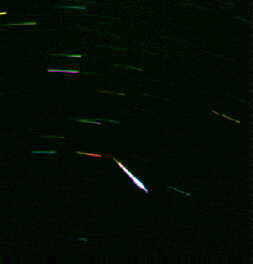
The Perseid meteor shower at its peak and will be visible all night tomorrow. It won’t have to compete with the Moon until after 3:30 am Sunday morning. The meteors will be seen all over the sky, However Perseid meteors can be backtracked to a spot below the W shaped constellation of Cassiopeia, in the area of the constellation Perseus. As the night progresses, the radiant point will be rising higher in northeast. So lay down on a blanket in a dark location, keep mosquito repellent handy, dress warmly, because the ground and air will be chilly and dewy. Bring some hot coffee or chocolate to drink. And enjoy up to 60 meteors an hour at the peak in the morning. They will be near peak all weekend.
The astronomical event times given are for the Traverse City/Interlochen area of Michigan (EDT, UT –4 hours). They may be different for your location.
Addendum
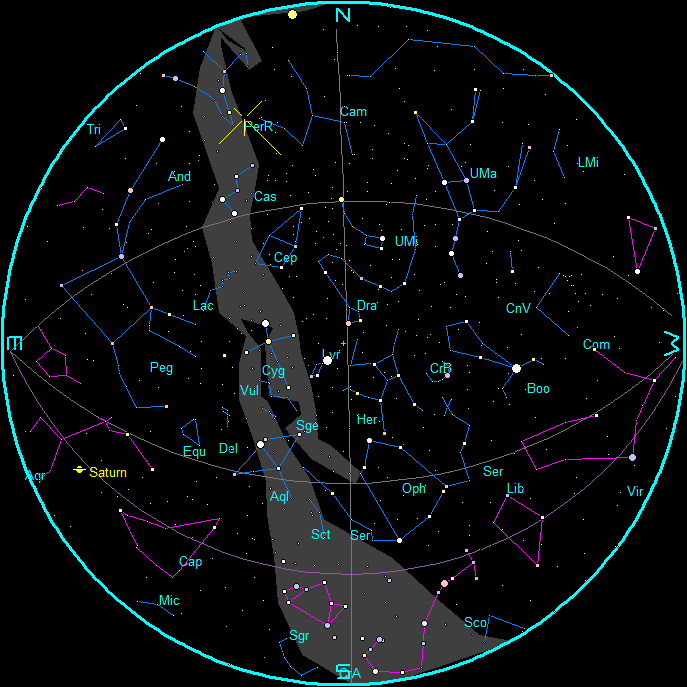
The Dome of the sky for the night of August 12th and 13th, 2023 at 10:30 PM for northern Michigan. The Perseid radiant is in the northeast and fairly low in the sky, and marked in yellow with the caption PerR. It will continue to rise in the northeast throughout the night. The constellation names are abbreviated. Their full names can be found here. Large images can be truncated on the right. Click or tap on the image to enlarge and display the complete image. Created using my LookingUp app.
The cool thing about viewing the meteor shower early in the evening is that the meteoroids enter the Earth’s atmosphere at a grazing angle, so they seem to last longer and have longer trains. I remember one early evening meteor traveling down the Milky Way, like it was a highway.
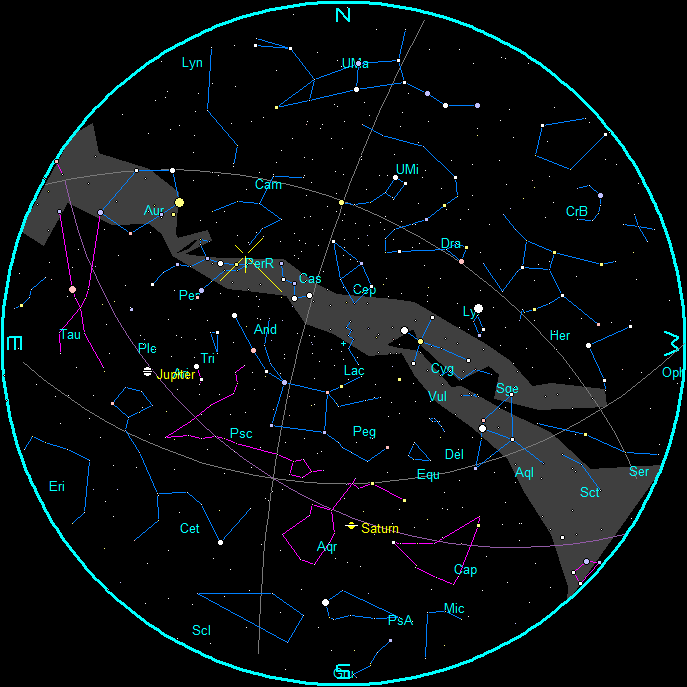
The Dome of the sky for August 12th and 13th, 2023 at 3 AM for northern Michigan. The Perseid radiant is in the northeast, much higher in the sky, and marked in yellow with the caption PerR. The constellation names are abbreviated. Their full names can be found here. Large images can be truncated on the right. Click or tap on the image to enlarge and display the complete image. Created using my LookingUp app.
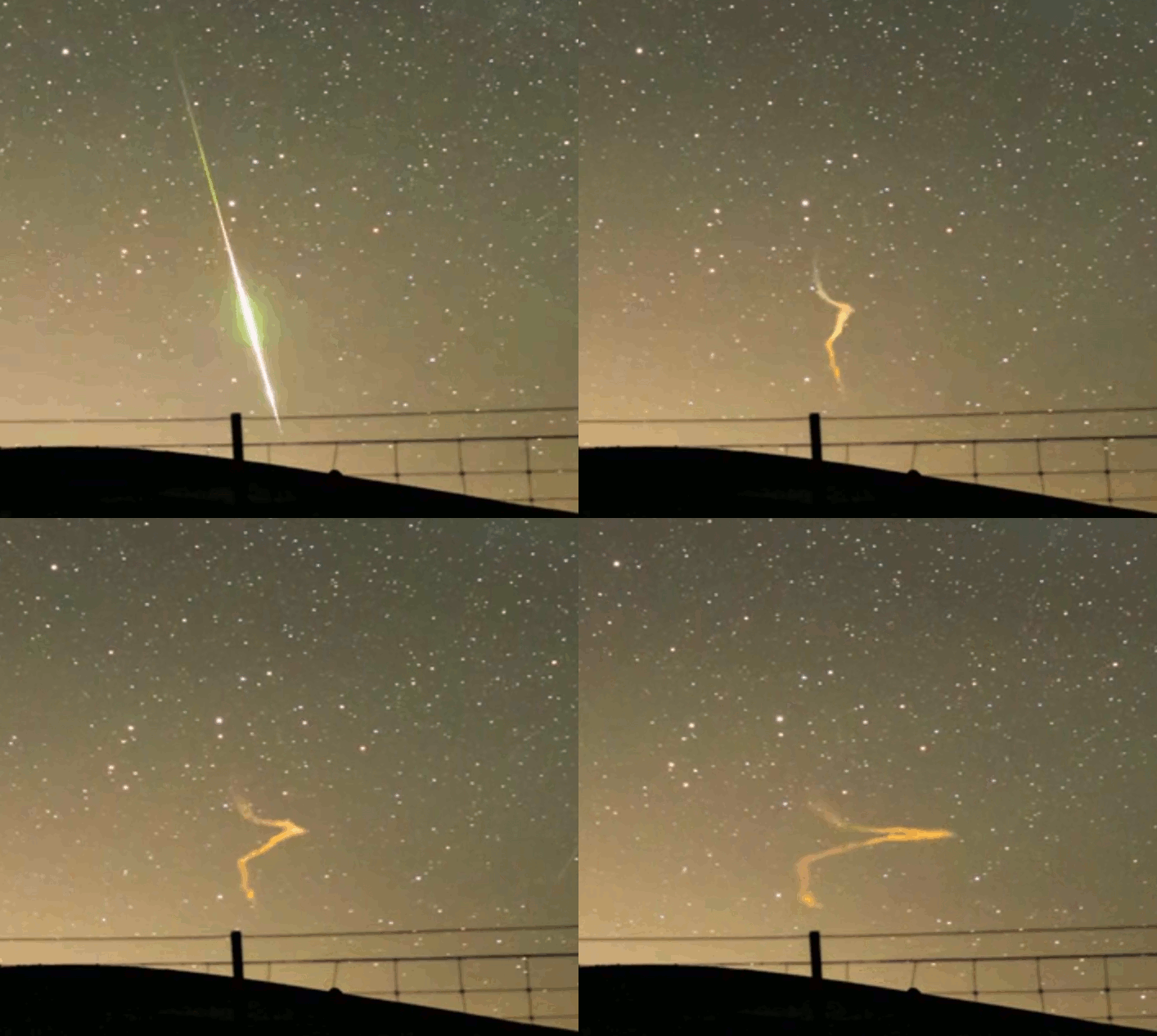
Binoculars come in handy to view the luminous trains that the brightest Perseids leave behind for a short time.
 Bob Moler's Ephemeris Blog