Archive
Ephemeris: 01/09/2024 – Betelgeuse, Betelgeuse, nope I’m not saying it again
Jan 9. This is Ephemeris for Tuesday, January 9th. Today the Sun will be up for 9 hours and 1 minute, setting at 5:20, and it will rise tomorrow at 8:18. The Moon, 2 days before new, will rise at 8:04 tomorrow morning.
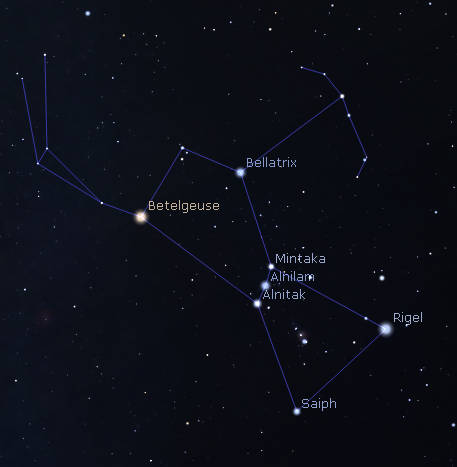
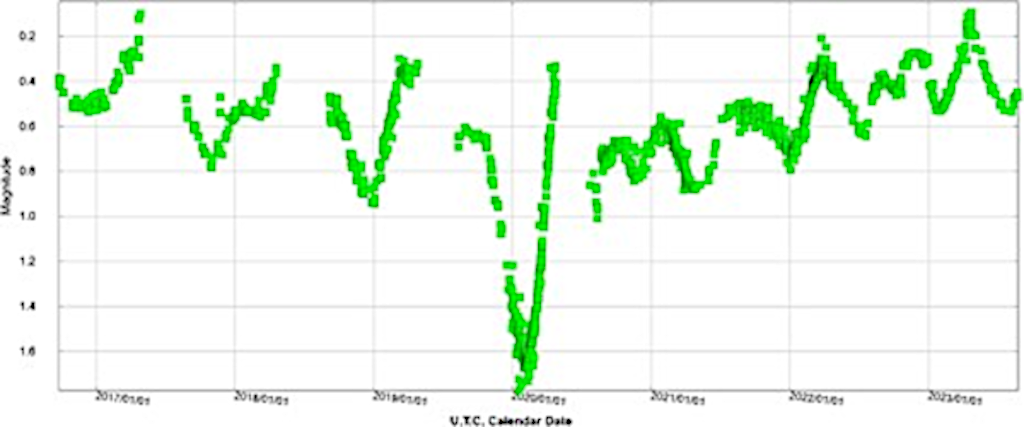
The constellation Orion has two first magnitude stars, the most famous of these is Betelgeuse. It is a red supergiant star in Orion’s shoulder. Its name actually means Armpit of the Central One. Betelgeuse is about 500 light years away, and it is many hundreds of thousands of times brighter than the Sun, and it’s thought to be almost as big as the orbit of Jupiter. For all its size it’s only about 20 times the mass of the Sun. Some call it a red-hot vacuum. Betelgeuse has been interesting lately, first dimming for a period of time and now somewhat brighter than normal. Astronomers are wondering what’s going on with it. Betelgeuse is a type of star that will end with the supernova explosion. The question is when. Perhaps sometime in the next 100,000 years.
The astronomical event times given are for the Traverse City/Interlochen area of Michigan (EST, UT –5 hours). They may be different for your location.
Addendum

 Bob Moler's Ephemeris Blog