Archive
Ephemeris: 01/22/2024 – The Dog Star’s little buddy
This is Ephemeris for Monday, January 22nd. Today the Sun will be up for 9 hours and 24 minutes, setting at 5:37, and it will rise tomorrow at 8:11. The Moon, 3 days before full, will set at 7:14 tomorrow morning.
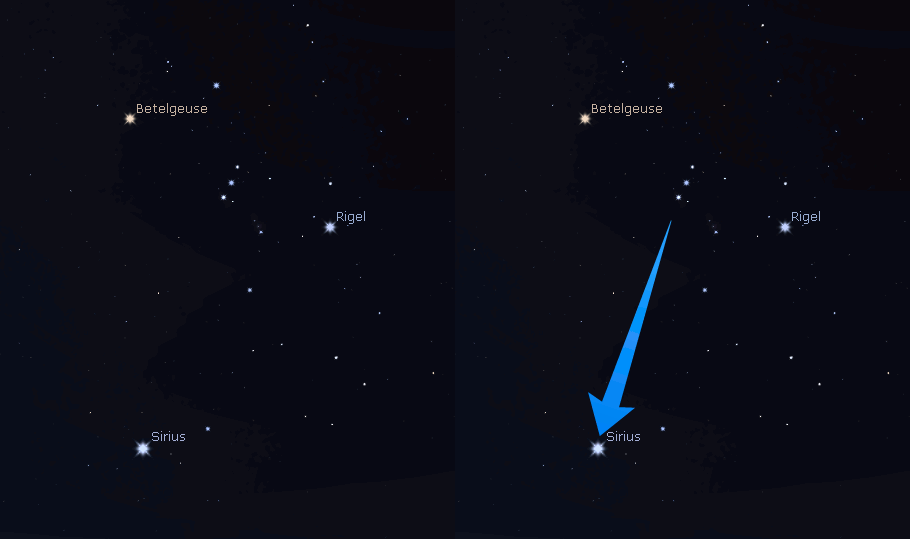
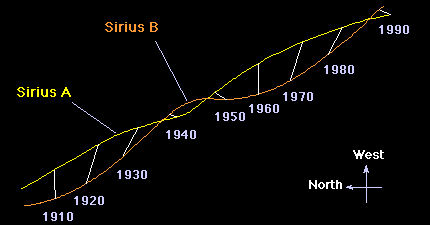
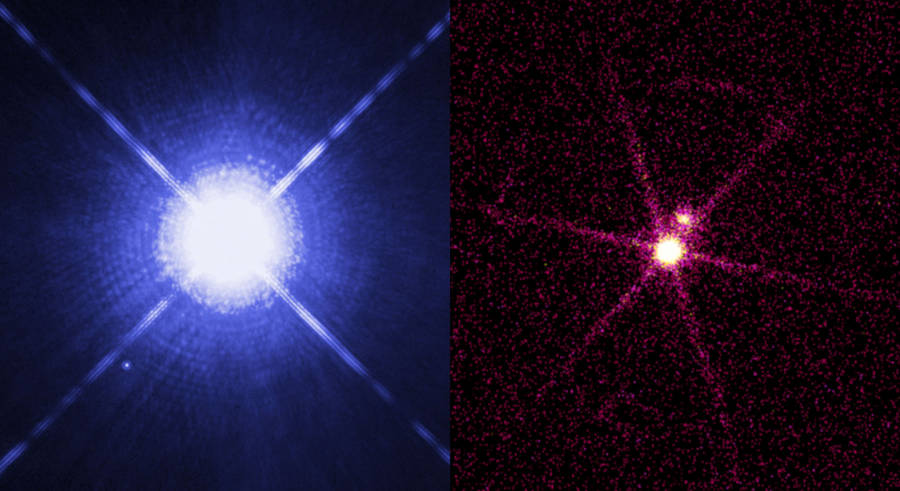
Sirius is the brightest nighttime star and is located low in the southeast at 9 p.m. below and a bit left of Orion the Hunter. We’ve visited Sirius on Tuesday, but there is another star in the Sirius system that is practically invisible due to Sirius’ dazzling glare. Its name is Sirius B, nicknamed the Pup, alluding to Sirius’ Dog Star title. The tiny star was suspected as far back as 1834 due to Sirius’ wavy path against the more distant stars in the sky. Sirius and the Pup have 50-year orbits of each other. The Pup was first seen in 1862. It was the first of a new class of stars to be discovered, white dwarfs. The Pup is a dying star with the mass of the Sun, collapsed down to the size of the Earth after running out of hydrogen fuel in its core.
The astronomical event times given are for the Traverse City/Interlochen area of Michigan (EST, UT –5 hours). They may be different for your location.
Addendum
 Bob Moler's Ephemeris Blog