Archive
Ephemeris: 06/29/2026 – Red stars large and small
This is Ephemeris for Monday, June 29th. Today the Sun will be up for 15 hours and 32 minutes, setting at 9:32, and it will rise tomorrow at 6:00. The Moon, at full today, will rise at 9:53 this evening.
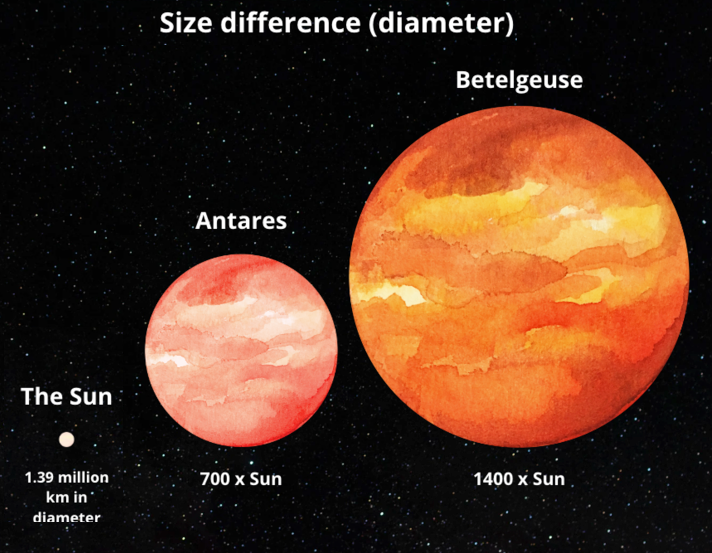
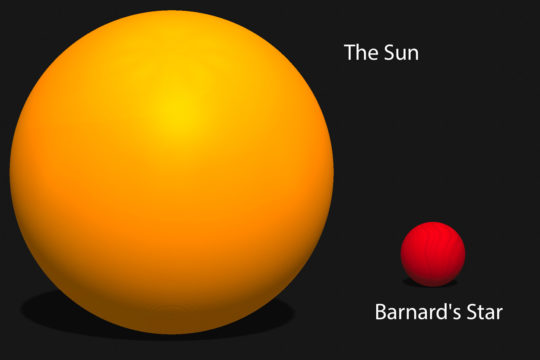
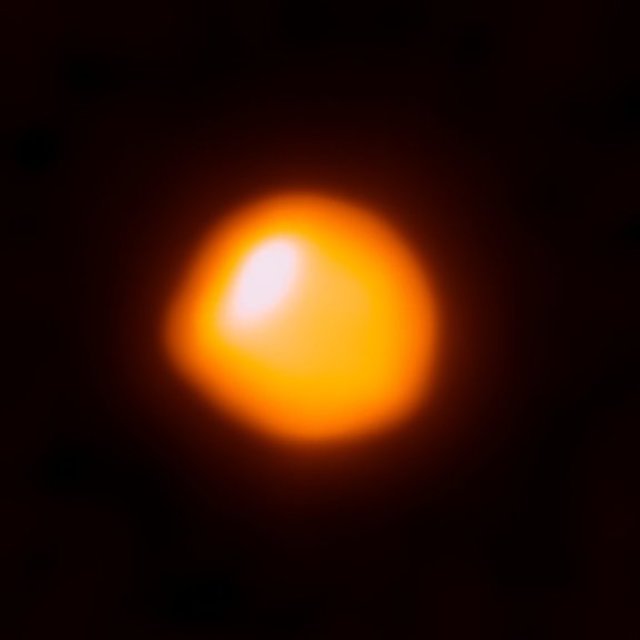
There are two kinds of red stars very bright ones and very dim ones. The bright red ones are very few. One of them in the evening sky now is Antares in the heart of Scorpius the scorpion. Another one is in the winter sky and the most famous red giant of all, Betelgeuse in the shoulder of Orion the hunter. These are giant stars have exhausted the hydrogen in their cores to produce helium and are working on helium or even heavier elements fusing them to still heavier elements at even higher temperatures to keep them alive, but since they are working on the ash of the previous reaction, they won’t last very long, and the star dies, possibly cataclysmically. The higher internal heat bloats the star to be, huge, making its outer layers are actually cooler.
The astronomical event times given in this blog are for the Traverse City/Interlochen area of Michigan (Lat 44.7° N, Long 85.7° W; EDT, UT – 4 hours) unless stated otherwise. Times will be different for other locations.
Addendum
Ephemeris: 06/26/2026 – How do we know so much about those points of lights in the sky?
This is Ephemeris for Friday, June 26th. Today the Sun will be up for 15 hours and 33 minutes, setting at 9:32, and it will rise tomorrow at 5:59. The Moon, 3 days before full, will set at 3:37 tomorrow morning.
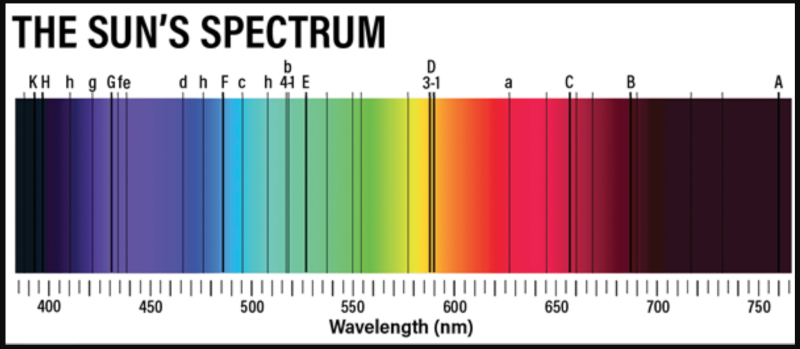
All but a handful of stars are mere points in even our largest telescopes. How do we know so much about them then? The reason is the science of spectroscopy, breaking down light into its constituent colors where color equals frequency or the energy of the light. Isaac Newton was the first to discover that by passing white light through a prism it turned into a rainbow of colors that the colors were actually combined within the white light. Passing sunlight through a vertical slit and smearing the light horizontally with the prism into its constituent colors, many dark vertical lines within that spectrum of colors appear. They turned out to be the fingerprints of the elements within the atmospheres of the stars, and that is just the beginning.
The astronomical event times given in this blog are for the Traverse City/Interlochen area of Michigan (Lat 44.7° N, Long 85.7° W; EDT, UT – 4 hours) unless stated otherwise. Times will be different for other locations.
Addendum
Ephemeris: 06/25/2026 – The color of stars
This is Ephemeris for Thursday, June 25th. Today the Sun will be up for 15 hours and 34 minutes, setting at 9:32, and it will rise tomorrow at 5:58. The Moon, halfway from first quarter to full, will set at 3:03 tomorrow morning.
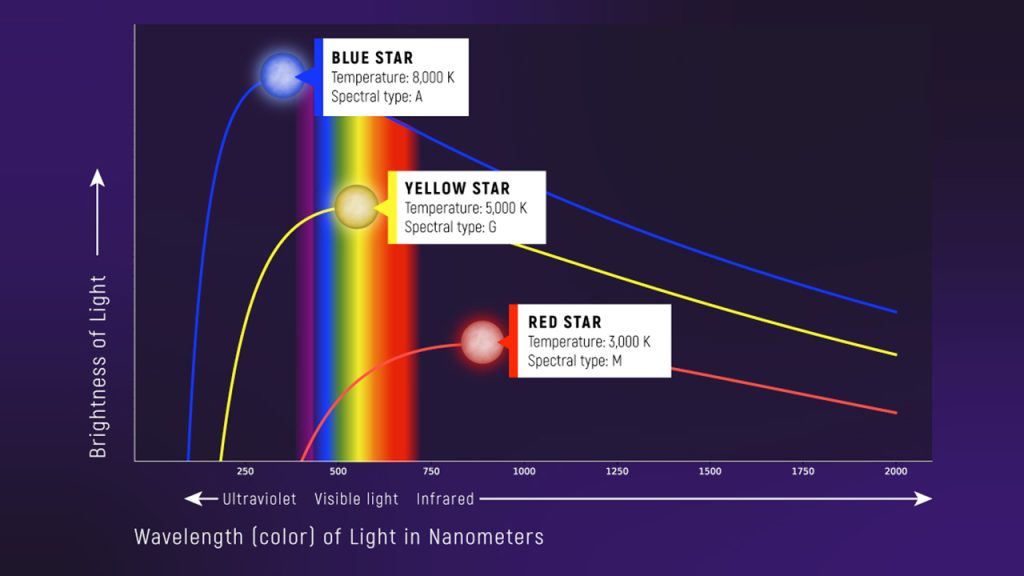
Looking out at the night sky casually, the first impression is that the stars all appear to be white. Closer inspection shows that some appear with tinges of red or orange or maybe yellow while other stars have a bluish cast to them. The color of stars is due to their surface temperature which physicists call black body radiation. A rainbow is a spectrum of colors from red through orange yellow green blue and violet. These colors represent the different wavelengths of light. The peak wavelength determines the star’s surface temperature. The Sun’s in the green in the middle of our visual field. Cooler stars have their peak in the red, while hotter stars have their peak output to the blue end of the spectrum.
The astronomical event times given in this blog are for the Traverse City/Interlochen area of Michigan (Lat 44.7° N, Long 85.7° W; EDT, UT – 4 hours) unless stated otherwise. Times will be different for other locations.
Addendum

Ephemeris: 05/14/2026 – Looking at the bluest first magnitude star: Spica
This is Bob Moler with Ephemeris for Thursday, May 14th. Today the Sun will be up for 14 hours and 47 minutes, setting at 9:03, and it will rise tomorrow at 6:14. The Moon, 2 days before new, will rise at 5:02 tomorrow morning.
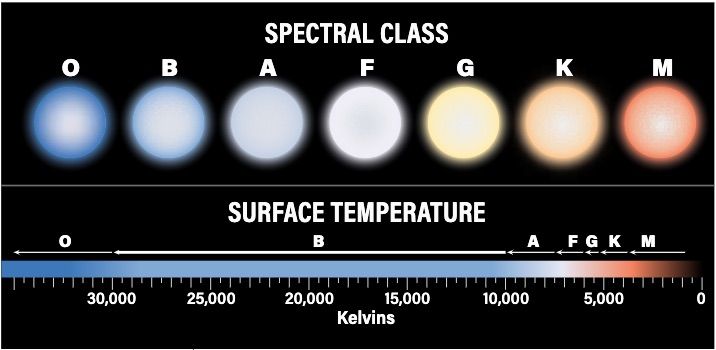
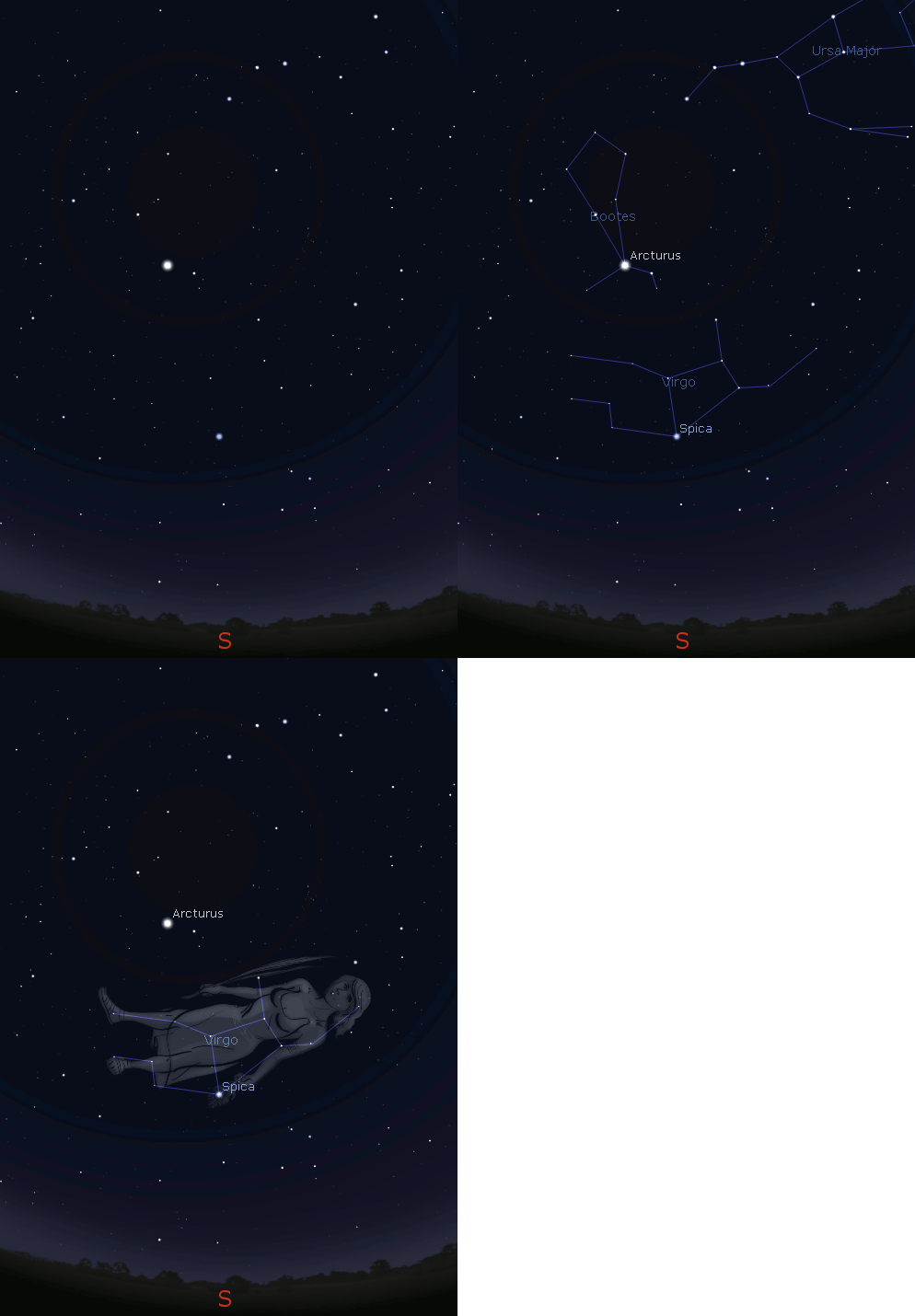
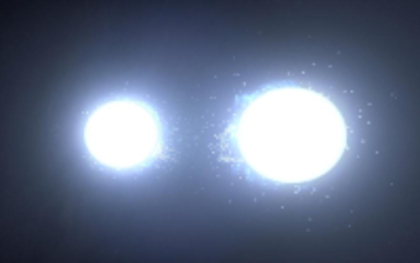
In the south at 11 PM is the bright star Spica in Virgo the virgin. Arcturus, high in the southeast, is much brighter than Spica and has an orange tint to Spica’s bluish hue. In fact, Spica is the 15th brightest and the bluest of the 21 first magnitude stars. That means that it has a really hot surface temperature. I found that out once photographing a lunar eclipse near Spica, The star came out very blue, much bluer than seen visually. Spica is actually two stars in a tight 4-day orbit of each other. They are both reasonably matched in mass and brightness. The twin stars of Spica are 250 light years away. I’m glad the stars are young now. They will have a very interesting future as they age and interact in the next few million years.
The astronomical event times given in this blog are for the Traverse City/Interlochen area of Michigan (Lat 44.7° N, Long 85.7° W; EDT, UT – 4 hours) unless stated otherwise. Times will be different for other locations.
Addendum
Ephemeris: 04/28/2026 – Stars spend most of their lives fueled by hydrogen
This is Ephemeris for Tuesday, April 28th. Today the Sun will be up for 14 hours and 7 minutes, setting at 8:44, and it will rise tomorrow at 6:35. The Moon, 3 days before full, will set at 5:24 tomorrow morning.
A star is a gaseous ball made mostly of hydrogen, which due to its mass crushes down in its core to create heat in the millions of degrees. Under those temperatures and pressures hydrogen nuclei, stripped of their electrons can collide to convert into helium and in doing so lose a tiny bit of mass that turns into energy which is used to sustain the star’s light and keep it stable. This hydrogen burning, so to speak, takes place during the longest period of a star’s life. And stars have a characteristic color based on their mass. Stars with little mass are cooler and appear a dim red. We call them red dwarfs. The nearest star to our solar system is a red dwarf called Proxima Centauri. It’s so dim that it’d be difficult to find with a pair of binoculars. And it’s only four light years away.
The astronomical event times given in this blog are for the Traverse City/Interlochen area of Michigan (Lat 44.7° N, Long 85.7° W; EDT, UT – 4 hours) unless stated otherwise. Times will be different for other locations.
Addendum
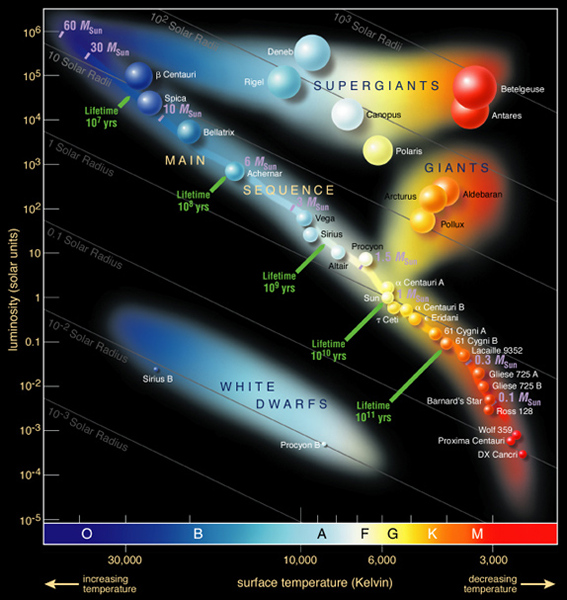
The HR diagram above shows the various types and brightness of stars. The relatively thin line of stars from upper left to lower right, called the main sequence, are stars that are running primarily on hydrogen as a fuel. At the bottom end of the main sequence small stars with a fraction of the sun’s mass. All these stars are near the sun. It doesn’t mean that we live in a bad neighborhood, but that the most numerous stars are red dwarfs, and we just can’t see them when they’re farther away. All the other stars are not using as hydrogen as their main fuel source. Stars the upper right are using heavier elements to produce energy from the fusion products of lighter elements, after having run out of hydrogen in their cores. The white dwarf stars in the lower part of the diagram no longer have active thermonuclear reactions in their cores and are cooling down and collapsing. A star with the mass of the sun, when it becomes a white dwarf, will shrink down to about the size of the earth.
Ephemeris: 02/19/2026 – The star called Pup
This is Ephemeris for Thursday, February 19th. Today the Sun will be up for 10 hours and 40 minutes, setting at 6:17, and it will rise tomorrow at 7:35. The Moon, 2 days past new, will set at 9:05 this evening.
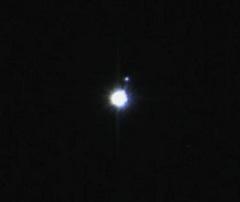
Sirius is the brightest nighttime star and is located in the south at 9 p.m. below and a bit left of Orion the Hunter. We’ve visited Sirius last Monday, but there is another star in the Sirius system that is practically invisible due to Sirius’ dazzling glare. Its name is Sirius B, nicknamed the Pup, alluding to Sirius’ Dog Star title as the heart of Canis Major, Orion’s larger hunting dog. The tiny star was suspected as far back as 1834 due to Sirius’ wavy path in the sky against the more distant stars. Sirius and the Pup have 50-year orbits of each other. The Pup was first seen in 1862. The Pup was the first of a new class of stars to be discovered, white dwarfs. The Pup, with the mass of the Sun, is packed into the volume of the Earth.
The astronomical event times given in this blog are for the Traverse City/Interlochen area of Michigan (Lat 44.7° N, Long 85.7° W; EST, UT – 5 hours) unless stated otherwise. Times will be different for other locations.
Addendum
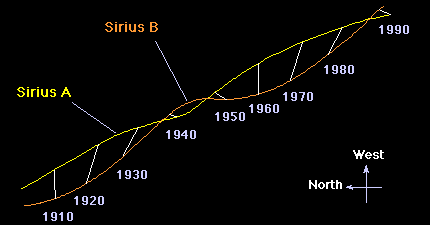
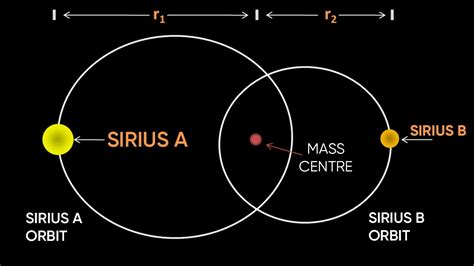
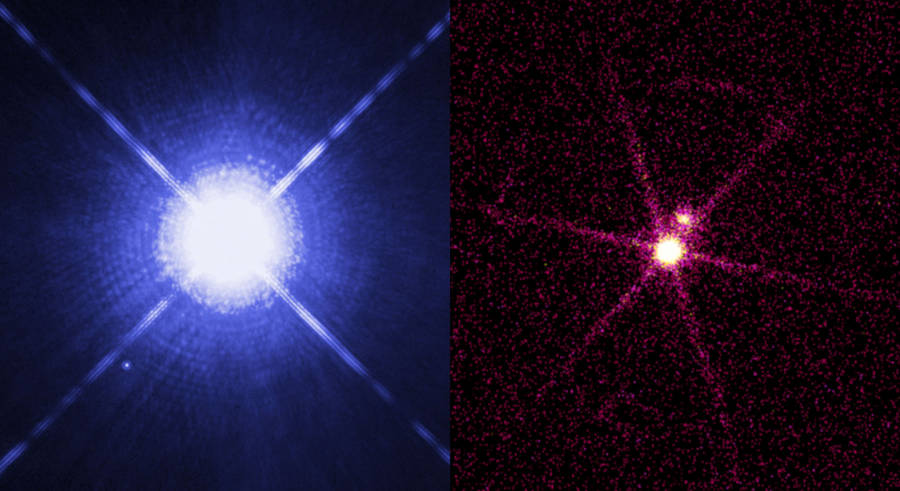
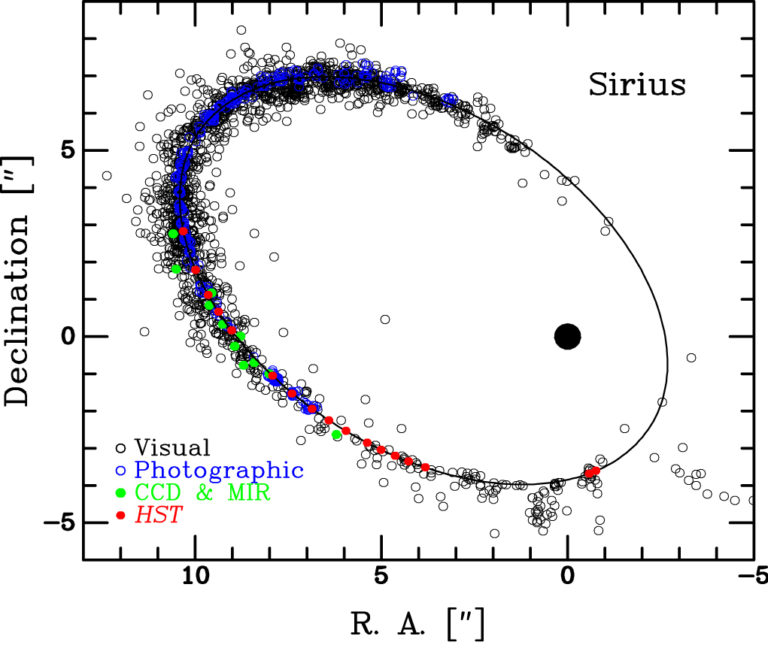
by Howard E. Bond et al 2017 ApJ 840 70.
Ephemeris: 02/16/2026 – The Dog Star
This is Bob Moler with Ephemeris for President’s Day, Monday, February 16th. Today the Sun will be up for 10 hours and 31 minutes, setting at 6:12, and it will rise tomorrow at 7:39. The Moon, 1 day before new, will rise at 7:51 tomorrow morning.
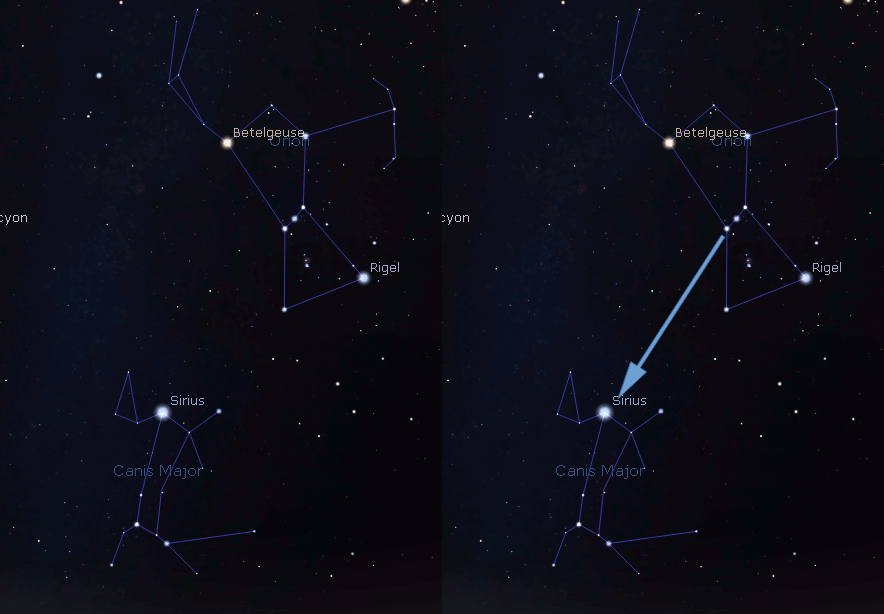
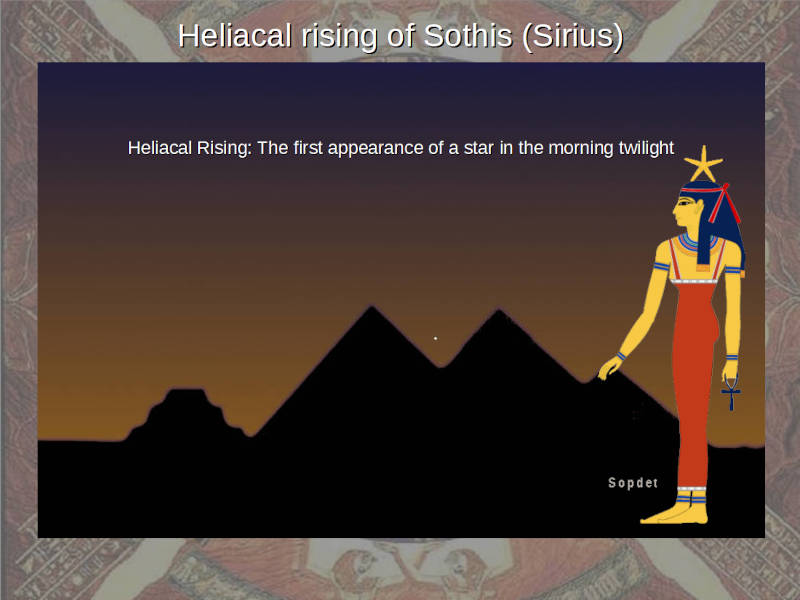
The second-brightest star-like object in the evening sky is Sirius, also known as the Dog Star. It also is the brightest nighttime star in our skies period. Tonight at 9 p.m. it’s located in the southern sky. The Dog Star name comes from its position at the heart of the constellation Canis Major, the great dog of Orion the hunter. The three stars of Orion’s belt tilt to the lower left to Sirius. Sirius means ‘Dazzling One’, because of its great brilliance and twinkling. Its Egyptian name was Sopdet, and its first appearance in the dawn skies around July 20th signaled the flooding of the Nile, and the beginning of the agricultural year. The relationship of the heliacal rising of Sirius and the seasonal or tropical year lasted from about 2900 BCE to the start of the Common Era. Sirius owes much of its brilliance to the fact that it lies close to us, only 8.6 light years away.
The astronomical event times given in this blog are for the Traverse City/Interlochen area of Michigan (Lat 44.7° N, Long 85.7° W; EST, UT – 5 hours) unless stated otherwise. Times will be different for other locations.
Addendum
Trivia Note
The Greeks invented the term “Dog days of summer” for the hottest days of July because they thought that Sirius added its intensity to the heat of the Sun to make it hotter out. So why doesn’t Sirius help warm our winter nights? Just asking.
Ephemeris: 02/09/2026 – Orion’s amazing belt stars
This is Ephemeris for Monday, February 9th. Today the Sun will be up for 10 hours and 11 minutes, setting at 6:02, and it will rise tomorrow at 7:50. The Moon, at last quarter today, will rise at 3:01 tomorrow morning.
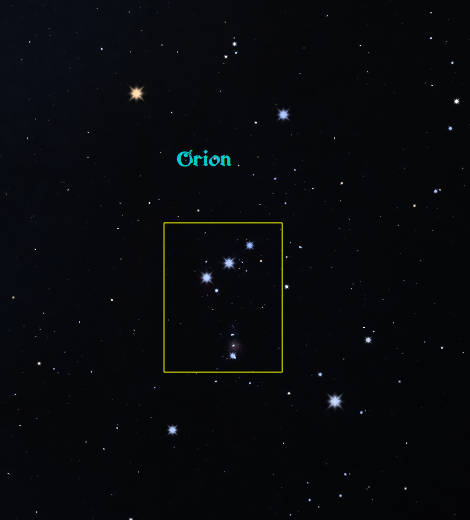
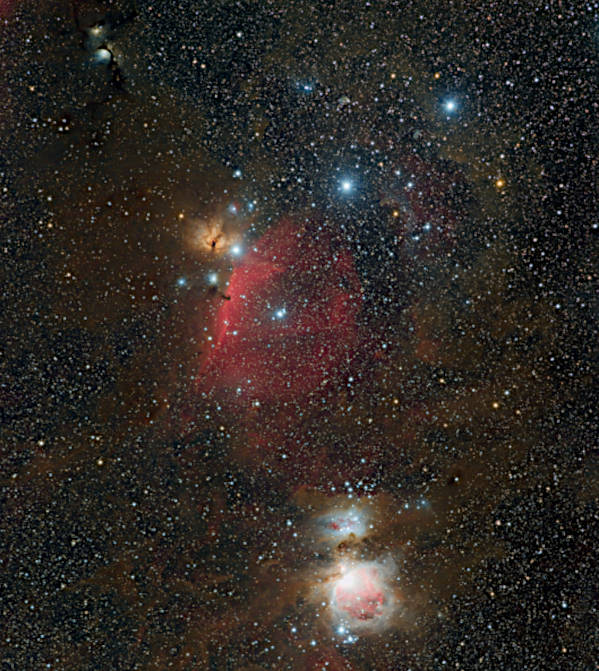
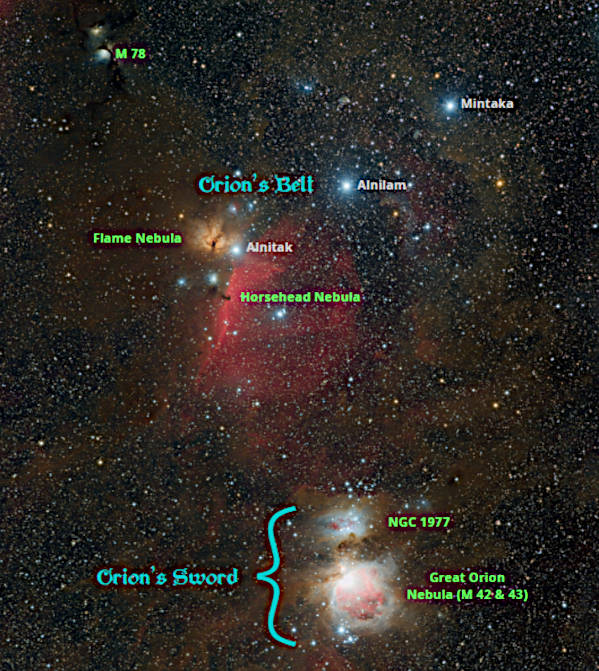
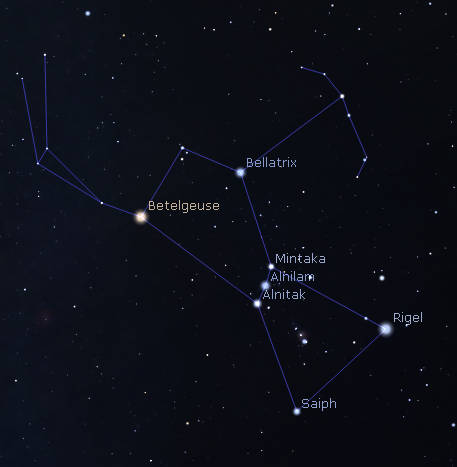
Orion’s belt of three stars is one of the most noticeable star groupings in the sky. There are no other groups of three bright stars in a straight line visible anywhere else in the sky. The star’s names from left to right are Alnitak, Alnilam and Mintaka. They are actually a bit farther away than the other bright stars of Orion. Alnilam, the center star, is over three times the distance of red giant Betelgeuse above them and over twice as far as blue white giant star Rigel below them. Alnilam is 375 thousand times brighter than the Sun. These three stars were also known as Frigga’s Spindle by the Norsemen. Frigga, also known as Freya, is the goddess from which we get the name of the day of the week we call Friday.
The astronomical event times given in this blog are for the Traverse City/Interlochen area of Michigan (Lat 44.7° N, Long 85.7° W; EST, UT – 5 hours) unless stated otherwise. Times will be different for other locations.
Addendum
Ephemeris: 01/16/2026 – Comparing Orion’s two brightest stars
This is Ephemeris for Friday, January 16th. Today the Sun will be up for 9 hours and 13 minutes, setting at 5:29, and it will rise tomorrow at 8:15. The Moon, 2 days before new, will rise at 7:54 tomorrow morning.
Orion’s two brightest stars are kind of the same but different. Let me explain. Betelgeuse is a red giant star, extremely massive, maybe 14 to 19 times the sun’s mass. It is somewhere between 8 and 14 million years old, which compared to the sun is just a baby, except it is so massive that it is in the last million or so years of its life. Rigel is a bluish white and a bit more massive, about 21 times the mass of the sun, and maybe 8 million years old. It has used most of the hydrogen in its core, and is beginning to transition into its final years which is a few more millions of years. So it’s not as far along in its evolution as Betelgeuse and has not bloated out and turned red. Betelgeuse is 500 light years away, while Rigel is almost 900.
The astronomical event times given in this blog are for the Traverse City/Interlochen area of Michigan (Lat 44.7° N, Long 85.7° W; EST, UT – 5 hours) unless stated otherwise. Times will be different for other locations.
Addendum
Ephemeris: 12/15/2025 – Capella, the winter star that never quite leaves us*
This is Ephemeris for Monday, December 15th. Today the Sun will be up for 8 hours and 49 minutes, setting at 5:02, and it will rise tomorrow at 8:14. The Moon, halfway from last quarter to new, will rise at 5:13 tomorrow morning.
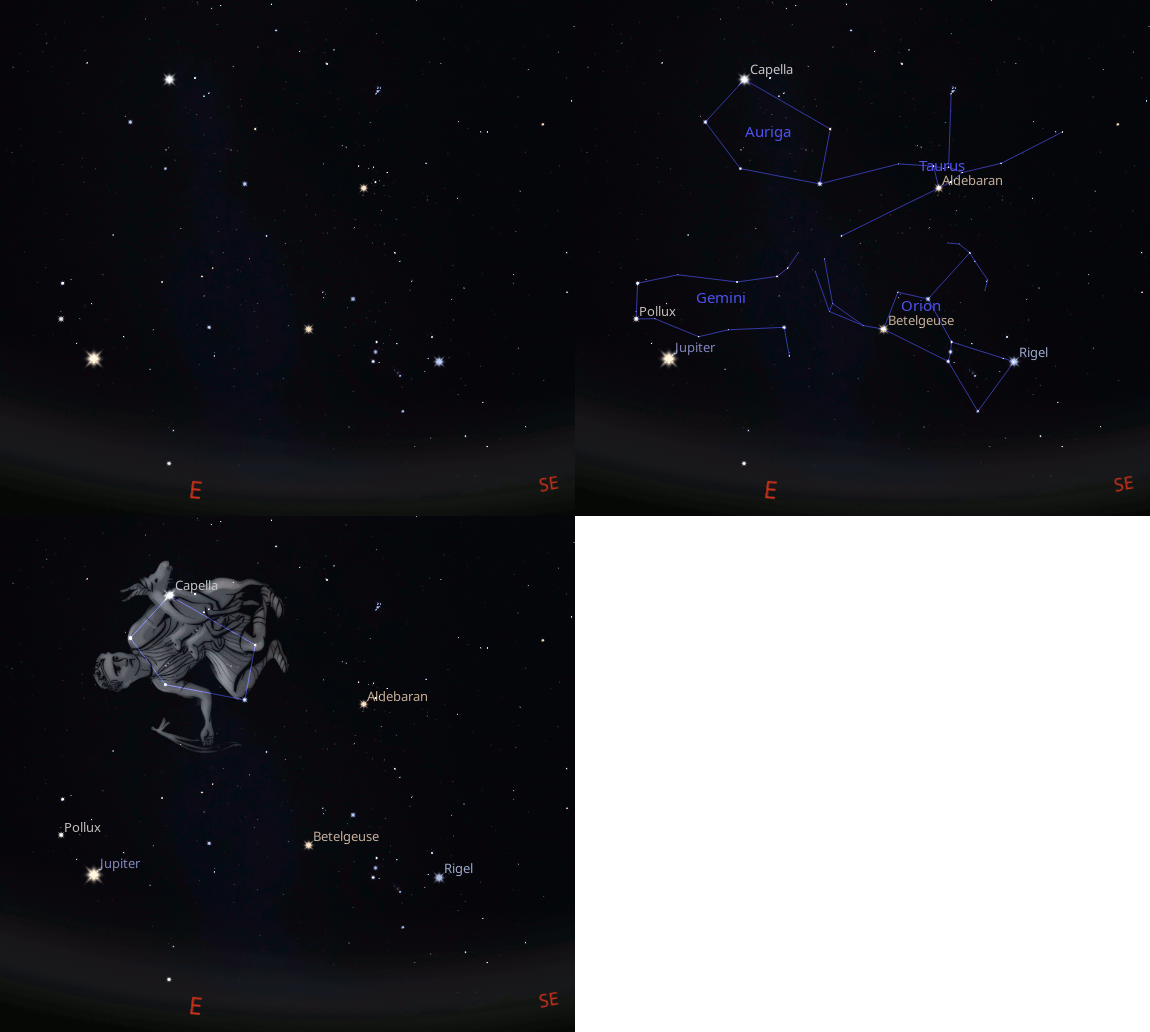
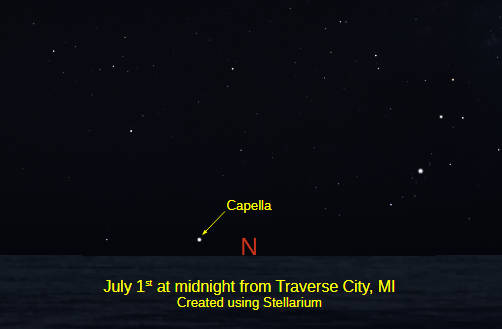
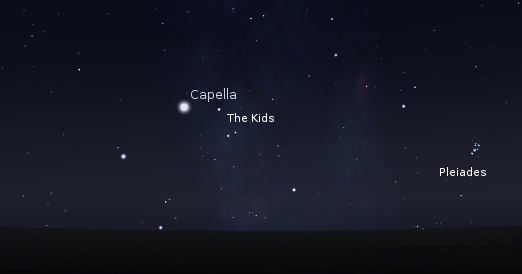
Capella is the northernmost first magnitude stars. Tonight it shines in the northeastern sky. First magnitude stars are the 21 brightest stars in the night sky. Capella is the 6th brightest. Although I’ve always known it as the little she-goat, Capella’s name literally translates to “little goat.” Her three Kids are represented by a narrow triangle of stars positioned to the right of her in tonight’s evening sky. Capella is in the topmost corner of the pentagonal constellation of Auriga the Charioteer. Capella is actually a system of four stars only 43 light years away. And never sets for listeners in the Interlochen Public Radio transmission area who have a low northern horizon.
The astronomical event times given in this blog are for the Traverse City/Interlochen area of Michigan (Lat 44.7° N, Long 85.7° W; EST, UT – 5 hours) unless stated otherwise. Times will be different for other locations.
* If you live north of 44° north latitude.
Addendum