Ephemeris: 01/26/2024 – In astronomy “dark” means we can’t see it
This is Ephemeris for Friday, January 26th. Today the Sun will be up for 9 hours and 33 minutes, setting at 5:42, and it will rise tomorrow at 8:07. The Moon, 1 day past full, will rise at 6:37 this evening.
What does the word “dark” mean? In astronomy the word dark means something we cannot see. In ages before 1959 we could not see the backside of the moon, so people got to calling it the dark side of the Moon. All changed in 1959 when a Soviet spacecraft went around behind the moon it took photographs of it. The two contenders for dark things in astronomy are now dark matter and dark energy. Dark matter is something that has a gravitational effect on the galaxies that it surrounds, but we can’t see it. Also, the expansion of the universe appears to be accelerating, where we would expect it to be decelerating because of gravitational forces of all the galaxies in it. We call that cause dark energy. And we don’t know what either is.
The astronomical event times given are for the Traverse City/Interlochen area of Michigan (EST, UT –5 hours). They may be different for your location.
Addendum
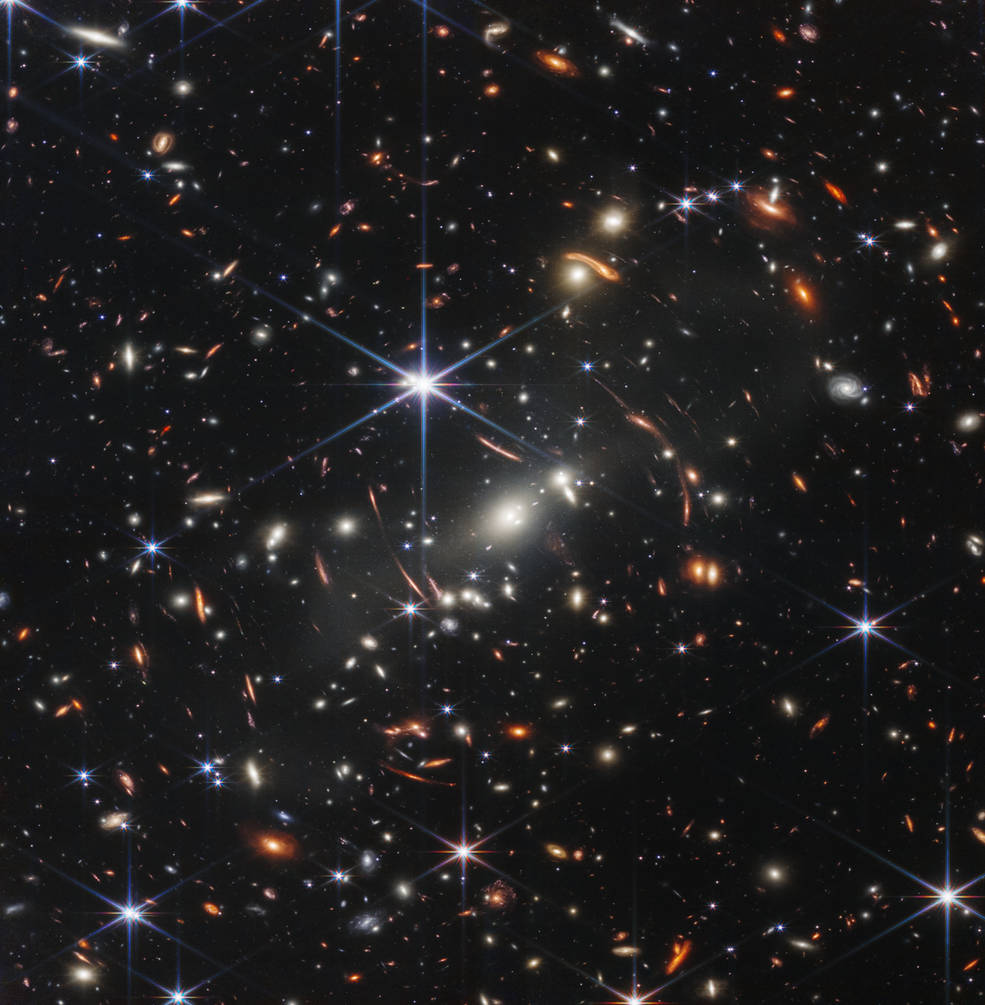
Two possible causes of Dark Matter are in the running, WIMPs, and of course MACHOs. WIMPs are Weakly Interacting Massive Particles, while MACHOs are the bit more tortured acronym Massive Astrophysical Compact Halo Objects. Whatever they are they don’t interact much with themselves or ordinary matter, neither emitting light or any other radiation, or block it. However, they have mass and warp spacetime, distorting the shape of galaxies seen behind them. They also make galaxies seem to be more massive than their starlight would make them appear, and other effects.
 Bob Moler's Ephemeris Blog