Archive
Ephemeris: 09/28/2026 – What happens to the Earth during Autumn
This is Ephemeris for Monday, September 28th. Today the Sun will be up for 11 hours and 51 minutes, setting at 7:28, and it will rise tomorrow at 7:38. The Moon, 2 days past full, will rise at 8:04 this evening.
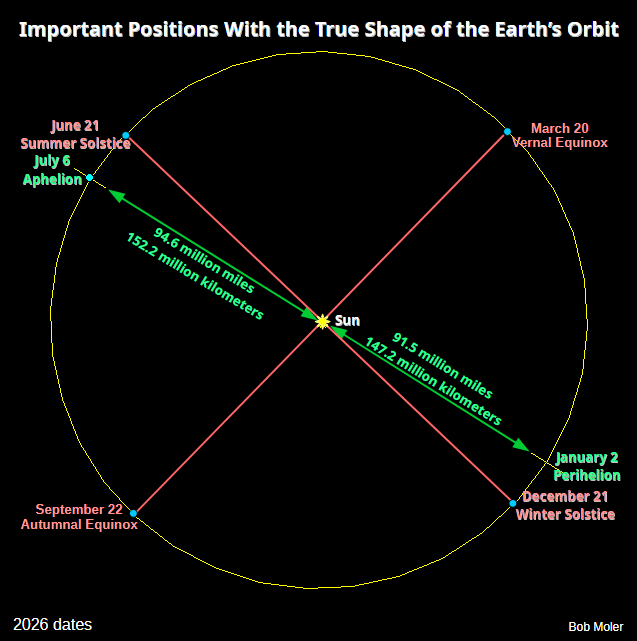
Autumn is a season of change. The Sun, at noon each day, will not rise as high as the previous day. Sunrises will occur progressively later each day, while the Sun sets progressively earlier. This is not occuring by the earth moving away from the sun giving us colder temporatures. In fact throughout autumn we’re moving slowly closer to the Sun. But the entire yearly range in the sun’s distance change is only 3 million miles out of 93 million. The reason for the change of season is the tilt of the axis of the Earth to its orbital plane around the sun. The axis of the Earth points in a single direction, currently towards the star Polaris, so as the Earth moves around the Sun the Earth’s axis appears to change its orientation with the Sun.
The astronomical event times given in this blog are for the Traverse City/Interlochen area of Michigan (Lat 44.7° N, Long 85.7° W; EDT, UT – 4 hours) unless stated otherwise. Times will be different for other locations.
Addendum
Ephemeris: 09/24/2026 – The Harvest Moon Effect
This is Ephemeris for Thursday, September 24th. Today the Sun will be up for 12 hours and 3 minutes, setting at 7:36, and it will rise tomorrow at 7:33. The Moon, 2 days before full, will set at 6:18 tomorrow morning.
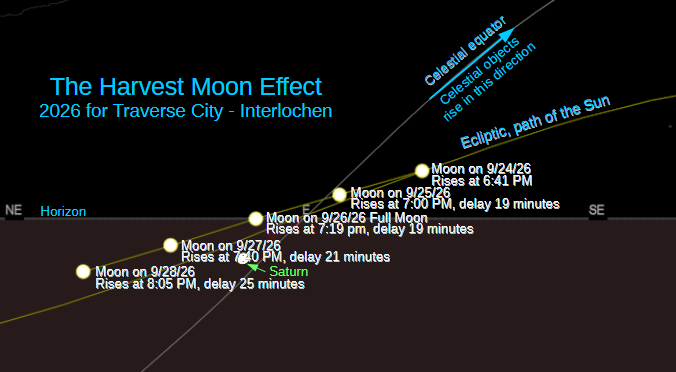
The full, or nearly full moon, just rising, looks like a large orange pumpkin. The color, like the red of the sunset is caused by the scattering out of blue light by the atmosphere. It can happen at any full moon, not just the Harvest Moon, which will occur on Saturday. What the Moon around the Harvest Moon does do is rise only a little later each evening. This helped the farmers in earlier times effectively extend twilight to bring in the crops. On average the moon rises or sets 50 minutes later each night. However when the Moon is in the part of the sky where it is moving northward as well as eastward, then it rises only a little later each night. Tomorrow’s Moon will rise only 19 minutes later than it will this evening.
The astronomical event times given in this blog are for the Traverse City/Interlochen area of Michigan (Lat 44.7° N, Long 85.7° W; EDT, UT – 4 hours) unless stated otherwise. Times will be different for other locations.
Addendum
Ephemeris: 09/14/2026 – The young September Moon slowly enters the evening sky
This is Ephemeris for Monday, September 14th. Today the Sun will be up for 12 hours and 34 minutes, setting at 7:55, and it will rise tomorrow at 7:21. The Moon, half way from new to first quarter, will set at 9:07 this evening.
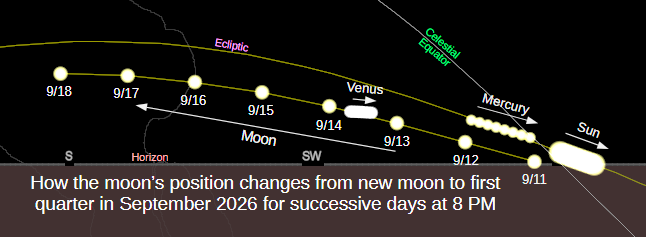
Something interesting is happening to the moon in late summer and early autumn. The moon, when either near new or near full, tends to hang low near the horizon for a long time. We are now about 4 days past new moon, and it is hanging low in the southwestern sky, and will set only about an hour and 12 minutes after the sun. Later this month we’ll have the Harvest Moon when the moon rises at short daily intervals later each night around full moon. I call it the Harvest Moon effect and that allowed farmers of old together in their crops by extending twilight. What the young moon does right now is keeping it really low in the sky so as a crescent it’s not easy to observe low on the southwestern horizon.
The astronomical event times given in this blog are for the Traverse City/Interlochen area of Michigan (Lat 44.7° N, Long 85.7° W; EDT, UT – 4 hours) unless stated otherwise. Times will be different for other locations.
Addendum
Ephemeris: 09/08/2026 – Where is the Sun heading to?
This is Ephemeris for Tuesday, September 8th. Today the Sun will be up for 12 hours and 52 minutes, setting at 8:06, and it will rise tomorrow at 7:14. The Moon, 2 days before new, will rise at 5:18 tomorrow morning.
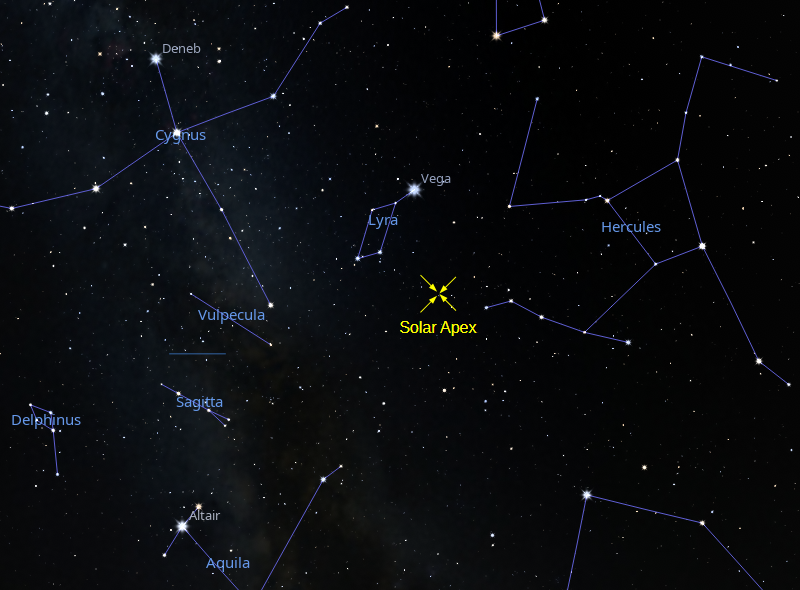
We know that the Earth orbits the sun, but where is the sun going? The sun orbits the center of the Milky Way moving something like 137 miles (220 kilometers) per second in the direction of Cygnus the Swan. It takes about 200 to 250 million years to orbit the center of the galaxy. However, the sun has a motion with respect to the general flow of stars in our neighborhood orbiting the center of the galaxy. Where the sun is heading is it called the solar apex. That point is it just a little bit south of the star Vega which is high in the south in the evening. Vega is the brightest star of this Summer Triangle, which includes Altair to the southeast and Deneb to the east. The sun’s motioned towards the apex that is about 8 miles (13 kilometers) per second.
The astronomical event times given in this blog are for the Traverse City/Interlochen area of Michigan (Lat 44.7° N, Long 85.7° W; EDT, UT – 4 hours) unless stated otherwise. Times will be different for other locations.
Addendum
Ephemeris: 08/25/2026 – Thursday’s lunar eclipse – and when eclipses can occur
This is Ephemeris for Tuesday, August 25th. Today the Sun will be up for 13 hours and 34 minutes, setting at 8:31, and it will rise tomorrow at 6:58. The Moon, 3 days before full, will set at 5:06 tomorrow morning.
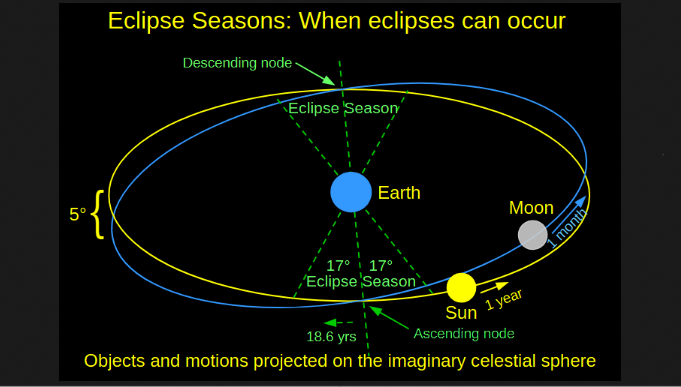
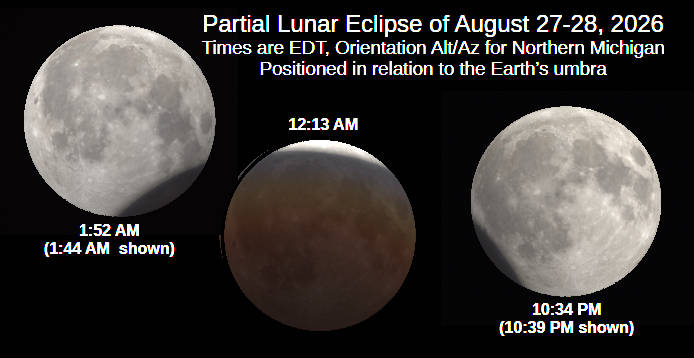
This Thursday’s partial lunar eclipse will occur only 15 days after the last eclipse, a nibble of a solar eclipse for us, and a total eclipse for others on August 12th. Eclipses occur in seasons of about a month long that occur at a bit less than six month intervals, so eclipses will occur a little earlier next year to this. That’s because the crossing points of the Moon’s and the Earth’s orbital planes regress slowly westward. In an eclipse season two eclipses will occur: a solar and a lunar eclipse. On rare occasions when a lunar eclipse occurs in the center of a season a partial solar eclipse can occur two weeks before and again after the lunar eclipse, but they will affect the opposite polar regions of the Earth. For Thursday night, the partial eclipse will start at 10:34 PM. Maximum eclipse occurs at 12:13 AM, and will end at 1:52 AM.
The astronomical event times given in this blog are for the Traverse City/Interlochen area of Michigan (Lat 44.7° N, Long 85.7° W; EDT, UT – 4 hours) unless stated otherwise. Times will be different for other locations.
Addendum
Ephemeris: 08/03/2026 – The Milky Way, a spiral galaxy with a bar

This is Ephemeris for Monday, August 3rd. Today the Sun will be up for 14 hours and 34 minutes, setting at 9:05, and it will rise tomorrow at 6:32. The Moon, 2 days before last quarter, will rise at 11:07 this evening.
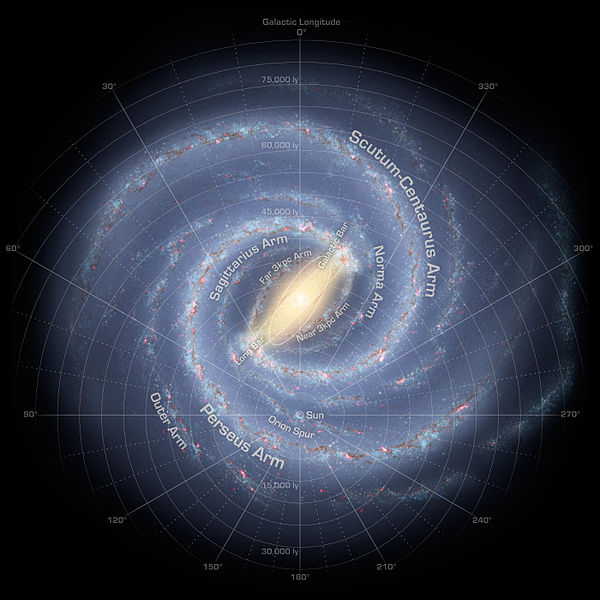
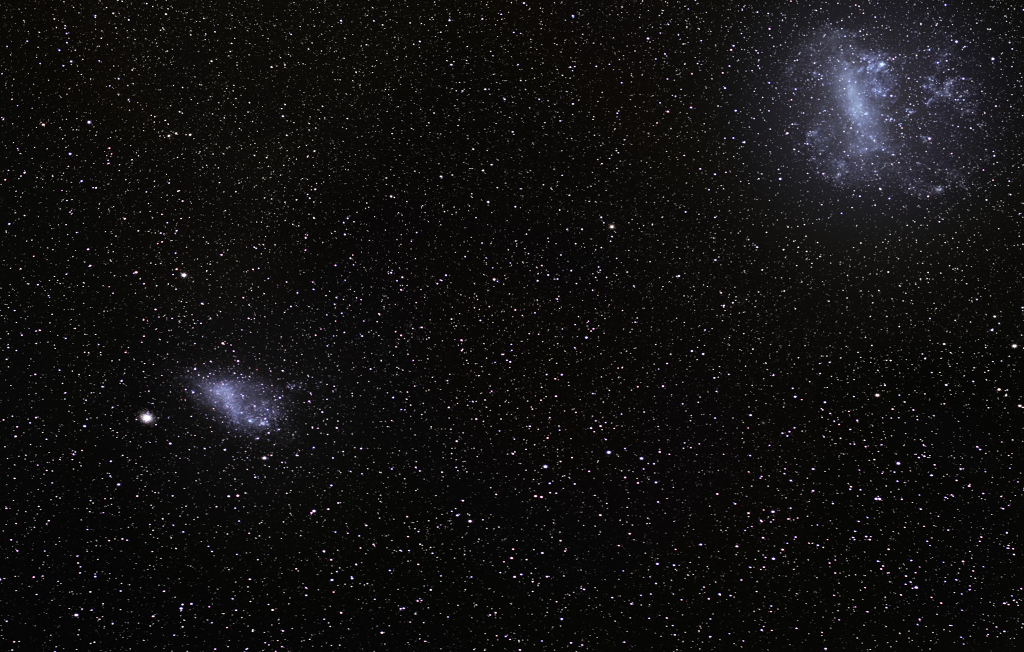
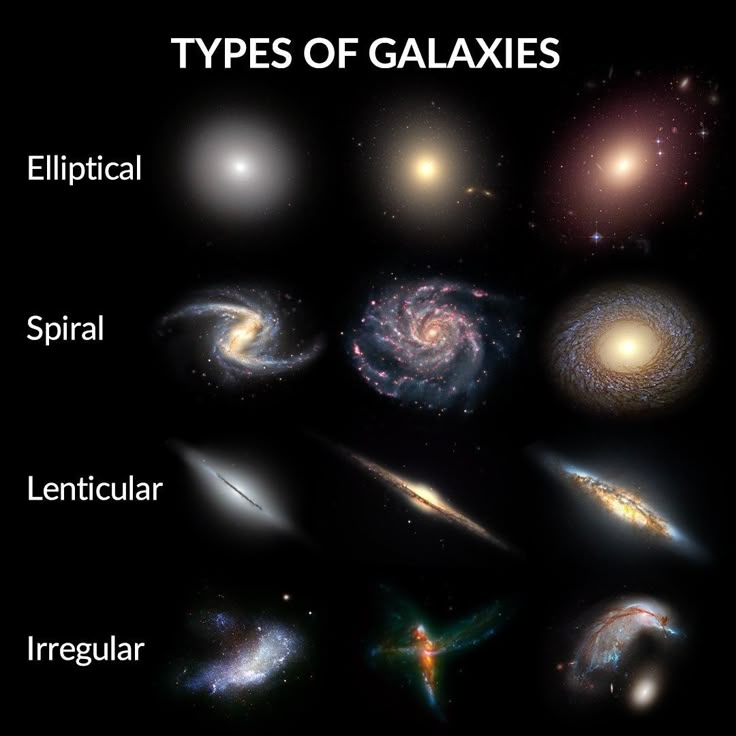
The Milky Way is classed as a barred spiral galaxy. It has an apparent spiral structure in its disk illuminated by bright massive short lived stars that don’t stray far from the nebulae they were born from. Nebulae, mostly dark, form the backbone of the spiral structure. The Andromeda Galaxy is also a spiral, a little larger than our Milky Way Galaxy. Dwarf galaxies like the Magellanic clouds which are seen from the southern hemisphere of the earth that happen to be satellites of the Milky Way, and are irregular in shape. A third type of galaxy is the elliptical galaxy, many of which are extremely large and contain pretty much nothing but old stars, and no nebulosity to make new ones.
The astronomical event times given in this blog are for the Traverse City/Interlochen area of Michigan (Lat 44.7° N, Long 85.7° W; EDT, UT – 4 hours) unless stated otherwise. Times will be different for other locations.
Addendum
Ephemeris: 07/30/2026 – The types and distribution of galaxies
This is Ephemeris for Thursday, July 30th. Today the Sun will be up for 14 hours and 44 minutes, setting at 9:10, and it will rise tomorrow at 6:27. The Moon, 1 day past full, will rise at 9:52 this evening.
Until a little over 100 years ago the Milky Way was thought to be the whole universe. Then with photography the great Andromeda nebula turned out to be not a cloud of gas but a great group of stars outside. Since then we have found billions upon billions of these galaxies. Galaxy simply is a derivation from “Milky Way” in Latin. Galaxies are not sprinkled through the universe uniformly. They appear in great clusters and in small groups. The Milky Way and the Andromeda Galaxy belong to a relatively small group of galaxies called the Local Group, which contains 130 or more, mostly dwarf galaxies of which Andromeda and our Milky Way are the largest. The Great Andromeda Galaxy will come in view into the evening sky this autumn.
The astronomical event times given in this blog are for the Traverse City/Interlochen area of Michigan (Lat 44.7° N, Long 85.7° W; EDT, UT – 4 hours) unless stated otherwise. Times will be different for other locations.
Addendum
Ephemeris: 07/28/2026 – The size and shape of the Milky Way
7/
This is Ephemeris for Tuesday, July 28th. Today the Sun will be up for 14 hours and 48 minutes, setting at 9:13, and it will rise tomorrow at 6:25. The Moon, 1 day before full, will set at 6:11 tomorrow morning.
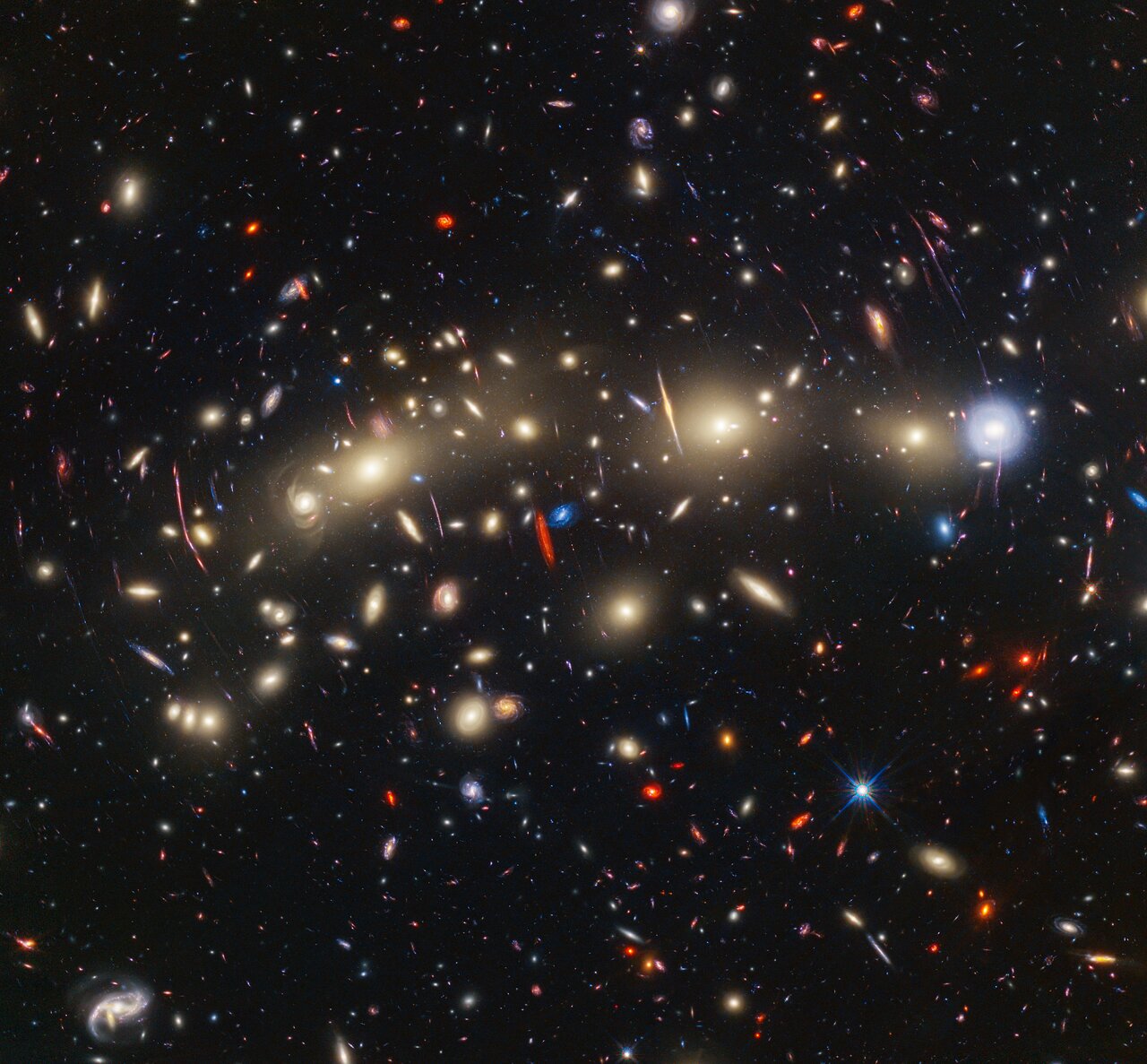
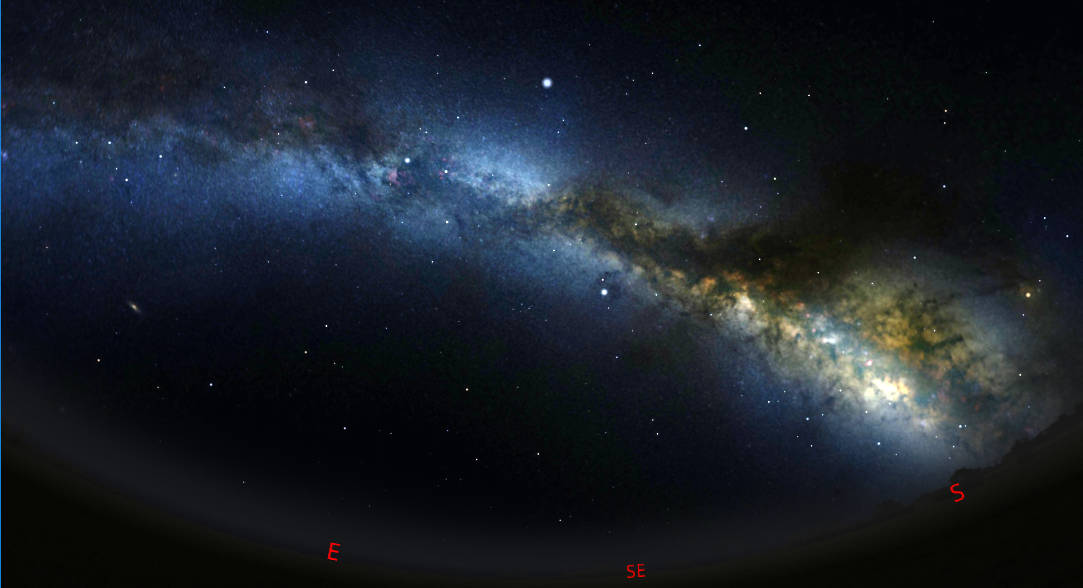
August and September are the two months in which the Milky Way dominates the evening sky. It also dominates the sky in the winter, six months from now but we’re looking out away from the center of the Milky Way. It is dimmer, an almost invisible as a band, but we have a great number of really bright stars, including those of Orion. The Milky Way is a galaxy, a large conglomeration of stars that are arranged in a disk, with the central bulge, whose diameter is about 87,400 light years. The thickness of the disk runs from 8,500 light years near the center to 1,000 light years farther out. The sun’s location is 25 to 26,000 light years from the center. From our location within the disk it appears to be a glowing band that surrounds the sky.
The astronomical event times given in this blog are for the Traverse City/Interlochen area of Michigan (Lat 44.7° N, Long 85.7° W; EDT, UT – 4 hours) unless stated otherwise. Times will be different for other locations.
Addendum
Ephemeris: 07/24/2026 – AI, a paradigm shift in computing
This is Ephemeris for Friday, July 24th. Today the Sun will be up for 14 hours and 57 minutes, setting at 9:17, and it will rise tomorrow at 6:21. The Moon, 3 days past first quarter, will set at 2:15 tomorrow morning.
Astronomy is my hobby. Back in my working days I was a computer systems analyst designing computer software systems for particular tasks, mainly for banks. However I was always interested in the idea of artificial intelligence. The computers I worked with were dumb. They did exactly what you told it to do, whether it was correct or not. So computer errors were really human errors. The current AI, based on neural networks, which are an approximation of what happens in the human brain, are different. Their errors are their own, because they are taught rather than programmed. And to my mind are more than the sum of their inputs. Even the people who design these systems admit they don’t really know what goes on inside. Scary.
The astronomical event times given in this blog are for the Traverse City/Interlochen area of Michigan (Lat 44.7° N, Long 85.7° W; EDT, UT – 4 hours) unless stated otherwise. Times will be different for other locations.

Ephemeris: 07/23/2026 – Our location in the Eastern Time zone
This is Ephemeris for Thursday, July 23rd. Today the Sun will be up for 14 hours and 59 minutes, setting at 9:18, and it will rise tomorrow at 6:20. The Moon, 2 days past first quarter, will set at 1:36 tomorrow morning.
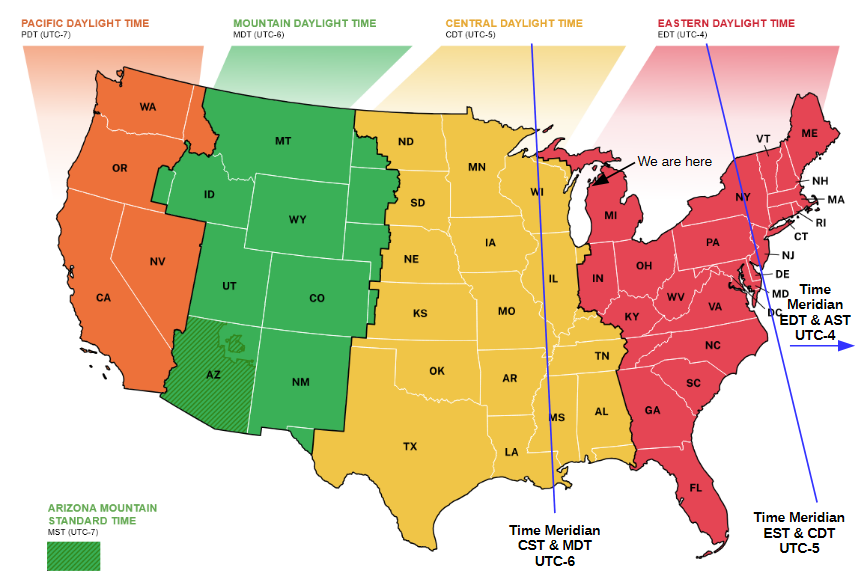
Continuing my discussion about daylight savings time: In theory time zones are supposed to be centered on longitude meridians 15º apart, starting at 0° through Greenwich Observatory in England and proceed eastward and westward. our time meridian for Standard Time (75º west longitude) runs through Philadelphia, Pennsylvania, far to the east. The central standard time meridian runs down just east of Ironwood, Michigan. Most of us in the western lower peninsula are between 85 and 86° west longitude, meaning that we are already from 40 to 45 minutes behind our time meridian in Philadelphia and Eastern Daylight Time we are an hour and 40 to 45 minutes behind our daylight time meridian which is out in the Atlantic Ocean at 60° west longitude.
The astronomical event times given in this blog are for the Traverse City/Interlochen area of Michigan (Lat 44.7° N, Long 85.7° W; EDT, UT – 4 hours) unless stated otherwise. Times will be different for other locations.
Addendum