Ephemeris: 07/29/2024 – Late July’s meteor shower
This is Ephemeris for Monday, July 29th. Today the Sun will be up for 14 hours and 45 minutes, setting at 9:11, and it will rise tomorrow at 6:27. The Moon, 2 days past last quarter, will rise at 1:26 tomorrow morning.
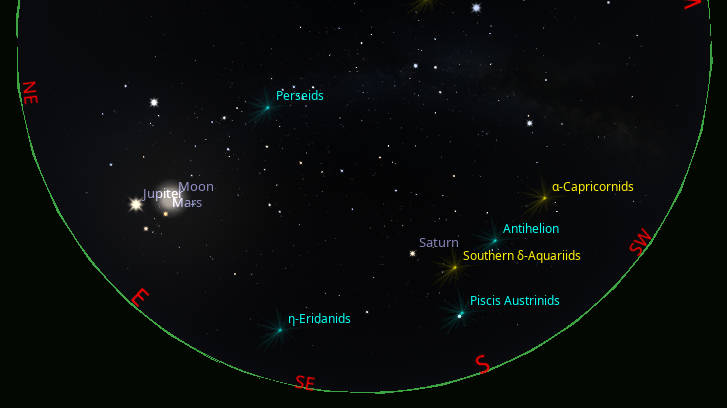
There are more meteor showers that occur in the second-half of the year than there are in the first six months of the year. I don’t know why that is. The first of these major showers is the Southern Delta Aquariid meteor shower. There happens to be a few meteor showers at appear to emanate from the constellation of Aquarius so they named them after the closest star to the direction they appear to come from at their maximum. The star Delta in the southern part of Aquarius is associated with two meteor showers. This one appears to be coming from south of that star. And are only an eighth as active as the Perseids that we’re going to have next month partly because the radiant point doesn’t get very high in the sky.
The astronomical event times given are for the Traverse City/Interlochen area of Michigan (EDT, UT–4 hours). They may be different for your location.
Addendum
 Bob Moler's Ephemeris Blog