Archive
Ephemeris: 09/23/2024 – Scanning the Milky Way with binoculars
This is Ephemeris for Monday, September 23rd. Today the Sun will be up for 12 hours and 5 minutes, setting at 7:37, and it will rise tomorrow at 7:33. The Moon, 1 day before last quarter, will rise at 10:50 this evening.
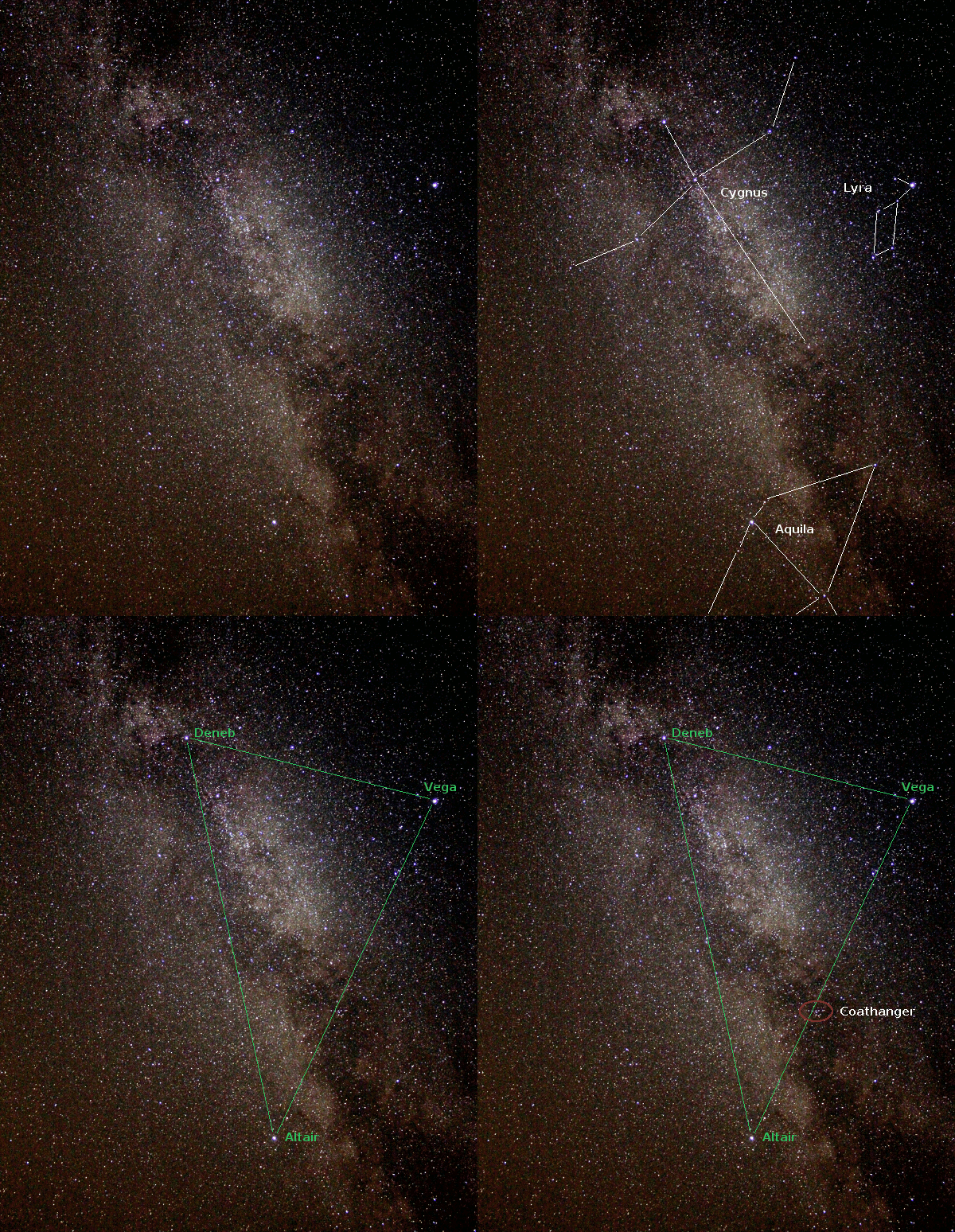
Now that the Moon has fled the early evening skies the Milky Way is showing up again, if you’re at a dark site. I’ve always said that August and September are the best times to view what I call the summer Milky Way, even now that it’s not technically summer anymore. The Teapot asterism in the constellation of Sagittarius is low in the south-southeast, pouring its tea on the horizon. It is in that direction we are looking towards the center of our Milky Way Galaxy. The Summer Triangle is high in the South with Vega and Deneb, two of its stars near the zenith. All the Milky Way is an invitation to scan it with the pair of binoculars or a very low power telescope. One doesn’t need a chart. Just wander through the Milky Way to find many star clusters, groups of stars and nebulae.
The astronomical event times given are for the Traverse City/Interlochen area of Michigan (EDT, UT – 4 hours). Times will be different for other locations.
Addendum (Some binocular wonders)
The Coathanger

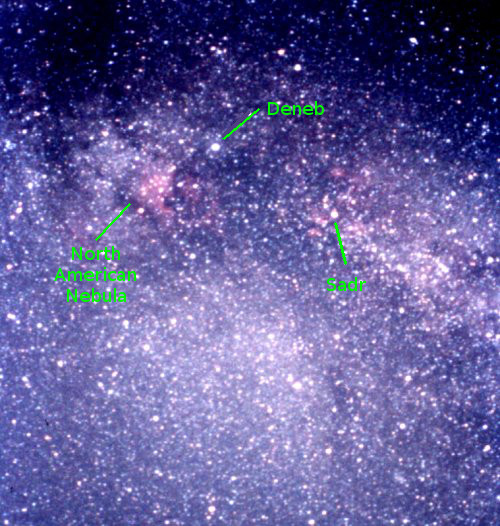
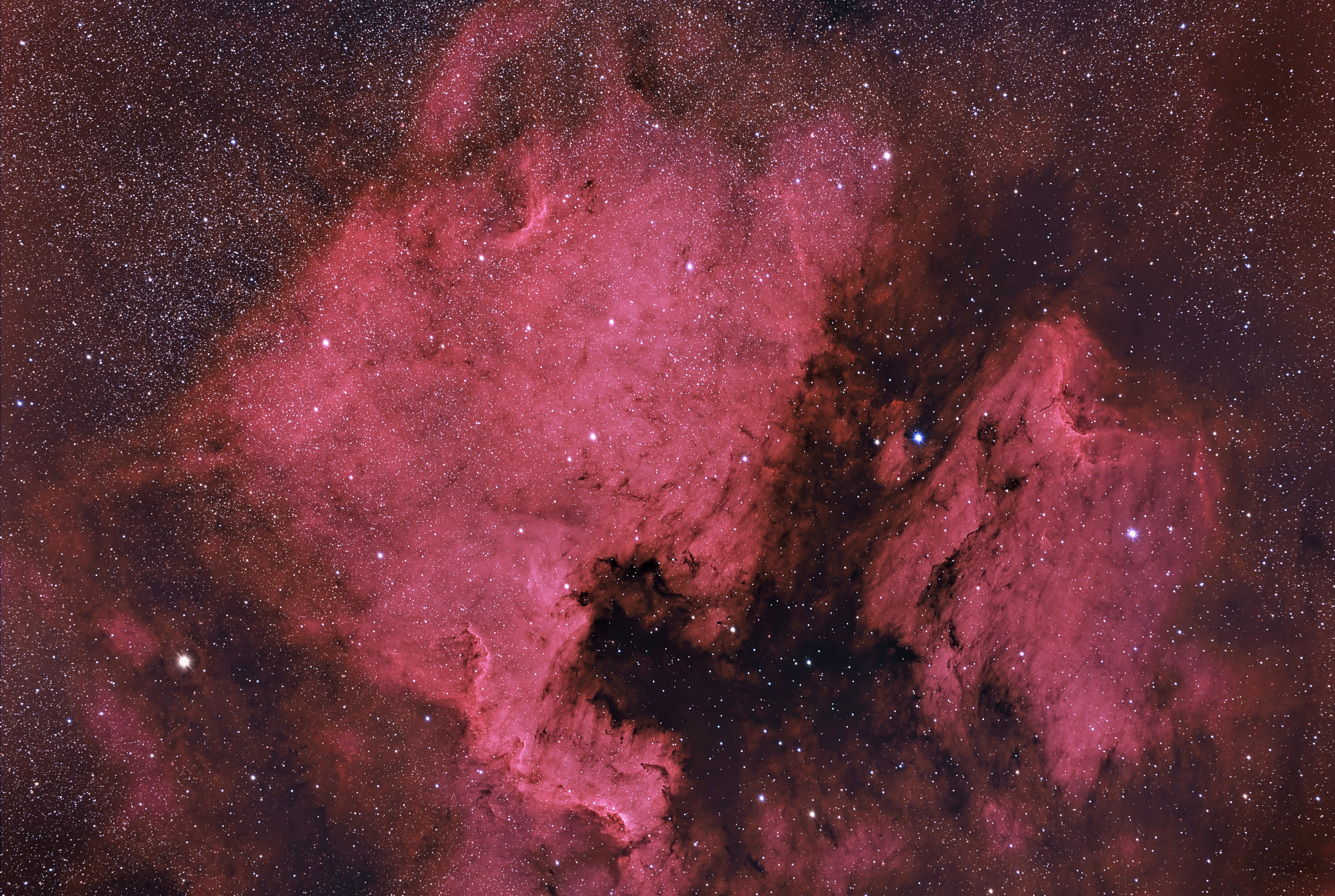
The North American Nebula
 Bob Moler's Ephemeris Blog