Ephemeris: 10/17/2024 – Comets look a lot bigger than they actually are
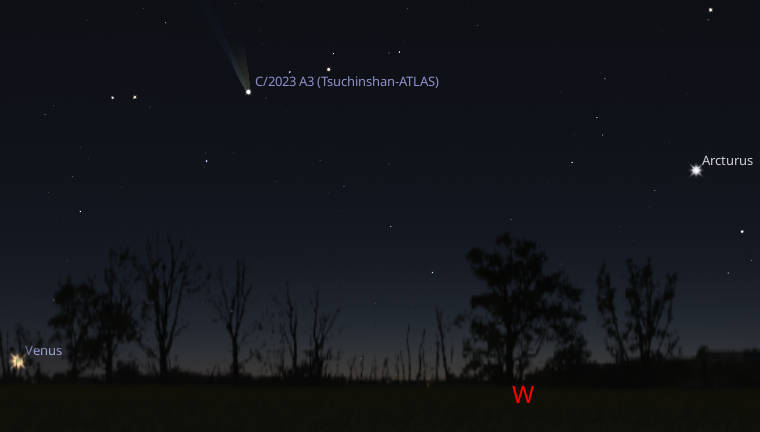
This is Bob Moler with Ephemeris for Thursday, October 17th. Today the Sun will be up for 10 hours and 52 minutes, setting at 6:53, and it will rise tomorrow at 8:02. The Moon, at full today, will rise at 6:53 this evening. | Comet Tsuchinshan-ATLAS will have its greatest competition with the Moon tonight since it’s full. However, in succeeding nights the Moon will get dimmer and also rise later. At 8 PM the comet will be nearly 18° above the west-southwestern horizon with its tail pointing to up into the bit to the left.* What makes comets spectacular is that they contain volatile materials, like frozen gases, water, and carbon compounds. The solid body of the comet, called the nucleus is quite small, from less than a mile to up to 25 miles in diameter, which on the solar system scale is tiny. They live quite happily in the outer solar system where it’s cold. When approaching the Sun the gases sublimate liberating the included dust, producing the tails the comets are famous for.
The astronomical event times given are for the Traverse City/Interlochen area of Michigan (EDT, UT – 4 hours). Times will be different for other locations.
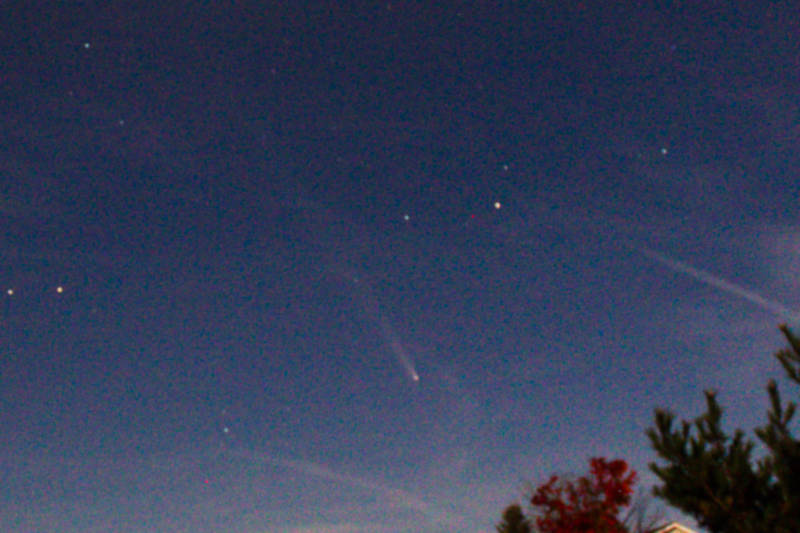
* I was able to spot the comet last night at around 8:10 PM but only through binoculars. It was not visible to my unaided eye. However, it was visible in binoculars. It also photographed well with the image showing a lot more than what was visible even through binoculars and the amount of clouds that were actually in the sky. However, the clouds were light and generally did not hinder the comet too much. The photograph of the comet below has been processed to increase its brightness and contrast with the sky.
Addendum
 Bob Moler's Ephemeris Blog