Archive
Ephemeris: 01/21/2025 – How to find the Great Orion Nebula
This is Ephemeris for Tuesday, January 21st. Today the Sun will be up for 9 hours and 24 minutes, setting at 5:36, and it will rise tomorrow at 8:11. The Moon, at last quarter today, will rise at 2:01 tomorrow morning.
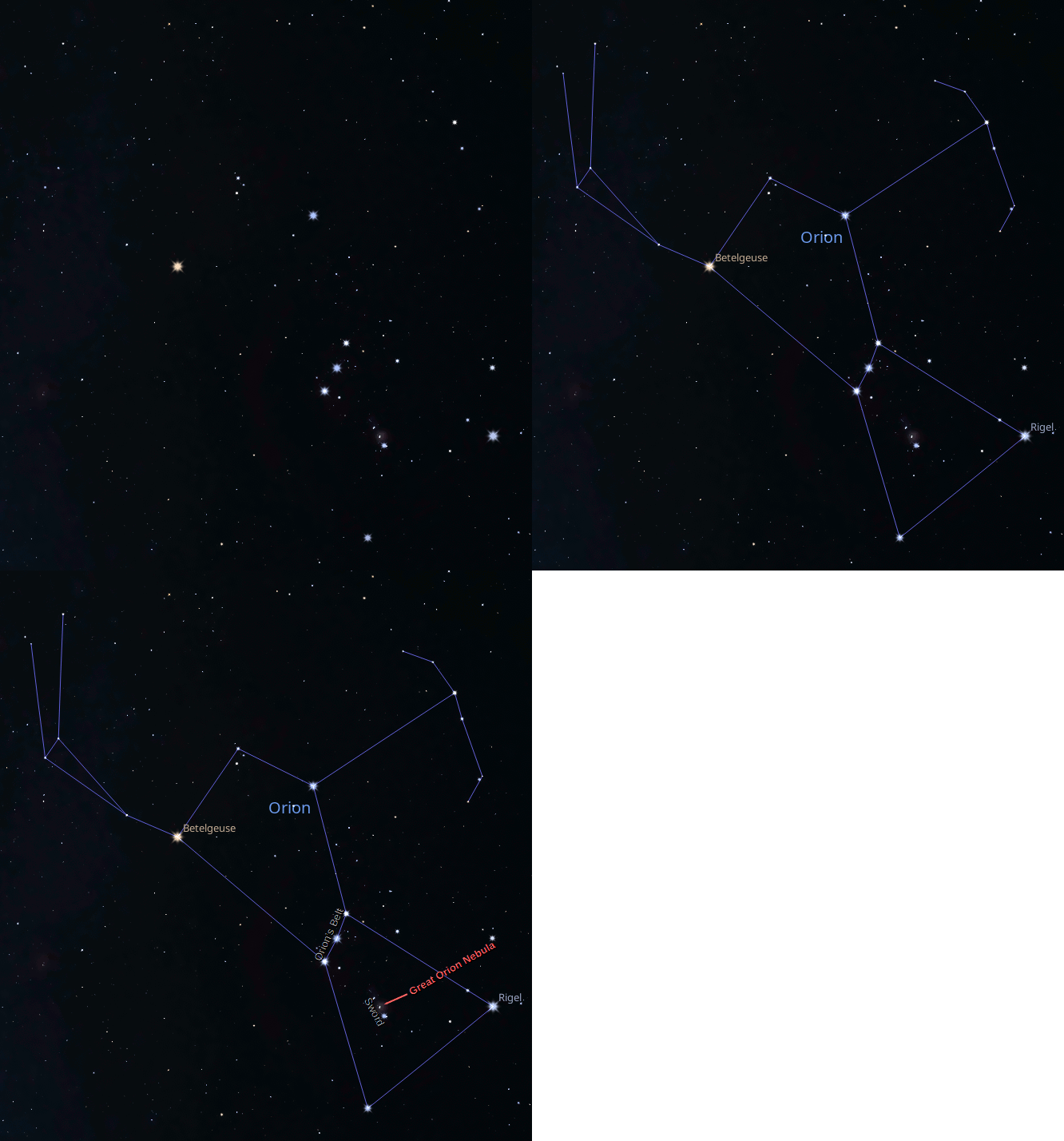
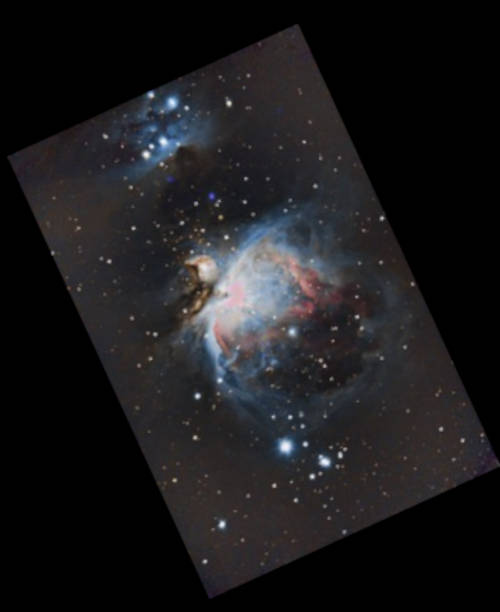
The constellation Orion the hunter is in the southeast at 8 PM. Its rectangle of four stars lean to the left and frame his belt of three stars in a straight line in the center of the rectangle. Below the belt is what appear to the unaided eye as three more stars arranged in a shorter straight line, his sword. Binoculars aimed at the middle stars of the sword will find a glowing haze around those stars. That is the Great Orion Nebula, also known as Messier 42 or M 42. It is the birthplace of stars, illuminated by a clutch of four hot young stars. Besides stars and protostars being born in the nebula, there are also many double planets not belonging to stars discovered by the James Webb Space Telescope. The planets are only detectable in the infrared, Webb’s specialty.
The astronomical event times given are for the Traverse City/Interlochen area of Michigan (EST, UT – 5 hours). Times will be different for other locations.
Addendum
The blog’s archive has many other posts about the Great Orion Nebula and other nebulae in Orion.
 Bob Moler's Ephemeris Blog