Ephemeris: 06/26/2025 – Finding the famous Double-Double Star
This is Ephemeris for Thursday, June 26th. Today the Sun will be up for 15 hours and 33 minutes, setting at 9:32, and it will rise tomorrow at 5:59. The Moon, 1 day past new, will set at 11:12 this evening.
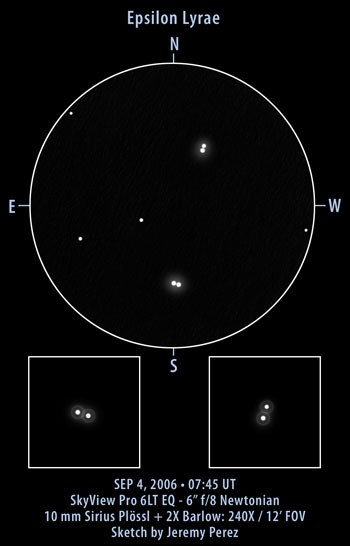
I generally will talk about observing something in the sky, in this program, if it can be seen with the naked eye, or can be seen in binoculars near something that can be seen with the naked eye, or something that can be seen in a small telescope that is visible in binoculars, near a naked eye object. This is of the latter type. High in the east at 11:00 PM or so is the bright star Vega. Just to the left of it in is a faint star, best seen in binoculars. It’s barely visible to the naked eye as a single star. But binoculars will show that it’s two star of equal brightness. However, viewing it with a telescope using probably the most power the telescope is capable, each of those stars is doubled again so Epsilon Lyrae is the famous Double-Double Star. It’s quite a challenge for a small telescope. This is also the time of the latest sunset and end of evening twilight. The last vestige of the glow moves to the north and ends just after midnight.
The astronomical event times given in this blog are for the Traverse City/Interlochen area of Michigan (Lat 44.7° N, Long 85.7° W; EDT, UT – 4 hours) unless stated otherwise. Times will be different for other locations.
Addendum
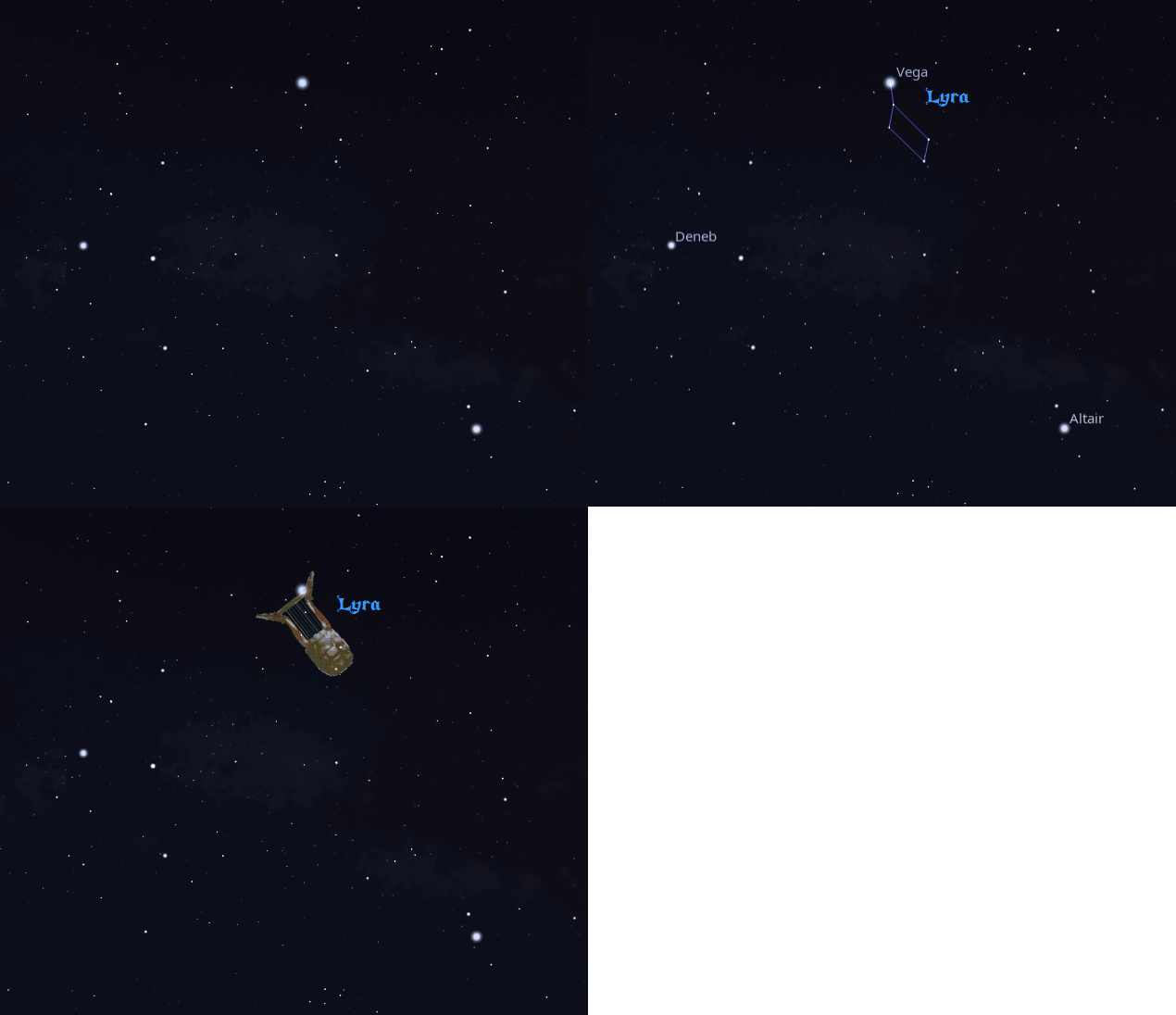
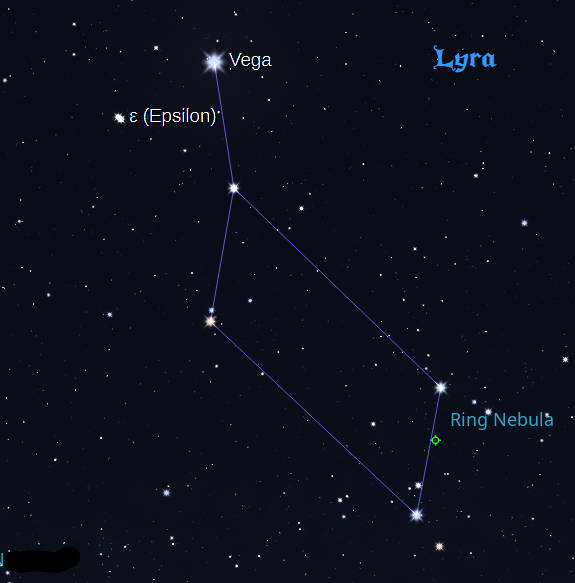
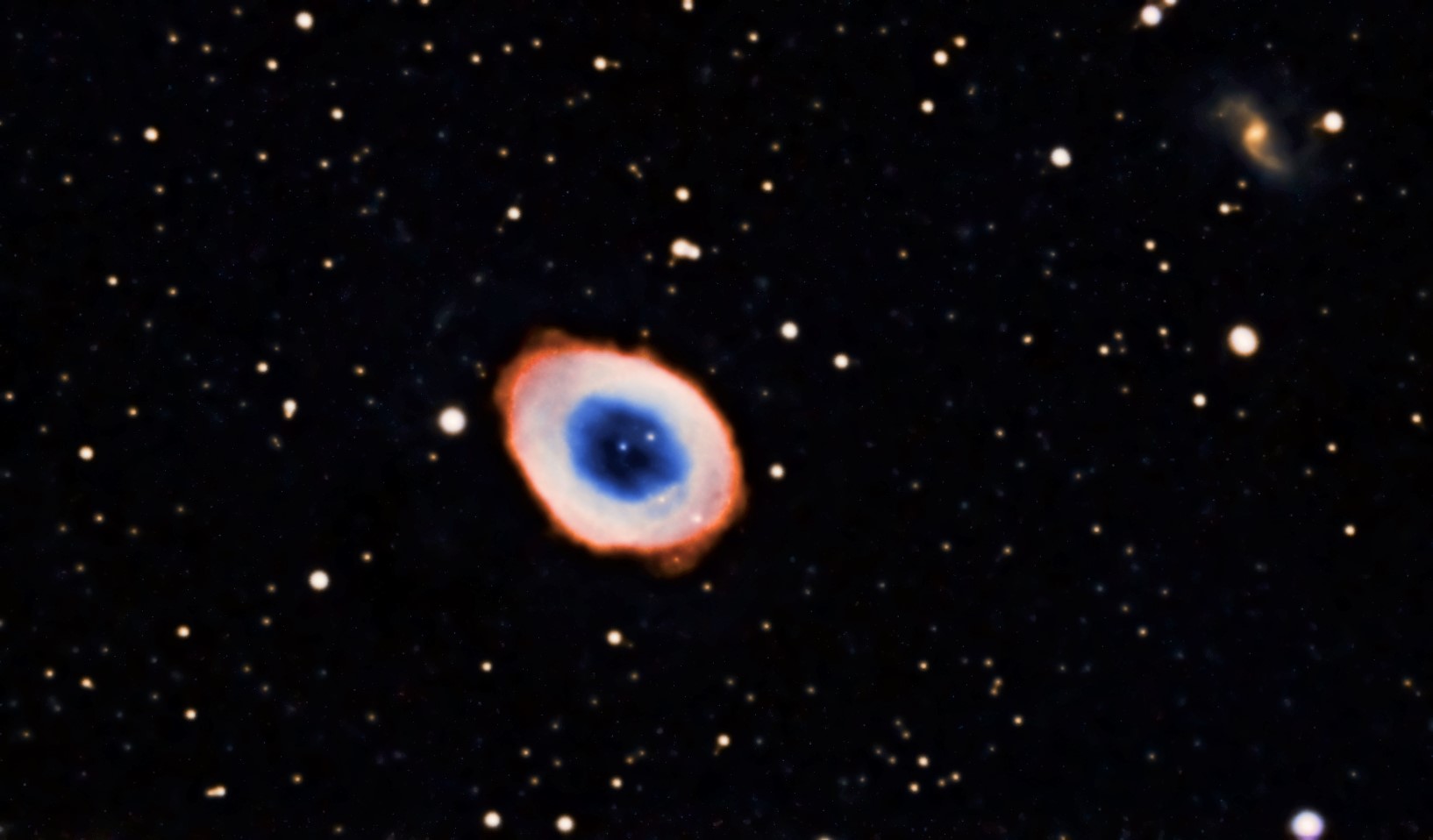
Bonus: A telescope capable of splitting the components of Epsilon should be capable of spotting the Ring Nebula (M57). It is not, however, visible in binoculars or a telescope finder. But it’s easily found by pointing the telescope between the two bottom stars of the Lyra parallelogram. Created using Stellarium, LibreOffice Draw and GIMP.
 Bob Moler's Ephemeris Blog