Ephemeris: 07/03/2025 – The Sun is farthest away today
This is Bob Moler with Ephemeris for Thursday, July 3rd. Today the Sun will be up for 15 hours and 29 minutes, setting at 9:31, and it will rise tomorrow at 6:03. The Moon, 1 day past first quarter, will set at 1:36 tomorrow morning.
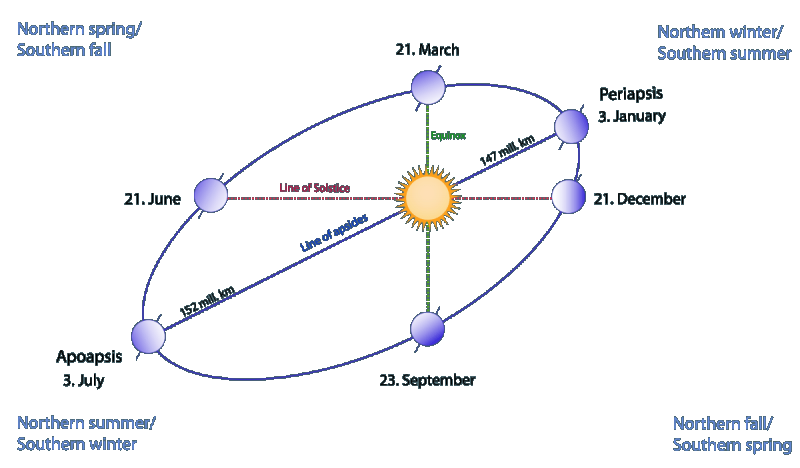
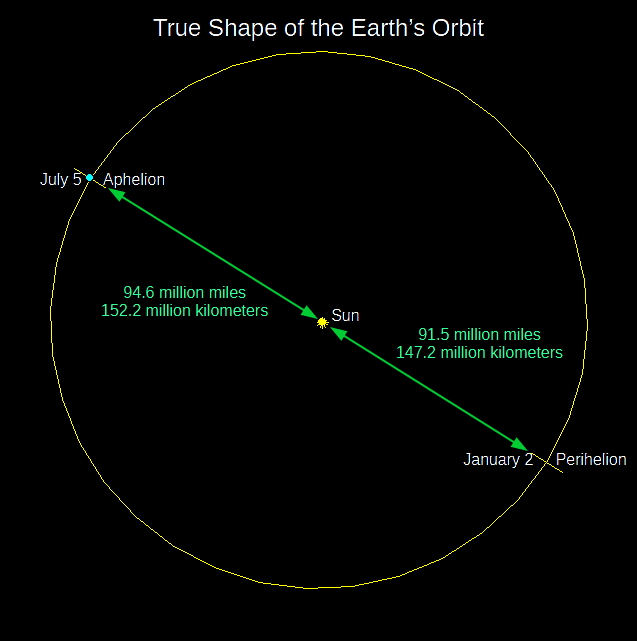
This afternoon at 5:59 PM, the Earth will reach aphelion from the Sun, the farthest it gets from it during the year. Earth will be 94 and a half million miles away from the Sun, a bit farther than our normal 93 million. In a planet’s orbit of the Sun, the Earth is no exception, it moves slowest when farthest from the Sun than when it’s nearest. It doesn’t make much difference in the amount of heat we get from the Sun being only 1½% farther than average. But it makes summer the longest season at 94 days, versus winter’s 89 days. OK, I know it doesn’t feel like it here in Northern Michigan, but count the days between each solstice and the next equinox.
The astronomical event times given in this blog are for the Traverse City/Interlochen area of Michigan (Lat 44.7° N, Long 85.7° W; EDT, UT – 4 hours) unless stated otherwise. Times will be different for other locations.
Addendum
 Bob Moler's Ephemeris Blog