Archive
Ephemeris: 01/20/2026 – What’s happening inside the Great Orion Nebula
This is Bob Moler with Ephemeris for Tuesday, January 20th. Today the Sun will be up for 9 hours and 21 minutes, setting at 5:35, and it will rise tomorrow at 8:12. The Moon, 2 days past new, will set at 7:42 this evening.
The closest star nursery to us, places where stars are being born, is the Great Orion Nebula, 1,300 light years away. A light year is about 6 trillion miles, if you want to pace it out. It’s located in the constellation Orion’s sword that hangs below his belt. It is seen in as little as a pair of binoculars, and shines by emission and reflection of the light of a tiny clutch of four stars at its heart, called the Trapezium. These extremely hot young massive stars are not destined to live long. Unlike the Sun’s 10 billion year lifetime, these stars lifespans will be measured in millions of years. Yet do not mourn for them, even now stars are forming within their dusty cocoons in the nebula. The Trapezium stars’ deaths will provide heavy elements for new stars and planets.
The astronomical event times given in this blog are for the Traverse City/Interlochen area of Michigan (Lat 44.7° N, Long 85.7° W; EST, UT – 5 hours) unless stated otherwise. Times will be different for other locations.
Addendum
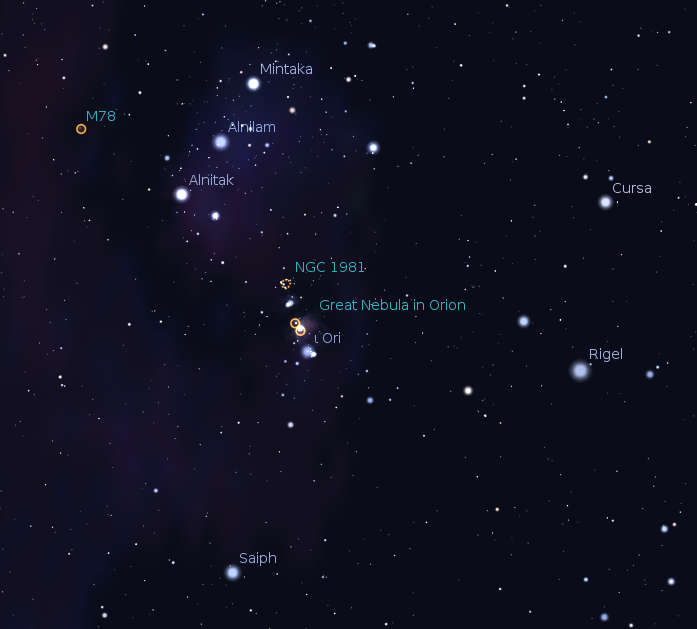
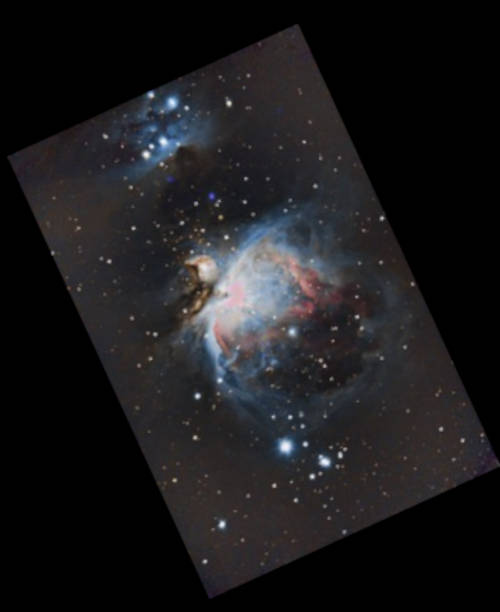
There are several videos produced by NASA, ESA and others of a fanciful trip through the Great Orion Nebula. I found them by typing: NASA trip through the Orion nebula into my Internet browser.
 Bob Moler's Ephemeris Blog