Archive
Ephemeris: 02/10/2026 – Artemis 2 is delayed until at least March
This is Ephemeris for Tuesday, February 10th. Today the Sun will be up for 10 hours and 14 minutes, setting at 6:04, and it will rise tomorrow at 7:48. The Moon, 1 day past last quarter, will rise at 4:03 tomorrow morning.
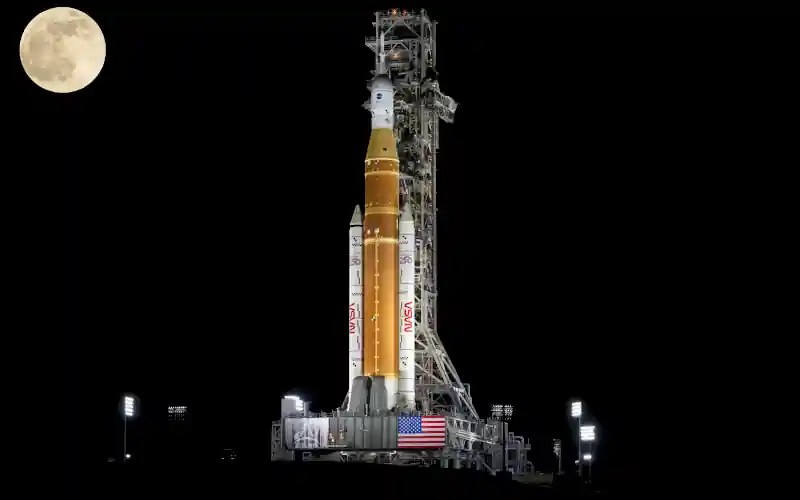
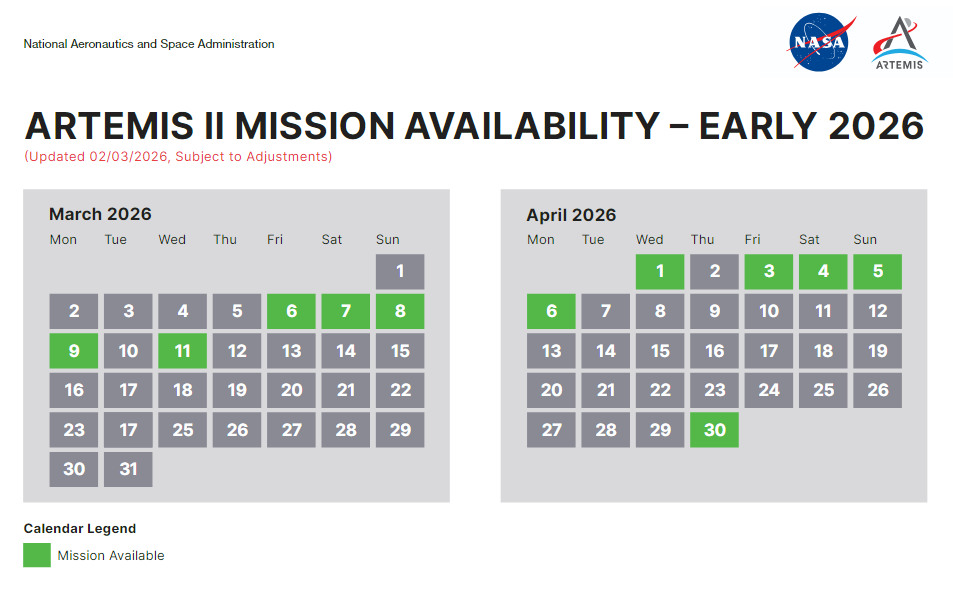
The next attempt to launch Artemis 2 and its crew around the moon will be in March. During the wet dress rehearsal, which involves filling the tanks of the huge core stage of the rocket with liquid hydrogen and oxygen, and counting down almost to the point of ignition. They discovered a greater than expected leak with the hydrogen quick disconnect fitting at the base of the core stage. They can’t test for hydrogen leaks while the spacecraft is sitting in the vertical assembly building because as cavernous as it is, it’s still a closed space and hydrogen is a notoriously leaky substance, being the smallest molecule. A little leakage is to be expected, but what they found was over the limit.
The astronomical event times given in this blog are for the Traverse City/Interlochen area of Michigan (Lat 44.7° N, Long 85.7° W; EST, UT – 5 hours) unless stated otherwise. Times will be different for other locations.
Addendum
 Bob Moler's Ephemeris Blog