Archive
Ephemeris: 08/18/2026 – The Artemis III Mission
This is Ephemeris for Tuesday, August 18th. Today the Sun will be up for 13 hours and 54 minutes, setting at 8:43, and it will rise tomorrow at 6:50. The Moon, 1 day before first quarter, will set at 11:05 this evening.
Late next year or earlier 2028, NASA will launch the Artemis 3 mission to low earth orbit to test operations between the Orion spacecraft and one or both of the Human Landing Systems destined to take crews to the moon’s surface by 2030. The two landers are the SpaceX Starship HLS and Blue Origin’s Blue Moon Mark 2. Neither of the Landers will be operational, that is they may not even be pressurized, though they will need a docking port. However, it will be a test of rendezvous and docking to make sure that the vehicles can operate together. It will also be a test of the new lunar space suit. Artemis 3 will be a flight test similar to Apollo 9, except crews will not board the landers for independent flight testing.
The astronomical event times given in this blog are for the Traverse City/Interlochen area of Michigan (Lat 44.7° N, Long 85.7° W; EDT, UT – 4 hours) unless stated otherwise. Times will be different for other locations.
Addendum


Ephemeris: 07/10/2026 – Examining Artemis II images
This is Ephemeris for Friday, July 10th. Today the Sun will be up for 15 hours and 21 minutes, setting at 9:28, and it will rise tomorrow at 6:08. The Moon, 3 days past last quarter, will rise at 2:38 tomorrow morning.
The Grand Traverse Astronomical Society will host its July meeting tonight at 9 PM at Northwestern Michigan College’s Joseph H Rogers Observatory. The later meeting time allows us to have viewing after the meeting starts in darker skies. The program is informal. The Artemis 2 mission brought back a treasure trove of photographs of the earth and the moon. We will be showing some of them and having everyone have a chance to comment on them, ask questions, explore them further, or explain them. This is the same topic that was proposed for the June meeting, which was canceled due to unforeseen circumstances. Afterward, about 10 PM, if it’s clear, there will be viewing of the heavens through the observatory’s telescopes. The observatory is located south of Traverse City, on Birmley Rd. The meeting is also on Zoom; see gtastro.org.
The astronomical event times given in this blog are for the Traverse City/Interlochen area of Michigan (Lat 44.7° N, Long 85.7° W; EDT, UT – 4 hours) unless stated otherwise. Times will be different for other locations.
Addendum
Ephemeris: 06/22/2026 – Will SpaceX and Blue Origin be ready for Artemis 3?
This is Ephemeris for Monday, June 22nd. Today the Sun will be up for 15 hours and 34 minutes, setting at 9:32, and it will rise tomorrow at 5:57. The Moon, 1 day past first quarter, will set at 1:53 tomorrow morning.
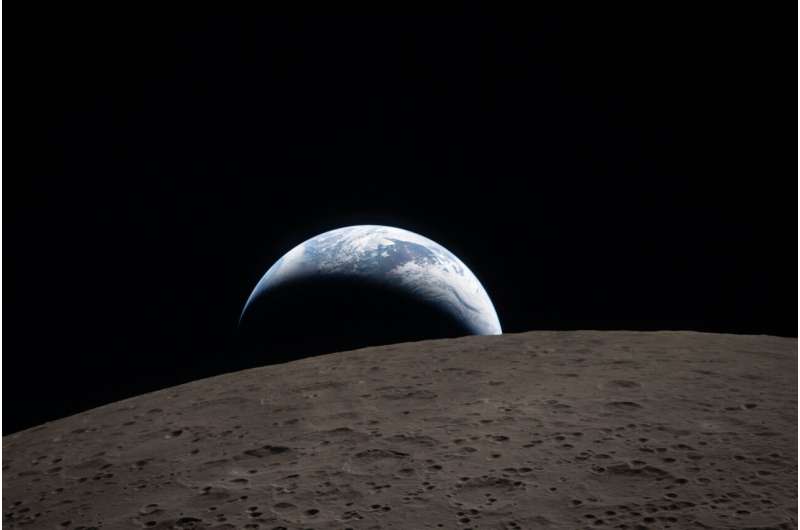
NASA and it’s partners SpaceX and Blue Origin are having problems on their way back to the Moon. On April 28th, Blue Origin’s New Glenn Rocket blew up doing a static firing of its engines, destroying the rocket and severely damaging the launch pad, the only one they had. History has shown that launch pads take a year or more to rebuild. The New Glen Rocket is to launch their moon lander. SpaceX had a partially successful flight of their Starship, but had loss of engines, and didn’t perform an in space relight of a starship engine, to prove they could deorbit it. These two companies are suppliers of the lunar landers, prototypes of which must be ready next year for the Artemis 3 mission and a real lander must be ready in 2028 to stay on schedule.
The astronomical event times given in this blog are for the Traverse City/Interlochen area of Michigan (Lat 44.7° N, Long 85.7° W; EDT, UT – 4 hours) unless stated otherwise. Times will be different for other locations.
Addendum
Ephemeris: 05/18/2026 – Earth shines on the Moon
This is Bob Moler with Ephemeris for Monday, May 18th. Today the Sun will be up for 14 hours and 56 minutes, setting at 9:07, and it will rise tomorrow at 6:10. The Moon, 2 days past new, will set at 12:07 tomorrow morning.
The Moon tonight will appear as a thin sliver, with Venus below and left of it. However, if as you look at the Moon closely tonight you may have the funny feeling that the whole moon is actually visible, you would be right. It’s easily confirmed with a pair of binoculars or a small telescope. What is illuminating the dark part of the Moon is earthshine. The Earth is big and bright in the Moon’s sky, as a fat waning gibbous orb from its vantage point. From the Moon the Earth has the opposite phase that we see of the Moon from the Earth. The effect used to be called by the term “Old moon in the new moon’s arms”. The effect was first explained by Leonardo da Vinci some 500 years ago. The effect will disappear in a few days as the Moon gets brighter and the Earth less so in the Moon’s sky. Earthshine will appear again when the Moon appears as a waning crescent in the morning. But not many of us are up to see it at that hour.
The astronomical event times given in this blog are for the Traverse City/Interlochen area of Michigan (Lat 44.7° N, Long 85.7° W; EDT, UT – 4 hours) unless stated otherwise. Times will be different for other locations.
Addendum

Ephemeris: 04/27/2026 – Mare Orientale made a splash!
This is Ephemeris for Monday, April 27th. Today the Sun will be up for 14 hours and 4 minutes, setting at 8:42, and it will rise tomorrow at 6:37. The Moon, halfway from first quarter to full, will set at 5:06 tomorrow morning.
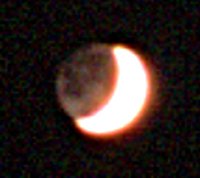
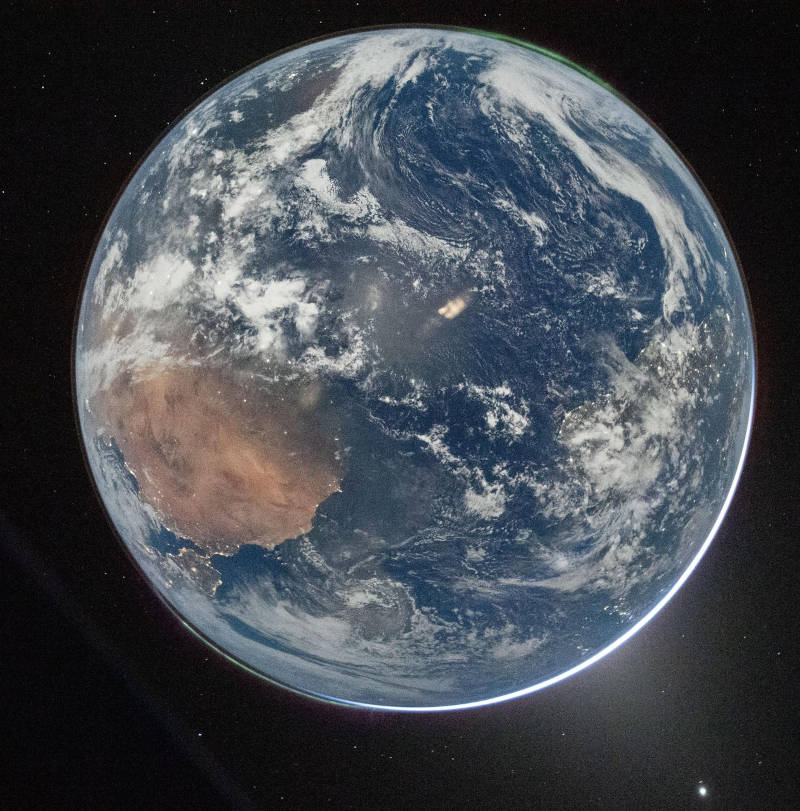
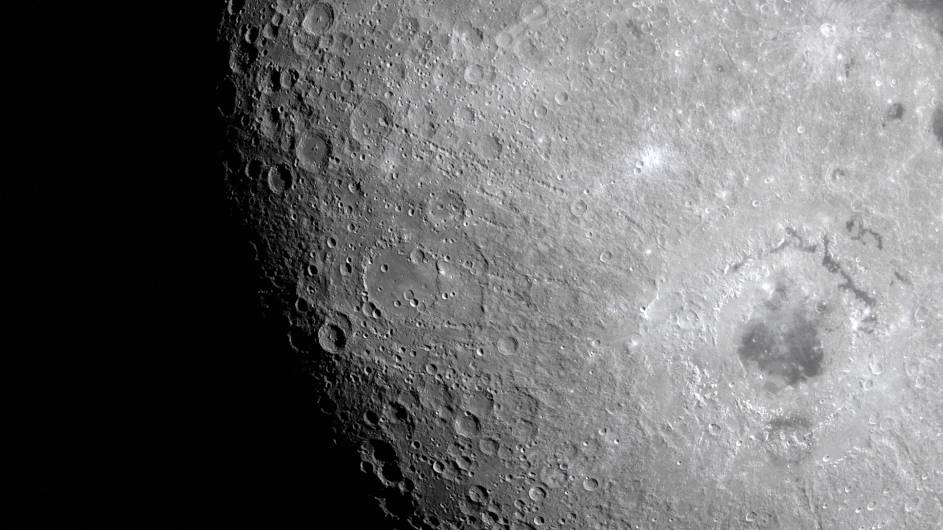
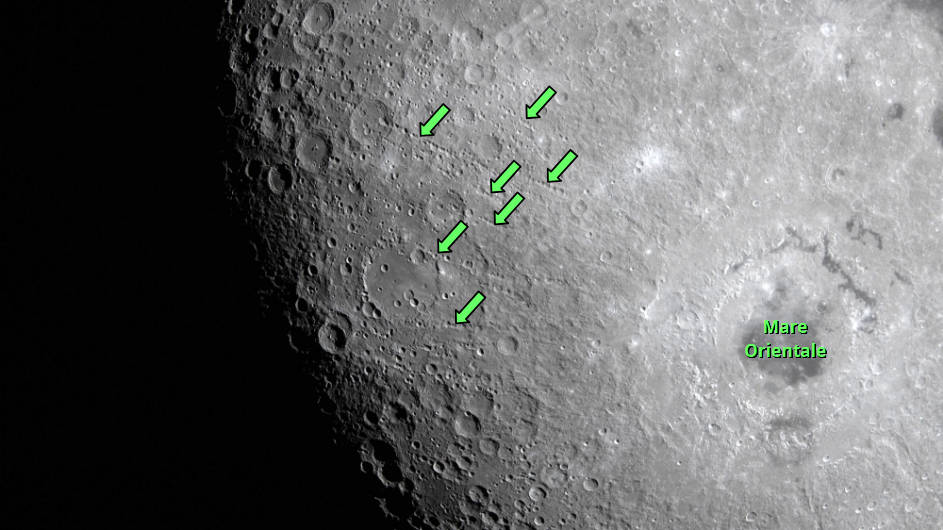
One of the pictures that the astronauts of Artemis 2 took of the far side of the moon was one that revealed chains of craters which appear to be emanating from the Sea on the edge of what we can see on the moon from the Earth, called Mare Orientale or the Eastern Sea. It was created by the impact of an asteroid onto the Moon’s surface, maybe 4 billion years ago, kicking out debris in all directions. Apparently the ejecta thrown out created chains of craters that appear to trace back to Orientale. They are most easily seen to the north and west of Orientale towards the terminator, the sunrise line, where the shadows are deeper. There’s probably chains of craters going in other directions, but they have no shadows.
The astronomical event times given in this blog are for the Traverse City/Interlochen area of Michigan (Lat 44.7° N, Long 85.7° W; EDT, UT – 4 hours) unless stated otherwise. Times will be different for other locations.
Addendum
Ephemeris: 04/16/2026 – The greatest distance humans have traveled from the Earth
This is Ephemeris for Thursday, April 16th. Today the Sun will be up for 13 hours and 32 minutes, setting at 8:29, and it will rise tomorrow at 6:54. The Moon, 1 day before new, will rise at 6:38 tomorrow morning.
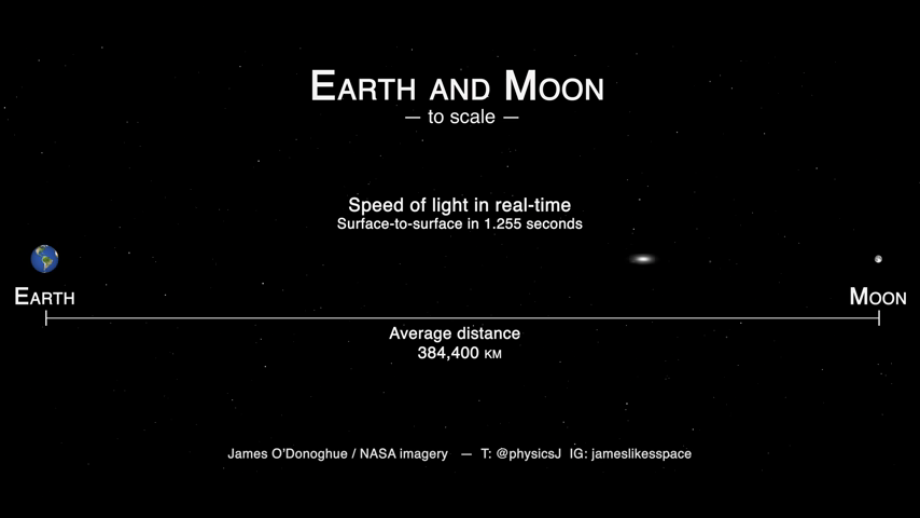
On their trip around the moon the Artemis 2 crew set a new record for distance from the earth of 252,760 miles (406,778 kilometers) which beat by 4,105 miles (6,607 kilometers) the record of Apollo 13 of 248,655 miles (400,171 kilometers). This was helped a great deal by the fact that the moon reached apogee, its farthest distance from the Earth, a few hours after the Artemis 2 capsule, Integrity, passed by. So I think the record is going to hold up for a while. So the only way to get further away from the earth is to head out to Mars, or the Chinese make a farther flyby of the Moon. The Artemis 2 mission was to see if the capsule can sustain human life comfortably during an extended mission. It seemed proved it’s worth. The videos that came back seem to be reasonably roomy, much more so than the Apollo capsule.
The astronomical event times given in this blog are for the Traverse City/Interlochen area of Michigan (Lat 44.7° N, Long 85.7° W; EDT, UT – 4 hours) unless stated otherwise. Times will be different for other locations.
Addendum
Ephemeris: 04/14/2026 – My virtual flight with the Artemis II crew
This is Ephemeris for Tuesday, April 14th. Today the Sun will be up for 13 hours and 26 minutes, setting at 8:26, and it will rise tomorrow at 6:58. The Moon, 3 days before new, will rise at 5:55 tomorrow morning.
I hadn’t enjoyable time last week Monday afternoon listening to Artemis 2 astronauts talking with the science team on Earth about what they were seeing Moon’s far side. I have the program called Virtual Moon Atlas which allows one to see the entire Moon with the phase and shadows. And I was able to rotate it and get the phase right so it appeared pretty much as it did to the astronauts. So I was able to follow along with their discussions of the far side features that they were seeing and photographing. I could zoom in to craters and features they were talking about, but nowhere near the detail they were seeing. So I consider it to be a really great time of, in essence, flying along with the astronauts.
The astronomical event times given in this blog are for the Traverse City/Interlochen area of Michigan (Lat 44.7° N, Long 85.7° W; EST, UT – 5 hours) unless stated otherwise. Times will be different for other locations.
Addendum
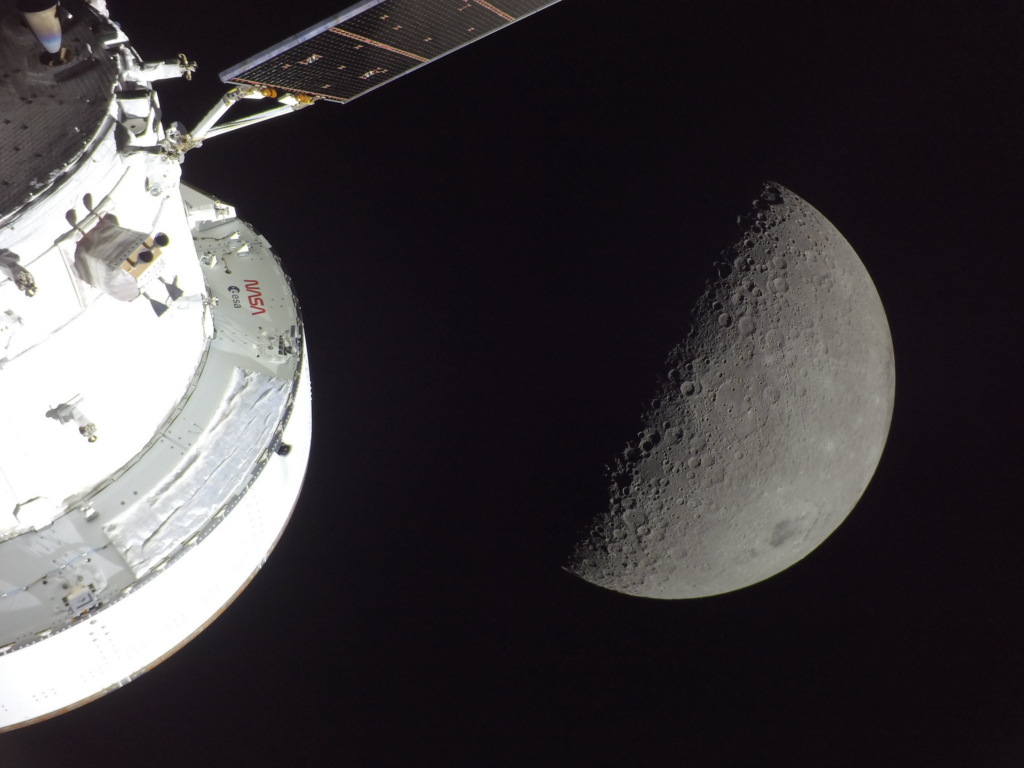
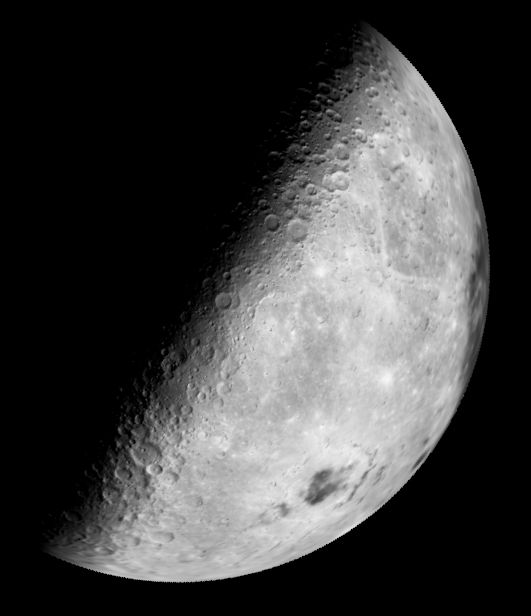
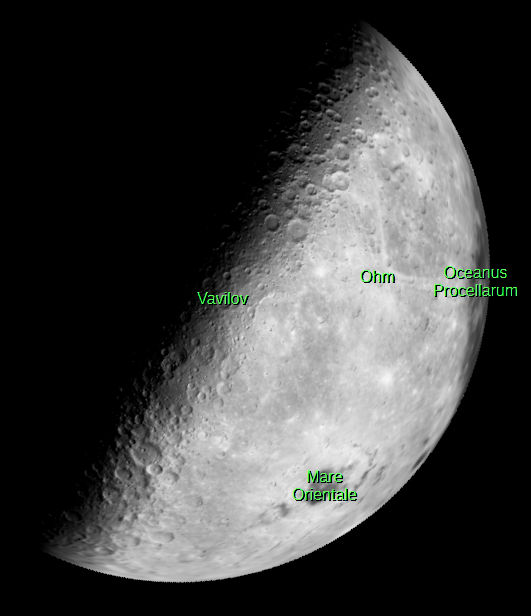
Ephemeris: 04/07/2026 – The Artemis II crew made amazing observations of the Moon’s Far Side
This post was made late due to some WordPress posting issues last night.
This is Ephemeris for Tuesday, April 7th. Today the Sun will be up for 13 hours and 5 minutes, setting at 8:18, and it will rise tomorrow at 7:10. The Moon, 3 days before last quarter, will rise at 2:33 tomorrow morning.
Yesterday evening the Artemis 2 crew flew over the far side of the moon. The moon to us has a waning gibbous phase. The far side is actually a waxing crescent, so most of the far side was in night. They might have gotten a good look at Mare Orientale, which is right on the edge of the moon that we see from Earth. It is a double-walled sea that looks like a bulls eye. Now they’re on their way back to the earth and will splash down in the Pacific Ocean later this week. Unlike Apollo 8 which orbited the moon, they will not be flying over any proposed landing sites. They flew over the moon’s equator while Artemis 4 will attempt to land near the moon’s South Pole. Besides, the Lunar Reconnaissance Orbiter has surveyed it much better than they could have.
The astronomical event times given in this blog are for the Traverse City/Interlochen area of Michigan (Lat 44.7° N, Long 85.7° W; EST, UT – 5 hours) unless stated otherwise. Times will be different for other locations.
Addendum
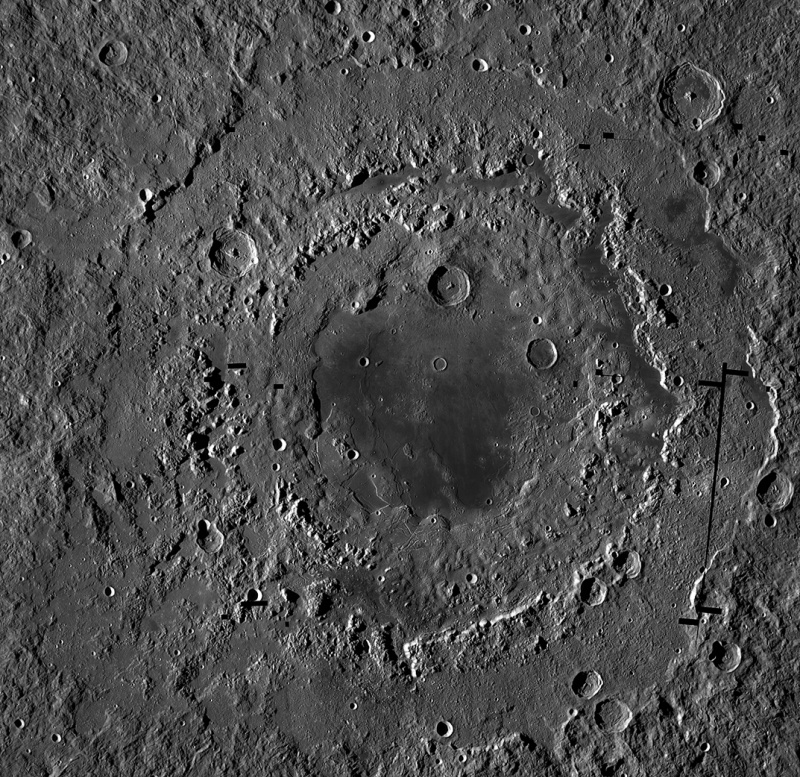
The script for the program seen above was written and recorded Sunday night April 5th before Artemis 2’s lunar flyby. This comment is made after the flyby on the late afternoon of April 6th. I speculated about Mare Orientale being something I wanted to have them investigate. And they did spend a great deal of time observing it, so we should expect some very nice photographs of it when they’re sent back. The image above is from the Lunar Reconnaissance Orbiter taken several years ago, at least. I find it a really cool feature.
Ephemeris: 02/05/2026 – Artemis 3 isn’t going to the Moon
This is Ephemeris for Thursday, March 5th. Today the Sun will be up for 11 hours and 22 minutes, setting at 6:36, and it will rise tomorrow at 7:11. The Moon, 2 days past full, will rise at 9:22 this evening.
Late last week NASA announced that the Artemis 3 mission was not going to land on the Moon. It wasn’t even going to the Moon. It would be a low earth orbit test of docking and operations of the Human Landing System or lunar landers, either the SpaceX Starship Lander or Blue Origin’s Blue Moon Lander. This reminds me of the Apollo 9 mission which came after the spectacular Apollo 8 mission which orbited the Moon. Apollo 9 was a checkout of the Lunar Lander in low earth orbit. Several Months later, Apollo 10 flew to the Moon to a checkout of the Lunar Lander in lunar orbit. They couldn’t land, but it was a test of the operations in preparation for Apollo 11 which successfully landed on the Moon.
The astronomical event times given in this blog are for the Traverse City/Interlochen area of Michigan (Lat 44.7° N, Long 85.7° W; EST, UT – 5 hours) unless stated otherwise. Times will be different for other locations.
Addendum
Ephemeris: 02/10/2026 – Artemis 2 is delayed until at least March
This is Ephemeris for Tuesday, February 10th. Today the Sun will be up for 10 hours and 14 minutes, setting at 6:04, and it will rise tomorrow at 7:48. The Moon, 1 day past last quarter, will rise at 4:03 tomorrow morning.
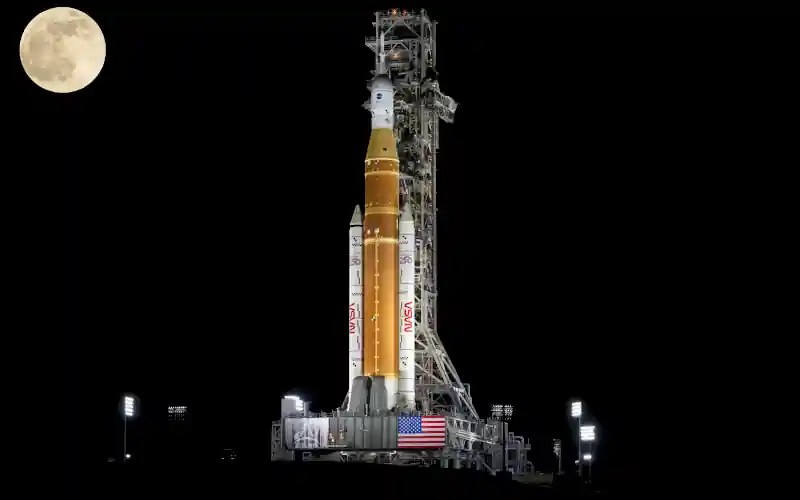
The next attempt to launch Artemis 2 and its crew around the moon will be in March. During the wet dress rehearsal, which involves filling the tanks of the huge core stage of the rocket with liquid hydrogen and oxygen, and counting down almost to the point of ignition. They discovered a greater than expected leak with the hydrogen quick disconnect fitting at the base of the core stage. They can’t test for hydrogen leaks while the spacecraft is sitting in the vertical assembly building because as cavernous as it is, it’s still a closed space and hydrogen is a notoriously leaky substance, being the smallest molecule. A little leakage is to be expected, but what they found was over the limit.
The astronomical event times given in this blog are for the Traverse City/Interlochen area of Michigan (Lat 44.7° N, Long 85.7° W; EST, UT – 5 hours) unless stated otherwise. Times will be different for other locations.
Addendum