Archive
Ephemeris: 09/23/2025 – Neptune is at opposition today
This is Ephemeris for Tuesday, September 23rd. Today the Sun will be up for 12 hours and 6 minutes, setting at 7:37, and it will rise tomorrow at 7:32. The Moon, 2 days past new, will set at 8:07 this evening.
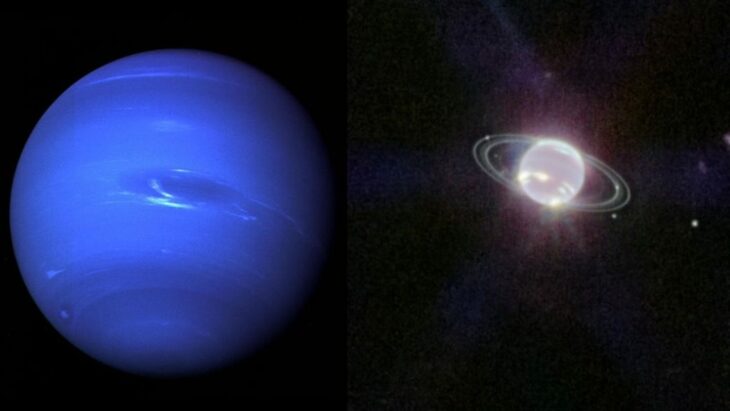
I normally don’t talk about observing things in the sky unless it can be seen with the naked eye, or can be seen in binoculars which are near stars that are visible to the naked eye. So I rarely talk about the planet Neptune. The last time was eight years ago and for the same reason as today. Neptune is in opposition with the Sun. That is, it is exactly opposite to the Sun in the sky, rising at sunset and setting at sunrise. Not only that, today is the 179th anniversary of the date it was discovered in 1846. Interestingly, it was first seen by Galileo. In one of his drawings of Jupiter and its moons that he made with his small telescope, there happened to be a background star that he recorded. That star turned out to be Neptune.
The astronomical event times given in this blog are for the Traverse City/Interlochen area of Michigan (Lat 44.7° N, Long 85.7° W; EDT, UT – 4 hours) unless stated otherwise. Times will be different for other locations.
Addendum
Ephemeris: 07/04/2025 – Mars, 49 years ago today
This is Ephemeris for Independence Day, Friday, July 4th. Today the Sun will be up for 15 hours and 28 minutes, setting at 9:31, and it will rise tomorrow at 6:03. The Moon, 2 days past first quarter, will set at 1:56 tomorrow morning.
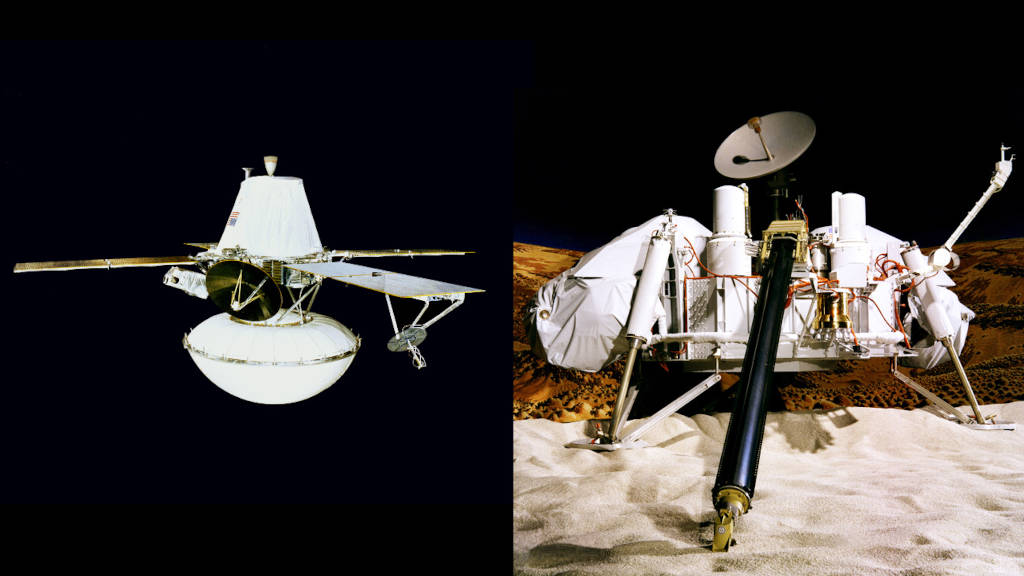
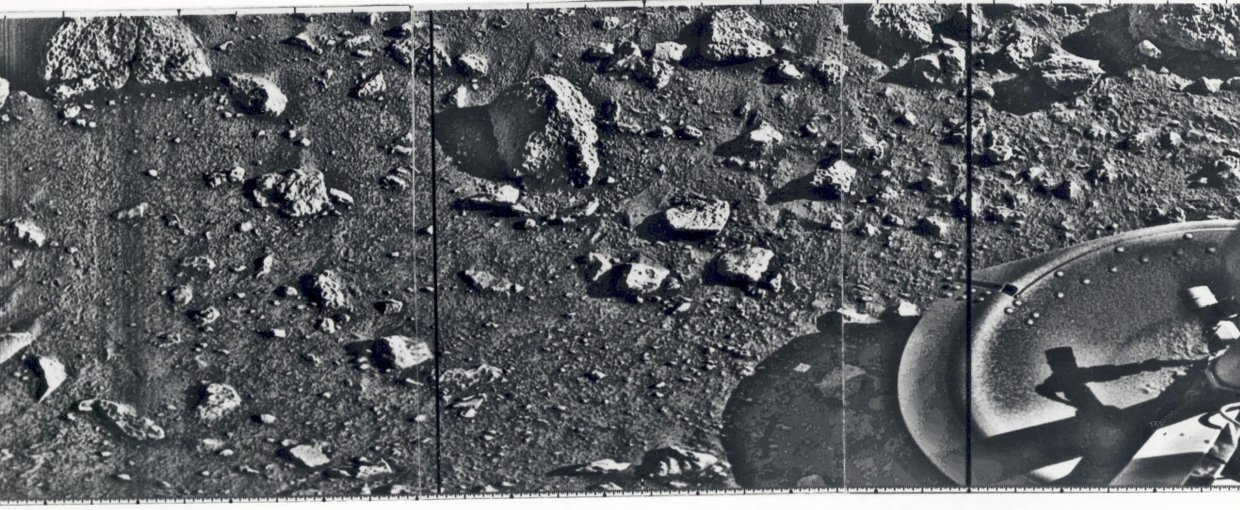
Forty-nine years ago today the Viking 1 spacecraft was orbiting Mars looking for a spot to land. NASA was hoping they could land it on July 4th, of our national Bicentennial, but they were having trouble trying to find a smooth enough spot to land. NASA eventually thought they found a smooth enough spot. The lander part of the spacecraft touched down on July 20th 1976, the 7th anniversary of the Apollo 11 landing on the Moon. Though the landing was successful, the area was a lot rougher than we would consider a safe spot to land today. Currently, The United States has two Rovers on the surface studying Mars. It’s an achievement a scientifically advanced democracy can do. I wonder if we will keep it intact for the two hundred and fifty year mark, only one year away?
The astronomical event times given in this blog are for the Traverse City/Interlochen area of Michigan (Lat 44.7° N, Long 85.7° W; EDT, UT – 4 hours) unless stated otherwise. Times will be different for other locations.
Addendum
Ephemeris: 06/06/2024 – 80 years ago, D-Day’s astronomical connection
This is Ephemeris for Thursday, June 6th. Today the Sun will be up for 15 hours and 27 minutes, setting at 9:25, and it will rise tomorrow at 5:57. The Moon is new today, and won’t be visible.
Today is the 80th anniversary of the greatest battle of World War II was the Allied invasion of Mainland Europe at Normandy on D-Day, a date governed by the phase of the Moon. The full moon on June the 6th, 1944 gave light for the gliders and paratroopers to carry out their operations at midnight. Plus the high tides were near noon and midnight and the low tides near dawn. The idea was to hit the beach at low tide to enable the landing craft to operate without hitting the obstacles the Germans had planted in the tidal zone. It was great for the landing craft, but the troops had a lot of open beach to run through to get to any sort of shelter. The best days for the invasion were the 5th, 6th and 7th of June. Bad weather on the 5th caused a one day postponement.
The astronomical event times given are for the Traverse City/Interlochen area of Michigan (EDT, UT–4 hours). They may be different for your location.
Addendum

Ephemeris: 06/03/2024 – We begin our 50th orbit of the Sun
This is Ephemeris for Monday, June 3rd. Today the Sun will be up for 15 hours and 24 minutes, setting at 9:23, and it will rise tomorrow at 5:58. The Moon, 3 days before new, will rise at 4:20 tomorrow morning.
Today begins Ephemeris’ 50th circuit of the Sun having completed 49 last Friday. Next month will be the 50th anniversary of my stint as a volunteer program producer for IPR, but that’s another story. So already having produced a weekly program for Interlochen Public Radio, which back then was simply, to me anyway, WIAA. I was asked to come up with a week daily program giving out the sunrise and sunset times. Well I really didn’t want to do just that. Back then I had to come into the station to record them. So what I did was add the Moon rise or set times and a little bit of astronomical trivia. By the way an Ephemeris is a table of celestial body positions over time.
The astronomical event times given are for the Traverse City/Interlochen area of Michigan (EDT, UT–4 hours). They may be different for your location.
Addendum
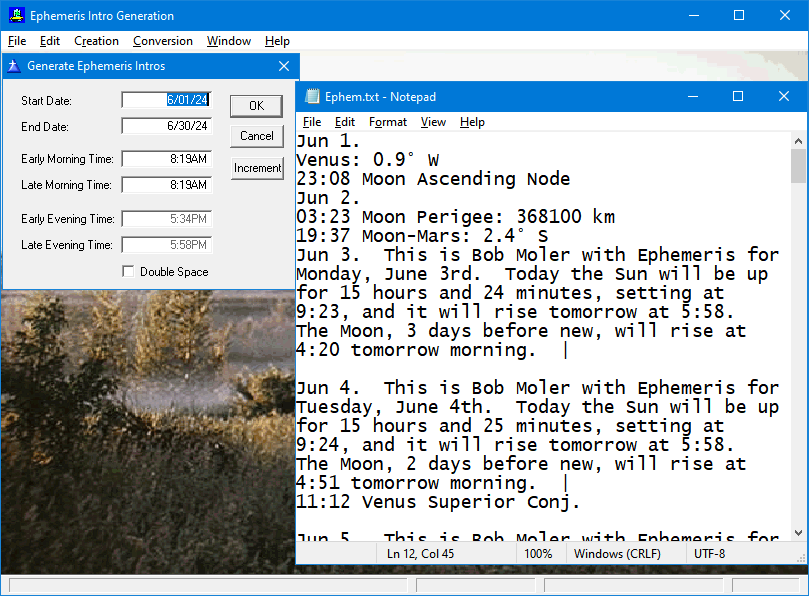
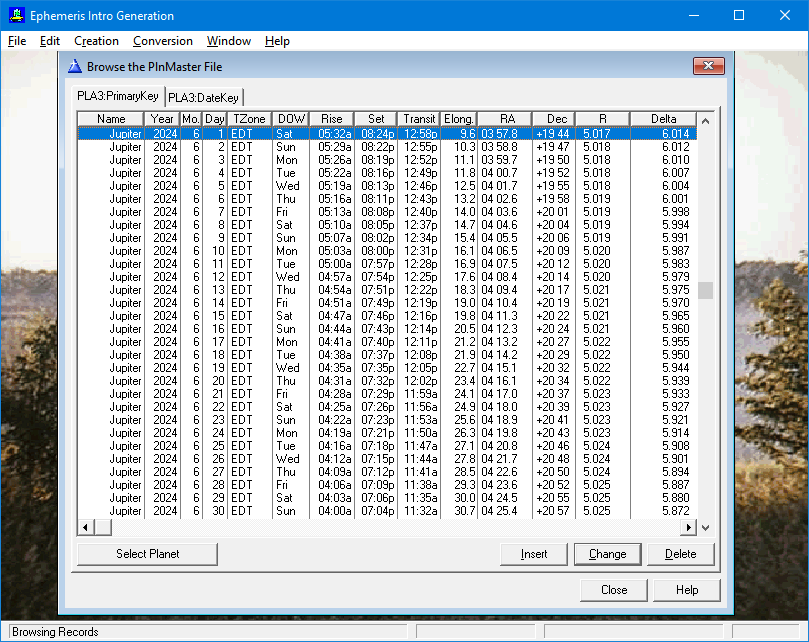
My programming background is not that of scientific coding, but that of the financial industry which is completely different. So I had to pretty much learn on my own and use references for the coding and algorithms for the calculation of astronomical positions, times, and events.
Ephemeris: 02/12/2024 – Darwin Day
This is Bob Moler with Ephemeris for Darwin Day, Monday, February 12th. Today the Sun will be up for 10 hours and 18 minutes, setting at 6:06, and it will rise tomorrow at 7:46. The Moon, 3 days past new, will set at 9:53 this evening.
Today we commemorate the birthday of Charles Darwin, whose Origins of the Species produced a revolution in biology, that is the Theory of Evolution. Back then, in the 19th century, the Earth was thought to be fairly young. By then geologists had figured out that the Earth was at least millions of years old. Astronomers working on the amount of energy that the Sun put out calculated that if it were made of coal it would burn out in about 3000 years. So there was a definite problem with the age of the Sun and the Earth. With the discovery of radioactivity and the beginnings of Quantum Theory, at the turn of the last century, astronomers and physicists figured out that the conversion of matter into energy, according to Einstein, was energetic enough to fuel the Sun for billions of years. Enough time for evolution to work. In fact the entire universe is evolving!
The astronomical event times given are for the Traverse City/Interlochen area of Michigan (EST, UT –5 hours). They may be different for your location.
Addendum
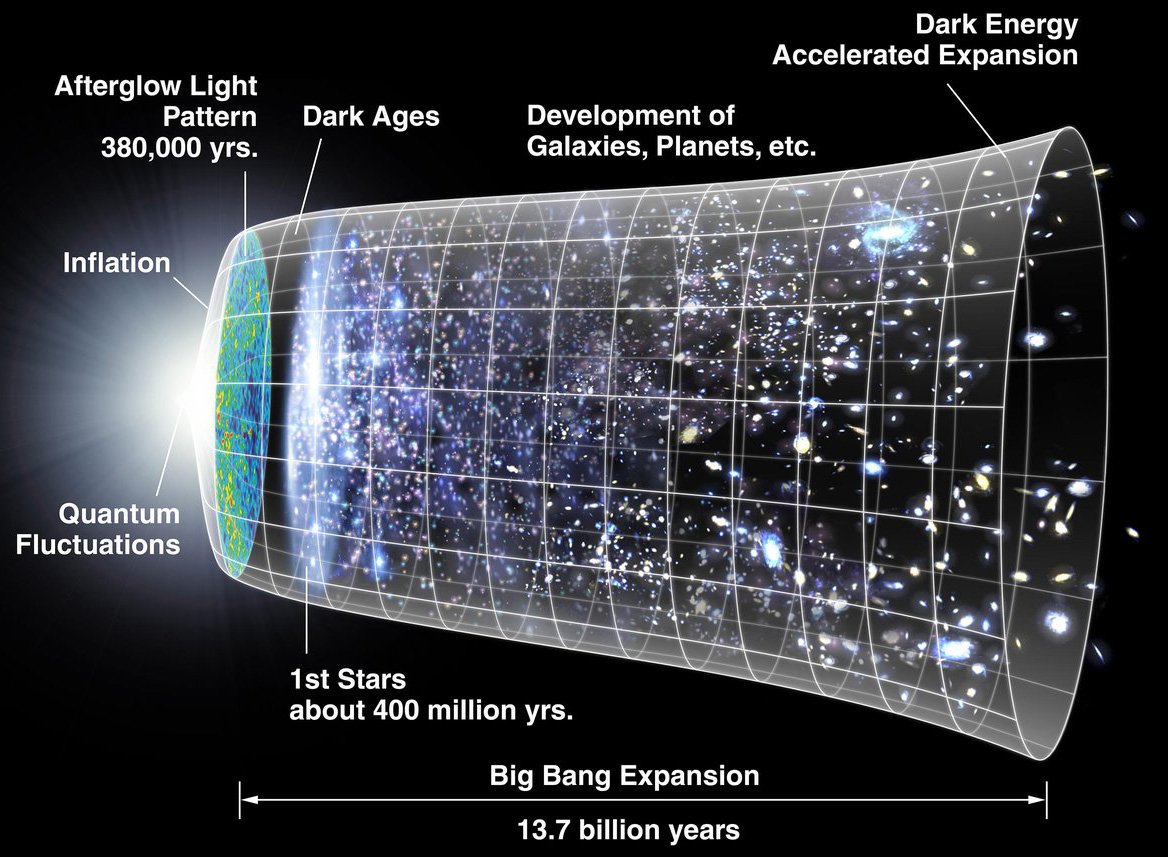
Biology isn’t my thing… too messy. Astronomy is mainly physics and chemistry, with the addition, relatively recently of astrobiology. However, not only living things evolve, the universe itself has been evolving for the last 13.8 billion years from the origin of the Big Bang to the present day.
Ephemeris: 11/21/2023 – Where I was 60 years ago tomorrow
This is Ephemeris for Tuesday, November 21st. Today the Sun will be up for 9 hours and 22 minutes, setting at 5:09, and it will rise tomorrow at 7:48. The Moon, 1 day past first quarter, will set at 2:00 tomorrow morning.
Sixty years ago tomorrow, November 22nd 1963, President John F Kennedy was assassinated in Dallas. On that day I was in Basic Training for the Air Force at Lackland Air Force Base just South of San Antonio, about 250 miles south of Dallas. Being in Basic Training meant we were pretty well cut off from the outside world as far as finding out what was happening. That day I happened to be serving KP and in the afternoon after washing all the pots and pans from lunch we were sitting around at the back of the Mess Hall when we found out from one of the cooks that Kennedy was shot. There were also rumors going around that they took out Vice President Johnson too. So we’re wondering if this was a massive assault on our government. I thought this was a hell of a time to join the military, we could be off to war soon.
The astronomical event times given are for the Traverse City/Interlochen area of Michigan (EST, UT –5 hours). They may be different for your location.
 Bob Moler's Ephemeris Blog