Archive
Ephemeris: 12/23/2025 – An alternate possibility of the Star of Bethlehem
This is Bob Moler with Ephemeris for Tuesday, December 23rd. Today the Sun will be up for 8 hours and 48 minutes, setting at 5:06, and it will rise tomorrow at 8:18. The Moon, halfway from new to first quarter, will set at 8:40 this evening.
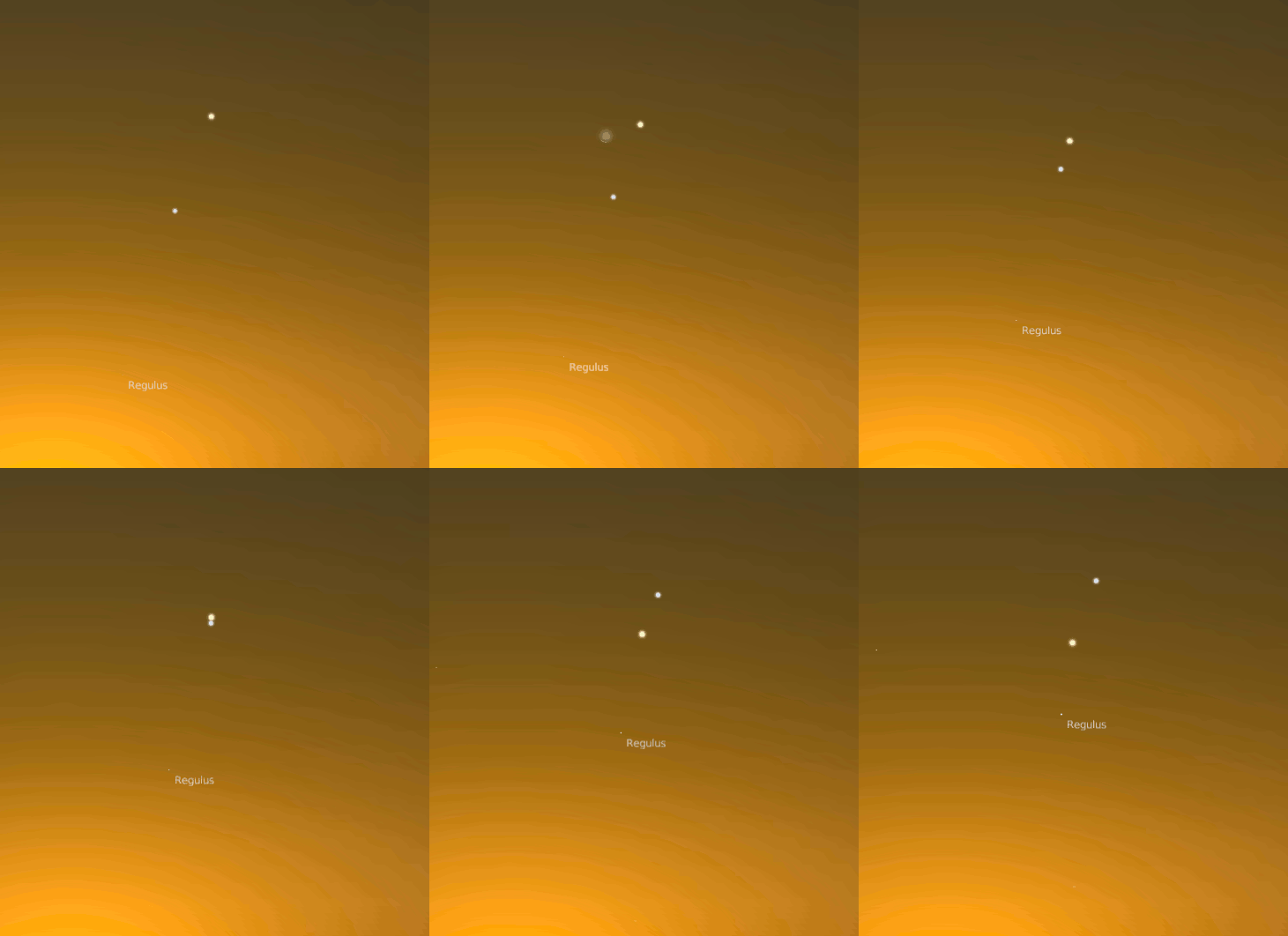
Many writers of the early church place Jesus’ birth around 2 BC, which had to be before Herod the Great’s death, which I suggest was in 1 BC marked by a total lunar eclipse, rather than the 4 BC partial lunar eclipse, normally accepted. In 3 and again in 2 BC there were star-like conjunctions or apparent joining of the planets Jupiter and Venus against the backdrop of the constellation of Leo the Lion. A lion is related to Judah, son of Jacob by a blessing the latter gave his sons in Genesis. The first conjunction occurred in the morning sky of August, 3 BC. In June the next year the two planets got together again, in the evening sky, just after Jesus would have been born in the lambing season, when shepherds would be guarding their flocks at night.
The astronomical event times given in this blog are for the Traverse City/Interlochen area of Michigan (Lat 44.7° N, Long 85.7° W; EST, UT – 5 hours) unless stated otherwise. Times will be different for other locations.
Addendum
Ephemeris: 12/22/2025 – The most popular astronomical explanation for the Star of Bethlehem
This is Ephemeris for Monday, December 22nd. Today the Sun will be up for 8 hours and 48 minutes, setting at 5:05, and it will rise tomorrow at 8:18. The Moon, 3 days past new, will set at 7:30 this evening.
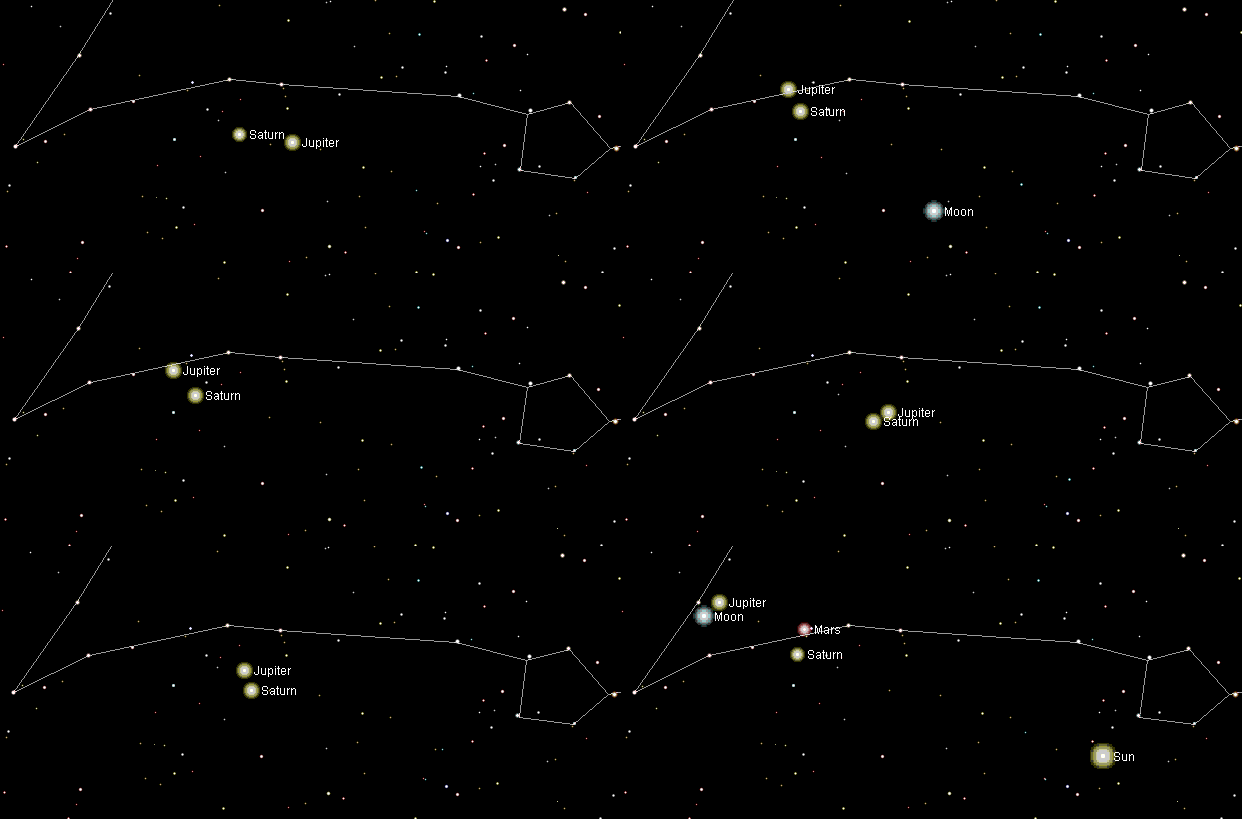
This year we have a bright evening Christmas star, Jupiter in the east. But what about the one described in the Bible, in the Gospel of Matthew? We will look today at the first of two events that may have been recorded as the Star of Bethlehem. In 7 BCE there was a rare event over 6 months when three times the planet Jupiter passed Saturn against the stars of the constellation Pisces. Could the Persian astrologer priests, called Magi, have read into the event enough significance to start the journey to Jerusalem in search of the newborn King of the Jews? It was the scribe’s readings that sent them to Bethlehem. Jupiter, Saturn and Pisces all may have had significance to the Magi.
The astronomical event times given in this blog are for the Traverse City/Interlochen area of Michigan (Lat 44.7° N, Long 85.7° W; EST, UT – 5 hours) unless stated otherwise. Times will be different for other locations.
Addendum
Ephemeris: 09/29/2025 – First attempts to measure the distance to the Sun
This is Ephemeris for Monday, September 29th. Today the Sun will be up for 11 hours and 47 minutes, setting at 7:26, and it will rise tomorrow at 7:39. The Moon, at first quarter today, will set at 11:38 this evening.
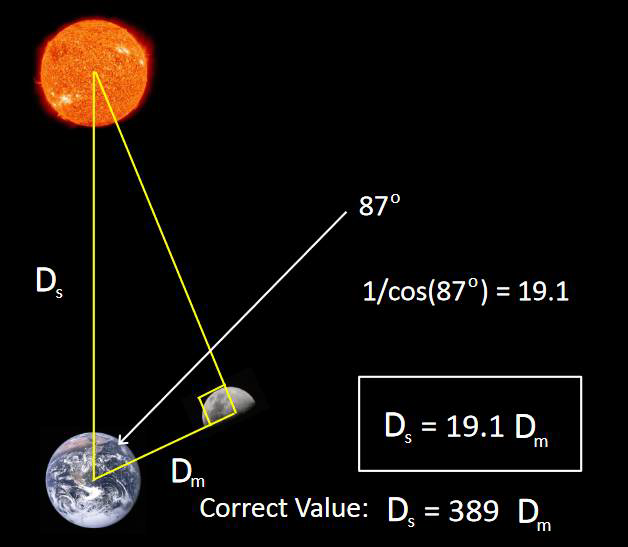
The first quarter Moon tonight reminds me of how the Greeks used the quarter Moon to attempt to determine the distance to the Sun. The idea was to determine when the Moon was exactly at first or last quarter, so the angle of the Sun-Moon-Earth was exactly 90°. The next thing to do was to measure the actual angle between the Sun and the Moon at that instant. It’s a difficult observation. Aristarchus tried and got a result that the Sun was about 19 times the distance of the Moon. The Sun-Earth-Moon angle he got was 87°. Hipparchus measured the Moon to be 60 earth radii away which is near the Moon’s actual distance from the Earth. In actuality the Sun is about 400 times the distance to the Moon.
The astronomical event times given in this blog are for the Traverse City/Interlochen area of Michigan (Lat 44.7° N, Long 85.7° W; EDT, UT – 4 hours) unless stated otherwise. Times will be different for other locations.
Addendum
Ephemeris: 07/21/2025 – When our knowledge of the size of the universe expanded
This is Ephemeris for Monday, July 21st. Today the Sun will be up for 15 hours and 2 minutes, setting at 9:20, and it will rise tomorrow at 6:18. The Moon, 3 days before new, will rise at 3:18 tomorrow morning.
A little over 100 years ago astronomers the Milky Way and the surrounding stars were thought to be the entire universe. A universe which was, apparently, disc shaped. Astronomers photographed examples of objects they called spiral nebulae, which they thought belonged to the Milky Way. Then Edwin Hubble photographed stars in the Andromeda spiral nebula. One star changed brightness in a way like some of the stars we know in our Milky Way. These stars are called Cepheid Variables and the rate of variation in brightness is related to their true brightness. This star that Hubble found was much too dim and much too far away to be in the confines of the Milky Way. Soon we found that we are in a spiral nebula or galaxy, like billions of others.
The astronomical event times given in this blog are for the Traverse City/Interlochen area of Michigan (Lat 44.7° N, Long 85.7° W; EDT, UT – 4 hours) unless stated otherwise. Times will be different for other locations.
Addendum
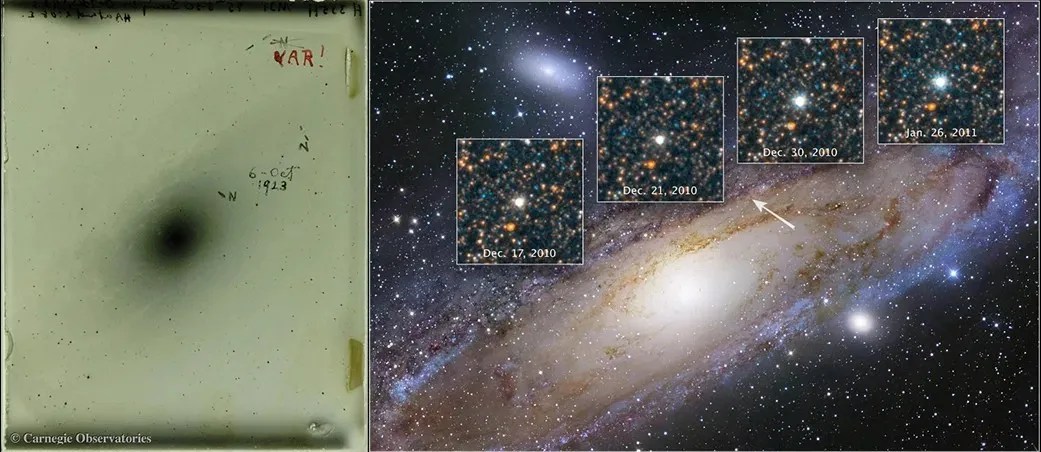
Left: Carnegie Observatories. Right: NASA, ESA, and the Hubble Heritage Team (STScI/AURA); Acknowledgment: R. Gendler
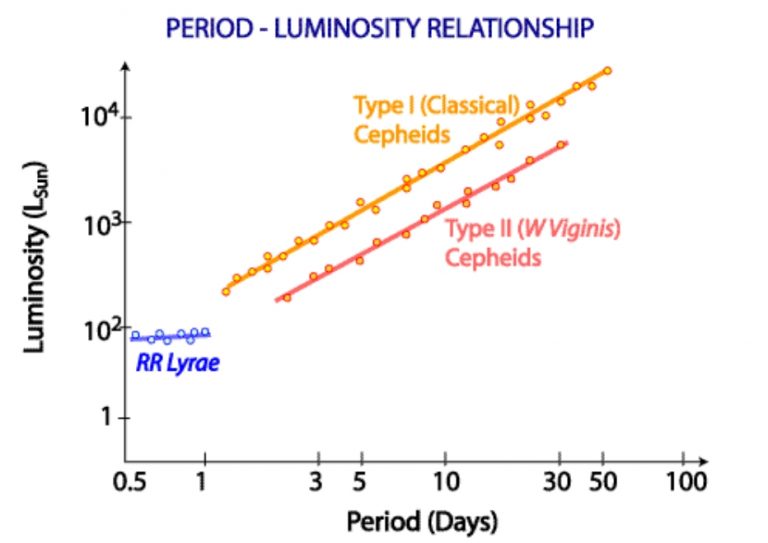
The universe “expanded” again, when astronomers found out there were two types of Cepheids, one 4 times brighter than the other. Using the brighter Type I Cepheids, the measurement doubled the estimated distance*. This was about the time in the early 1950s when I was getting interested in astronomy, so the quoted distance to Andromeda and all the other galaxies doubled from older astronomy books to the newer ones.
* Inverse square law: brightness drops with the square of the distance. Double the distance and the brightness drops by 22 or 4.
Ephemeris: 03/17/2025 – When the largest telescope in the world was in Ireland
This is Ephemeris for St. Patrick’s Day, Monday, March 17th. Today the Sun will be up for 12 hours and 1 minute, setting at 7:51, and it will rise tomorrow at 7:49. The Moon, 3 days past full, will rise at 11:40 this evening.
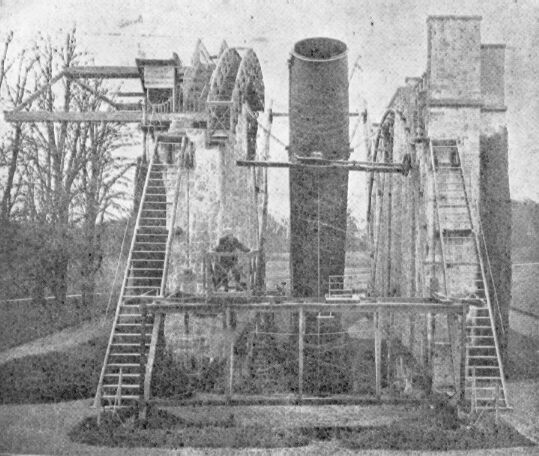
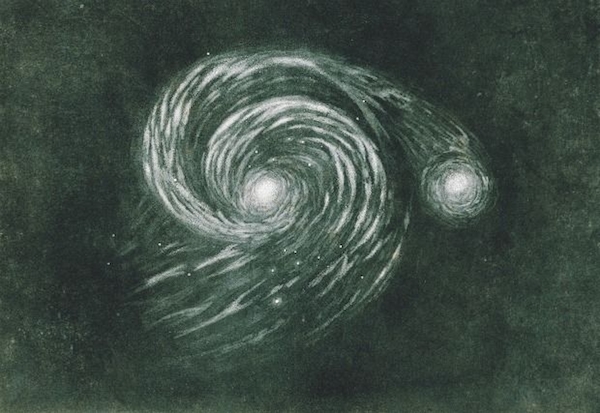
In the 19th century Ireland laid claim to having the largest telescope in the world. It was a reflecting telescope with a mirror diameter of 72 inches. It was built by William Parsons the Third Earl of Rosse. The base of the telescope tube rested in a pit between two massive walls and could only look to either side of a north-south direction. It saw first usage in 1847. The telescope was called the Leviathan of Parsonstown, and was in use until 1890. Mirrors in those days were made of a silvery alloy called speculum. Two mirrors were used alternately because speculum tarnished. The mirror not in use would have to be re-polished and swapped in from time to time. It was the largest telescope until the 100 inch at Mt. Wilson was put in service in 1917.
The astronomical event times given are for the Traverse City/Interlochen area of Michigan (EST, UT – 5 hours). Times will be different for other locations.
Addendum
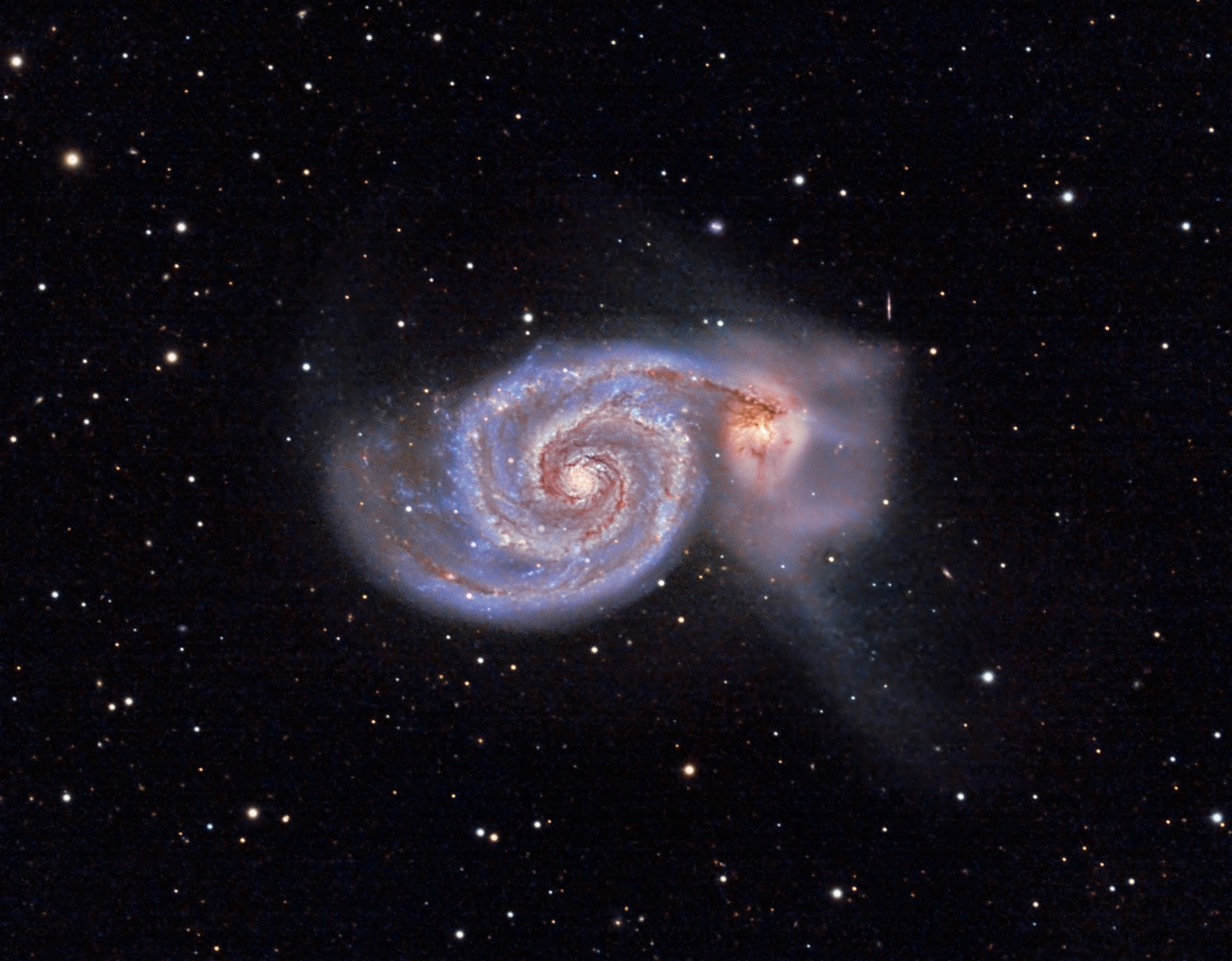
Ephemeris Extra: 03/12/2025 – Almost everything you wanted to know about lunar eclipses

What is a lunar eclipse?
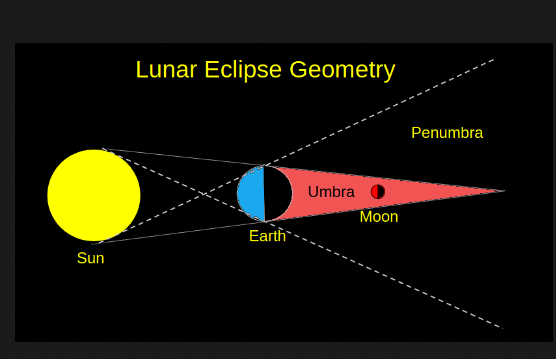
There are two types of eclipses. Eclipses of the Sun or solar eclipses, and eclipses of the Moon, or lunar eclipses. They are both related, in that they involve the Sun the Earth and the Moon. In the solar eclipse the Moon casts its shadow on the Earth at new moon. The lunar eclipse is the Earth casting its shadow on the full Moon. Since the Sun is an extended object, that is not a point, it has two shadows according to astronomers. If you take a look at your shadow in the sunlight cast on the ground, you will notice that your shadow is fuzzy. The fuzziness comes from the fact that your body is only blocking out part of the sunlight on the edges. That part of the shadow is called the penumbra.
There are three types of lunar eclipses. The penumbral eclipse is when the Moon is too far north or south of the umbra and just enters the penumbra. A partial eclipse is where the moon again is too far and south but close enough to have part of it skirt the umbra. And total eclipse is when the Moon becomes completely immersed inside the earth’s umbral shadow.
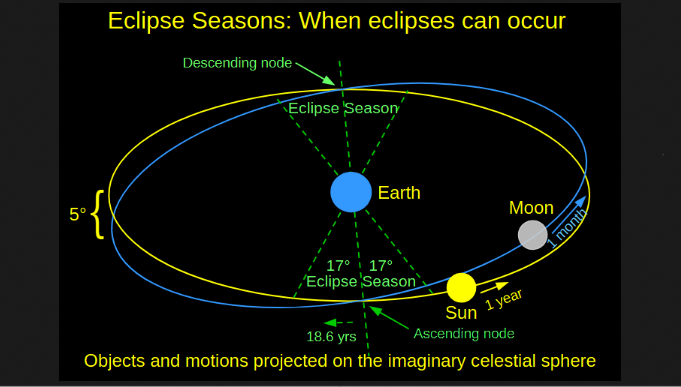
If one checks an almanac, one would find that eclipses generally come in pairs, one of each type, about two weeks apart separated by about six months. The times when eclipses can appear are called eclipse seasons lasting 35 days, about six months apart. They occur as often as they do, because the Moon has an orbit around the Earth that is more aligned with the Earth’s orbit of the Sun than it is the Earth’s equator like most moons of planets. The moon’s orbital plane deviates from the Earth’s orbit by 5 degrees. The intersection of those two orbital planes is called the line of the nodes. Eclipses can only occur when the Sun and the moon are near those nodes at the same time this could occur when the Sun is within 17° of the node.
Lunar eclipses throughout history
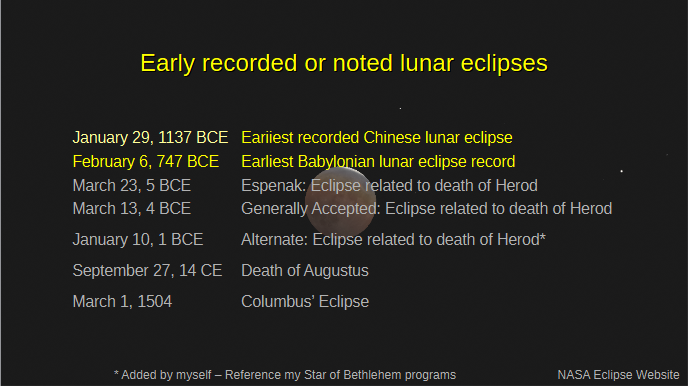
Humans have been observing eclipses both lunar and solar for millennia. And as they got more sophisticated they recorded them. The Chinese were especially good at this. The earliest recorded Chinese lunar eclipse was January 29th 1137 BCE. No, obviously they did not use the dating system we use today. It was usually in whatever year of a particular monarch’s reign that it happened in, and historians had to go back and figure out when that was. I found out that at least two that I know of the earliest lunar eclipses were actually solar eclipses. I found out using the app Stellarium by actually setting the date back to then, and finding out what kind of eclipse it was.
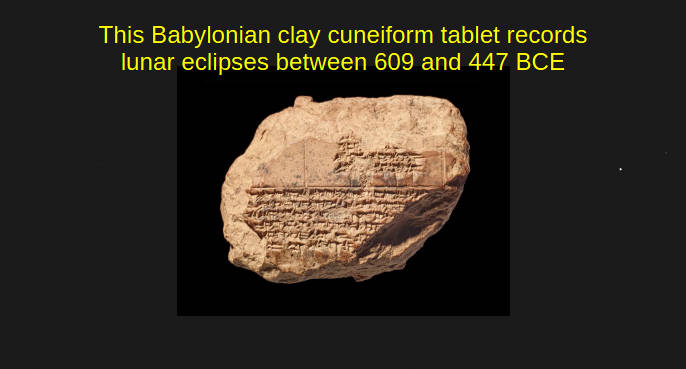
The Babylonians became astute observers and recorders of astronomical events including of course eclipses. By the 4th century BCE they had discovered a method to compute when eclipses occurred by a specific cycle of when they reoccurred, which I will talk about shortly.
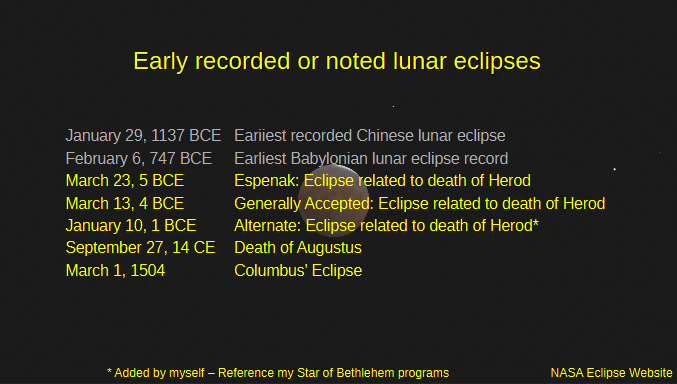
Continuing with our early recorded or noted lunar eclipses, we have 3 eclipses in 5, 4 and 1BCE, which are related to the death of King Herod the Great in Judea, around the time of the birth of Christ. In my biennial programs to the Grand Traverse Astronomical Society at Christmastime, where I discuss the Star of Bethlehem I referenced the latter two. They are also mentioned by David Hughes in his book The Star of Bethlehem. The first one is provided by Fred Espenak, recently retired from NASA, and now owns the website called MrEclipse.com. Most historians place the death of King Herod in 4 BCE, after the March 13th 4 BCE lunar eclipse. The source for this is the Jewish historian Josephus in his work Antiquities of the Jews. In it, he relates that King Herod died after a lunar eclipse but before Passover. The Jewish Calendar is a lunar calendar and Passover occurs at full moon, so the period during when Herod died is an integral number of lunar months before Passover. The 4 BCE eclipse occurs 1 lunar month before Passover. Josephus also records two chapters worth of palace intrigue of Herod’s court between the eclipse and Passover. To my mind and to many others, that is too short a period for all the events to have taken place, and the eclipse was partial visible early in the morning. The 1 BCE eclipse is total and allows 3 to 4 months for the palace intrigue to take place as Josephus describe it. I’ll get to Columbus’ eclipse in a bit, but first we’ll take a look at how eclipses can be predicted, which is the essence of the Columbus’ eclipse.
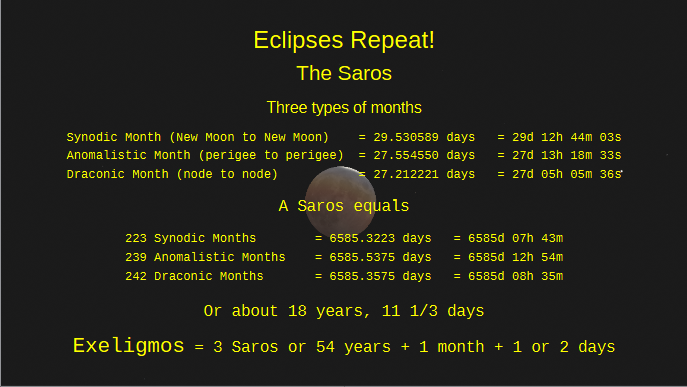
We know the Babylonians have been observing and recording eclipses since the 8th century BCE from their cuneiform tablets. By the 4th century BCE they had figured out that eclipses repeat themselves every 18 years and 11 and a third days. It seems they did this by observing lunar eclipses because that one third day in the saros. It keeps solar eclipses from being visible from the same location until 3 saros periods elapse that’s where we get the exeligmos where three saros periods equals 54 years and a month. With lunar eclipses if one sees a lunar eclipse in the early evening, one saros later, the next eclipse of the series will be visible in the morning before dawn.
The saros happens to be the confluence of three separate kinds of lunar months. The first is the synodic month which is also called a lunar month, is from new moon to new moon. It is the period that lunar calendars are based on. The next kind of month is the anomalistic month which is perigee to perigee that is this is the closest point to the earth back to its closest point to the earth one orbit later this is two days shorter than the synodic month. The third kind of month is the draconic month, which is the moon’s orbit from one node back to the same node.
Over the period of saros these separate months coincide within a very few hours. But since they don’t coincide exactly, the eclipses of the Cerro series the moon or the moon’s shadow actually moves northward or southward each saros period. And since we see more than one set of eclipses every 18 years, actually at least two of each a year, there are 36 or so separate saros series running at the same time.
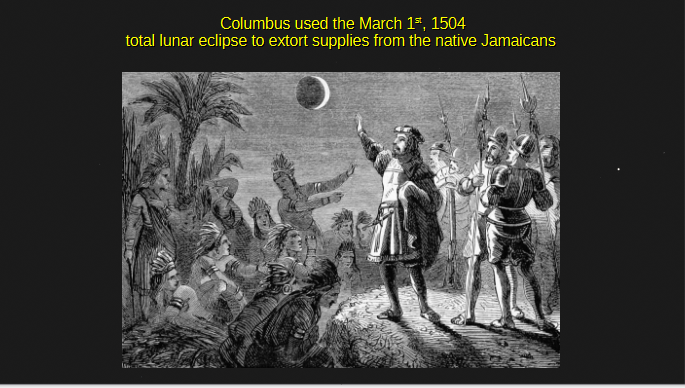
Columbus’ 4th voyage to the new world started out with four ships. After exploring the islands in I think the coast of South America, he ended up on Jamaica with no ships. At first, he had friend relations with the native Jamaicans, however over time that worsens when this crew began to harass, attack, and kill the native peoples, so they refused to give Columbus any more food or supplies. Columbus’s crew were on the brink of starvation when he checked an almanac and found out that soon there would be a total eclipse of the Moon. And on that fateful night he told the natives that unless he was given some supplies his God was going to take away the Moon. And that night the Moon did indeed begin to be devoured, that is the Moon began its entry into the Earth’s shadow. Columbus told them that unless they provided him with food and supplies his God was going to take away the Moon, and if they did provide him with supplies immediately he would consult with his God and see what he could do. The natives acquiesced and brought him food and supplies. Eventually within a couple of hours the Moon did indeed emerge from the earth’s shadow, and it was restored just as Columbus had said.
Notable modern lunar eclipses
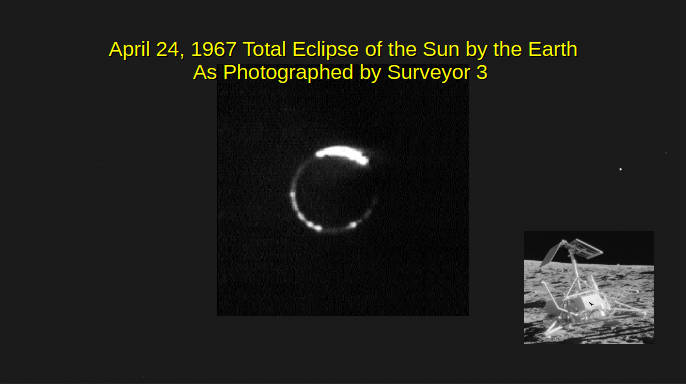
When we have a lunar eclipse, entities on the Moon see a solar eclipse. However, the Earth is 4 times larger than the Moon so that the totality of the solar eclipse lasts a long time, and the Earth covers much more than just the disk of the Sun. The Surveyor program was a lunar exploration program in preparation for the Apollo manned landings. Surveyor 3 landed on the moon just before a lunar eclipse, so one of its photographs was to look back at the Earth and take a look at it during totality of the solar eclipse. We know the Moon appears red, generally, when it’s eclipsed, and what Surveyor saw was the Earth with a red ring around it showing the combined sunrises and sunsets all around the earth at that time. The atmosphere of the Earth bends sunlight into the earth’s shadow. Blue light is scattered out, so we have red sunsets, and sunrises, so that is the color of the light that reaches the Moon. The amount of light we see on the Moon during totality depends on how clear the Earth’s atmosphere is at that time.
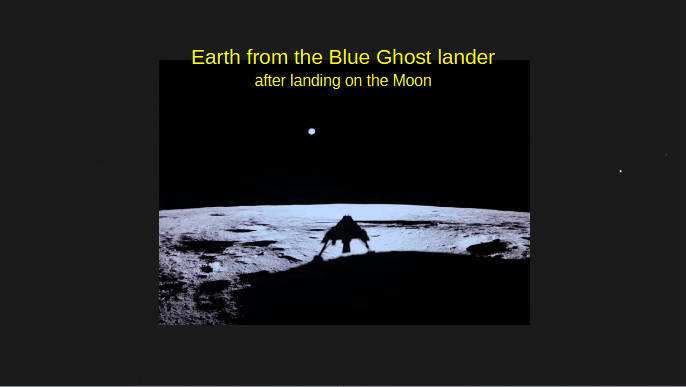
Firefly Aerospace’s Blue Ghost Lander, which is spending this lunar day on the Moon will be attempting to photograph the Earth and the solar eclipse while we are enjoying our lunar eclipse this Friday morning.
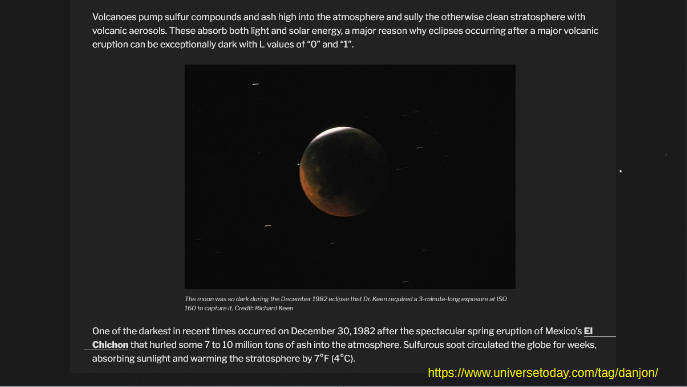
There were two total lunar eclipses visible from northern Michigan in 1982. Also that year, in April, a volcano named El Chichon, in southern Mexico erupted in a massive explosion sending a great deal of volcanic ash into the stratosphere. The earth’s shadow during the July 6th total lunar eclipse, to my eyes, didn’t look as uniform as it usually did, I assume because of the amount of dust in the atmosphere, and not being spread out quite as much as it would be later on. The second lunar eclipse was in the early morning hours of December 30th. And amazingly, here in Northern Michigan the sky was clear. I got out and looked over in the west to the Moon and didn’t see it at all. There was kind of a very faint glow in the constellation of Gemini, but that was all. I went to the Joseph H Rogers observatory to observe the Moon with the telescope. The moon was there but very, very dim. I could not see any of the red that shows up in the image above with the Moon being so dark. With the Moon being in Gemini, there were a lot of background stars since it was adjacent to the Milky Way. I was able to see many occultations of the stars as the moon moved against the background stars of the sky.
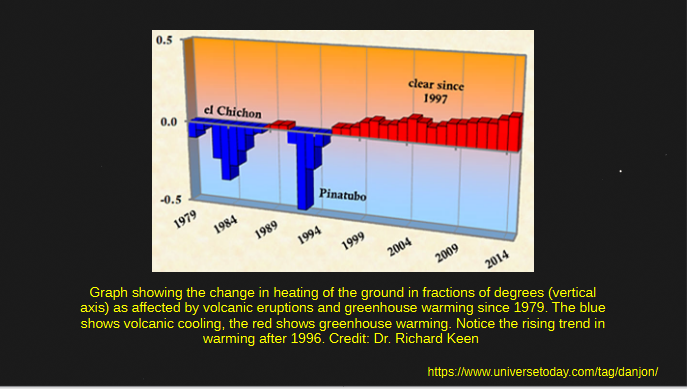
Above is a chart of the heating of the ground or lack of it caused by volcanic ash in the atmosphere in the 80s and 90s. We had two massive volcanic explosions the first El Chichon, in 1982, which I’ve already mentioned, and in 1991 Mount Pinatubo in Philippines, and how the volcanic ash caused cooling. It would also cause the dark lunar eclipses we saw. Since then even though this graph only goes to 2014 our lunar eclipses have been fairly bright, the red coloring obviously showing very well during totality.
The March 14, 2025 total lunar eclipse
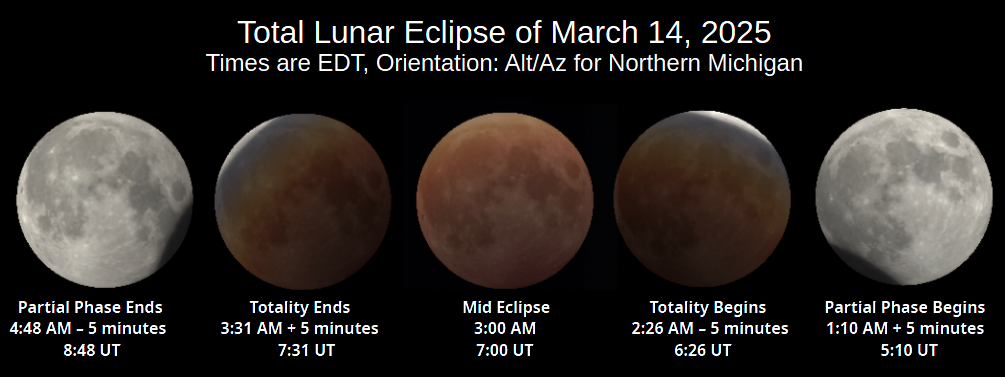
The image above shows the progress of the March 14th 2025 total lunar eclipse, at least the phases having to do with the Earth’s inner shadow, the umbra. The sequence moves from right to left as it moves through the Earth’s shadow. The penumbra will show itself about half an hour before the partial phase begins, as a sort of a dimming of the Moon in the side towards the umbra, so it will not appear uniformly illuminated. The partial phase begins at 1:10 AM, The next image is taken 5 minutes before totality, which will begin at 2:26 AM. We’re looking at just before totality begins, so you can tell where the shadow is. Mid eclipse is at 3:00 AM. I’ve increased the brightness of that image so it actually shows better, but it will be dimmer than the outer edges of the umbra. Totality will end at 3:31 AM and that image is what it should look like 5 minutes after that time. And the partial phase will finally end at 4:48 AM. For the next half hour you might be able to see the effects of the penumbra. Seeing the slight shading of the penumbra is easier if one uses sunglasses, which will reduce the glare of the still bright Moon and enhancing the shadow effect.
Ephemeris: 02/17/2025 – Follow the Drinking Gourd
This is Ephemeris for President’s Day, Monday, February 17th. Today the Sun will be up for 10 hours and 35 minutes, setting at 6:14, and it will rise tomorrow at 7:38. The Moon, 3 days before last quarter, will rise at 11:47 this evening.
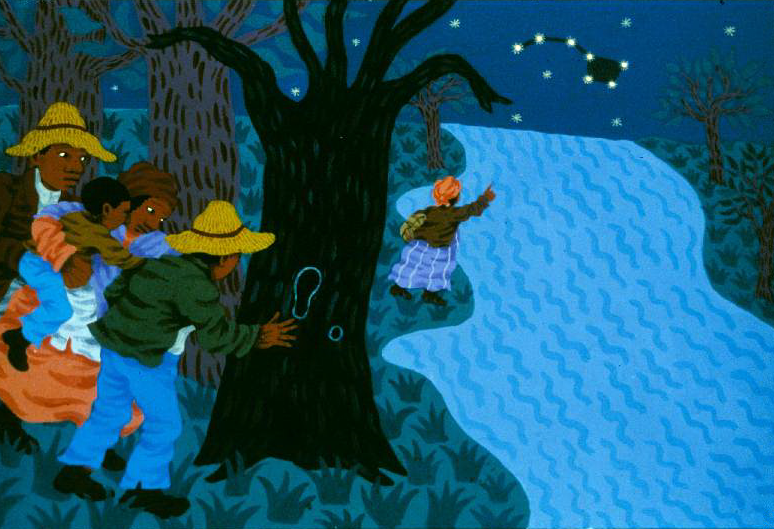
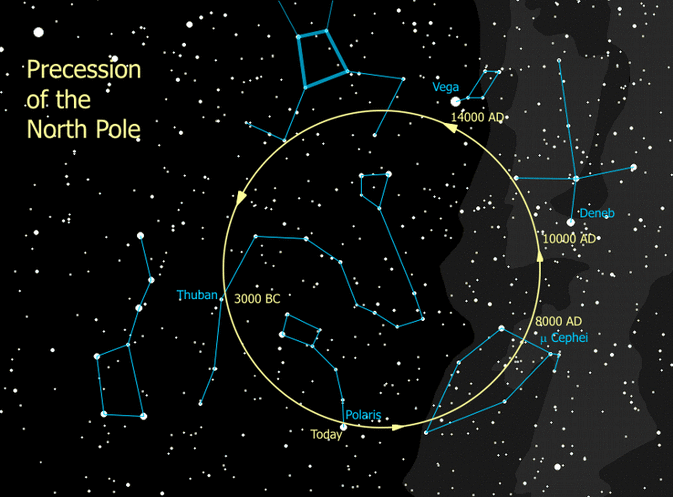
In the decades before the Civil War, runaway slaves would travel, often at night, northward from the slave states in the south to the northern free states and Canada over the metaphorical Underground Railroad following the Drinking Gourd, the Big Dipper as their compass. For millennia, the North Pole of the sky had been passing near the handle of the Big Dipper or Great Bear’s tail and now up to the star Polaris in the Little Dipper. As an amateur astronomer, who loves the dark, starlit skies, I’ve noticed that everyone is the same color in the dark! This year the Grand Traverse Astronomical Society will, once again, team with the Sleeping Bear Dunes for more Sun and star parties.
The astronomical event times given are for the Traverse City/Interlochen area of Michigan (EST, UT – 5 hours). Times will be different for other locations.
Addendum
Ephemeris: 01/24/2025 – 100th anniversary of the last total solar eclipse visible in Northern Michigan
This is Ephemeris for Friday, January 24th. Today the Sun will be up for 9 hours and 31 minutes, setting at 5:40, and it will rise tomorrow at 8:08. The Moon, 3 days past last quarter, will rise at 5:22 tomorrow morning.
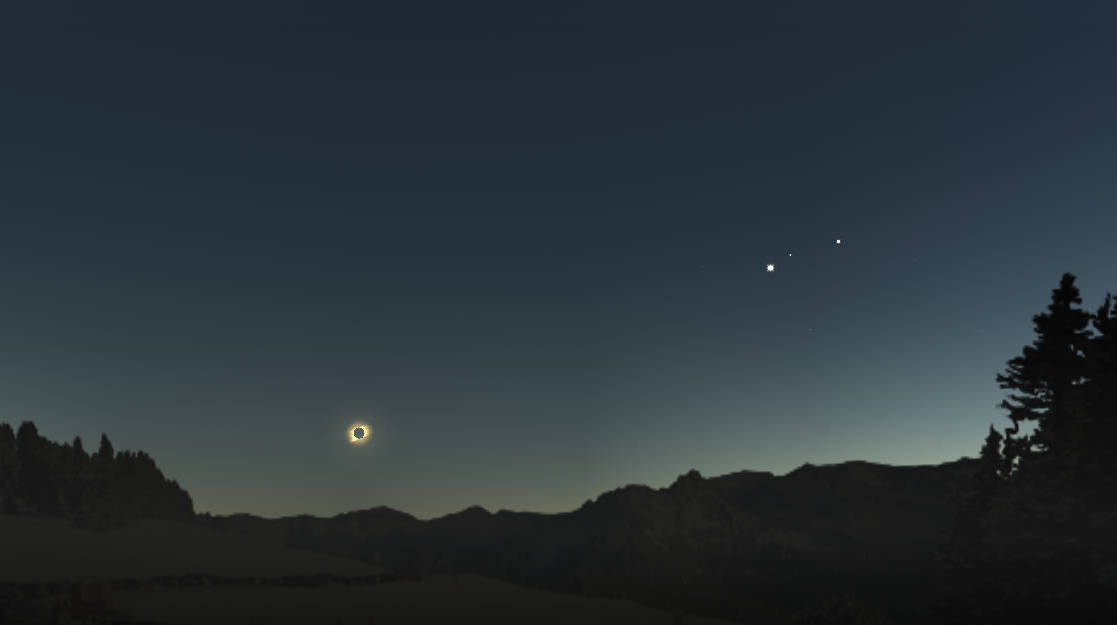
100 years ago this morning, Saturday, January 24th, 1925 the partial phase of a solar eclipse was already in progress as the Sun rose at 8:12 AM in the Grand Traverse region. I found no record of the weather that day, but being January, I don’t expect it was clear. So after sunrise instead of the daylight getting brighter as the Sun rose, it got darker. This was the last time Northern Michigan experienced a total solar eclipse. Totality was around 9:03 AM. After that the daylight gradually became brighter with the eclipse ending at 10:15 AM. If it was clear that morning the sight would have been spectacular with the eclipsed Sun’s corona shining low in the southeastern sky, off to the right were a group of three planets: Venus, Mercury and Jupiter in a tight line.
The astronomical event times given are for the Traverse City/Interlochen area of Michigan (EST, UT – 5 hours). Times will be different for other locations.
Addenda
My article in this January’s Stellar Sentinel, newsletter of the Grand Traverse Astronomical Society
Last year’s total solar eclipse was fantastic. Those of us in Northern Michigan had to travel to neighboring states or even further to experience it. When was the last time that someone in Northern Michigan didn’t have to leave home to see a total solar eclipse?
That was 100 years ago this January. On the morning of Saturday, January 24th, 1925 the partial phase of the eclipse was already in progress as the Sun rose at 8:12 AM. I found no record of the weather that day, but being January, I don’t expect that it was clear. So after sunrise instead of the daylight getting brighter as the Sun rose, it got darker. Totality began at 9:02 AM, midi-eclipse was at 9:03, and totality ended at 9:04. After that the daylight gradually became brighter with the eclipse ending at 10:15 AM. And things got back to normal. If it were clear that day, it would have been a spectacular sight with the corona shining brightly around the blacked out Sun only 7° above the southeastern horizon. A little off to the right would be 3 planets: Venus, Mercury and Jupiter within 4° of each other. That scene is reproduced in the image above, created using Stellarium.
The eclipse made especially big news because the path of totality clipped New York City. In fact the northern half of Central Park got to experience totality while the southern part did not.
Most of the then 48 states of the United States got to see at least part of the eclipse, although the path of totality started in northern Minnesota, crossed northern Wisconsin, western UP, and northern lower Michigan. It went across southern Ontario and across New York State, Connecticut, Massachusetts and Rhode Island, then into the Atlantic Ocean. The path of totality ended north of Scotland. Its path of totality crossed the path of last April’s total eclipse at Niagara Falls.
As I was preparing for this article I got to thinking that I saw the total solar eclipse in Bottineau, North Dakota on February 26, 1979. The 1925 eclipse was on January 24th. A one-month difference. Subtracting 1925 from 1979 is a difference of 54 years. I had seen this eclipse before. Eclipses nearly the same character reoccur in a period of 18 years 10 or 11 1/3rd days. The period is called a saros which was discovered by the Babylonians a long time ago. The third of a day is a kicker. Each eclipse of the saros series occurs 120° in longitude west of the previous one so in three saros periods you get 360°, a whole circle, back to the same longitude again. The Greeks had a word for it, exeligmos, meaning ’turning of the wheel’.
So, when is our next chance for a stay-at-home total solar eclipse? On average any particular place on the Earth can see a total solar eclipse about once in 375 years. Traverse City will see its next total solar eclipse on October 26, 2144. That’s cheating on the average, with only 219 years, and only 120 years away If you can’t wait that long, there is a total eclipse in the UP in 2106. There is a much sooner annular eclipse visible from Northern Michigan on June 11, 2048. It’s an exeligmos from the annular eclipse that clipped the southeast corner of Michigan on May 10, 1994, which I viewed from Genoa, Ohio.
We will have a total lunar eclipse this year. Its partial phase begins just after midnight March 14th. Next year we will have another total lunar eclipse in March and a little nibble of a solar eclipse in August.
Ephemeris: 12/30/2024 – Two great astronomical events of 2024
This is Ephemeris for Monday, December 30th. Today the Sun will be up for 8 hours and 51 minutes, setting at 5:11, and it will rise tomorrow at 8:20. The Moon is new today, and won’t be visible.
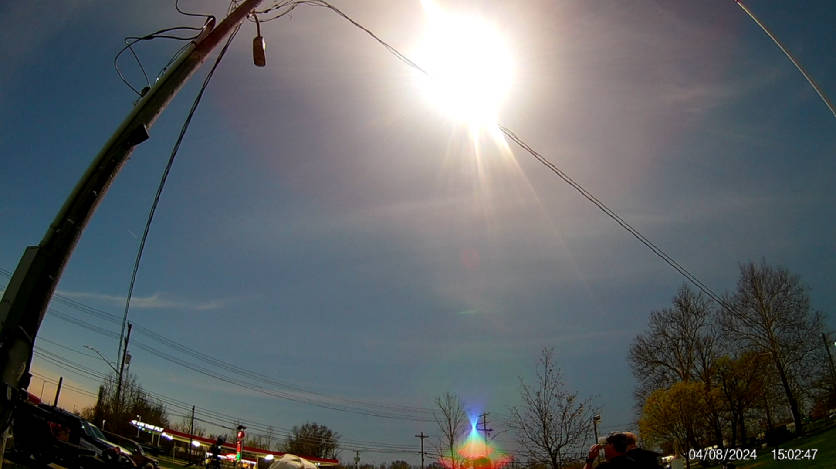
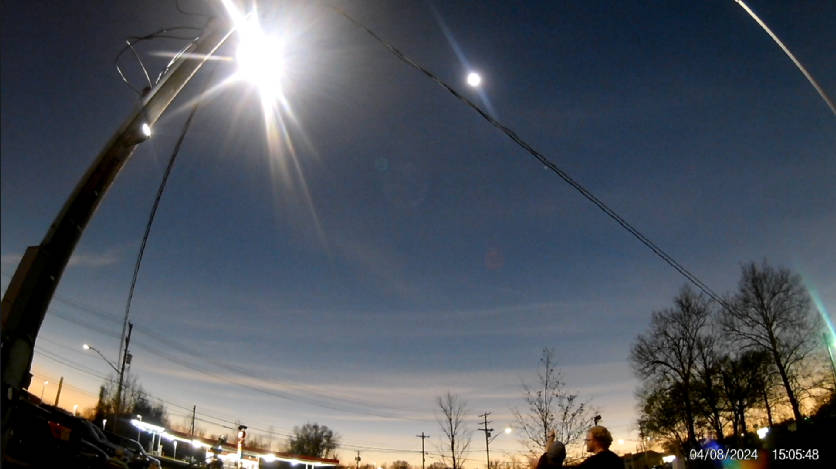
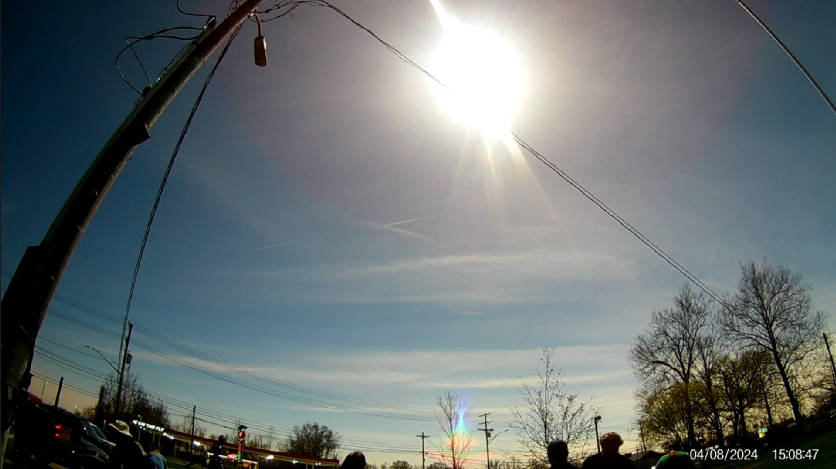
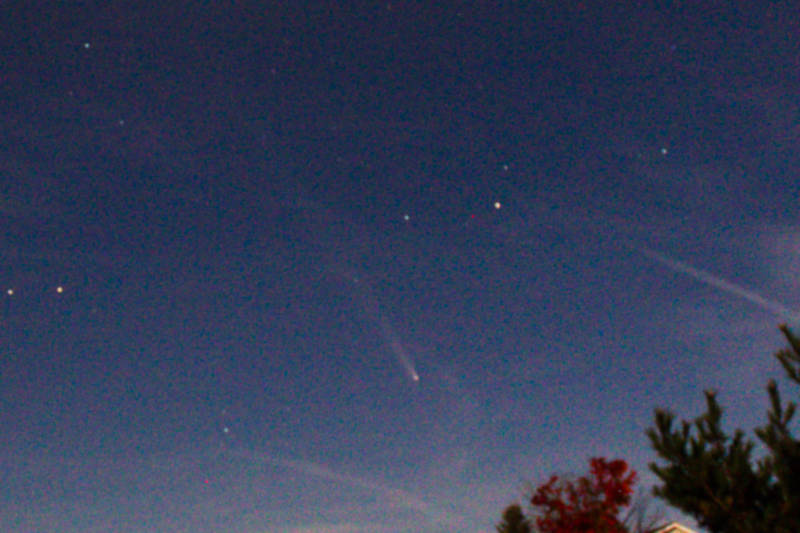
Speaking of new moons, the most spectacular astronomical event of 2024 was the total solar eclipse of April 8th. The path of totality came fairly close to us here in Northern Michigan just clipping the southeastern corner of the state. It was my sixth observation of a total solar eclipse out of six tries and probably my last, because our next total solar eclipse in the contiguous 48 states will be twenty-one years from now in 2045. The other event of 2024 was the appearance of the Comet Tsuchinshan-ATLAS which graced our skies for a few days in mid-October. I have no reports of anybody seeing it with the naked eye, however it was visible in binoculars and easily photographed with a few seconds exposure with a camera. It had a very prominent tail.
The astronomical event times given are for the Traverse City/Interlochen area of Michigan (EST, UT – 5 hours). Times will be different for other locations.
Addendum
Ephemeris: 12/24/2024 – Looking at another possibility for the Star of Bethlehem
This is Ephemeris for Christmas Eve, Tuesday, December 24th. Today the Sun will be up for 8 hours and 48 minutes, setting at 5:07, and it will rise tomorrow at 8:18. The Moon, 2 days past last quarter, will rise at 3:10 tomorrow morning.
Many writers of the 2nd and 3rd centuries CE place Jesus’ birth, via Roman events, around 2 BCE. So the Star of Bethlehem could appear several years later than the triple conjunction of Jupiter and Saturn in 7 BCE that’s been popular. In 3 and again in 2 BCE there were star-like conjunctions or apparent joining of the planets Jupiter and Venus against the backdrop of the constellation of Leo the Lion. A lion is related to Judah, son of Jacob, by a blessing the latter gave his 12 sons in Genesis. The first conjunction occurred in August in the morning sky. On June 16th of the next year the two planets got together again, this time in the evening sky, a month or more after Jesus would have been born in the vulnerable spring lambing season when shepherds would most likely be out at night guarding the flocks, not December 25th.
The astronomical event times given are for the Traverse City/Interlochen area of Michigan (EST, UT – 5 hours). Times will be different for other locations.
Addendum
An edited excerpt from this year’s Star of Bethlehem presentation I gave to the Grand Traverse Astronomical Society on December 6th.
The triple conjunction of Jupiter and Saturn in 7 BCE is the generally accepted Star of Bethlehem, with Jesus being born in 6 or 5 BCE and Herod’s death being in 4 BCE after a lunar eclipse. What if the lunar eclipse in question was in 1 BCE? If so, there is that other possibility. It involves the constellation Leo, which is a lion. There is a passage in Genesis in which Jacob, who, by this time, is called Israel, is blessing his sons, each the heads of the twelve tribes of Israel. In Genesis 49 9-10 He compares him to a lion cub, the king of beasts, from whom the leaders of Israel will come. We can make a connection between Judah and the celestial lion, Leo. Let’s take a look at the celestial happenings against the constellation of Leo with Jupiter and Venus in 3 and 2 BCE.
On August 12th of 3 BCE Jupiter and Venus appeared to come together so close as to be separable only in telescopes. This may have been the Star at its rising mentioned to Herod. Could this predawn celestial mating of Jupiter, who the Babylonians saw as the god Marduk and Venus as Ishtar, the goddess of fertility, to bring forth a powerful king? The Magi, I’m pretty sure, would have known that 10 months later, a little longer than the human gestation period, by the way, that the two planets would again come together.
Ten months after the first conjunction of Jupiter and Venus, perhaps as the Magi neared Jerusalem, they saw Jupiter and Venus approaching each other again. Later as they left Herod’s palace on the evening of June 16th, 2 BCE the conjunction was at its tightest. They saw the “Star” again, as Matthew relates. Telescopes, which wouldn’t be invented for another sixteen hundred years, could have seen this extremely close conjunction of Jupiter and Venus. Venus, near its greatest eastern elongation from the Sun, would appear half illuminated. But even to the best naked eye observer, Jupiter and Venus would merge into a single star. Venus was much brighter than Jupiter than it appears here. In fact, it was nearly twelve times brighter, so Jupiter’s added brightness wouldn’t contribute much to the combined brightness. Jupiter would seem to disappear at their closest.
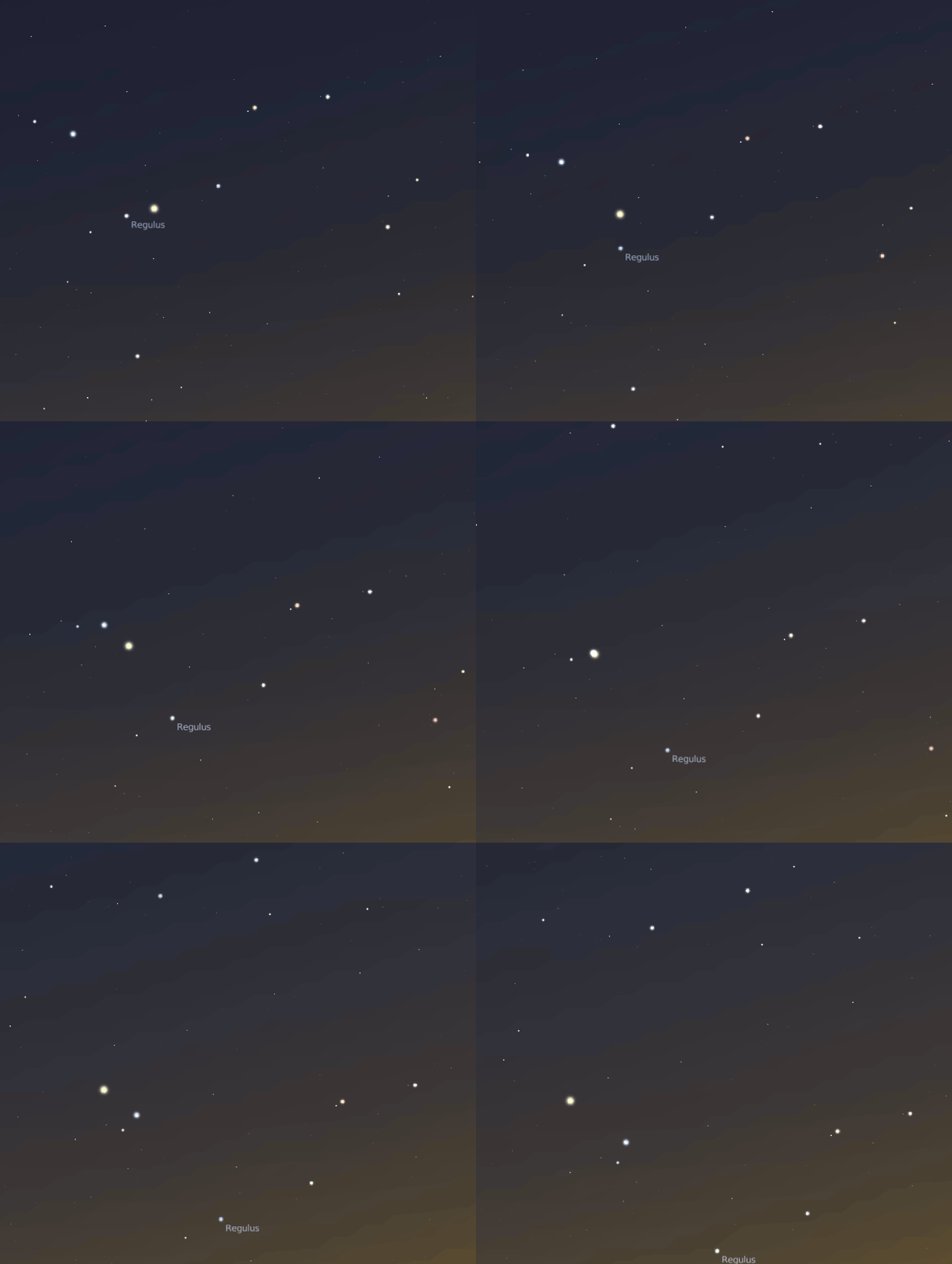
Also, there was a conjunction of Jupiter with the “Little King” star Regulus on September 14th 3 BCE, one or two days after the beginning of the Jewish New Year. Was this another sign that a new King of the Jews would be born? It is actually the first of three conjunctions Jupiter has with Regulus in the next 9 months. Yes, another triple conjunction. Jupiter passed Regulus the second time on February 17, of 2 BCE and for a final time on May 9th. During this time Venus had moved back toward the Sun and entered the evening sky where Jupiter met it once again.
 Bob Moler's Ephemeris Blog