Archive
Ephemeris: 11/03/2025 – Why is the universal expansion speeding up?
This is Ephemeris for Monday, November 3rd. Today the Sun will be up for 10 hours and 4 minutes, setting at 5:28, and it will rise tomorrow at 7:25. The Moon, 2 days before full, will set at 6:15 tomorrow morning.
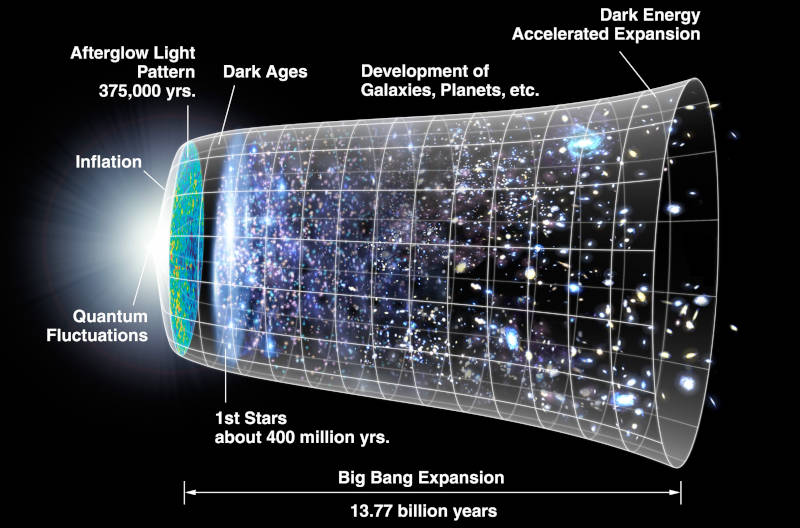
The Big Bang, nearly 14 billion years ago set the universe to be expanding. All the mass of ordinary matter and the dark matter I talked about last week should be slowing that expansion. However, about 20 years ago it was discovered that the universal expansion is not slowing down. Instead, the expansion rate is increasing! Astronomers don’t really know why. Since expansion requires energy, this new property is called dark energy. It is actually the expansion of space itself. The galaxies are not fleeing by their own motion through space. They are carried by the expanding space around them. It turns out that objects with mass cannot exceed the speed of light, but the expansion of space itself has no speed limit. At least that’s how I understand it.
The astronomical event times given in this blog are for the Traverse City/Interlochen area of Michigan (Lat 44.7° N, Long 85.7° W; EDT, UT – 4 hours) unless stated otherwise. Times will be different for other locations.
Addendum
Ephemeris: 10/28/2025 – The structure of the universe
This is Ephemeris for Tuesday, October 28th. Today the Sun will be up for 10 hours and 20 minutes, setting at 6:36, and it will rise tomorrow at 8:17. The Moon, 1 day before first quarter, will set at 11:38 this evening.
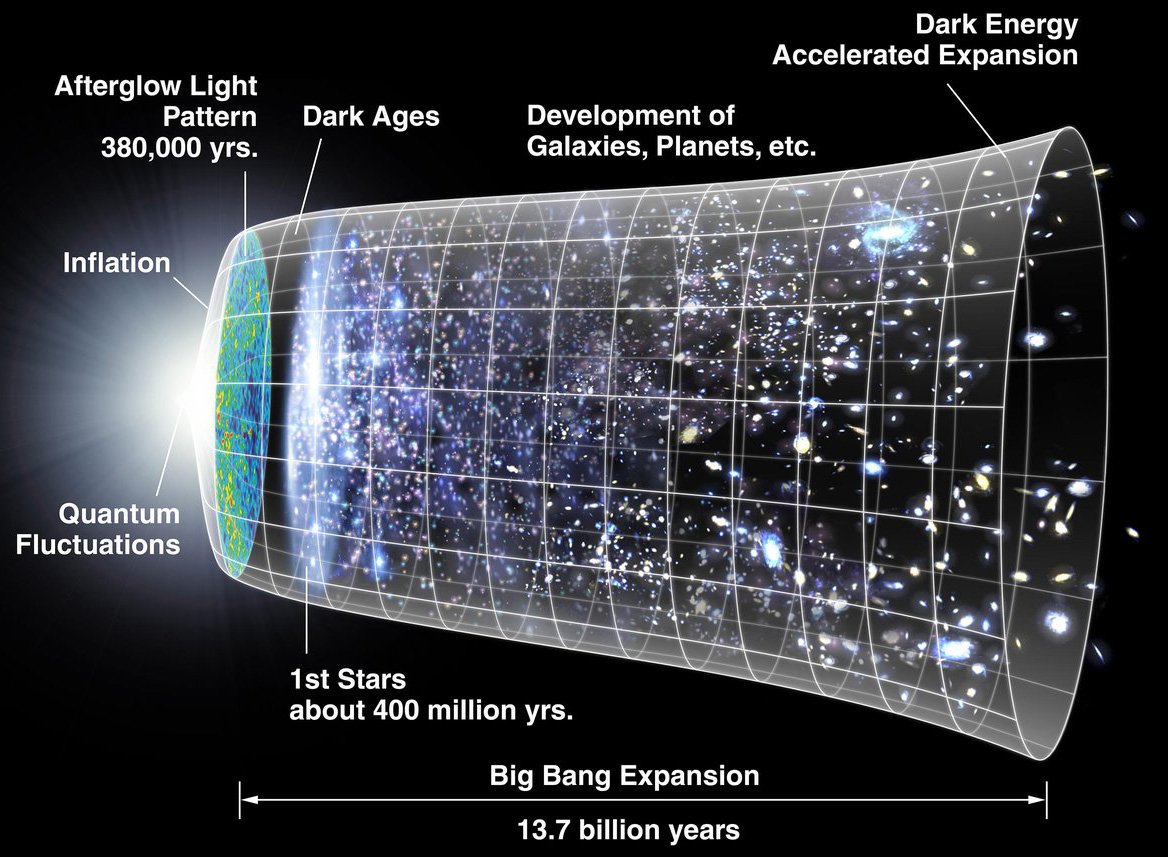
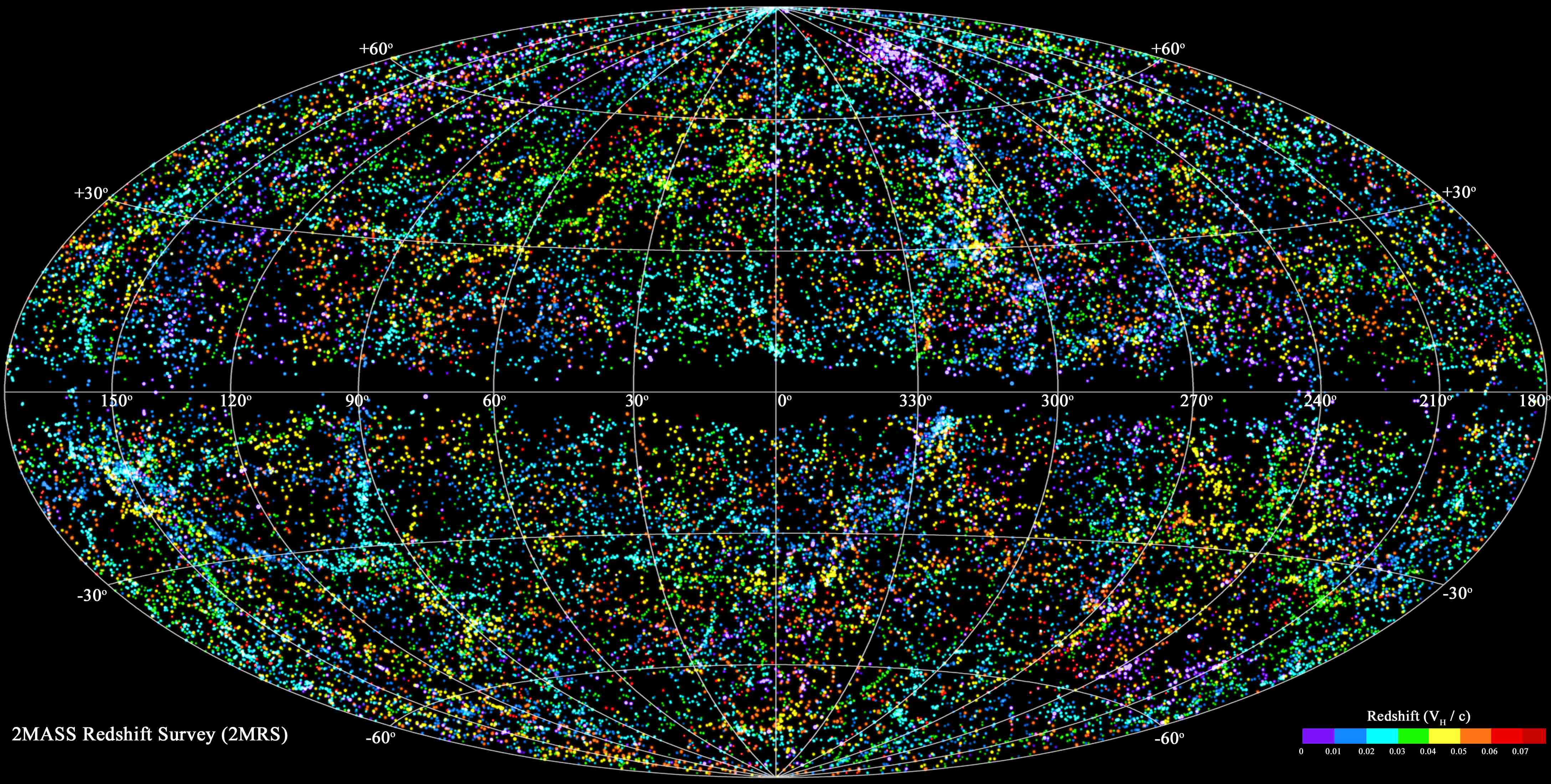
Dark matter makes up about 85% of all the matter in the universe, even though we can’t see it. It creates a kind of lattice on which the galaxies form. In looking out into the universe we see that there is a structure to it, not just random clusters of galaxies. The structure of the universe seems to be like a foam of bubbles where galaxies form along the intersection of these bubbles. The bubbles themselves are called voids. And with the expansion of the universe these voids are growing because space itself is expanding. So it’s not so much that the galaxies are fleeing each other, but that the voids are growing, pushing the galaxies apart. The galaxies are just going along for the ride.
The astronomical event times given in this blog are for the Traverse City/Interlochen area of Michigan (Lat 44.7° N, Long 85.7° W; EDT, UT – 4 hours) unless stated otherwise. Times will be different for other locations.
Addendum
Ephemeris: 08/19/24 – Dark Energy
This is Ephemeris for Monday, August 19th. Today the Sun will be up for 13 hours and 50 minutes, setting at 8:41, and it will rise tomorrow at 6:51. The Moon, at full today, will rise at 9:02 this evening.
The Big Bang, nearly 14 billion years ago set the universe to be expanding. All the mass of ordinary matter and the dark matter I talked about last week should be slowing that expansion. However, it was discovered, about 20 years ago, that the universal expansion is not slowing down. It is increasing its expansion rate. Astronomers do not really know why. Since expansion requires energy. This new property is called dark energy. It is actually the expansion of space itself. The galaxies are not fleeing by their own motion through space. They are carried by the expanding space around them. It turns out that objects with mass cannot exceed the speed of light, but the expansion of space itself has no speed limit. At least that’s how I understand it.
The astronomical event times given are for the Traverse City/Interlochen area of Michigan (EDT, UT–4 hours). Times will be different for other locations.
Addendum
Timeline of the universe. A representation of the evolution of the universe over 13.77 billion years. The far left depicts the earliest moment we can now probe, when a period of “inflation” produced a burst of exponential growth in the universe. (Size is depicted by the vertical extent of the grid in this graphic.) For the next several billion years, the expansion of the universe gradually slowed down as the matter in the universe pulled on itself via gravity. More recently, the expansion has begun to speed up again as the repulsive effects of dark energy have come to dominate the expansion of the universe. The afterglow light seen by WMAP was emitted about 375,000 years after inflation and has traversed the universe largely unimpeded since then. The conditions of earlier times are imprinted on this light; it also forms a backlight for later developments of the universe. Public Domain.
 Bob Moler's Ephemeris Blog