Archive
Ephemeris: 04/29/2025 – Using the Sun as a telescope
This is Ephemeris for Tuesday, April 29th. Today the Sun will be up for 14 hours and 10 minutes, setting at 8:45, and it will rise tomorrow at 6:33. The Moon, 2 days past new, will set at 11:56 this evening.
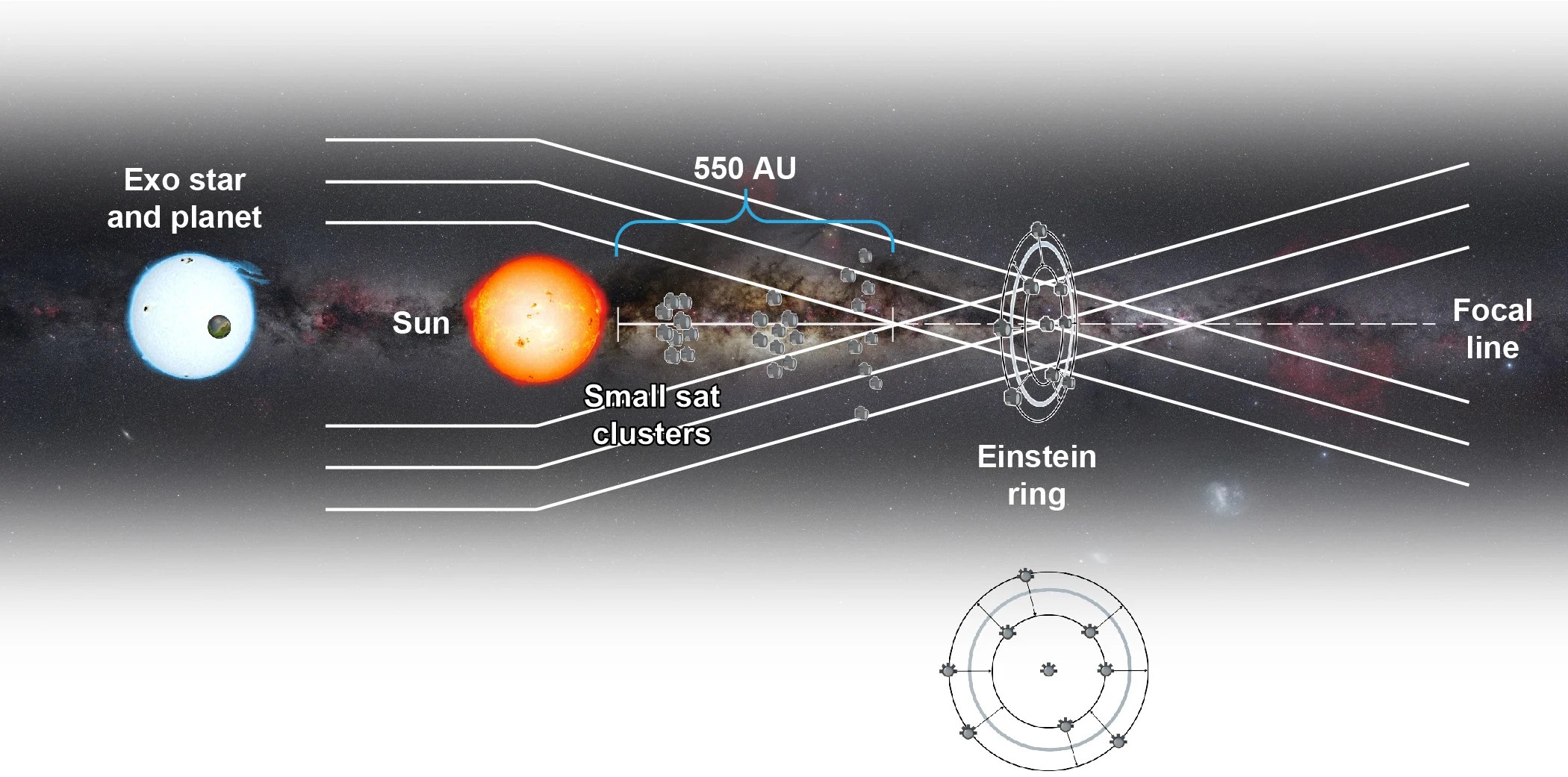
One idea of a telescope I find very fantastic. This is a telescope that uses the Sun and its mass curving spacetime to alter the path of light from a distant object to act like a lens in a telescope. This is called gravitational lensing. The length of this telescope would have to be about 542 times the earth’s distance from the Sun, 542 astronomical units. In the 48 years since Voyager 1 was launched it has achieved only about 1/3 of that distance. What would be the use of this telescope would be to image exoplanets. So far exoplanets, if they are visible at all, don’t even cover a single pixel in even our largest telescopes. The problems are huge, starting with gravitational lenses don’t bend light the same way as optical ones do.
The astronomical event times given in this blog are for the Traverse City/Interlochen area of Michigan (Lat 44.7° N, Long 85.7° W; EDT, UT – 4 hours) unless stated otherwise. Times will be different for other locations.
Addendum
Here are some sources of additional information on this topic:
https://www.universetoday.com/articles/how-can-the-sun-become-a-telescope
https://www.livescience.com/space/the-sun/could-we-turn-the-sun-into-a-gigantic-telescope
https://nasaspacenews.com/2025/04/see-alien-planets-in-4k-the-suns-gravitational-lens-explained/
https://news.stanford.edu/stories/2022/05/gravity-telescope-image-exoplanets
https://www.space.com/sun-gravity-could-help-observe-exoplanets-in-detail
Ephemeris: 04/07/2025 – Does the nearest star to our Sun have a habitable planet?
This is Ephemeris for Monday, April 7th. Today the Sun will be up for 13 hours and 6 minutes, setting at 8:18, and it will rise tomorrow at 7:10. The Moon, 3 days past first quarter, will set at 5:38 tomorrow morning.
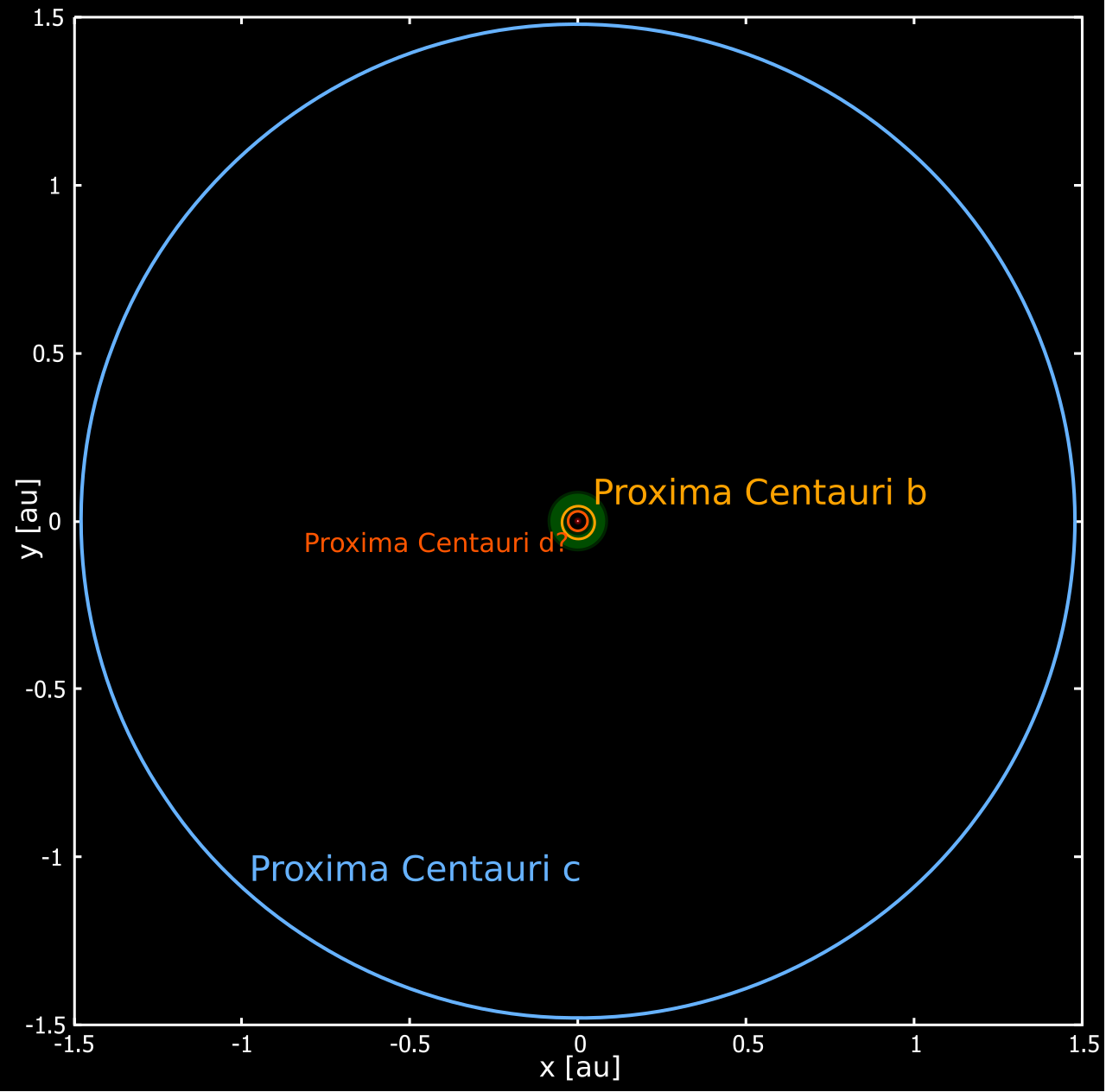
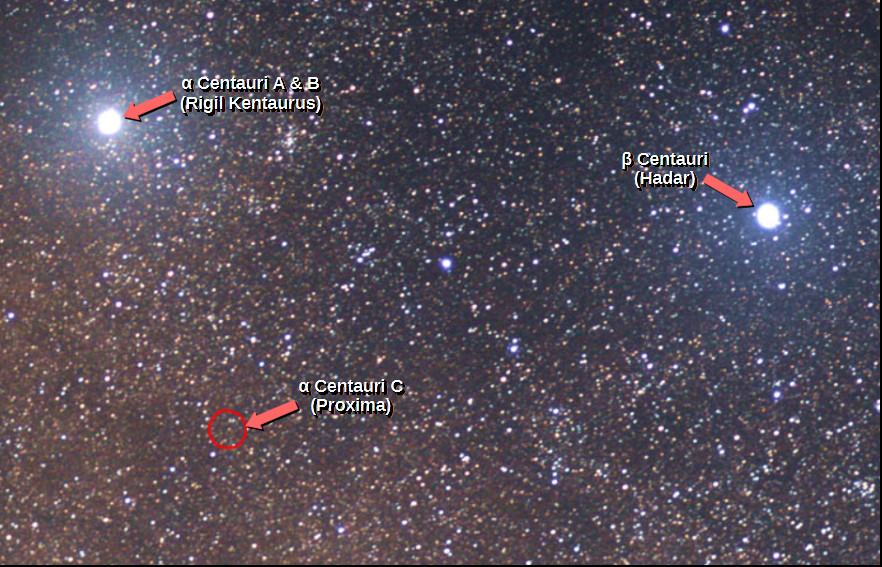
The closest star to our sun is Proxima Centauri which is a small member of the Alpha Centauri star system. It is a red dwarf star and has, we think, at least three planets. They are designated b, c and d. And right now “c” is questionable. At least one of these planets is in the habitable zone of the star, based on the amount of heat this little star gives off. So these planets all quite close to the star, and the problem with Proxima and with most red dwarf stars is that they create a great number of what we call solar flares. When the Earth gets hit by a solar flare from 93 million miles it causes the Northern Lights and causes X-rays to flood the Earth which is mostly shielded by the ozone in our atmosphere. These planets are much closer to their star.
The astronomical event times given are for the Traverse City/Interlochen area of Michigan (EDT, UT – 4 hours). Times will be different for other locations.
Addendum
Ephemeris: 11/21/2024 – Fomalhaut’s planet that wasn’t
This is Ephemeris for Thursday, November 21st. Today the Sun will be up for 9 hours and 20 minutes, setting at 5:08, and it will rise tomorrow at 7:49. The Moon, 1 day before last quarter, will rise at 10:56 this evening.
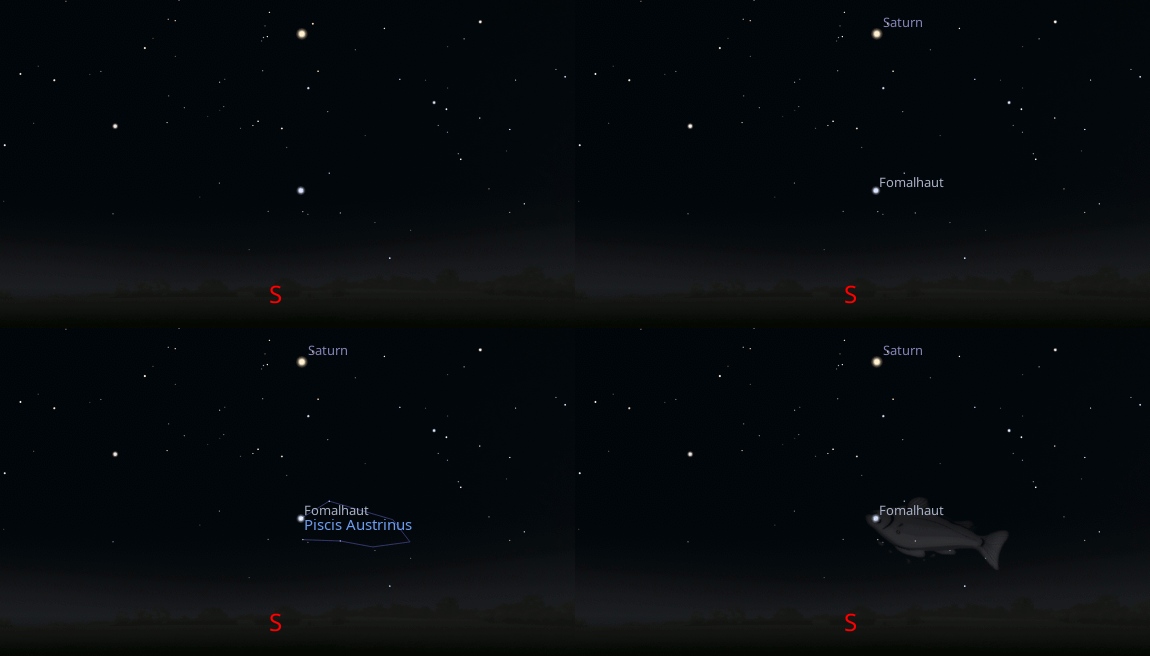
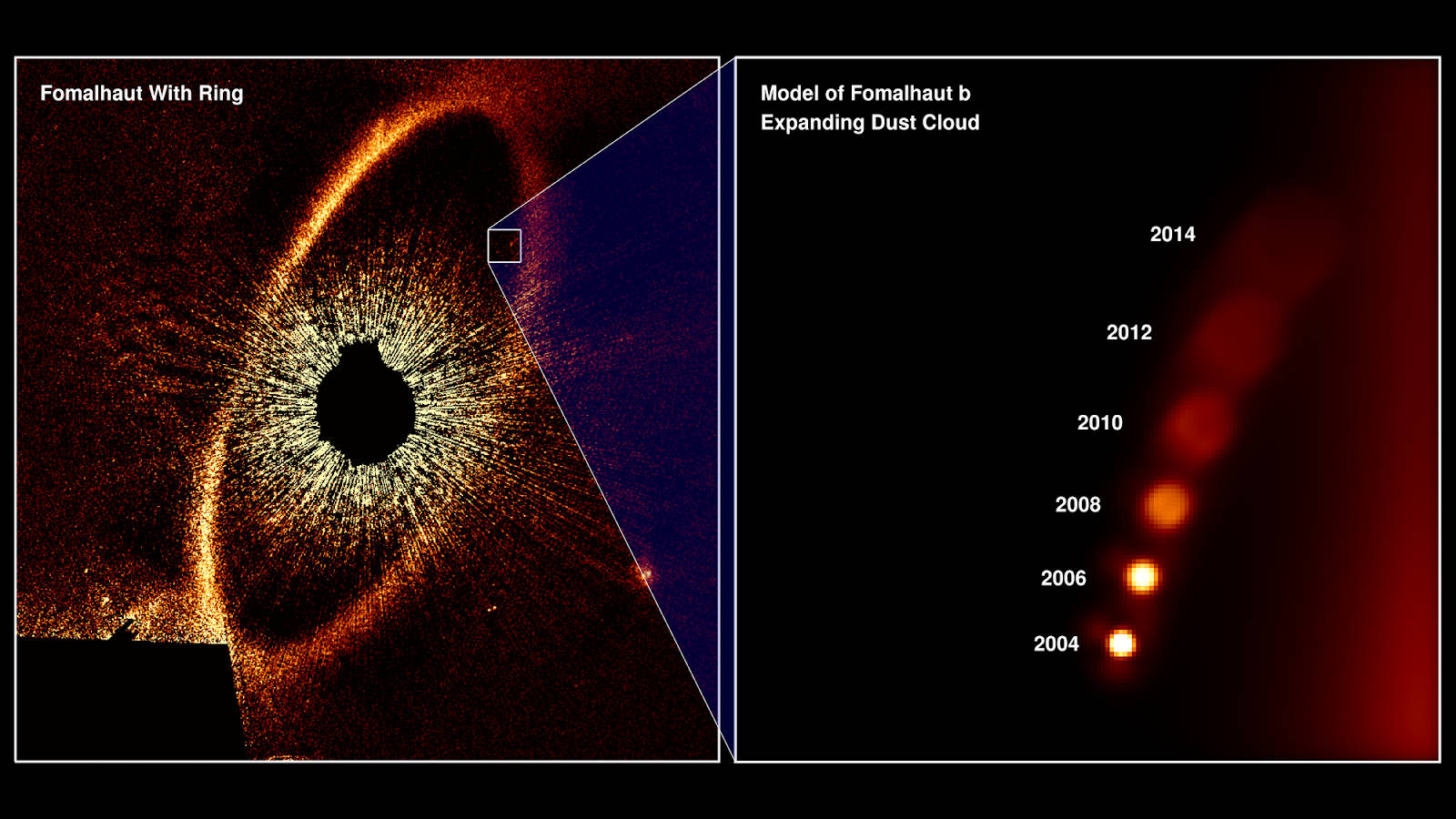
The lonely bright star low in the south-southeast at 8 p.m. these evenings is Fomalhaut, the harbinger of autumn in my book, and will leave as winter arrives. Fomalhaut is a young white star only about 400 million years old with a protoplanetary disk surrounding it. Near an outer dust ring, in 2008, the Hubble Space Telescope discovered a spot. Four years later, astronomers discovered that the spot had moved along the dust lane and announced the first direct discovery of an exoplanet. In 2010 and 2012 the planet now dubbed Fomalhaut b or Dagon was observed again. However, it appeared to be dissipating. It seems that it might actually be an expanding cloud of debris, the result of two asteroids or proto-planets colliding.
The astronomical event times given are for the Traverse City/Interlochen area of Michigan (EST, UT – 5 hours). Times will be different for other locations.
Addendum:
Ephemeris: 07/15/2024 – When planets go rogue
This is Ephemeris for Monday, July 15th. Today the Sun will be up for 15 hours and 13 minutes, setting at 9:25, and it will rise tomorrow at 6:12. The Moon, 2 days past first quarter, will set at 1:40 tomorrow morning.
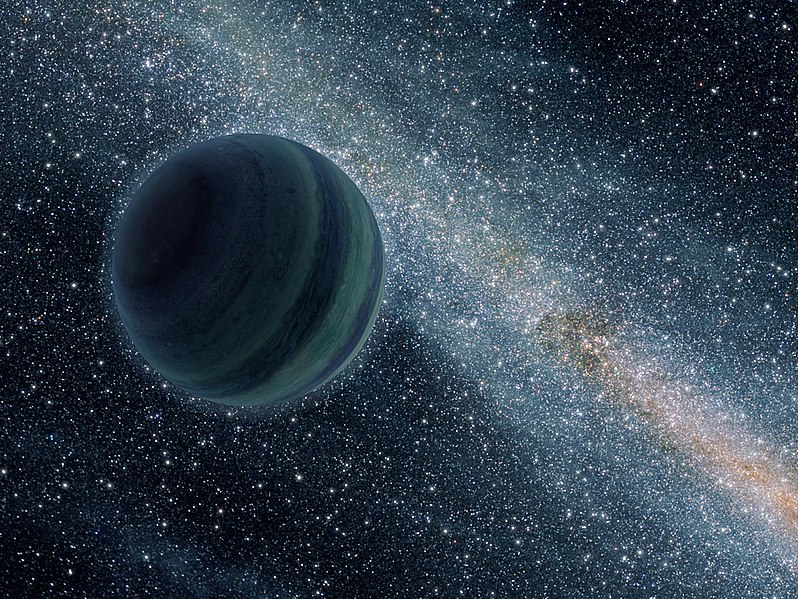
We all know that there are stars and there are planets and planets orbit stars, right? Well maybe not. Astronomers have recently discovered planets that don’t orbit stars. They float free in interstellar space. They are called rogue planets. There seems to be two ways to produce a rogue planet. The first way is to have the planet ejected from a star system through gravitational interaction with other planets especially big ones like Jupiter. Also, it appears that rogue planets can form like stars, and have protoplanetary discs. Or proto-moon disks? They can be discovered by the infrared light they give off, or by gravitational microlensing of a star that passes directly behind them.
The astronomical event times given are for the Traverse City/Interlochen area of Michigan (EDT, UT–4 hours). They may be different for your location.
Addendum

Ephemeris: 08/03/2023 – What is a rogue planet?
This is Bob Moler with Ephemeris for Thursday, August 3rd. Today the Sun will be up for 14 hours and 35 minutes, setting at 9:06, and it will rise tomorrow at 6:32. The Moon, 2 days past full, will rise at 10:40 this evening.
Did you ever hear of something called a rogue planet? A rogue planet is an exoplanet without a star, wandering through interstellar space. A planet could be ejected from its planetary system through interaction with another planet, or maybe it’s in a multiple star system and usually the body with the lease mass loses and can be ejected from the system. Another way to create a rogue planet is to have a planet being created like a star but without enough mass to build it up and be left with too little mass to ignite the hydrogen within its core to create helium and thus begin to shine. Rogue planets are detectable by gravitational microlensing, causing a background star inline with the rogue planet and the Earth to briefly brighten. Rogue planets can be detected and studied because they are relatively warmer than the 3
Kelvin Cosmic Microwave Background. The James Webb Space Telescope is an ideal tool to study them. There may be more rogue planets than stars in the Milky Way.
The astronomical event times given are for the Traverse City/Interlochen area of Michigan (EDT, UT –4 hours). They may be different for your location.
This has been extensively modified from the presentation in the radio program.
Addendum
11/18/2022 – Ephemeris – Fomalhaut’s disappearing “planet”
This is Ephemeris for Friday, November 18th. Today the Sun will be up for 9 hours and 27 minutes, setting at 5:11, and it will rise tomorrow at 7:45. The Moon, 2 days past last quarter, will rise at 2:32 tomorrow morning.
The lonely bright star low in the south at 8 p.m. these evenings is Fomalhaut, the harbinger of autumn in my book, and about to leave as winter approaches. Fomalhaut is a young white star only about 400 million years old with a disk of dust surrounding it. Near an outer dust ring, in 2008 the Hubble Space Telescope discovered a spot. Four years later, astronomers discovered that the spot had moved along the dust lane and announced the first direct discovery of an exoplanet. In 2010 and 2012 the planet now dubbed Fomalhaut b or Dagon was observed again. However, it appears to be dissipating. It might be an expanding cloud of debris that’s the result of two asteroids colliding. We’ll keep watching.
The astronomical event times given are for the Traverse City/Interlochen area of Michigan (EST, UT -5 hours). They may be different for your location.
Addendum
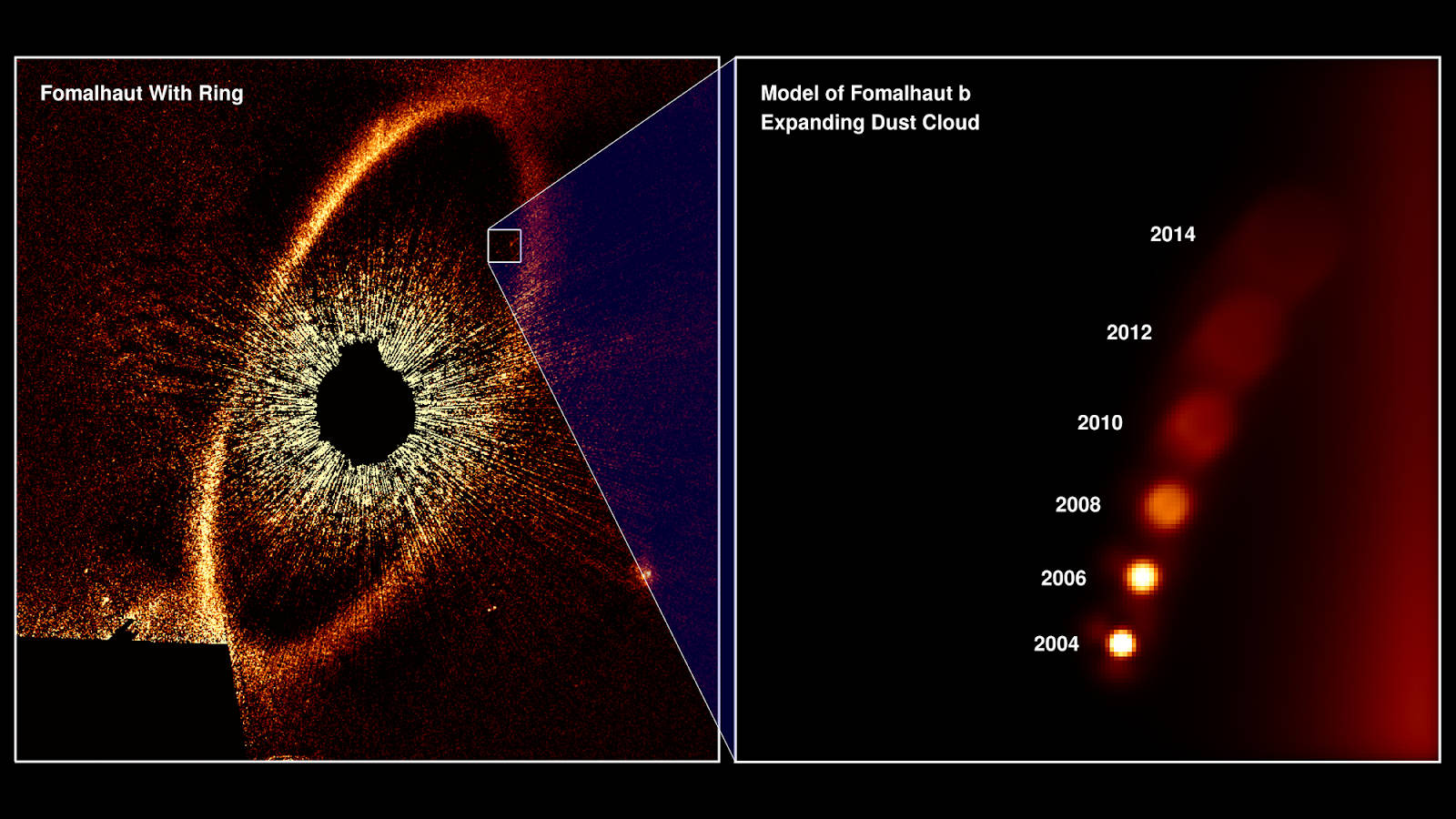
Hubble Space Telescope image of Fomalhaut’s ring and model of the disappearing dust cloud that was first thought to be a planet. Credit: Space Telescope Science Institute.
10/01/2021 Ephemeris – Learn about exoplanets and have a star party tonight (virtually)
This is Bob Moler with Ephemeris for Friday, October 1st. Today the Sun will be up for 11 hours and 41 minutes, setting at 7:22, and it will rise tomorrow at 7:42. The Moon, 3 days past last quarter, will rise at 2:49 tomorrow morning.
The Grand Traverse Astronomical Society hold a virtual meeting and program at 8 pm tonight via Zoom. For the program, yours truly will present Finding Exoplanets. Exoplanets are planets found orbiting other stars or rogue planets floating in interstellar space alone. We’ve actually only seen a handful of exoplanets, so most are detected by their effects on their host star. A virtual star party will start around 9 pm, hosted by Dr. Jerry Dobek, astronomy professor at Northwestern Michigan College, but only if it’s clear in Traverse City. It will feature Jupiter and Saturn, wonders of the northern part of the summer Milky Way. Instructions to join the meeting and a link can be found on the society’s website, http://www.gtastro.org.
The astronomical event times given are for the Traverse City/Interlochen area of Michigan (EDT, UT-4 hours). They may be different for your location.
Addendum
Finding Exoplanets title slide.
07/23/2021 – Ephemeris – The first exoplanet* found
This is Bob Moler with Ephemeris for Friday, July 23rd. Today the Sun will be up for 14 hours and 58 minutes, setting at 9:18, and it will rise tomorrow at 6:20. The Moon, at full today, will rise at 9:35 this evening.
In 1995 the first planet was found that orbits another star. It was 51 Pegasi b. That’s the star labeled number 51 in the constellation Pegasus, the flying horse. It was found because it tugged on its star as it orbited it. The planet was detected by the Doppler method, the same method that the police can tell if you’re speeding. A planet doesn’t orbit the center of the star, but the center of their combined mass. It turned out That 51 Pegasi b is a very large planet, half the mass of Jupiter, orbiting its star every 4 ½ days. Its discovery threw everything we thought we knew about planetary system evolution into a cocked hat. Planets just don’t stay nicely in their orbits like we thought. They move in and out! As this planet moved in toward its star, it would have ejected any of the inner planets out of the system.
The astronomical event times given are for the Traverse City/Interlochen area of Michigan (EDT, UT – 4 hr). They may be different for your location.
* A planet was found several years before, orbiting a pulsar, which is a neutron star. Apparently, planets orbiting dead stars don’t count.
Addendum
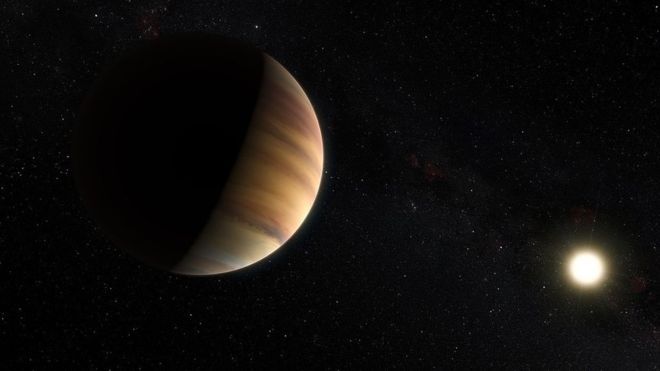
An artist’s depiction of what exoplanet Pegasus 51b and its star might look like. Credit: ESO (European Southern Observatory) / M. Kornmesser.
11/25/2019 – Ephemeris – Fomalhaut has a visible exoplanet
Ephemeris for Monday, November 25th. Today the Sun will be up for 9 hours and 14 minutes, setting at 5:06, and it will rise tomorrow at 7:53. The Moon, 1 day before new, will rise at 7:41 tomorrow morning.
The lonely bright star low in the south at 8 p.m. these evenings is Fomalhaut the harbinger of autumn in my book, and about to leave as winter approaches. Fomalhaut means fishes mouth and is located at the head of Piscis Austrinus, a very dim constellation. Fomalhaut is a young white star only about 400 million years old with a disk of dust surrounding it. Near an outer dust ring, 15 years ago the Hubble Space Telescope discovered a spot. Four years later astronomers discovered that the spot moved along the dust lane and announced the first direct discovery of an exoplanet. In 2010 and 2012 the planet now dubbed Fomalhaut b or Dagon was observed again and it really does orbit Fomalhaut in a very eccentric orbit.
The times given are for the Traverse City/Interlochen area of Michigan. They may be different for your location.
Addendum
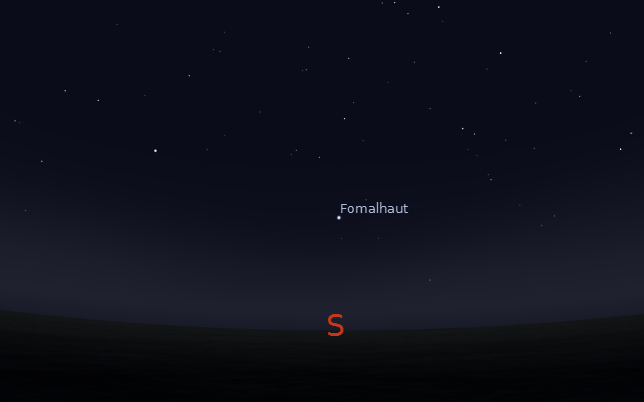
Fomalhaut in the south at 8 p.m. in November. Created using Stellarium.

The track of observations of Fomalhaut b or Dagon in 2004, 2006, 2010 and 2012. Credit: NASA and ESA – http://www.nasa.gov/images/content/717874main_p1301aw-orig_full.jpg, Public Domain, https://commons.wikimedia.org/w/index.php?curid=23735991
11/20/2018 – Ephemeris – Barnard’s Star has a planet
Ephemeris for Tuesday, November 20th. The Sun will rise at 7:46. It’ll be up for 9 hours and 23 minutes, setting at 5:10. The Moon, 3 days before full, will set at 5:37 tomorrow morning.
One of the most fascinating stars in the sky is Barnard’s Runaway Star. That’s how I first knew it. It’s now simply Barnard’s Star. It has the largest motion of any star across the sky (proper motion) of 10.3 arcseconds per year. That’s about the current width of Mars right now in telescopes. The Sun and Moon are about eighteen hundred arcseconds in diameter. It was announced last week, that a planet has been discovered orbiting that star. The planet designated with a lower case b orbits the red dwarf star at a distance comparable to Mercury in our solar system with a period of 233 days. It is three and a quarter times the Earth’s mass. It was found because it changes the velocity of the stars’ approach by the human walking speed in those 233 days.
The times given are for the Traverse City/Interlochen area of Michigan. They may be different for your location.
Addendum
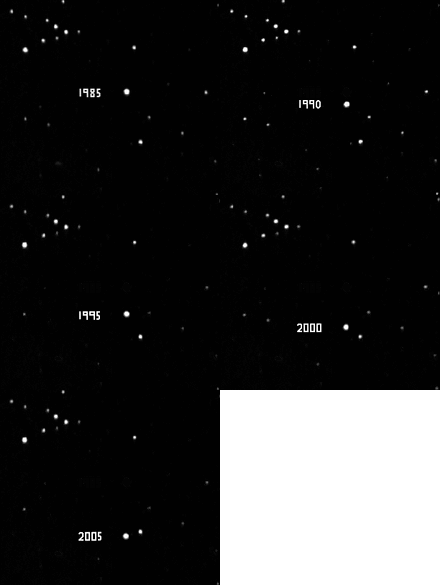
I recall back in the 1960’s astronomer Peter van de Kamp announced the discovery of a planet around Barnard’s Star. His technique was to spot little wiggles in the star’s path through the sky. Current methods to detect wiggles of the star use the Doppler method detecting the tiny change in the star’s radial velocity towards or away from us. Barnard’s Star b does not fit what van de Camp thought he detected.
The star gets its name from Edward Emerson Barnard ( 1857-1923) who discovered the star’s rapid proper motion.
On a local note Barnard’s great photographic work A Photographic Atlas of Selected Regions of the Milky Way was republished by my friend Gerold O. Dobek, Professor of Astronomy, Northwestern Michigan College and Director of its Joseph H. Rogers Observatory.
 Bob Moler's Ephemeris Blog
