Archive
08/08/2022 – Ephemeris – The ages of the features on the Moon
This is Ephemeris for Monday, August 8th. Today the Sun will be up for 14 hours and 21 minutes, setting at 8:59, and it will rise tomorrow at 6:38. The Moon, halfway from first quarter to full, will set at 3:03 tomorrow morning.
Looking up at the gibbous Moon tonight, at the various patches of light and dark gray. Did you ever wonder how planetary scientists could piece together the history of our satellite? Other than studying photographs of the Moon, we have samples to study brought back be the Apollo astronauts, the Russians, and most recently the Chinese. We have the Lunar Reconnaissance Orbiter, which has photographed, and otherwise studied the surface and environment of the moon up close for 13 years so far. Something of the Moon’s history can be seen even with a small telescope. Craters showing rays, that has bright ejecta are newer than craters with faint ejecta, which are newer than craters with no ejecta marks. And so on.
The astronomical event times given are for the Traverse City/Interlochen area of Michigan (EDT, UT – 4 hours). They may be different for your location.
Addendum
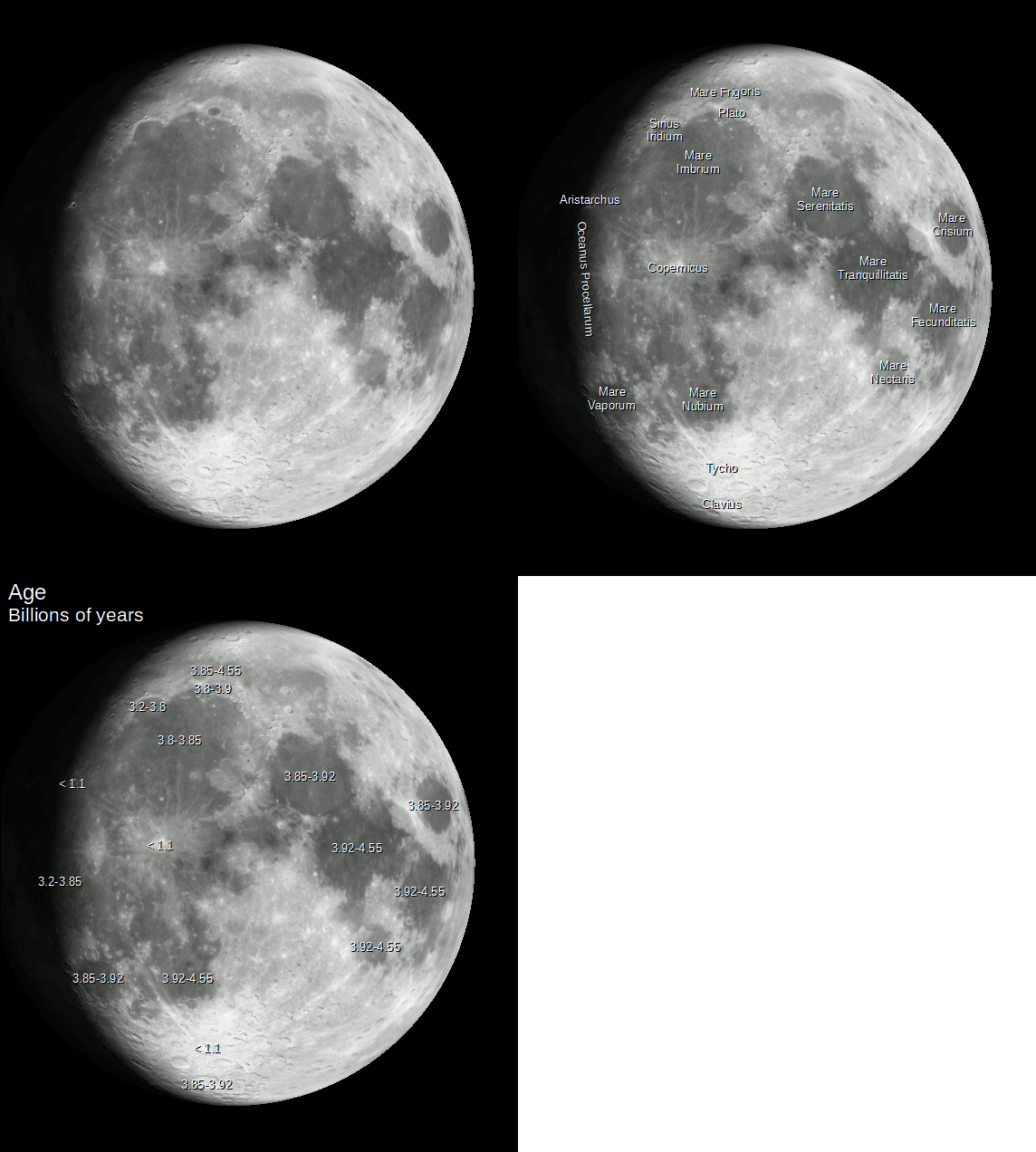
Names and ages of selected lunar features via GIF animation for the Moon as it will appear tonight, August 8, 2022. Ages are in billions of years, with the oldest features being created 4.55 billion years ago. Source: Virtual Moon Atlas application. It can be downloaded from a link from the right panel of this page. GIF created using GIMP and LibreOffice Draw apps.
Here’s a link to the Planetary Society article Relative and absolute ages in the histories of Earth and the Moon: The Geologic Time Scale by Emily Lakdawalla: https://www.planetary.org/articles/09301225-geologic-time-scale-earth-moon
 Bob Moler's Ephemeris Blog