Archive
Ephemeris: 09/25/2026 – Our Harvest Moon marks the Chinese Mid-Autumn Festival
This is Ephemeris for Friday, September 25th. Today the Sun will be up for 12 hours and 0 minutes, setting at 7:34, and it will rise tomorrow at 7:34. The Moon, 1 day before full, will set at 7:29 tomorrow morning.
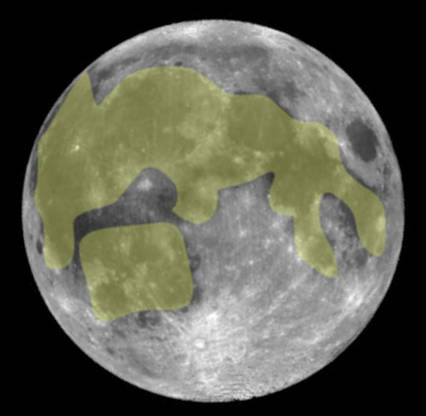
Tomorrow the Moon will be full. And since it’s only four days past the autumnal equinox, this makes it the Harvest Moon. This full moon also marks the Chinese Mid-Autumn Festival to honor the Moon and the story of Chang’e a mortal woman to took an elixir and flew off to the Moon and became a goddess. Another story revolves around the Jade Rabbit pounding Medicine. Beside the face one can see in the dark maria on the moon, we call the Man in the Moon, the Chinese saw the figure of a rabbit seen on the face of the Moon. He is a companion to Chang’e, and has a mortar and pestal with him. He pounds out the medicine that makes the inhabitants of the sky immortal. The Chinese lunar probes are named Chang’e, their rovers: Yutu, the Jade Rabbit.
The astronomical event times given in this blog are for the Traverse City/Interlochen area of Michigan (Lat 44.7° N, Long 85.7° W; EDT, UT – 4 hours) unless stated otherwise. Times will be different for other locations.
Addendum

Ephemeris: 09/24/2026 – The Harvest Moon Effect
This is Ephemeris for Thursday, September 24th. Today the Sun will be up for 12 hours and 3 minutes, setting at 7:36, and it will rise tomorrow at 7:33. The Moon, 2 days before full, will set at 6:18 tomorrow morning.
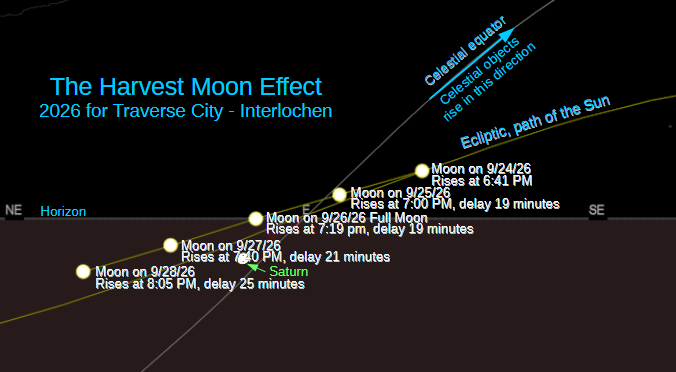
The full, or nearly full moon, just rising, looks like a large orange pumpkin. The color, like the red of the sunset is caused by the scattering out of blue light by the atmosphere. It can happen at any full moon, not just the Harvest Moon, which will occur on Saturday. What the Moon around the Harvest Moon does do is rise only a little later each evening. This helped the farmers in earlier times effectively extend twilight to bring in the crops. On average the moon rises or sets 50 minutes later each night. However when the Moon is in the part of the sky where it is moving northward as well as eastward, then it rises only a little later each night. Tomorrow’s Moon will rise only 19 minutes later than it will this evening.
The astronomical event times given in this blog are for the Traverse City/Interlochen area of Michigan (Lat 44.7° N, Long 85.7° W; EDT, UT – 4 hours) unless stated otherwise. Times will be different for other locations.
Addendum
Ephemeris: 09/18/2026 – The Moon will be lower than the winter solstice Sun tonight
This is Ephemeris for Friday, September 18th. Today the Sun will be up for 12 hours and 22 minutes, setting at 7:47, and it will rise tomorrow at 7:26. The Moon, at first quarter today, will set at 11:40 this evening.
Tonight’s first quarter moon will appear low in the southern sky at its highest at about 11 minutes before sunset tonight. The moon is in the part of the sky where the sun will be on the first day of winter, December 21st at it’s lowest and the moon will be even lower tonight. For us, in Northern Michigan that’s 15 degrees, or one and a half times the width of a fist held at arms length. The moon, though, is even lower than the sun will be that day. The sun will be 22º above the southern horizon that day, a bit more than two fist widths above the southern horizon. I talk a lot about angles on this program, because measuring angles is what astronomers did before the invention of the telescope. A telescope allows better precision, among other attributes.
The astronomical event times given in this blog are for the Traverse City/Interlochen area of Michigan (Lat 44.7° N, Long 85.7° W; EDT, UT – 4 hours) unless stated otherwise. Times will be different for other locations.
Addendum
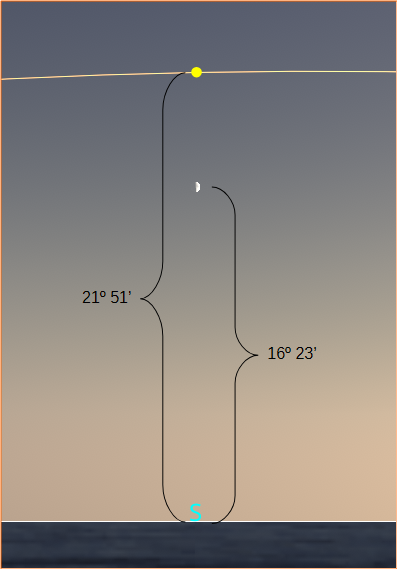
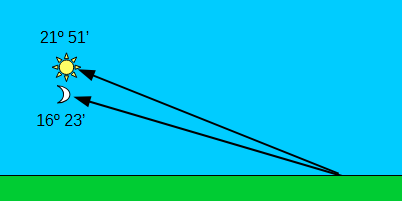
As readers of this blog may have surmised, I’m facinated by angles in the sky.
Ephemeris: 09/14/2026 – The young September Moon slowly enters the evening sky
This is Ephemeris for Monday, September 14th. Today the Sun will be up for 12 hours and 34 minutes, setting at 7:55, and it will rise tomorrow at 7:21. The Moon, half way from new to first quarter, will set at 9:07 this evening.
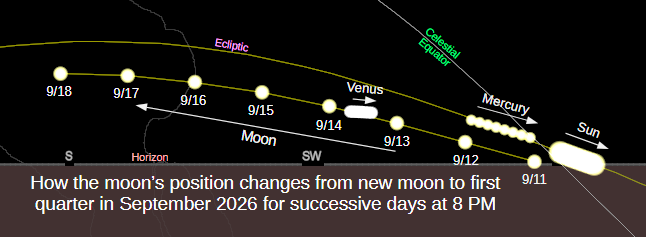
Something interesting is happening to the moon in late summer and early autumn. The moon, when either near new or near full, tends to hang low near the horizon for a long time. We are now about 4 days past new moon, and it is hanging low in the southwestern sky, and will set only about an hour and 12 minutes after the sun. Later this month we’ll have the Harvest Moon when the moon rises at short daily intervals later each night around full moon. I call it the Harvest Moon effect and that allowed farmers of old together in their crops by extending twilight. What the young moon does right now is keeping it really low in the sky so as a crescent it’s not easy to observe low on the southwestern horizon.
The astronomical event times given in this blog are for the Traverse City/Interlochen area of Michigan (Lat 44.7° N, Long 85.7° W; EDT, UT – 4 hours) unless stated otherwise. Times will be different for other locations.
Addendum
Ephemeris: 08/28/2026 – Crater found from Falcon 9 impact on the Moon
This is Ephemeris for Friday, August 28th. Today the Sun will be up for 13 hours and 25 minutes, setting at 8:26, and it will rise tomorrow at 7:01. The Moon, which was full just after midnight this morning during ther lunar eclipse, will rise at 8:36 this evening.
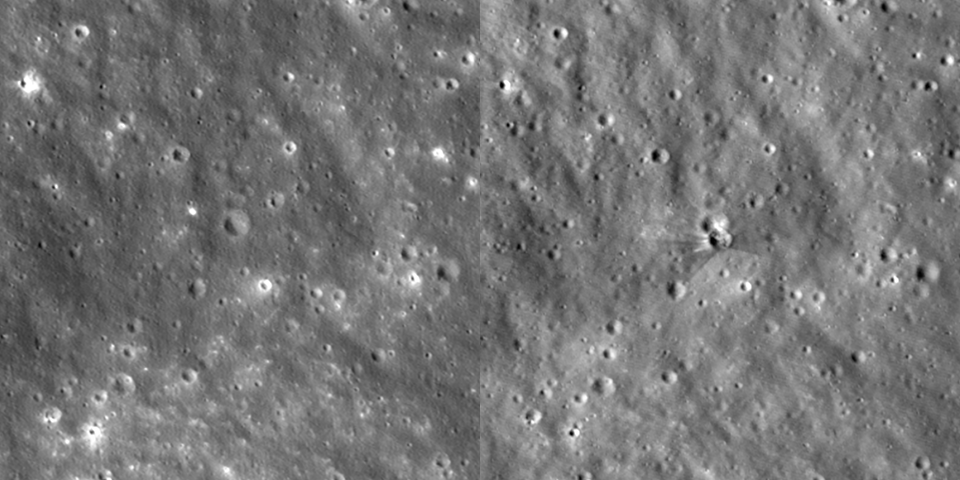
SpaceX made a big splash on the moon a couple of weeks ago when the second stage of the Falcon 9 rocket that delivered two lunar landers to the moon last year, itself crashed into the moon. This, plus detection of the flashes of several meteoroid strikes on the moon by the Artemis 2 crew, suggested to some scientists that lunar colonization might be a very risky thing. On the moon when something hits it, material flies off in all directions. But without an atmosphere to slow these particles down they fly a long way and will crash back onto the moon at the same velocity they were ejected with. The crash dug a crater 60 feet (18 meters) across and 10 feet (3 meters) deep.
The astronomical event times given in this blog are for the Traverse City/Interlochen area of Michigan (Lat 44.7° N, Long 85.7° W; EDT, UT – 4 hours) unless stated otherwise. Times will be different for other locations.
Addendum
Ephemeris: 05/21/2026 – The man who first mapped the Moon
This is Ephemeris for Thursday, May 21st. Today the Sun will be up for 15 hours and 2 minutes, setting at 9:11, and it will rise tomorrow at 6:07. The Moon, 2 days before first quarter, will set at 2:11 tomorrow morning.
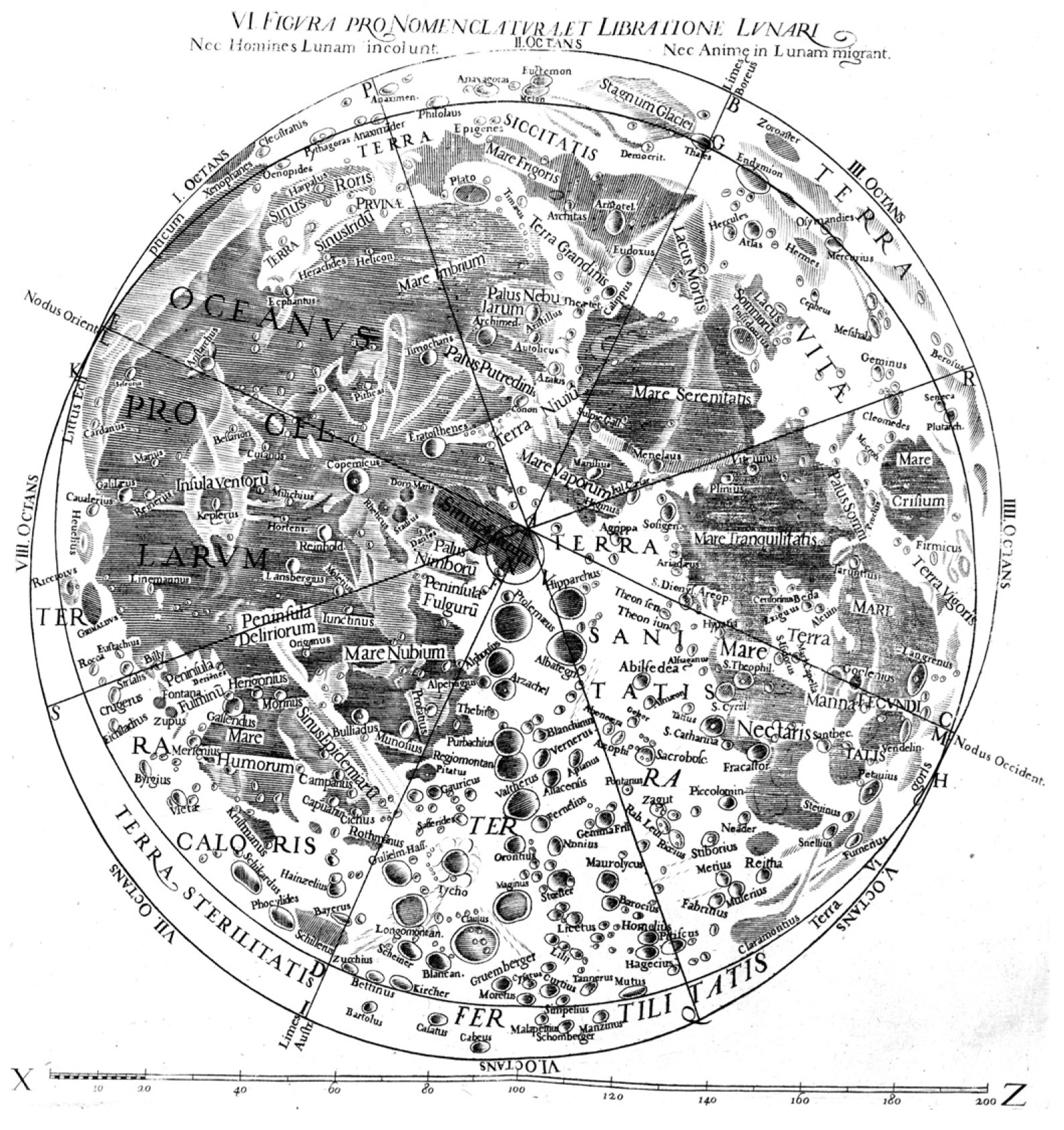
Ever wonder where the names of the features of the Moon come from? Most of the large features on the Moon were named by Giovanni Battista Riccioli, a Jesuit priest of the 17th century. He created the first accurate map of the Moon in 1651, and he named the features he drew, including the Sea of Tranquility (Mare Tranquillitatis), the craters Tycho, Plato, Clavius and many others that I talk about. Even though he professed the Earth centered universe, he gave the heliocentrists Copernicus, Kepler and Aristarchus prominent craters, but in the Ocean of Storms, Oceanus Procellarum, denoting the controversy of the day. Riccioli’s nomenclature became the standard for the Moon and other planets and moons.
The astronomical event times given in this blog are for the Traverse City/Interlochen area of Michigan (Lat 44.7° N, Long 85.7° W; EDT, UT – 4 hours) unless stated otherwise. Times will be different for other locations.
Addendum

Ephemeris: 05/19/2026 – The Greeks discovered that the Earth was round and determined the Moon’s distance
This is Bob Moler with Ephemeris for Tuesday, May 19th. Today the Sun will be up for 14 hours and 58 minutes, setting at 9:08, and it will rise tomorrow at 6:09. The Moon, 3 days past new, will set at 1:01 tomorrow morning.
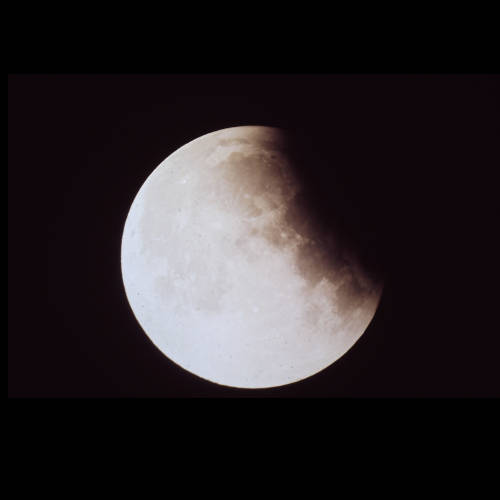
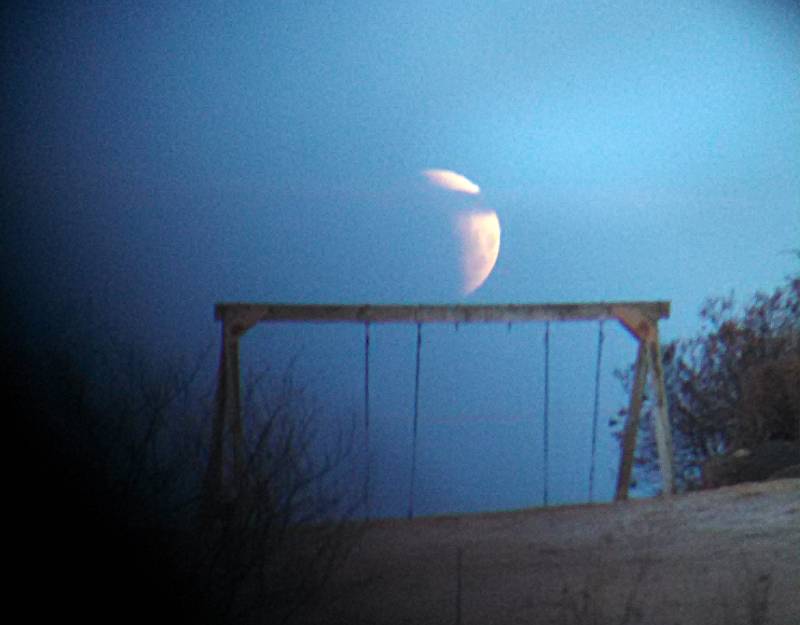
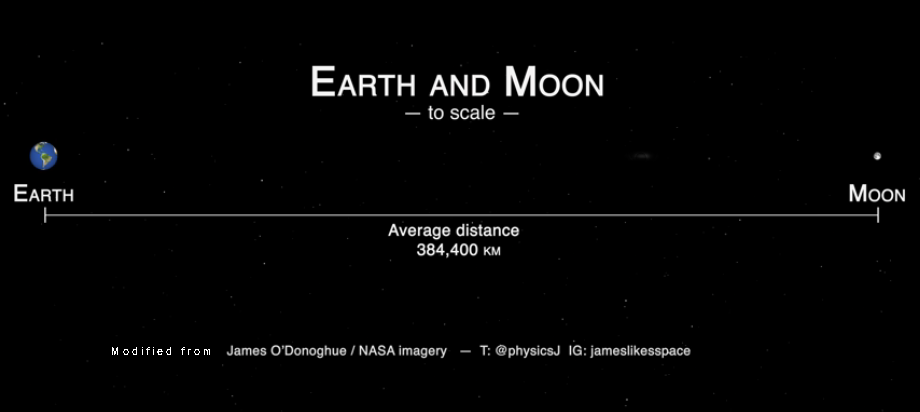
The Ancient Greeks used lunar eclipses to determine that Earth is a sphere, and worked on determining the distance to the Moon. From ancient times, the Greeks knew that an eclipse of the Moon was caused by the Earth’s shadow falling on the Moon. Since the Earth’s shadow was always circular, no matter where the Moon was in the sky during an eclipse, the Earth must be a sphere since that’s the only three-dimensional body that always casts a circular shadow. They also used the size of the Earth’s shadow to estimate the distance to the Moon. The lunar distance, on average, is 60.8 times the Earth’s radius away. The first estimates were about one third of that. Hipparchus in the 2nd century BC got much closer at 68 Earth radii.
The astronomical event times given in this blog are for the Traverse City/Interlochen area of Michigan (Lat 44.7° N, Long 85.7° W; EDT, UT – 4 hours) unless stated otherwise. Times will be different for other locations.
Addendum
Ephemeris: 04/27/2026 – Mare Orientale made a splash!
This is Ephemeris for Monday, April 27th. Today the Sun will be up for 14 hours and 4 minutes, setting at 8:42, and it will rise tomorrow at 6:37. The Moon, halfway from first quarter to full, will set at 5:06 tomorrow morning.
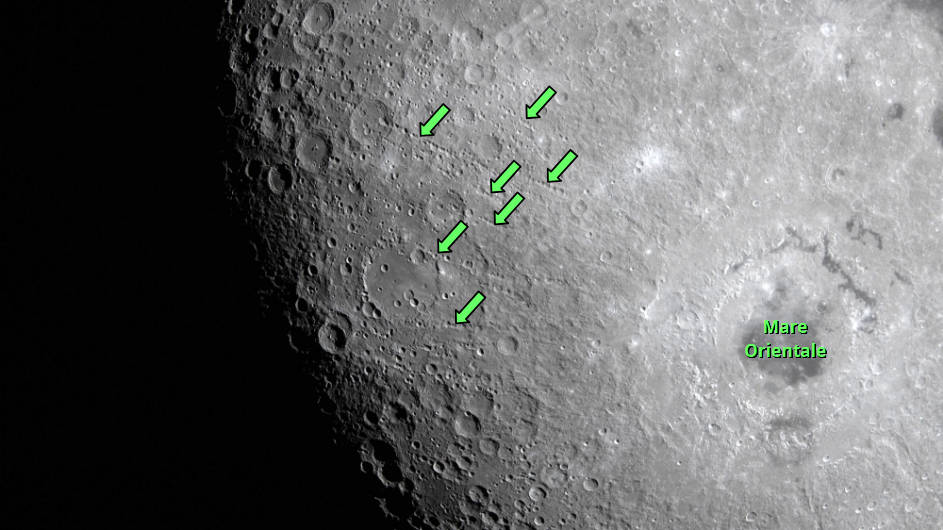
One of the pictures that the astronauts of Artemis 2 took of the far side of the moon was one that revealed chains of craters which appear to be emanating from the Sea on the edge of what we can see on the moon from the Earth, called Mare Orientale or the Eastern Sea. It was created by the impact of an asteroid onto the Moon’s surface, maybe 4 billion years ago, kicking out debris in all directions. Apparently the ejecta thrown out created chains of craters that appear to trace back to Orientale. They are most easily seen to the north and west of Orientale towards the terminator, the sunrise line, where the shadows are deeper. There’s probably chains of craters going in other directions, but they have no shadows.
The astronomical event times given in this blog are for the Traverse City/Interlochen area of Michigan (Lat 44.7° N, Long 85.7° W; EDT, UT – 4 hours) unless stated otherwise. Times will be different for other locations.
Addendum
Ephemeris: 04/24/2026 – Where did the lunar “seas” come from?
This is Bob Moler with Ephemeris for Arbor Day, Friday, April 24th. Today the Sun will be up for 13 hours and 55 minutes, setting at 8:39, and it will rise tomorrow at 6:41. The Moon, 1 day past first quarter, will set at 4:08 tomorrow morning.
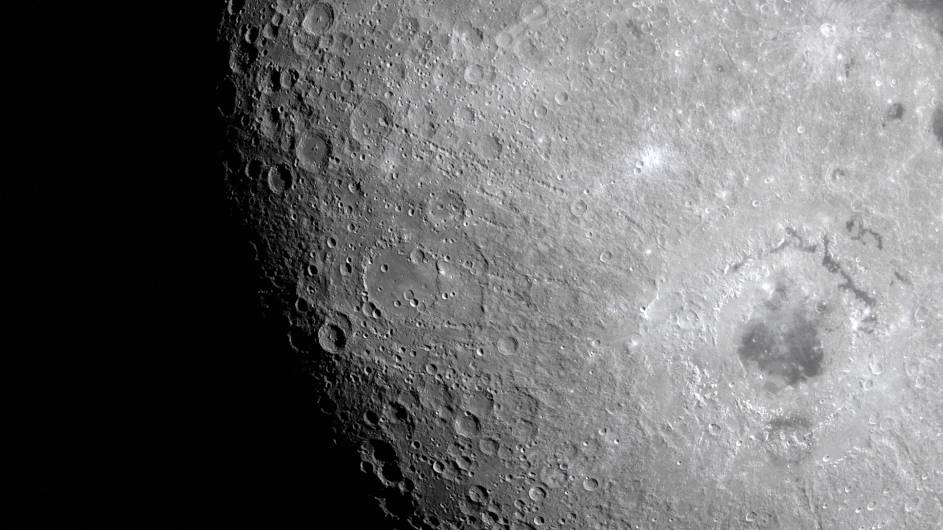
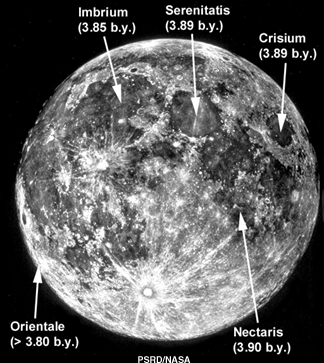
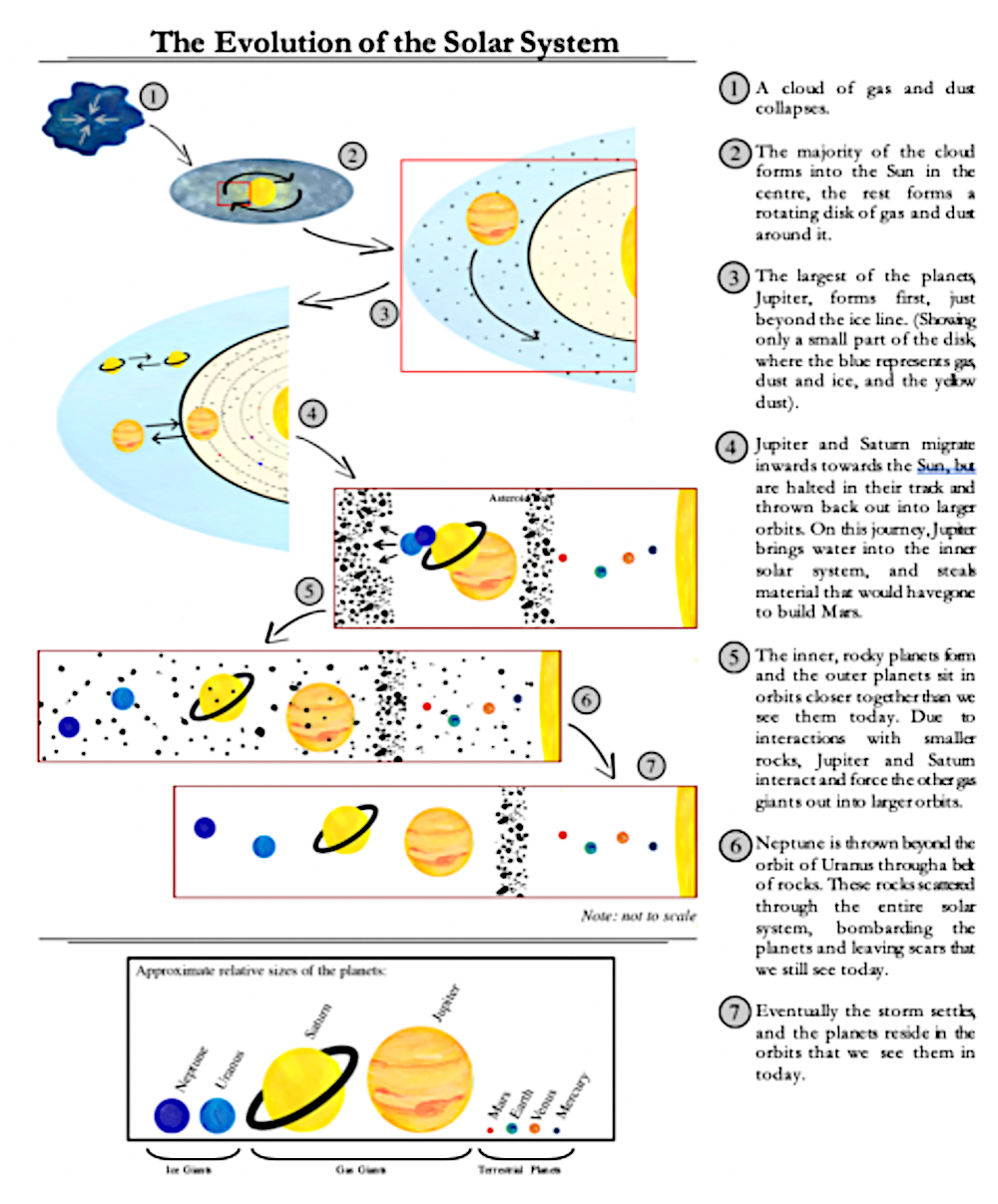
The face of the Moon is a bit more than half uncovered from our point of view, with first quarter occurring yesterday. It shows the string of lunar seas, those gray areas on the Moon which lead to the terminator, the Moon’s sunrise line. There is a larger sea called the Ocean of Storms on the eastern side of the Moon, as we see it. Most were created about 3.8 to 3.9 billion years ago by asteroid strikes. The same collisions happened to the Earth, but plate tectonics destroyed the evidence. Not so on the Moon. Many planetary scientists think it was the result of the Late Heavy Bombardment, caused by the changing orbits of mainly Saturn, Uranus and Neptune disrupting the asteroids, and sending them careening through the solar system.
The astronomical event times given in this blog are for the Traverse City/Interlochen area of Michigan (Lat 44.7° N, Long 85.7° W; EDT, UT – 4 hours) unless stated otherwise. Times will be different for other locations.
Addendum
Ephemeris: 04/17/2026 – The Moon’s Far Side isn’t dark!
This is Bob Moler with Ephemeris for Friday, April 17th. Today the Sun will be up for 13 hours and 35 minutes, setting at 8:30, and it will rise tomorrow at 6:53. The Moon is new today, and won’t be visible.
When I hear discussions about the Artemis 2 missions, some people who ought to know better still refer to the far side of the moon as the dark side. Officially we have the two faces of the moon: the near side and the far side. I’ll even accept front side and back side. Until 1959 no one had ever seen the far side of the moon so it was dark, in the sense that we could not see it. Not dark because of the lack of light. I’ve been thinking about it. The far side sees more light from the sun, so maybe we should call it the bright side. It certainly has fewer maria or seas, those dark patches that we see on the near side of the Moon. There’s only one on the far side, it’s called the Moscow Sea since the Russian spotted first. Mare Orientale, subject of much study by the Artemis 2 crew, straddles the near side-far side line. It’s closer to the sun when it’s fully illuminated than the near side by about half a million miles, and it doesn’t suffer solar eclipses to darken it like the near side, being already in night, like it always is, at full moon.
The astronomical event times given in this blog are for the Traverse City/Interlochen area of Michigan (Lat 44.7° N, Long 85.7° W; EDT, UT – 4 hours) unless stated otherwise. Times will be different for other locations.
Addendum