Archive
Ephemeris: 02/10/2026 – Artemis 2 is delayed until at least March
This is Ephemeris for Tuesday, February 10th. Today the Sun will be up for 10 hours and 14 minutes, setting at 6:04, and it will rise tomorrow at 7:48. The Moon, 1 day past last quarter, will rise at 4:03 tomorrow morning.
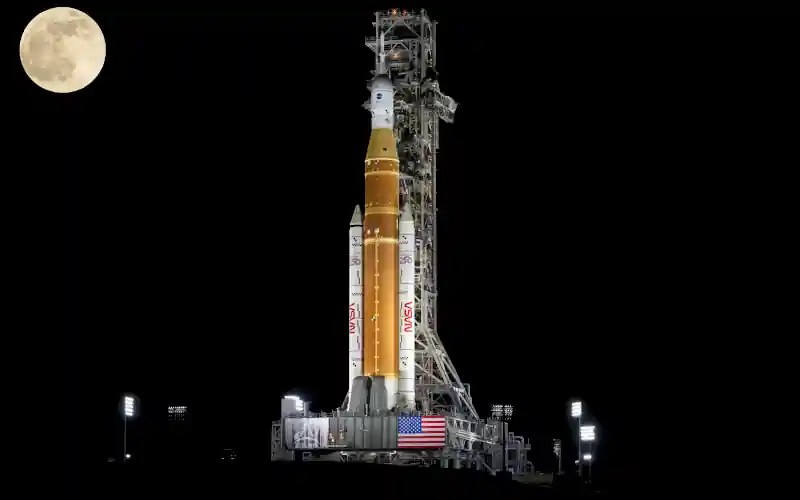
The next attempt to launch Artemis 2 and its crew around the moon will be in March. During the wet dress rehearsal, which involves filling the tanks of the huge core stage of the rocket with liquid hydrogen and oxygen, and counting down almost to the point of ignition. They discovered a greater than expected leak with the hydrogen quick disconnect fitting at the base of the core stage. They can’t test for hydrogen leaks while the spacecraft is sitting in the vertical assembly building because as cavernous as it is, it’s still a closed space and hydrogen is a notoriously leaky substance, being the smallest molecule. A little leakage is to be expected, but what they found was over the limit.
The astronomical event times given in this blog are for the Traverse City/Interlochen area of Michigan (Lat 44.7° N, Long 85.7° W; EST, UT – 5 hours) unless stated otherwise. Times will be different for other locations.
Addendum
Ephemeris: 01/27/2026 – Orion’s heat shield problem
This is Ephemeris for Tuesday, January 27th. Today the Sun will be up for 9 hours and 37 minutes, setting at 5:44, and it will rise tomorrow at 8:06. The Moon, 2 days past first quarter, will set at 4:29 tomorrow morning.
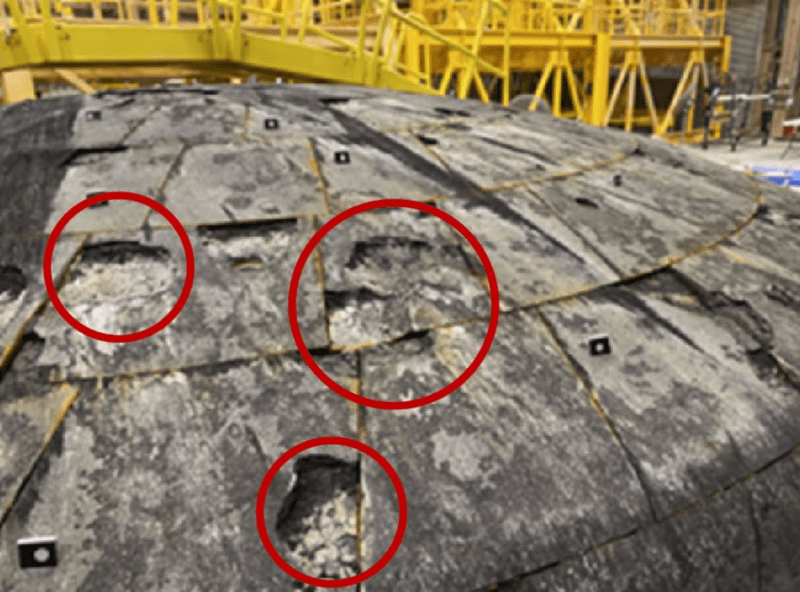
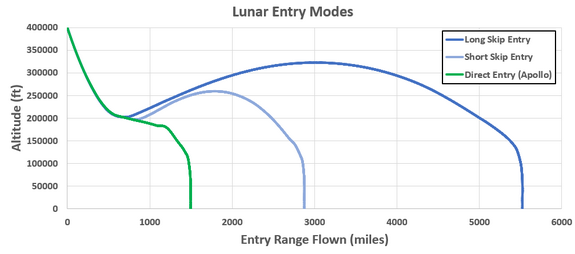
One of the problems that was detected with the reentry of the Artemis 1 mission back in November 2022* was the degradation of the heat shield of the Orion capsule. Chunks of the heat shield actually were breaking off. The technique they use for reentry called the skip reentry was thought to be the culprit. So while they are attempting to redesign the heat shield, Artemis 2 will be using the same type heat shield, but they will not do a skip reentry and come in without a skip off the atmosphere. The reason for using a skip reentry is to lessen the amount of Gs that are pulled by the capsule coming in at 7 miles per second by prolonging the entry and increasing the downrange travel of the capsule. Skip reentry is a proven technique, the Russians have been doing it for decades.
The astronomical event times given in this blog are for the Traverse City/Interlochen area of Michigan (Lat 44.7° N, Long 85.7° W; EST, UT – 5 hours) unless stated otherwise. Times will be different for other locations.
* For the broadcast, I misremembered the date as December 2024. That’s what happens when you’re old.
Addendum
Ephemeris: 01/22/2026 – Artemis II launch window opens up in 15 days
This is Ephemeris for Thursday, January 22nd. Today the Sun will be up for 9 hours and 26 minutes, setting at 5:37, and it will rise tomorrow at 8:10. The Moon, 3 days before first quarter, will set at 10:04 this evening.
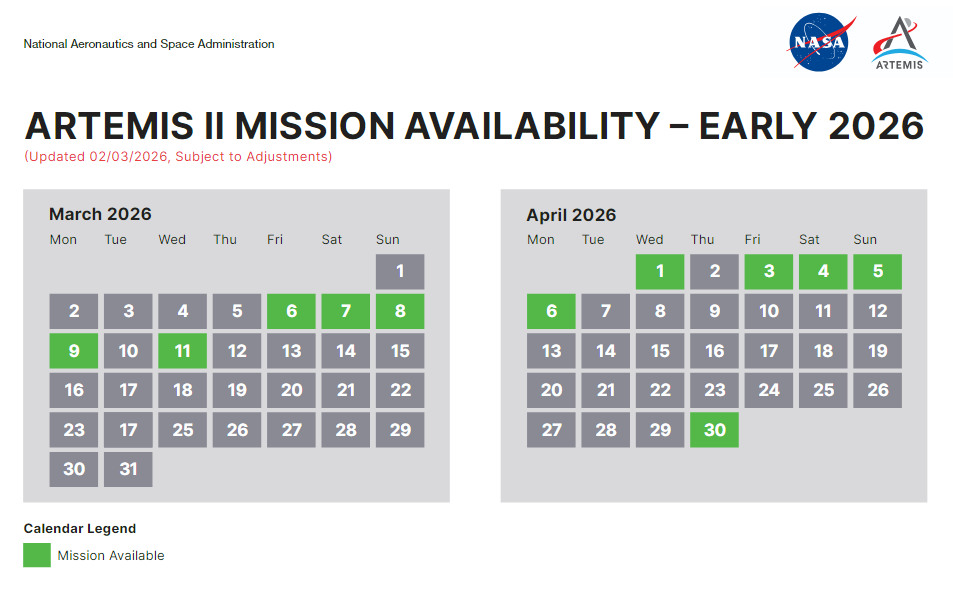
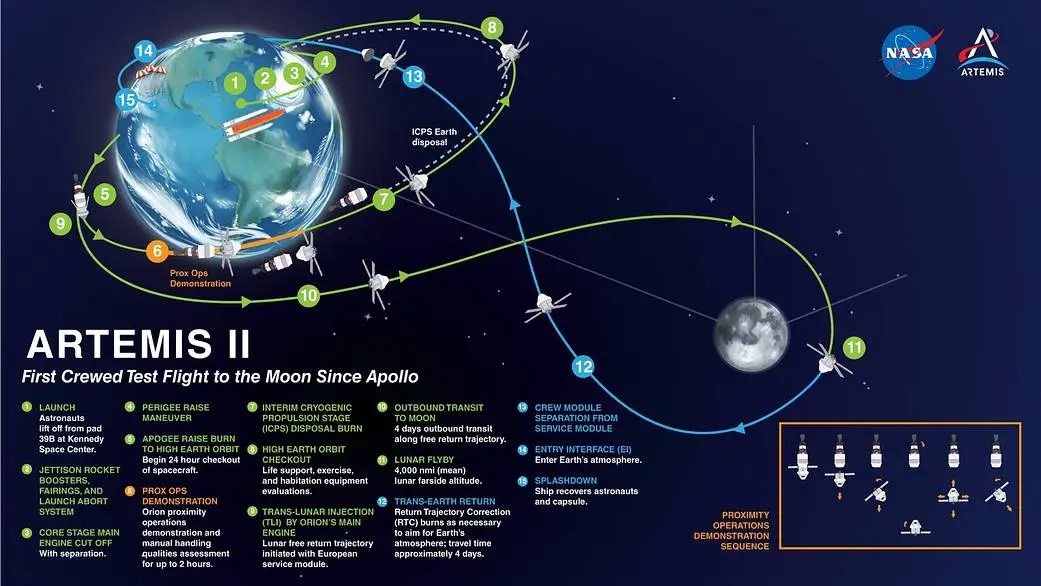
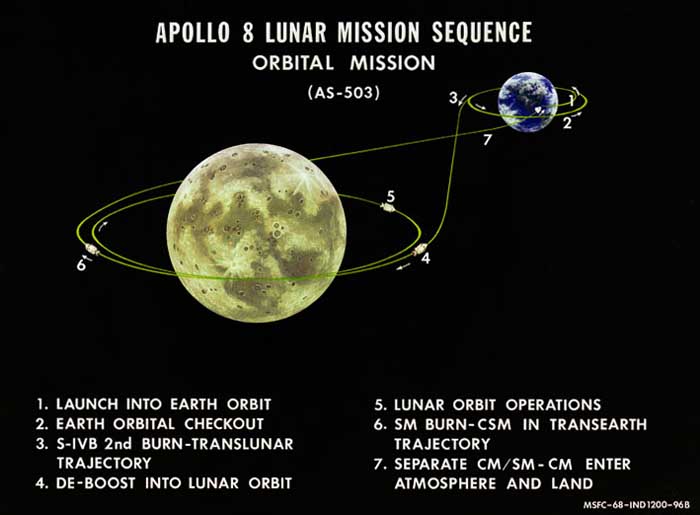
The launch window for the first crewed Artemis mission to the Moon opens up in a bit more than two weeks. It is made-up of 3 approximately 2 week windows containing four or five possible launch dates that extend to April. This mission is a mission to simply loop around the Moon and come back. It is different from the Apollo 8 mission, that actually orbited the Moon 10 times before returning to the Earth. The four astronauts will become the farthest members of humanity to venture from the Earth. One has hoped that NASA has solved the hydrogen leak problem that plagued the Artemis 1 mission a bit more than a year ago. Hydrogen is a small molecule that can leak through just about anything.
The astronomical event times given in this blog are for the Traverse City/Interlochen area of Michigan (Lat 44.7° N, Long 85.7° W; EST, UT – 5 hours) unless stated otherwise. Times will be different for other locations.
Addendum
Ephemeris: 10/02/2025 – The Artemis 2 mission may launch early next year
This is Bob Moler with Ephemeris for Thursday, October 2nd. Today the Sun will be up for 11 hours and 38 minutes, setting at 7:20, and it will rise tomorrow at 7:43. The Moon, 3 days past first quarter, will set at 3:10 tomorrow morning.
The Artemis 2 mission to send the crew around the moon and back is slated for early next year, which surprised me a bit because the launch window was moved up to earlier next year to between February 5th and April 26 about 2 1/2 months. That doesn’t mean that the mission could slip to later in the year, recalling the delays of the Artemis 1 mission. This mission is to send four people in the Orion capsule around the moon. It is crewed by three Americans and a Canadian, three men and a woman, three whites and a black. They’re the same four astronauts. I’m sure the current administration would have screamed DEI, if it wasn’t too late to break up the crew.
The astronomical event times given in this blog are for the Traverse City/Interlochen area of Michigan (Lat 44.7° N, Long 85.7° W; EDT, UT – 4 hours) unless stated otherwise. Times will be different for other locations.
Addendum
Ephemeris: 12/28/2023 – Next year in rockets and space
This is Ephemeris for Thursday, December 28th. Today the Sun will be up for 8 hours and 49 minutes, setting at 5:09, and it will rise tomorrow at 8:19. The Moon, 2 days past full, will rise at 6:35 this evening.
Let’s take a look at 2024 in space exploration. The Artemis 2 mission of sending a crew of four around the Moon and back will take place no earlier than November, so it could be pushed back into 2025 if there are any difficulties. SpaceX early next year will attempt the third flight of their gigantic Starship rocket. Hopefully this time it will reach near orbit. Blue Origin, sort of in competition to SpaceX, but have never put anything into orbit yet, is expected to launch their New Glenn rocket, which uses 7 BE4 engines next year. Also United Launch Alliance will be expected to launch their new Vulcan Centaur rocket, perhaps as early as January next year. It uses two Blue Origin BE4 engines as its main engines plus solid rocket boosters.
The astronomical event times given are for the Traverse City/Interlochen area of Michigan (EST, UT –5 hours). They may be different for your location.
 Bob Moler's Ephemeris Blog