Archive
Ephemeris: 11/15/2023 – Other possible contact binary solar system bodies
This is Ephemeris for Thursday, November 16th. Today the Sun will be up for 9 hours and 32 minutes, setting at 5:13, and it will rise tomorrow at 7:42. The Moon, 3 days past new, will set at 7:34 this evening.
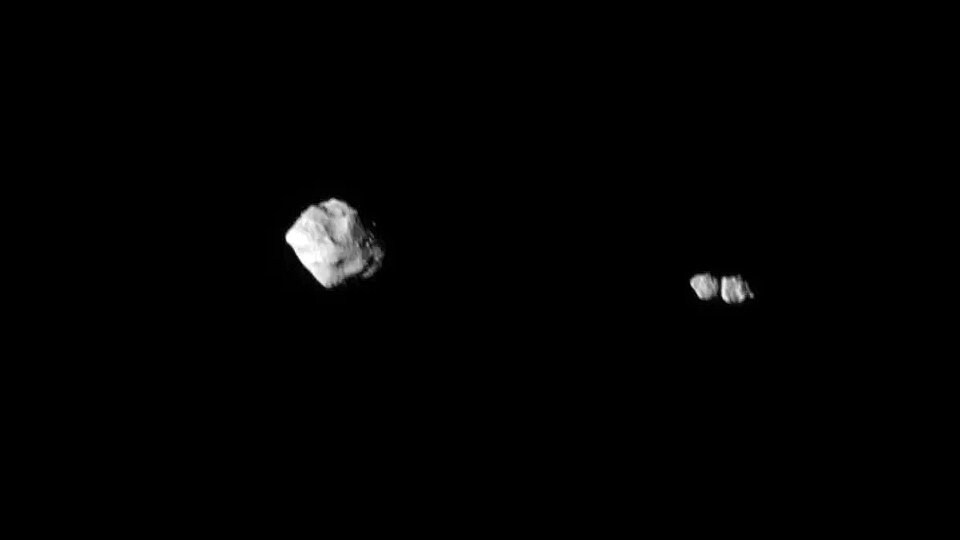
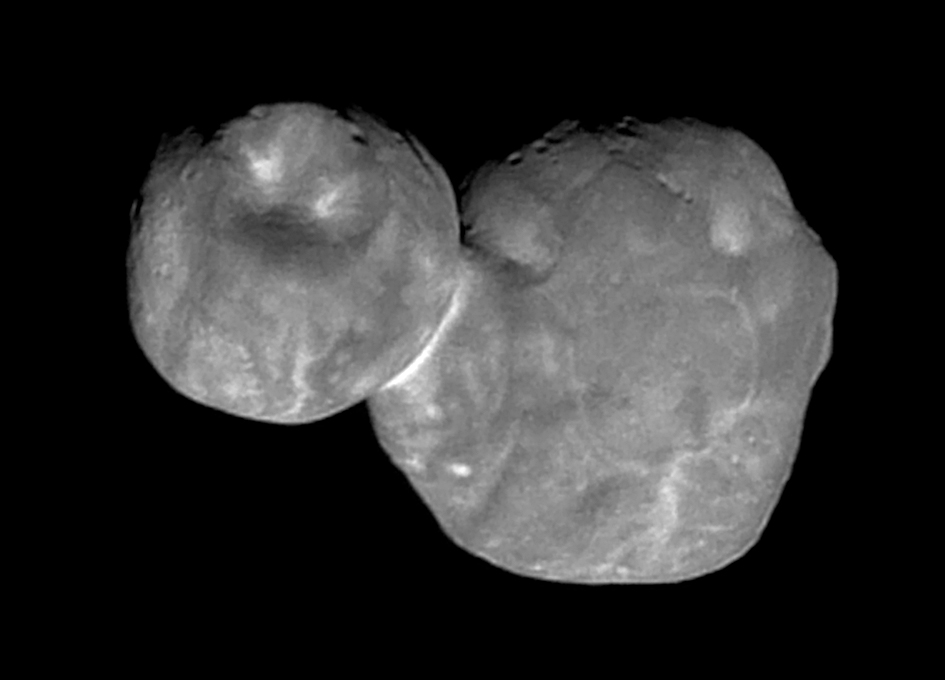
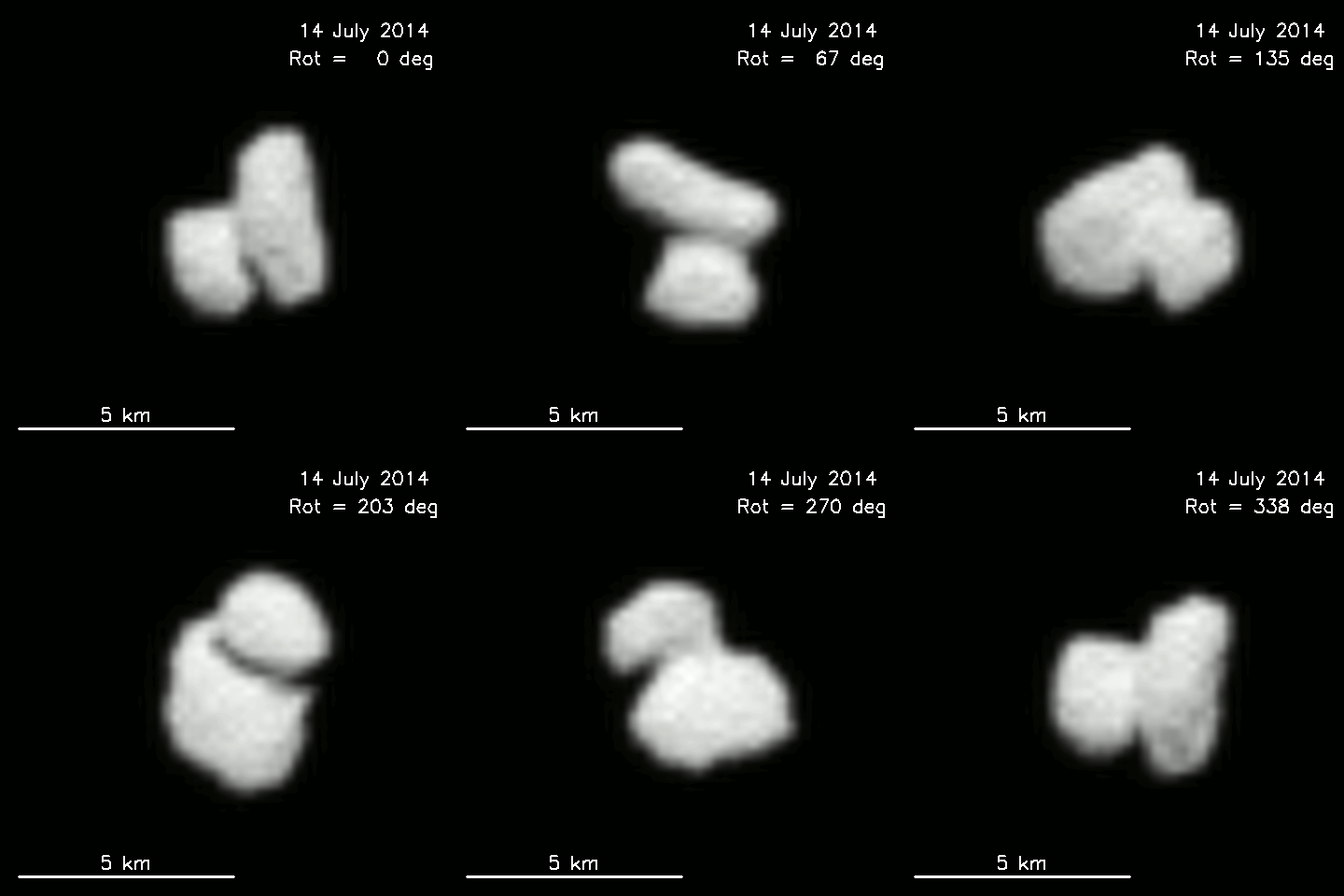
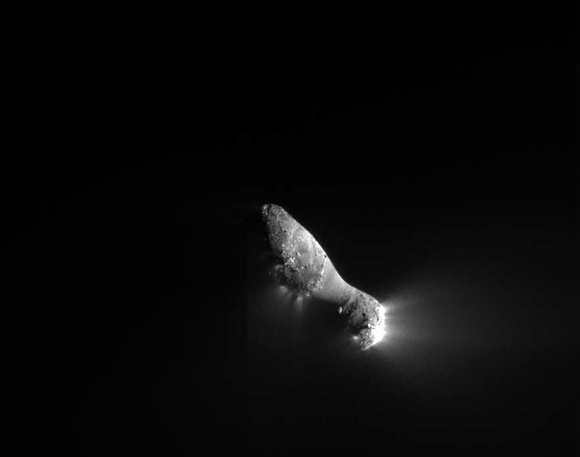
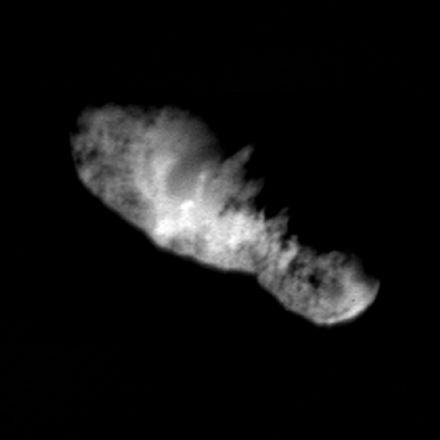
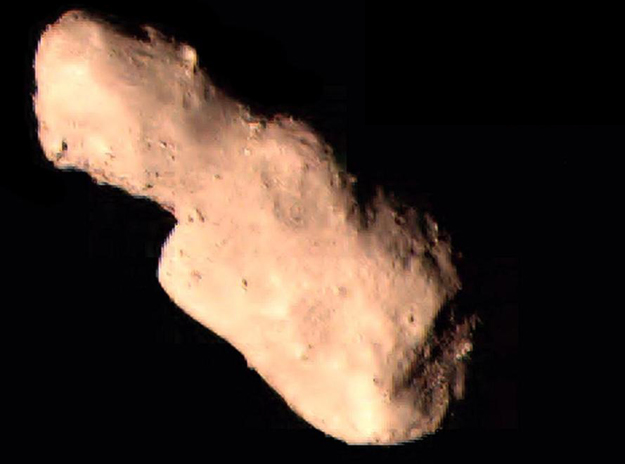
Thinking about it after seeing the contact the binary satellite of the asteroid that the Lucy spacecraft just flew by I have memories of several other bodies that could be contact binaries. The first one is that the New Horizons spacecraft passed four years ago which looked like two bodies stuck together, actually two pancakes because they weren’t spherical, but they were rather flattened. That Kuiper Belt Object now has the name Arrokoth. Comet 67 P, I won’t try to pronounce its name (Churyumov-Gerasimenko), that the Rosetta spacecraft orbited a few years ago, kinda looked like a rubber ducky with a small part attached to a larger part. It could be a contact binary. Again and there are a couple of comet nuclei that look like bowling pins. They may be contact binaries too.
The astronomical event times given are for the Traverse City/Interlochen area of Michigan (EST, UT –5 hours). They may be different for your location.
Addendum
12/29/2016 – Ephemeris – Astronomical milestones of 2016
Ephemeris for Thursday, December 29th. The Sun will rise at 8:19. It’ll be up for 8 hours and 50 minutes, setting at 5:10. The Moon is new today, and won’t be visible.
Looking back at 2016 the biggest astronomical news was the detection of gravitational waves coming from two separate collisions of black holes far beyond our Milky Way galaxy. The two detectors in Washington state and in Louisiana recorded these events in September and December 2015, but the first announcement was made in February this year after the signals were cleaned up and studied. The year saw the end of the European Space Agency’s Rosetta Mission to the comet we’ve come to call 67P after orbiting it for over two years. The Opportunity and Curiosity rovers continued their exploration of Mars along with a fleet of satellites. On a sad note, we lost pioneering Mercury astronaut John Glenn at the age of 95.
Times are for the Traverse City/Interlochen area of Michigan. They may be different for your location.
Addendum
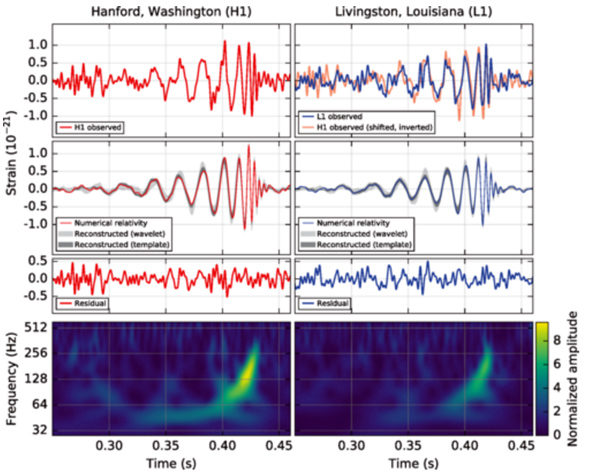
The chirp heard ’round the world and indeed the universe. Credit: LIGO/Abbot et al. 2016. Hat tip: Phil Plait, the Bad Astronomer.
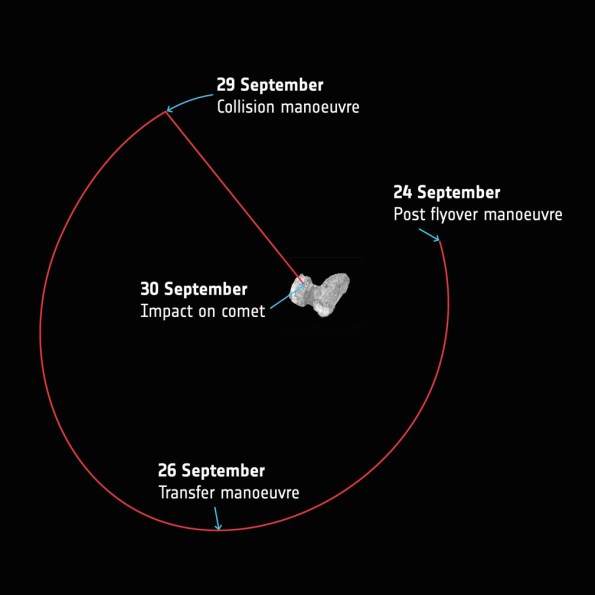
Rosetta, Final orbit. Credit & copyright European Space Agency (ESA)
09/29/2016 – Ephemeris – The Rosetta spacecraft starts its fatal dive today
Ephemeris for Thursday, September 29th. The Sun will rise at 7:38. It’ll be up for 11 hours and 47 minutes, setting at 7:26. The Moon, 1 day before new, will rise at 7:09 tomorrow morning.
Tomorrow morning at 6:40 a.m. give or take 20 minutes the European Space Agency’s Rosetta spacecraft will slowly crash into Comet 67P/Churyumov-Gerasimenko after orbiting it for a bit over 2 years. The comet is carrying Rosette out toward Jupiter’s orbit where the spacecraft cannot receive enough sunlight to power it. Today the controllers will command the spacecraft to perform the collision maneuver to cancel Rosetta’s complete orbital velocity and let it fall straight down to hit the head of the rubber ducky shaped comet. It’s antenna will be facing Earth and it will be taking pictures all the way down for immediate transmission because Rosetta will turn off its transmitter forever when it impacts the comet.
Times are for the Traverse City/Interlochen area of Michigan. They may be different for your location.
Addendum
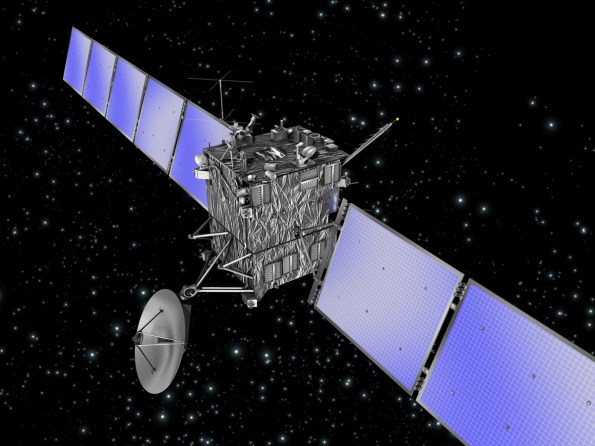
An artist’s illustration of the European Space Agency’s comet-chasing Rosetta spacecraft. Credit: ESA – C. Carreau
Rosetta, Final orbit. Credit & copyright European Space Agency (ESA)
07/15/2016 – Ephemeris – The end is near for ESA’s Rosetta spacecraft
Ephemeris for Monday, August 15th. The Sun rises at 6:45. It’ll be up for 14 hours and 1 minute, setting at 8:47. The Moon, 3 days before full, will set at 4:49 tomorrow morning.
In a month and a half the European Space Agency’s Rosetta spacecraft will end its mission to comet 67/P Churyumov-Gerasimenko or just 67/P for short. The end will come as the Rosetta spacecraft will make a slow crash onto the comet. A week ago the spacecraft shut down its link to the Philae lander, which itself didn’t stick its landing and bounced three times and found itself between ice and a hard place with no way for the Sun to reach it to recharge its batteries, and so had an abbreviated science mission before the batteries failed. The comet was closest to the Sun a year ago, and is heading back out to near the orbit of Jupiter. Last time it was out this far Rosetta had just been woken up out of a three-year slumber. This time though it will sleep forever after a job well done.
Times are for the Traverse City/Interlochen area of Michigan. They may be different for your location.
Addendum
An artist’s illustration of the European Space Agency’s comet-chasing Rosetta spacecraft. Credit: ESA – C. Carreau
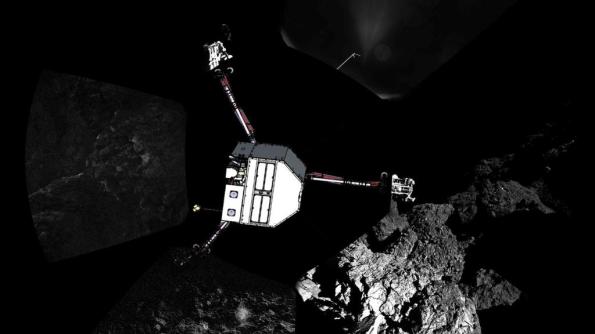
An image of the Philae lander superimposed on its panorama photographs where it was wedged between ice and a hard place in the shadows November 2014. Credit: ESA/Rosetta.
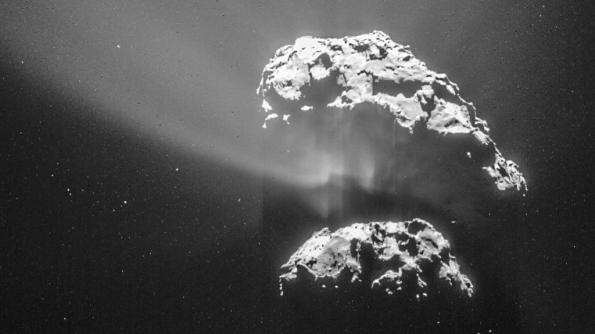
Comet 67P and jets of dust, carried by sublimating ices. Credit: ESA/Rosetta
10/16/2015 – Ephemeris – The topic this Saturday will be comets (Updated)
Ephemeris for Friday, October 16th. The Sun will rise at 7:59. It’ll be up for 10 hours and 57 minutes, setting at 6:56. The Moon, half way from new to first quarter, will set at 9:20 this evening.
Tomorrow I have a treat for youngsters of all ages. From 10 a.m. to noon ( Update: noon to 2 p.m.) I’ll be talking about and helping to make comets at the Betsie Valley District Library in Thompsonville. First we’ll explore comets as seen in our skies then travel along with the Rosetta space mission to get up close to Comet 67P/Churyumov–Gerasimenko to see what it’s made of and what happens when it comes close to the Sun. Then we’ll make our own comet nucleus using many of the ingredients that are found in actual comets, though we’ll leave out all the poisonous ones, and we’ll see if it survives this close to the Sun. If you want to help make a comet, bring your winter gloves. I do have extras, but yours will probably work better.
Times for astronomical events are for the Traverse City/Interlochen area of Michigan. They may be different for your location.
03/06/2015 – Ephemeris – Learn about this year’s adventures in exploring the soiar system tonight
Ephemeris for Friday, March 6th. The Sun will rise at 7:12. It’ll be up for 11 hours and 24 minutes, setting at 6:36. The Moon, 1 day past full, will rise at 7:47 this evening.
This evening yours truly will be giving a program at the monthly meeting of the Grand Traverse Astronomical Society at 8 p.m. at Northwestern Michigan College’s Rogers Observatory. It’s entitled Asteroids and Dwarf Planets and Comets, oh my! It’s about the three solar system bodies being visited this year by spacecraft from NASA and the European Space Agency. The asteroid is Ceres, which the Dawn spacecraft entered orbit of today. The dwarf planet is Pluto which is the target of a summer flyby by the New Horizon spacecraft. The comet is 67P/Churyumov–Gerasimenko orbited by ESA’s Rosetta spacecraft. There will be a star party at 9 p.m. following the meeting.
Times are for the Traverse City/Interlochen area of Michigan. They may be different for your location.
Addendum
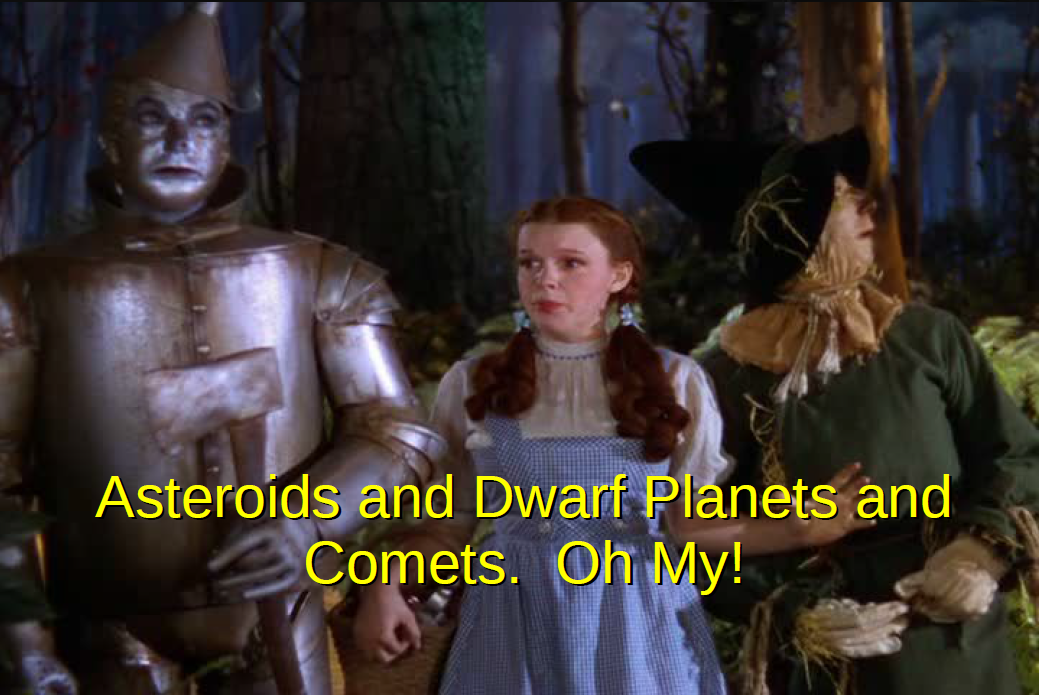
Apologies to MGM.
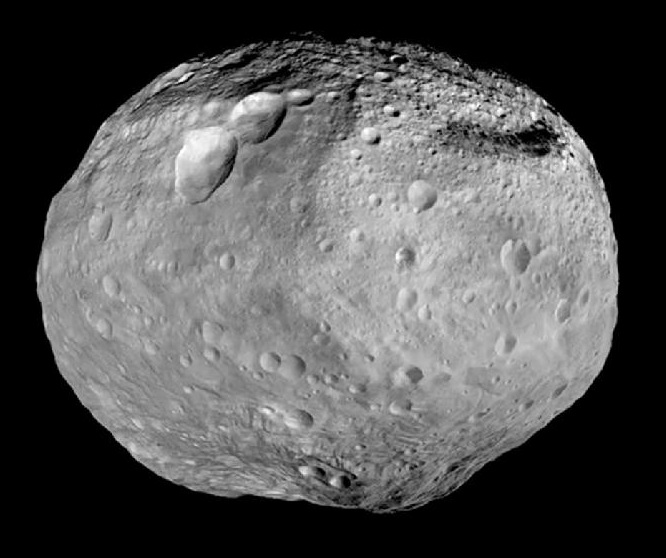
Looking back at Vesta as Dawn headed off to Ceres. Credit: NASA/JPL-Caltech/UCAL/MPS/DLR/IDA
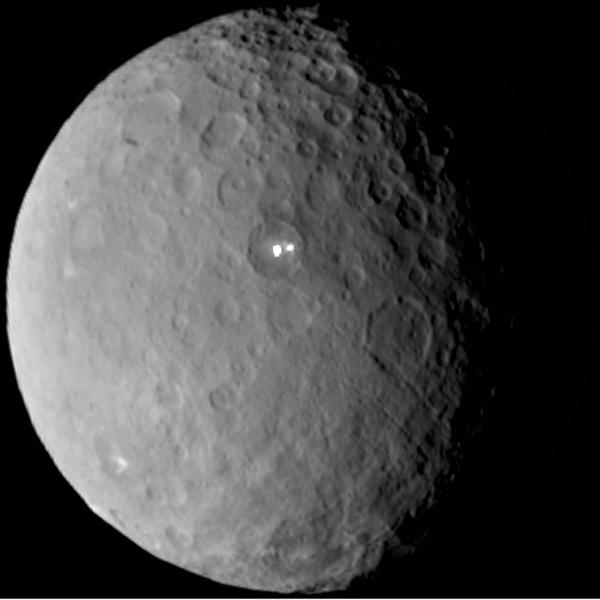
The bright spot is two. Picture taken February 19, 2015 from 29,000 miles (46,700 km). Credit: NASA/JPL-Caltech/UCLA/MPS/DLR/IDA.
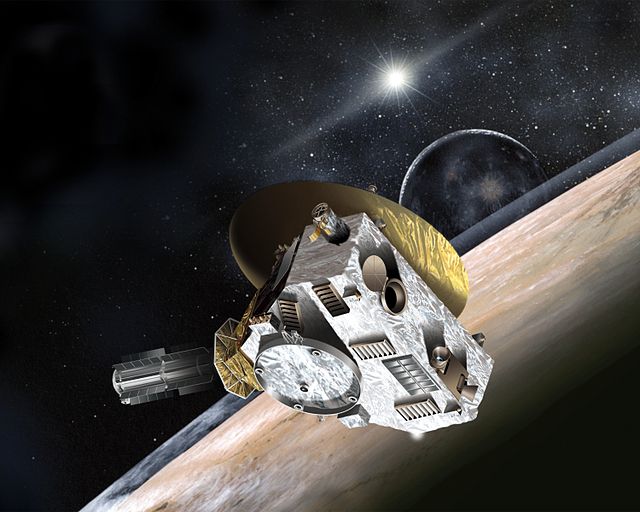
Artist conception of the New Horizons spacecraft at Pluto. Credit: NASA/Johns Hopkins University Applied Physics Laboratory/Southwest Research Institute
An animation of Comet 67p/Churyumov–Gerasimenko rotation on July 14, 2014. The 30 pixel wide image has been smoothed. The Rotation rate is 1 rotation every 12.4 hours. Credits: ESA/Rosetta/MPS for OSIRIS Team MPS/UPD/LAM/IAA/SSO/INTA/UPM/DASP/IDA
11/18/2014 – Ephemeris – Rosetta, Philae with Comet 67P and Maven’s discovery of the effects of it’s comet encounter
Ephemeris for Tuesday, November 18th. The sun will rise at 7:43. It’ll be up for 9 hours and 28 minutes, setting at 5:11. The moon, half way from last quarter to new, will rise at 4:31 tomorrow morning.
Last week the Philae lander bounced down on Comet 67P/Churyumov-Gerasimenko, its harpoons not able to fire to hold the lander down. “Where is Captain Ahab when you need him?” I Twittered at the time. We were lucky it didn’t bounce off the comet entirely. It ended against a cliff and in a shadow, so it couldn’t recharge its batteries from sunlight. The ESA controllers had it perform all its possible experiments quickly before its batteries died. Philae was still an amazing success. News from last month’s encounter Mars encounter with Comet Siding Spring. The Maven satellite detected the aftermath of a great martian meteor shower when it peaked around the planet from where it was hiding.
Times are for the Traverse City/Interlochen area of Michigan. They may be different for your location.
Addendum
Philae
If I’m understanding the spacecraft controllers at the European Space Agency (ESA) correctly Philae was launched toward the comet with a velocity of something like .7 meters per second (m/s). It would have accelerated to 1 m/s by the time it hit the comet. So it was pushed into the comet at more than the comet’s escape velocity. One meter per second is only 2.2 miles per hour. So to bounce and not escape the comet either the lander, the surface of the comet or both would have to have a lot of give to it. On this comet one could jump faster than escape velocity and go floating off into space.
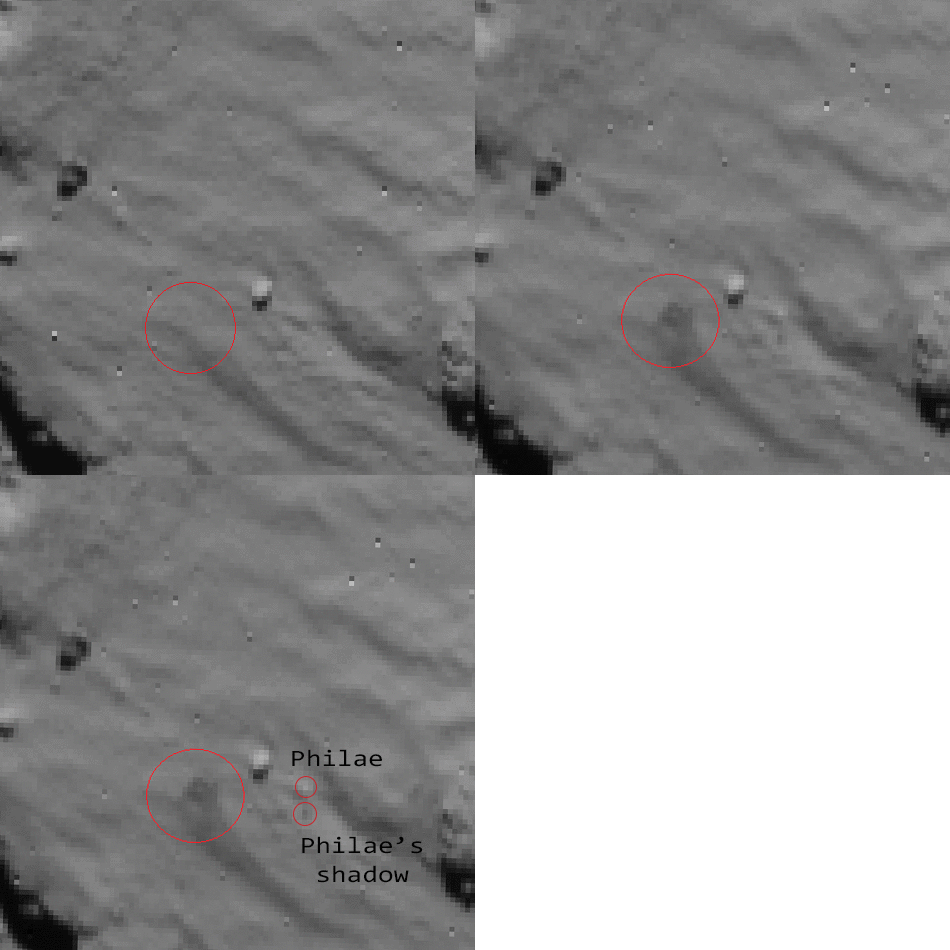
The Rosetta spacecraft spotted Philae and its shadow shortly after the lander touched down on Comet 67P/Churyumov–Gerasimenko and bounced up again. The first image is taken on Nov. 12, 2014 at 10:30 a.m. EDT (3:30 p.m. UTC) and the second five minutes later. Credit: ESA/Rosetta/NAVCAM; pre-processed by Mikel Catania. Hat tip to and credit for the caption to Universe Today.
Maven
Maven detected the aftermath of a meteor storm in the upper martian atmosphere with the signatures of eight metals. It looks like it was prudent to hide all the satellites when Mars came closest to the comet’s path. Here’s a link to Bob King’s post about it in Universe Today blog from 11 days ago.
The Rubber Ducky turns out to be kind of an Ugly Duckling
The European Space Agency’s Rosetta spacecraft arrived at its target Comet 67p/Churyumov–Gerasimenko yesterday, August 6th, 2014. The smoothed image 30 pixels across of three weeks ago of a rubber ducky,
An animation of Comet 67p/Churyumov–Gerasimenko rotation on July 14, 2014. The 30 pixel wide image has been smoothed. The Rotation rate is 1 rotation every 12.4 hours. Credits: ESA/Rosetta/MPS for OSIRIS Team MPS/UPD/LAM/IAA/SSO/INTA/UPM/DASP/IDA
have been replaced by the mega-pixel images we see now of an Ugly Duckling comet, with much more character and battle scars. That’s what happens when you’ve been ’round the Sun to many times.
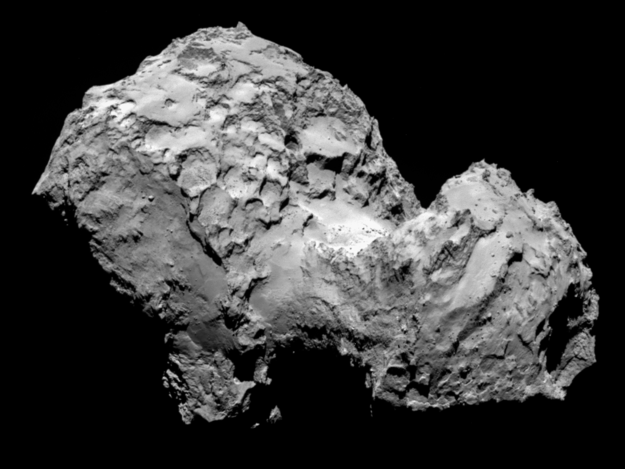
The comet on August 3rd, 2014, 3 days before arrival. Credit: ESA / Rosetta / MPS for OSIRIS Team MPS / UPD / LAM / IAA / SSO / INTA / UPM / DASP / IDA
See Emily Lakdawalla’s post from yesterday at http://www.planetary.org/blogs/emily-lakdawalla/2014/08060249-were-at-the-comet-rosetta.html. It contains lots of images and more information including a 3D image. Grab your red & blue 3D glasses for that one, or if you’ve mastered the techniques of crossed-eye, or parallel-eye stereo viewing.
Also go to ESA’s own Rosetta site at http://www.esa.int/Our_Activities/Space_Science/Rosetta.
I find Emily’s post much more comprehensive. So subscribe to the Planetary Society’s blog feed.
07/22/2014 – Ephemeris – Rosetta spies a cosmic rubber ducky
Ephemeris for Tuesday, July 22nd. Today the sun will be up for 15 hours even, setting at 9:18. The moon, half way from last quarter to new, will rise at 3:38 tomorrow morning. Tomorrow the sun will rise at 6:19.
The European Space Agency (ESA) Rosetta spacecraft is closing in on Comet 67P/Churyumov-Gerasimenko, also known as Comet Cherry-Gerry, or Comet C-G. After photos of the comet’s nucleus were published last week it has acquired a new nickname: Rubber Ducky. The nucleus may be a contact binary with two comet nuclei that stuck together after a slow speed collision. Further study may reveal the nature of the two pieces. Rosetta has more than a year to study the comet. It has a lander craft called Philae that can land on one of the pieces of the nucleus. No one expected the possibility of two possibly dissimilar comet nuclei to study. Rosetta will enter orbit of the comet August 6th.
Times are for the Traverse City/Interlochen area of Michigan. They may be different for your location.
Addendum
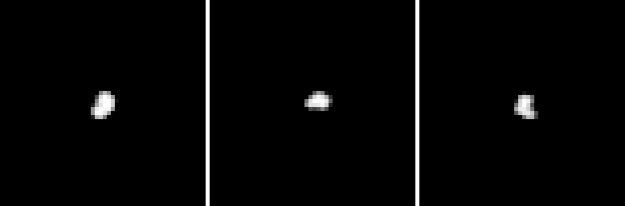
A hint of strangeness appears on July 4, 2014. What’s that lump on the side in that third image? Credits: ESA/Rosetta/MPS for OSIRIS Team MPS/UPD/LAM/IAA/SSO/INTA/UPM/DASP/IDA
An animation of Comet C-G rotation on July 14, 2014. The 30 pixel wide image has been smoothed. The actual rotation rate is 1 rotation every 12.4 hours. Credits: ESA/Rosetta/MPS for OSIRIS Team MPS/UPD/LAM/IAA/SSO/INTA/UPM/DASP/IDA
For more information go to http://sci.esa.int/rosetta/, or search: esa rosetta.
The post that explains this image more fully is here.
ESA has a policy of weekly releases, so expect a new one this Wednesday, Thursday or Friday.
07/11/2014 – Ephemeris – Spot Mercury tomorrow and Learn about two comets tonight
Ephemeris for Friday, July 11th. Today the sun will be up for 15 hours and 19 minutes, setting at 9:27. The moon, 1 day before full, will set at 6:31 tomorrow morning. Tomorrow the sun will rise at 6:08.
Really diehard Mercury watchers just may catch a glimpse of this very elusive planet tomorrow morning after it rises at 4:47 a.m. It’s below and left of Venus at that time. But before then the Grand Traverse Astronomical Society will hold its monthly meeting tonight at Northwestern Michigan College’s Observatory on Birmley Road. Yours truly will be giving the talk starting at 8 p.m. about the two comets that will be in the news starting next month. The first will be orbited by the European Rosetta spacecraft which will send down a lander starting next month. The second will be a close approach of a comet to Mars, near enough to possibly menace our satellites orbiting Mars in October. There will be viewing afterwords.
Times are for the Traverse City/Interlochen area of Michigan. They may be different for your location.
More information on the talk is here.
Addendum
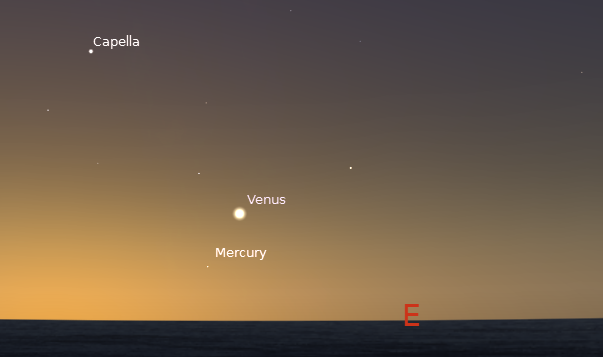
Mercury and Venus rising in twilight at 5:30 a.m. July 12, 2014. Created using Stellarium.
Title Slide for Tail of Two Comets
 Bob Moler's Ephemeris Blog