Archive
03/03/2015 – Ephemeris – The bright spots on Ceres are still a mystery
Ephemeris for Tuesday, March 3rd. The Sun will rise at 7:17. It’ll be up for 11 hours and 15 minutes, setting at 6:32. The Moon, 2 days before full, will set at 6:30 tomorrow morning.
The Dawn spacecraft is approaching the asteroid Ceres. It will be gently captured by Ceres on the 6th. This as an update from the date I gave you yesterday. Then the spacecraft will spiral closer and closer to the asteroid over the next few months. There is a mystery spot on Ceres, a bright spot that was visible by the Hubble Space Telescope orbiting Earth. As Dawn got close enough to resolve Ceres it too saw the bright spot. As the spacecraft got even closer the spot showed to be smaller and smaller. I thought it might be a crater that penetrated into Ceres icy interior. But the latest image, taken February 19th shows that the bright spot has a companion spot, both inside a crater and still too small to resolve. It’s still a mystery.
Times are for the Traverse City/Interlochen area of Michigan. They may be different for your location.
Addendum
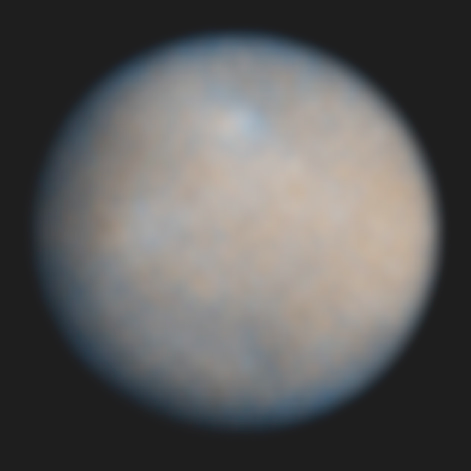
Hubble’s best photo of Ceres. Note the white spot near the top of the image. Image Credit: NASA, ESA, J. Parker (Southwest Research Institute), P. Thomas (Cornell University), L. McFadden (University of Maryland, College Park), and M. Mutchler and Z. Levay (STScI)
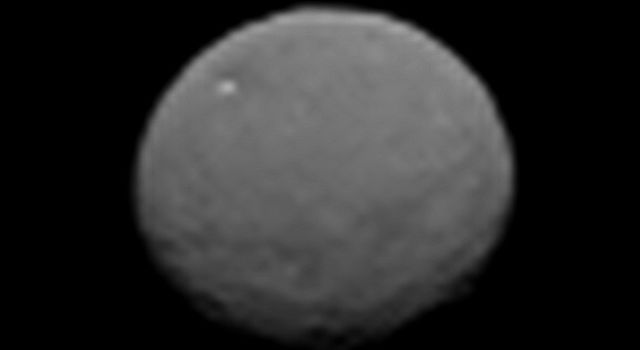
The white spot shows as Dawn approaches Ceres. Credit: NASA/JPL.
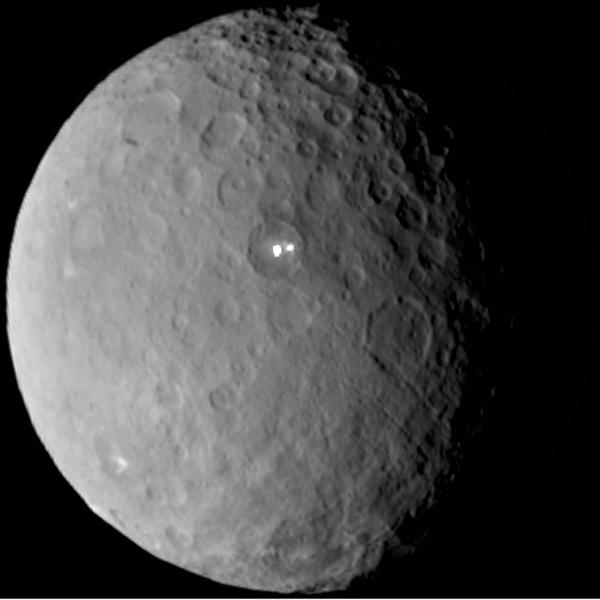
The bright spot is two. Picture taken February 19, 2015 from 29,000 miles (46,700 km). Credit: NASA/JPL-Caltech/UCLA/MPS/DLR/IDA.
This photo will be the best photo of the bright spots until the end of April, an Dawn maneuvers over the night side of Ceres.
On March 2nd NASA held a Dawn Mission Pre- Close Approach News Briefing which can be found on YouTube.
03/02/2015 – Ephemeris – The Dawn spacecraft (The turtle wins the race)
Ephemeris for Monday, March 2nd. The sun will rise at 7:19. It’ll be up for 11 hours and 12 minutes, setting at 6:31. The moon, 3 days before full, will set at 6:00 tomorrow morning.
On Thursday March 5th NASA’s Dawn spacecraft will fall under the gravitational influence of the asteroid, or actually recently promoted dwarf planet Ceres and enter orbit. The journey took 7 years including an intermediate year-long stop at the asteroid Vesta. Dawn uses the latest in ion thrusters, or latest when it was launched. Using power generated by its solar panels it ejects xenon ions from one of its three ion thrusters to produce a thrust comparable to the weight of a piece of paper. It can accelerate the spacecraft from zero to 60 miles per hour in a few days. In the tale of the hare and the tortoise it’s in the tortoise class, at least to start. Ion engines are 10 times as efficient as chemical rockets and they can thrust for years.
Times are for the Traverse City/Interlochen area of Michigan. They may be different for your location.
Addendum
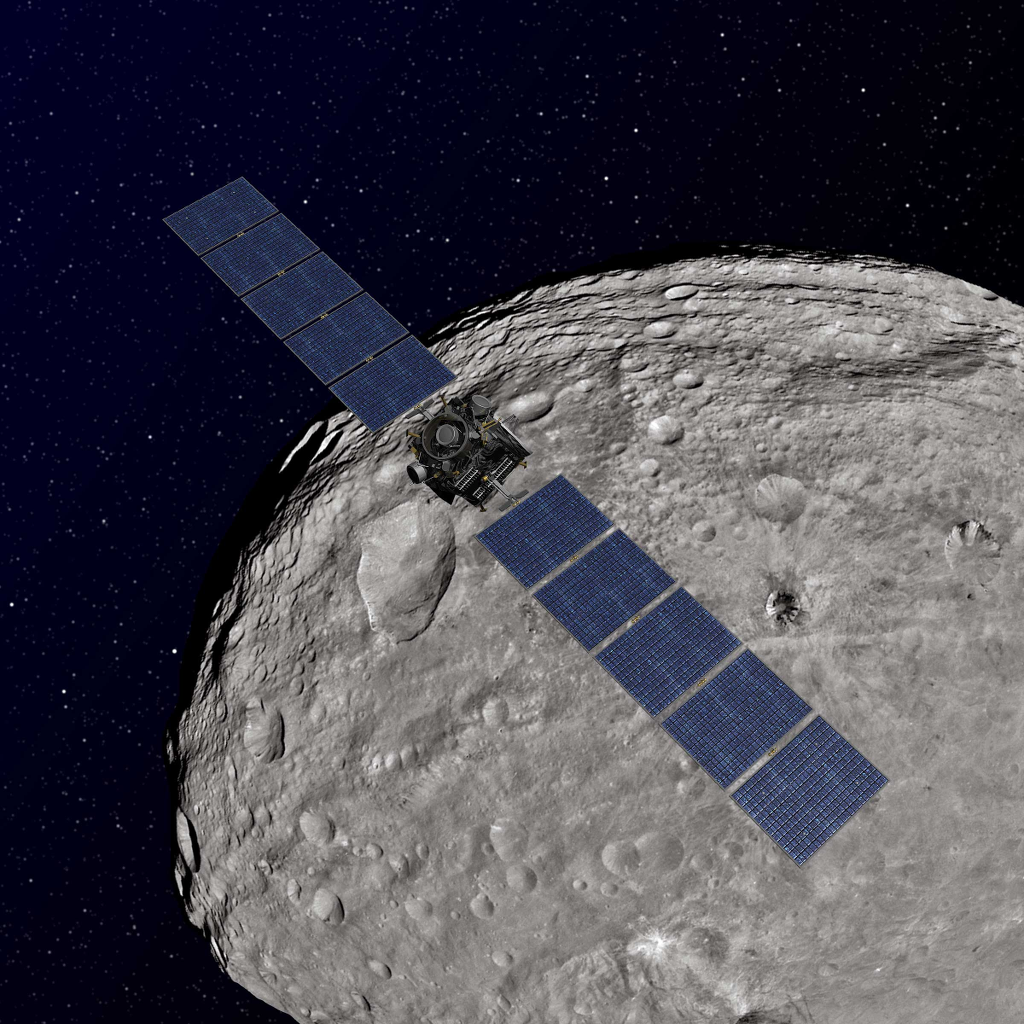
Artist’s rendition of the Dawn spacecraft at Vesta. Credit: NASA/JPL
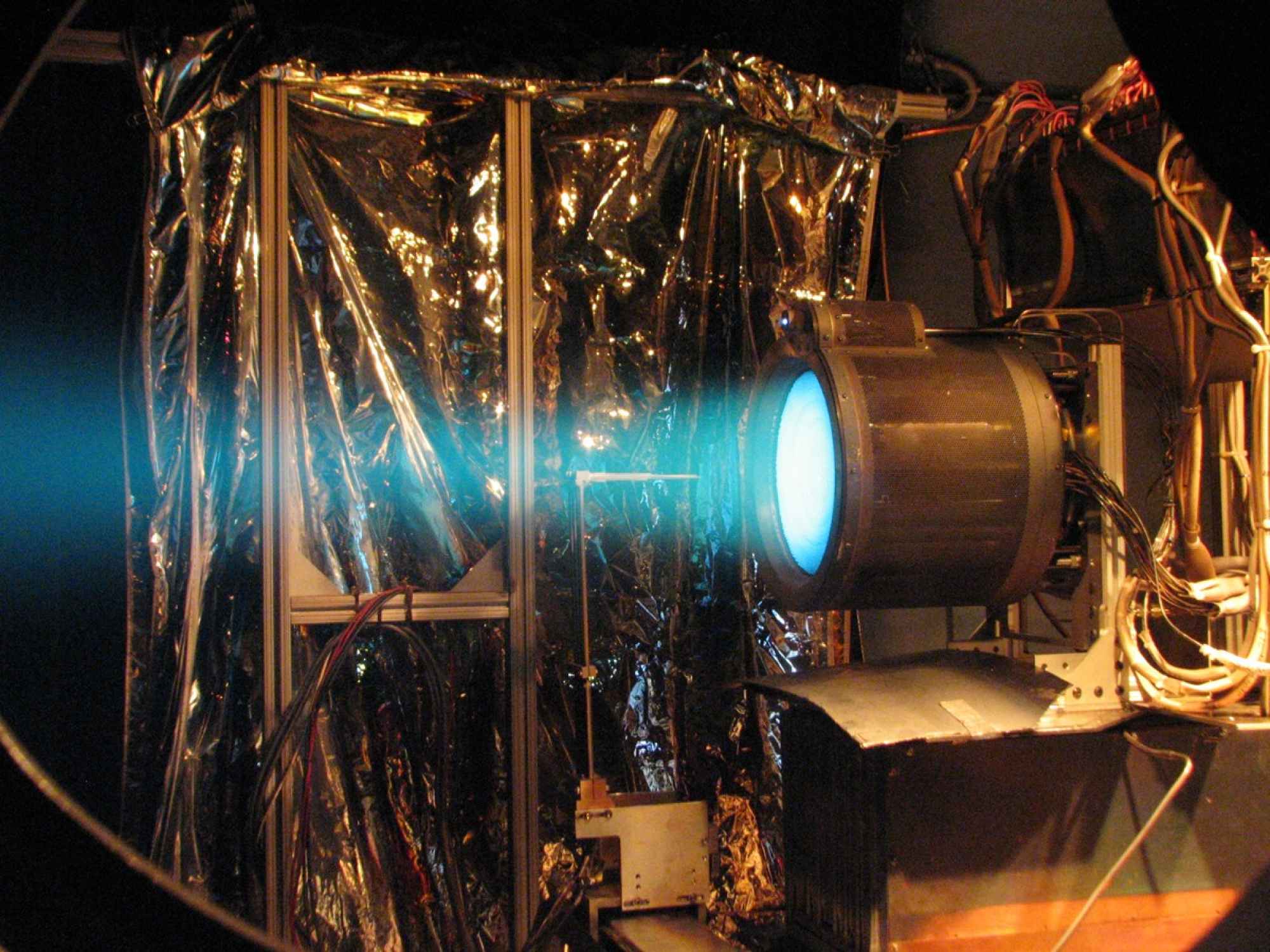
Ion engine test. Xenon ions glow blue. Credit NASA.
12/30/2014 – Ephemeris – Looking ahead at some local and space astronomical events in 2015
Ephemeris for Tuesday, December 30th. The sun will rise at 8:19. It’ll be up for 8 hours and 51 minutes, setting at 5:11. The moon, 2 days past first quarter, will set at 3:38 tomorrow morning.
Let’s look ahead at a few astronomical and space events that will take place in 2015. Visible for us will be the partial phase of a lunar eclipse in morning twilight of April 4th, plus there’s a total lunar eclipse visible during the evening hours of September 27th. Out in space in the asteroid belt the Dawn spacecraft will enter orbit of Ceres, the largest asteroid and dwarf planet Ceres, a spherical world of rock and ice in April. Further out past the last planet the New Horizons spacecraft will fly by the dwarf planet Pluto and its system of at least 5 satellites: Charon, Nix, Hydra, Styx, and Kerberos on July 14th. It will take several months to transmit the data and images back to Earth after which the spacecraft will be redirected to a new target.
Times are for the Traverse City/Interlochen area of Michigan. They may be different for your location.
Addendum
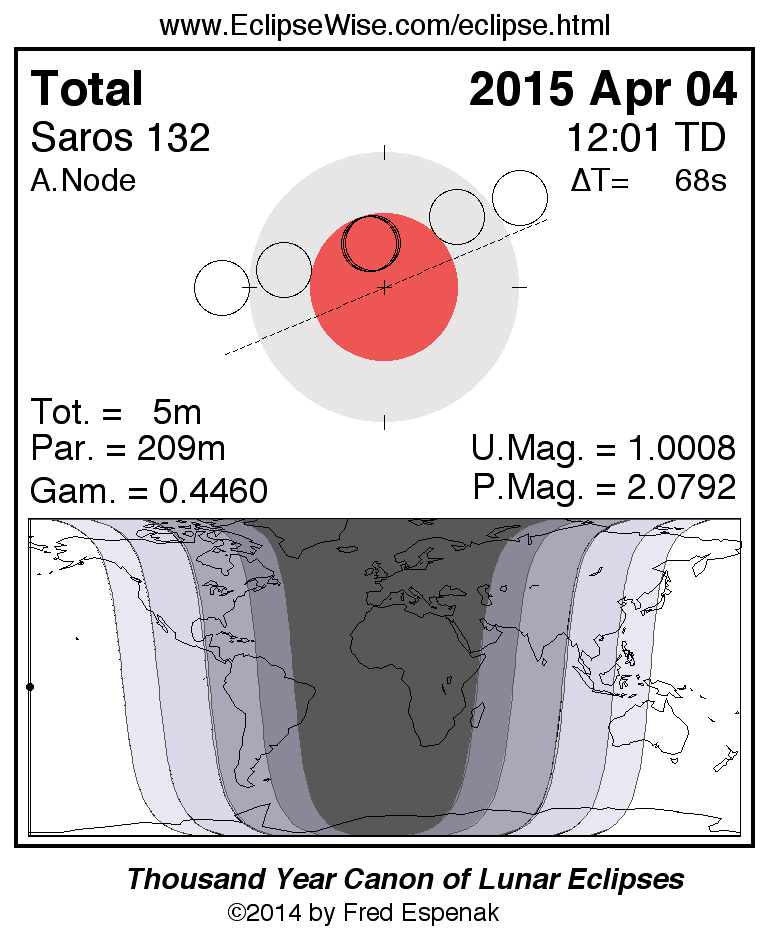
Chart for the total lunar eclipse of April 4, 2015. In Michigan we will see on;y the beginning partial phase in morning twilight. Credit: Fred Espenak, NASA/GSFC
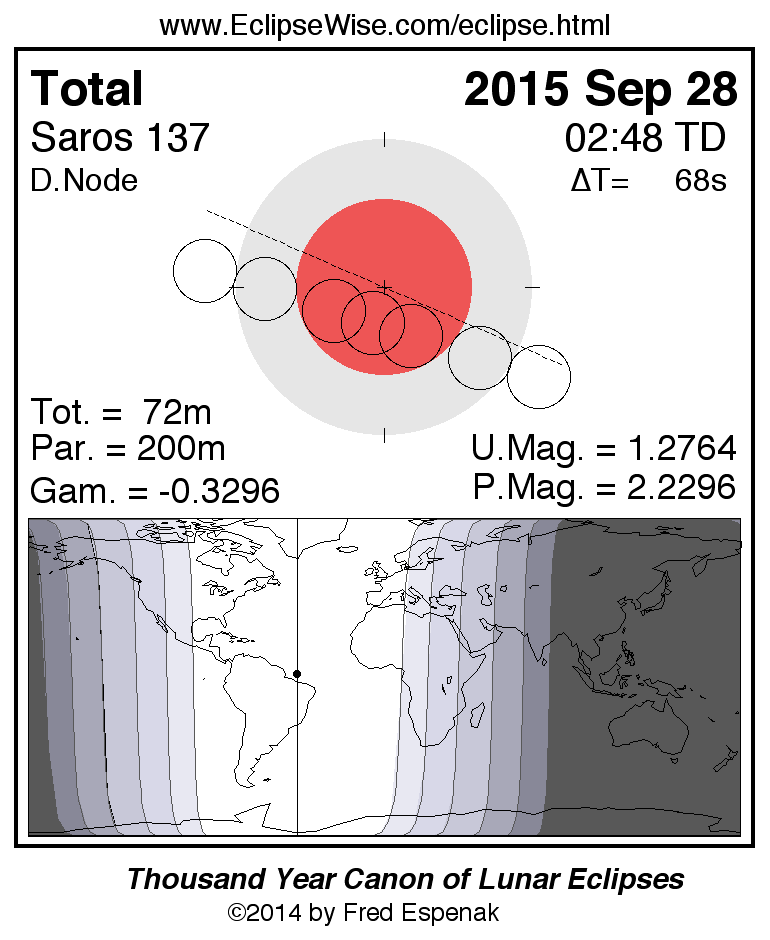
Chart for the total lunar eclipse of September 28, 2015. This is the evening of the 27th, EDT in Michigan. Credit: Fred Espenak, NASA/GSFC.
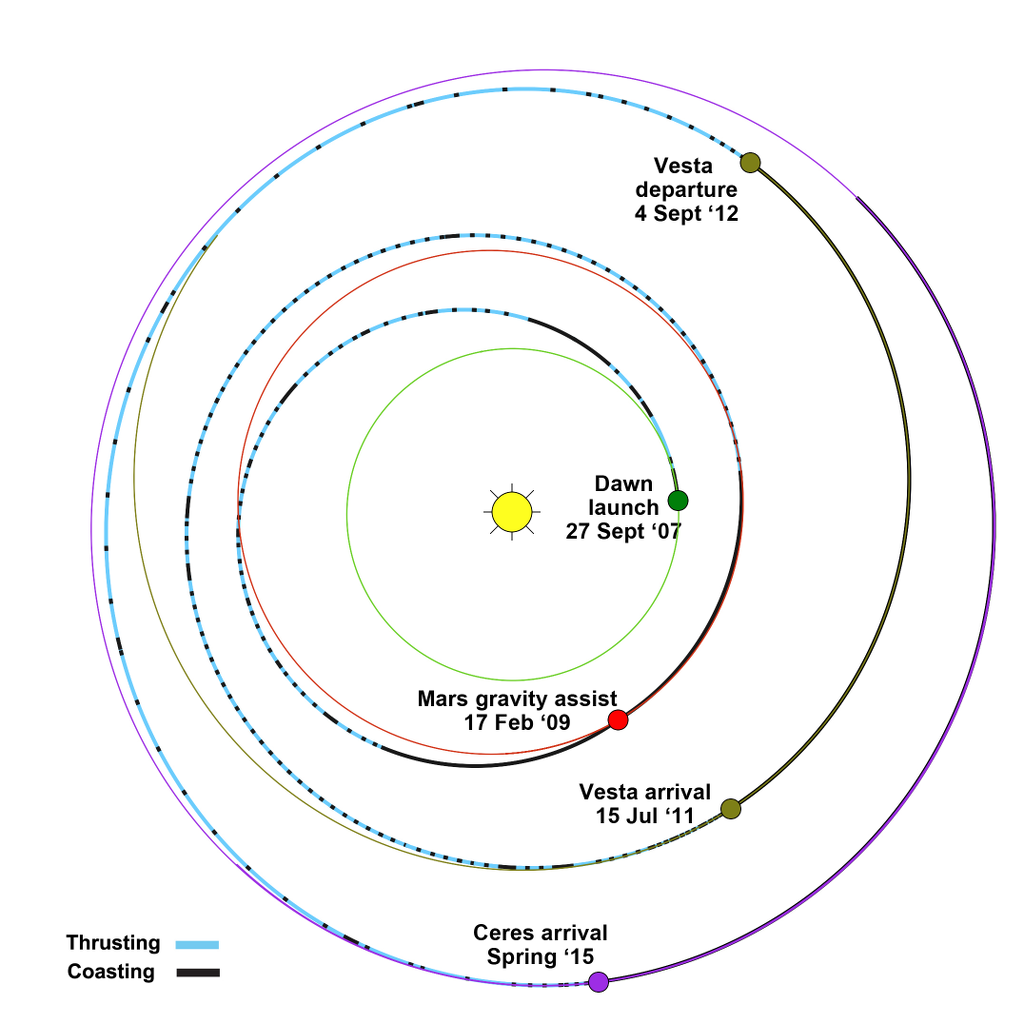
Dawn orbital track past Mars, stopping at Vesta and continuing to Ceres. Credit: NASA/JPL.
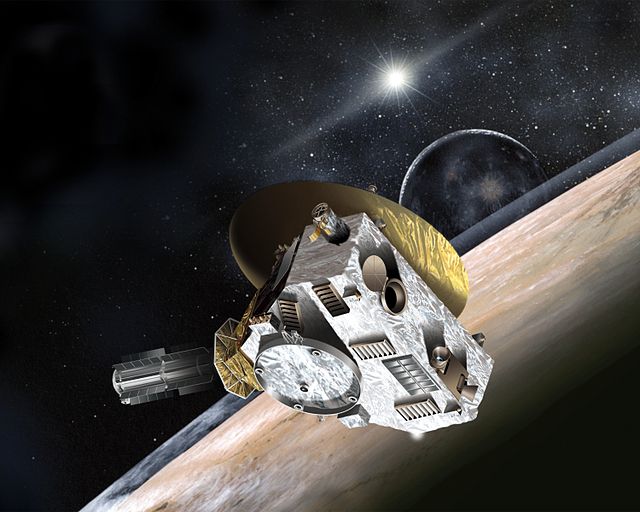
Artist conception of the New Horizons spacecraft at Pluto. Credit: NASA/Johns Hopkins University Applied Physics Laboratory/Southwest Research Institute
12/29/11 – Ephemeris – Astronomical highlights from 2011
Thursday, December 29th. The sun will rise at 8:18. It’ll be up for 8 hours and 51 minutes, setting at 5:10. The moon, 3 days before first quarter, will set at 11:00 this evening.
Let’s look at the best astronomical events of 2011. To my mind Comet Lovejoy’s survival near the sun is one. The announcements from the Kepler satellite keep coming in. Over 2000 planets in other solar systems suspected including a planet 2.4 times the size of the earth in its star’s habitable zone, two planets of another star about the size of the earth and a planet with two suns. A fourth moon of Pluto was discovered, worrying scientists operating the New Horizons spacecraft that will reach Pluto in 3 and a half years that there may be a debris field around the dwarf planet. This year the MESSENGER satellite gained orbit of the innermost planet Mercury, and the Dawn spacecraft began orbiting the asteroid Vesta. Those are just a sample.
* Times, as always are for the Traverse City/Interlochen area of Michigan.
07/18/11 – Ephemeris – Dawn orbits Vesta
Monday, July 18th. Today the sun will be up for 15 hours and 8 minutes, setting at 9:22. The moon, 3 days past full, will rise at 10:49 this evening. Tomorrow the sun will rise at 6:15.
Two days ago the Dawn spacecraft dropped into orbit of the asteroid Vesta. After nearly four years, most of it thrusting its ion engine, Dawn slipped into orbit of this 320 mile diameter asteroid. It will spend the next year photographing, and scanning the chemical composition of this second largest and brightest of the asteroids. It will slowly spiral closer to Vesta for a closer look. Also the change in velocity of the spacecraft as it orbits Vesta will give clues to the asteroid’s internal structure. Also to be closely monitored will be the large crater near Vesta’s south pole. An impact here less than a billion years ago spread debris throughout the inner solar system. Many of the meteorites on the earth have been traced to Vesta.
* Times are for the Traverse City/Interlochen area of Michigan. They may be different for your location.
 Bob Moler's Ephemeris Blog