Archive
Ephemeris: 04/08/2025 – A look at Proxima Centauri
This is Ephemeris for Tuesday, April 8th. Today the Sun will be up for 13 hours and 9 minutes, setting at 8:19, and it will rise tomorrow at 7:08. The Moon, halfway from first quarter to full, will set at 5:57 tomorrow morning.
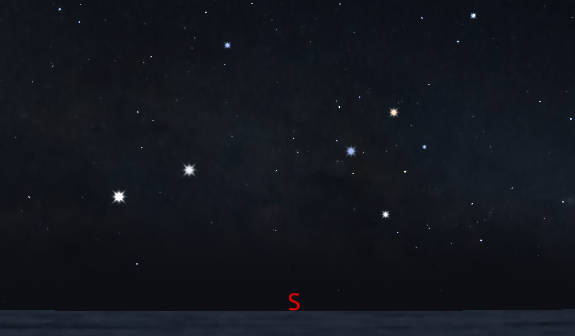
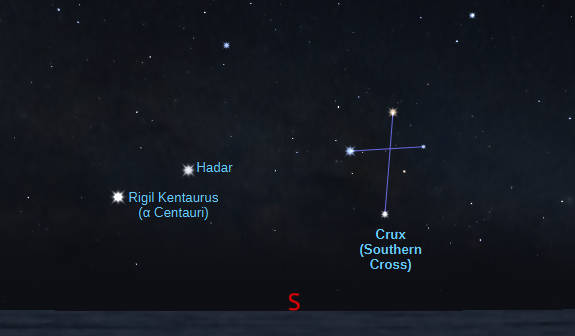
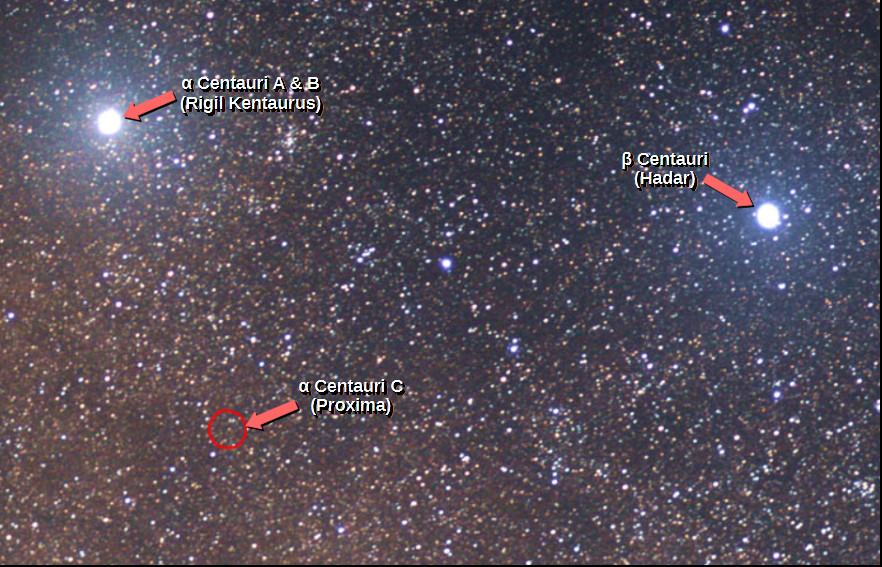
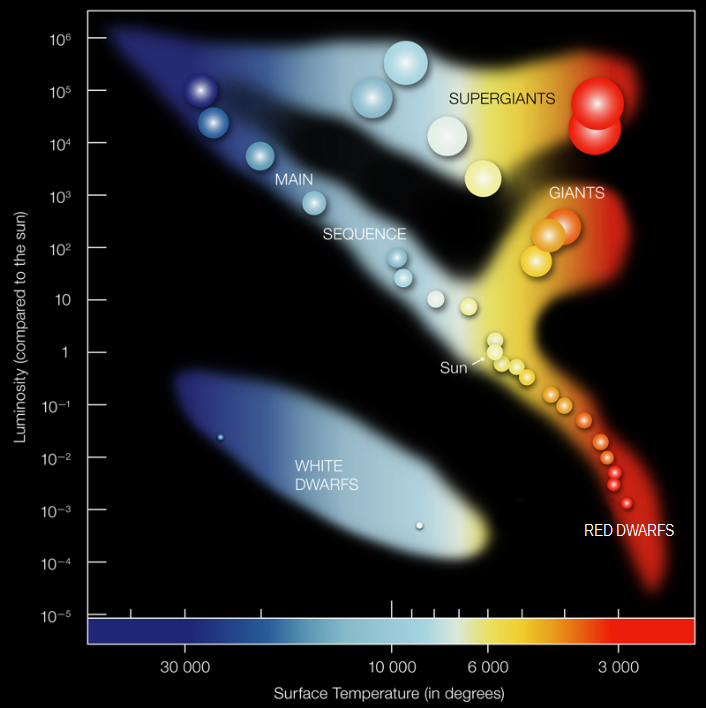
The nearest star to our Sun is a triple star system called Alpha Centauri or Rigil Kentaurus. It is in the skies of the Southern Hemisphere, but visible from the far southern parts of the United States. I’ve seen it from the Florida Keys and also from the latitude of the Big Island of Hawai’i. The closest member of that group this is a star we call Proxima Centauri or just Proxima for short. It is not visible to the naked eye. It is a red dwarf star maybe 12% the Sun’s mass, and at 11th magnitude. Proxima would be tough to spot with a pair of binoculars in a region of the sky which is filled with stars because it’s in the band of the Milky Way. Alpha Centauri, itself, is located near the Southern Cross, the farthest of the two bright stars to the east of it.
The astronomical event times given are for the Traverse City/Interlochen area of Michigan (EDT, UT – 4 hours). Times will be different for other locations.
Addendum
Ephemeris: 04/07/2025 – Does the nearest star to our Sun have a habitable planet?
This is Ephemeris for Monday, April 7th. Today the Sun will be up for 13 hours and 6 minutes, setting at 8:18, and it will rise tomorrow at 7:10. The Moon, 3 days past first quarter, will set at 5:38 tomorrow morning.
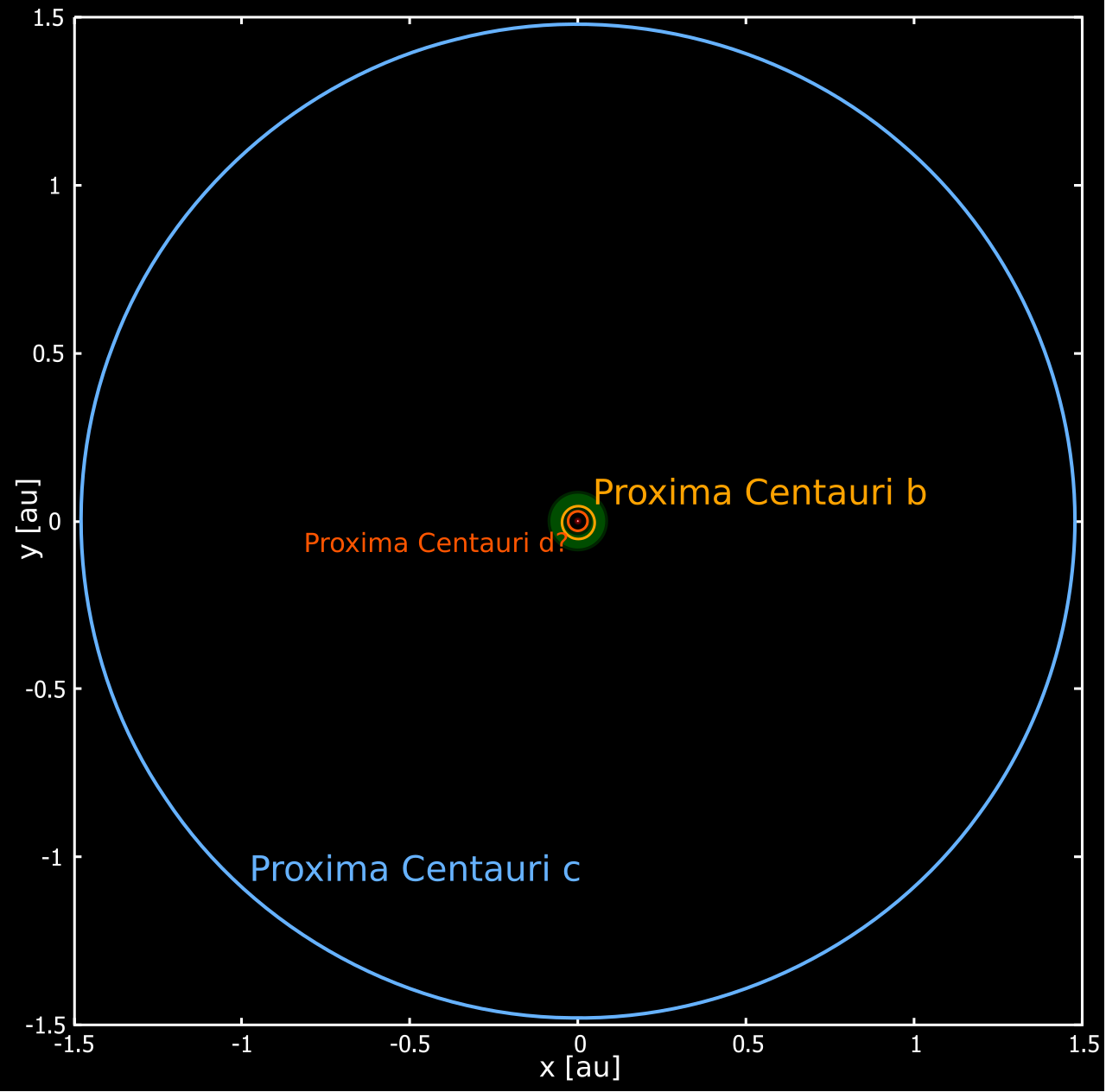
The closest star to our sun is Proxima Centauri which is a small member of the Alpha Centauri star system. It is a red dwarf star and has, we think, at least three planets. They are designated b, c and d. And right now “c” is questionable. At least one of these planets is in the habitable zone of the star, based on the amount of heat this little star gives off. So these planets all quite close to the star, and the problem with Proxima and with most red dwarf stars is that they create a great number of what we call solar flares. When the Earth gets hit by a solar flare from 93 million miles it causes the Northern Lights and causes X-rays to flood the Earth which is mostly shielded by the ozone in our atmosphere. These planets are much closer to their star.
The astronomical event times given are for the Traverse City/Interlochen area of Michigan (EDT, UT – 4 hours). Times will be different for other locations.
Addendum
07/03/2023 – Ephemeris – The Sun is more massive than most stars
This is Bob Moler with Ephemeris for Monday, July 3rd. Today the Sun will be up for 15 hours and 29 minutes, setting at 9:31, and it will rise tomorrow at 6:02. The Moon, at full today, will rise at 10:28 this evening.
The Sun appears to be a singular object in the sky. There is none other. But is that true? No, it’s not. The Sun is a star, middle-aged for a star of its mass. The Sun is bigger than most stars, because most stars are runty red dwarf stars. In fact the closest star to our Sun is a red dwarf, called Proxima Centauri, the third, outlying star in the triple star system whose brightest star is called Rigil Kentaurus, though better known by its 1603 Bayer catalog designation, Alpha Centauri. Proxima is a challenge to spot even with binoculars. It turns out that stars visible to the naked eye are all brighter than the Sun. As far as the range of stellar masses go, the Sun is pretty much in the middle. Rigil Kentaurus itself is 8 percent more massive than the Sun and 50 percent brighter. Both Rigil Kentaurus and Proxima are too far south to see from Michigan.
The astronomical event times given are for the Traverse City/Interlochen area of Michigan (EDT, UT –4 hours). They may be different for your location.
Addendum
08/16/2016 – Ephemeris – Does Proxima Centauri have a planet? Also some information for southern observers about Mercury
Ephemeris for Tuesday, August 16th. The Sun rises at 6:46. It’ll be up for 13 hours and 59 minutes, setting at 8:46. The Moon, 2 days before full, will set at 5:53 tomorrow morning.
Proxima Centauri is the closest star to our solar system. It is a red dwarf star, and a distant third member of the Alpha Centauri star system. Recently the German weekly Der Spiegel announced that astronomers at the La Silla Observatory in Chile have detected a possible Earth-like planet at a distance that water may be liquid on its surface around this tiny star. Other than this one leak, no one is talking, and the European Southern Observatory is mum on the subject. There may be some kind of announcement at the end of the month. If true, this means that the closest earth-like planet orbits the closest star, only four and a quarter light years away. That’s nearly 25 trillion miles, and hundreds of years travel time with our current technology.
Times are for the Traverse City/Interlochen area of Michigan. They may be different for your location.
Addendum
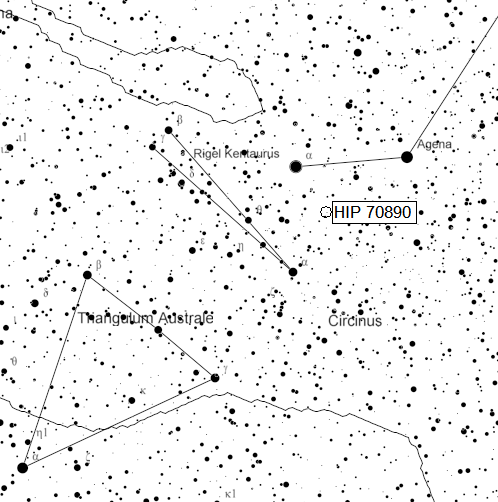
Chart showing the location of Proxima Centauri, labeled here HIP 70890. Alpha Centauri is labeled Rigel Kentaurus. Alpha Centauri is actually a catalog name in the style of Johann Bayer’s 1603 star atlas. Note also the alpha (α) Greek letter next to the star. Created using Cartes du Ciel (Sky Charts).
Note also the star labeled Agena. That is the more distant Beta (β) Centauri also known as Hadar.
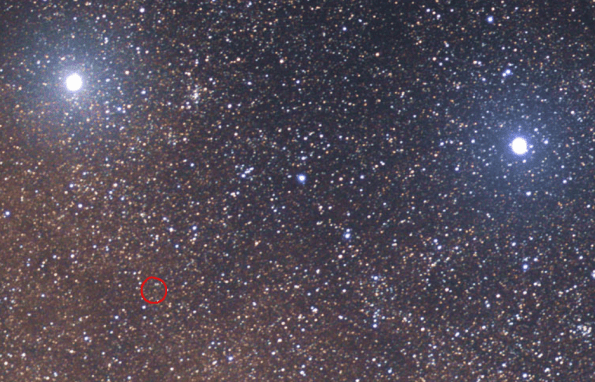
A section of a photograph of part of the field of view of the chart above. Credit: Wikipedia user Skatebiker.
Extra
For our southern observers: Today Mercury reaches its greatest eastern elongation of 27 degrees. So it’s visible in the west with Venus and Jupiter.
 Bob Moler's Ephemeris Blog