Archive
06/02/2023 – Ephemeris – A South Pole adventure and a comet collision presentation – Tonight!
This is Bob Moler with Ephemeris for Friday, June 2nd. Today the Sun will be up for 15 hours and 22 minutes, setting at 9:22, and it will rise tomorrow at 5:59. The Moon, 1 day before full, will set at 5:14 tomorrow morning.
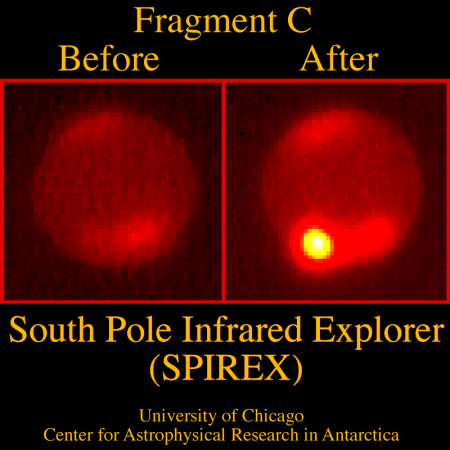
An Antarctic Odyssey: Winter-Over at South Pole Station will be the presentation by John W. Briggs, via Zoom, at tonight’s meeting of the Grand Traverse Astronomical Society at Northwestern Michigan College’s Rogers Observatory at 9 pm. John was a team member building a 24-inch infrared telescope and related experiments that were set up at the South Pole in time for him and colleagues to observe the July 1994, explosive crash of fragmented comet Shoemaker-Levy 9 into the planet Jupiter. There are two ways to attend: In person at the observatory, south of Traverse City on Birmley Road, or via Zoom with a link provided by the society’s website gtastro.org just prior to the meeting.
The astronomical event times given are for the Traverse City/Interlochen area of Michigan (EDT, UT –4 hours). They may be different for your location.
Addendum
About the Program
An Antarctic Odyssey: Winter-Over at South Pole Station
A presentation via Zoom by John W. Briggs
Abstract:
In a lavishly illustrated presentation, John W. Briggs of New Mexico will describe his year-long experience living at the Geographic South Pole while working for the Center for Astrophysical Research in Antarctica. In preparation for this at Yerkes Observatory of the University of Chicago, John was a team member building a 24-inch infrared telescope and related experiments that were set up at the Pole in time for him and colleagues to observe the July 1994, explosive crash of fragmented comet Shoemaker-Levy 9 into the planet Jupiter.
John weathered the “winter-over” with 26 other members of the U.S. Antarctic Program in an experience that many believe approximates what life will be like someday at a lunar or Martian outpost. Once begun, South Pole winter-over is an irreversible commitment, since the Program’s special LC-130 ski planes can’t land in the winter temperatures — in 1994, sometimes as low as 107 degrees F. below zero (with windchill, as low as -180 degrees). John will delight the audience with his perspective on the total South Pole experience — the strange natural environment, the odd social atmosphere, and the challenging, ongoing science.
04/22/2016 – Ephemeris – Hitting on Jupiter
Ephemeris for Earth Day, Friday, April 22nd. The Sun rises at 6:45. It’ll be up for 13 hours and 51 minutes, setting at 8:37. The Moon, at full today, will rise at 9:08 this evening.
The first time anyone had spotted anything hitting Jupiter was in 1994, when over 20 pieces of Comet Shoemaker-Levy 9 hit the planet over an exciting week in July. Jupiter gets hit maybe once a year by a small asteroid making a flash or a scar visible from the Earth. Except for Shoemaker-Levy 9, all the rest of the impacts have been discovered by amateur astronomers who create videos of Jupiter through their modest, by professional standards, telescopes. Generally the reason for the videos is to stack the images to produce super detailed images of the planet, like my friend Scott Anttila, whose images I occasional post with these program transcripts on my blog bobmoler.wordpress.com. Amateurs have even discovered exoplanets.
Times are for the Traverse City/Interlochen area of Michigan. They may be different for your location.
Addendum
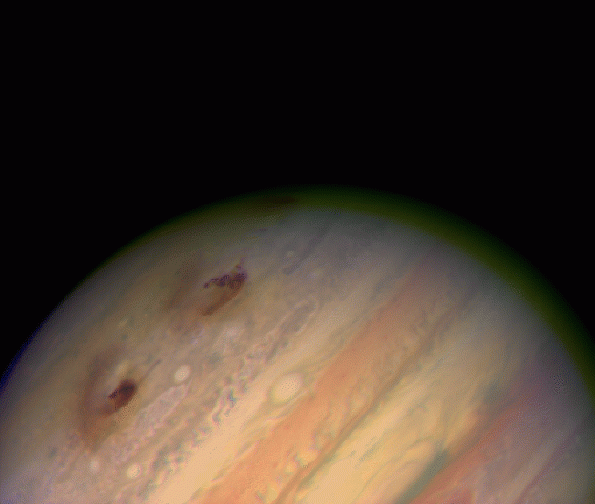
Two of the impact sites of the over 20 bits of Comet Shoemaker-Levy 9 photographed on July 18, 1994. Credit NASA/ESA Hubble Space Telescope.
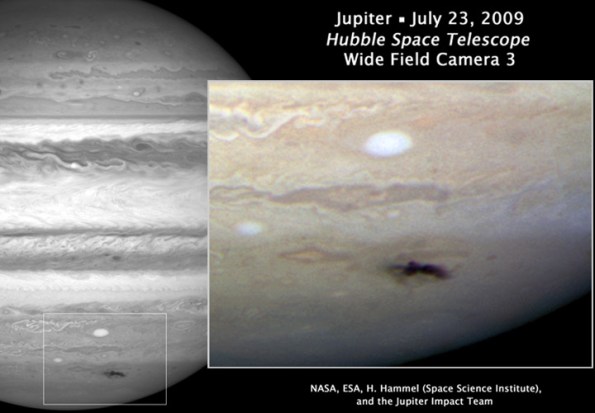
Blemish from an impact discovered by amateur astronomer Anthony Wesley on July 17, 2009. Credit NASA/ESA Hubble Space Telescope.
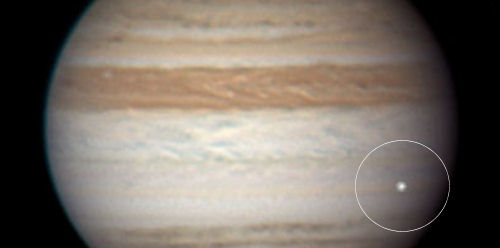
Impact June 3, 2010 photographed by Anthony Wesley. Credit Anthony Wesley.
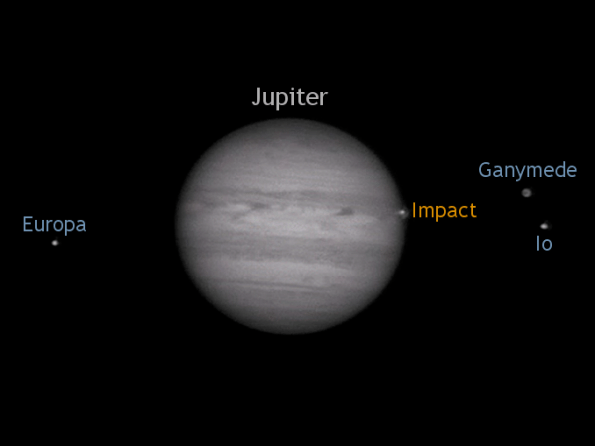
Processed image by John McKeon of the impact of March 17, 2017. The impact was first noticed by Gerrit Kernbauer. Both were amateur astronomers.
Universe Today and more information and videos of the most recent event.
11/20/2012 – Ephemeris – Tides from Sandy to Galaxies
Ephemeris for Tuesday, November 20th. The sun will rise at 7:46. It’ll be up for 9 hours and 23 minutes, setting at 5:09. The moon, at first quarter today, will set at 12:50 tomorrow morning.
It was three quarters of the moon’s revolution ago or three weeks that the moon was full and adding to the storm surge of Hurricane Sandy. When the moon is full or new the moon’s greater tidal force adds to the sun’s giving us the highest tides called spring tides. Tides are caused by the difference in the gravitational pull on a body from on side to the other when two bodies are close. That’s why the moon exerts a greater tidal force than the sun, even thought its very much less massive. Tides just don’t occur in earth’s oceans. Jupiter’s tidal force tore apart Comet Shoemaker-Levy 9 two years before its more than 20 pieces plunged into Jupiter’s atmosphere in 1994. Colliding galaxies exhibit tidal tails.
Times are for the Traverse City/Interlochen area of Michigan. They may be different for your location.
Addendum
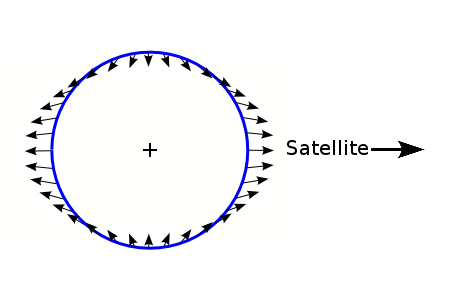
Tidal forces on a planet, the earth for instance by the moon. Source – Wikimedia.
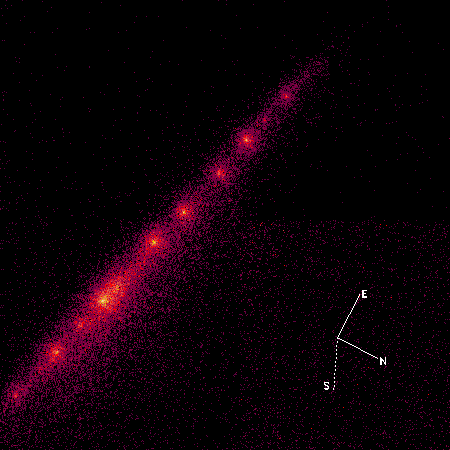
Comet Shoemaker-Levy 9 after a too close approach to Jupiter. The comet was torn into a “String of Pearls” by Jupiter,s immense tidal pull. They came back, crashing into Jupiter in July of 1994. Courtesy NASA Hubble Space Telescope.
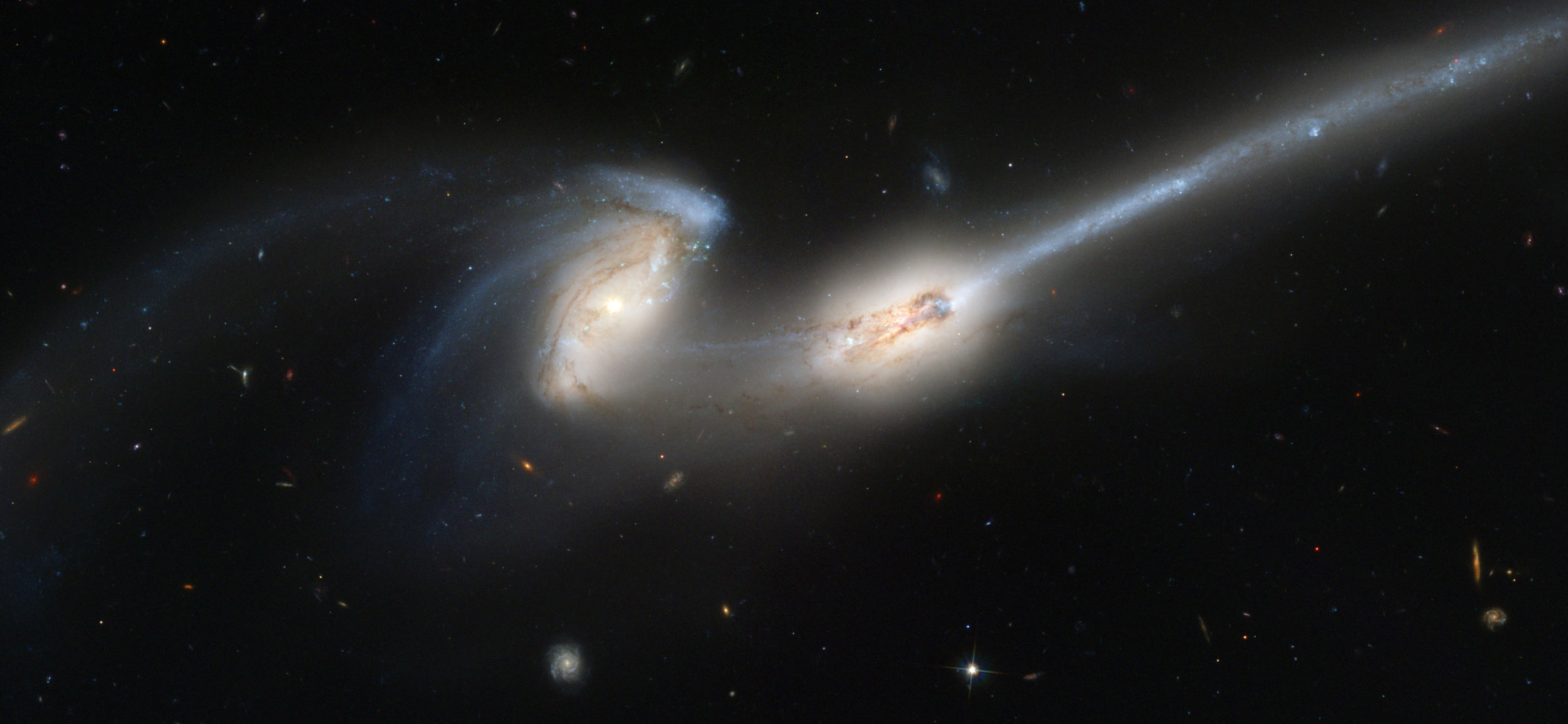
Two galaxies colliding, throwing off tidal tails as they close in. NGC4686 photo courtesy NASA and the Hubble Space Telescope.
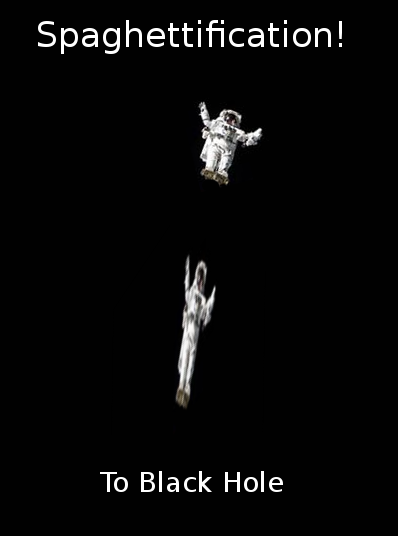
Don’t do this at home! Spaghettification by black hole. The intense gravitational gradient near a black hole will stretch a body, be it asteroid or astronaut as they approach a black hole.
 Bob Moler's Ephemeris Blog