Archive
Ephemeris: 01/29/2026 – After Artemis 2 comes Artemis 3 and the landing
This is Ephemeris for Thursday, January 29th. Today the Sun will be up for 9 hours and 42 minutes, setting at 5:47, and it will rise tomorrow at 8:04. The Moon, 3 days before full, will set at 6:44 tomorrow morning.
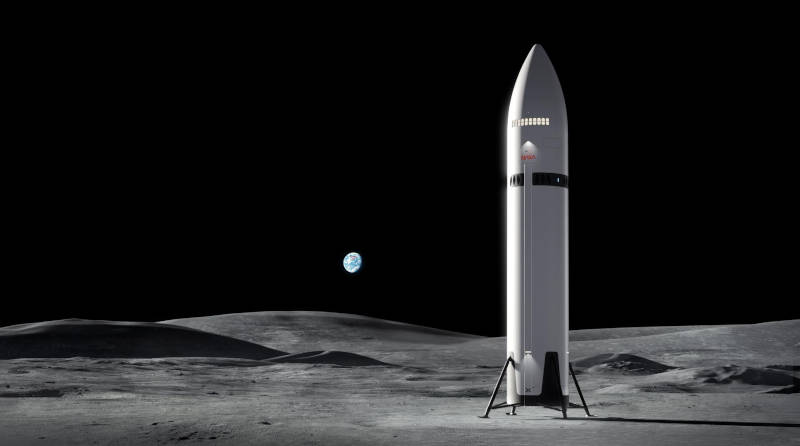
If Artemis 2 is successful in the late winter and early spring of this year, the next mission will be Artemis 3, a mission to land near the South Pole of the Moon. In order for that to happen a lunar Lander will have to be ready and tested. The Starship HLS or human landing system is currently being built by SpaceX. It’s delivery to the Moon, via Superheavy, Starship’s big booster, will require multiple launches and refueling in orbit, which has yet to be tested. There has been some question as to how many refueling trips will be necessary. NASA and SpaceX seem to differ. However, an uncrewed successful landing will have to be made to prove out the system before the Artemis 3 landing will be attempted.
The astronomical event times given in this blog are for the Traverse City/Interlochen area of Michigan (Lat 44.7° N, Long 85.7° W; EST, UT – 5 hours) unless stated otherwise. Times will be different for other locations.
Addendum
Ephemeris: 11/14/2024 – SpaceX to deorbit the International Space Station
This is Ephemeris for Thursday, November 14th. Today the Sun will be up for 9 hours and 35 minutes, setting at 5:15, and it will rise tomorrow at 7:40. The Moon, 1 day before full, will set at 7:28 tomorrow morning.
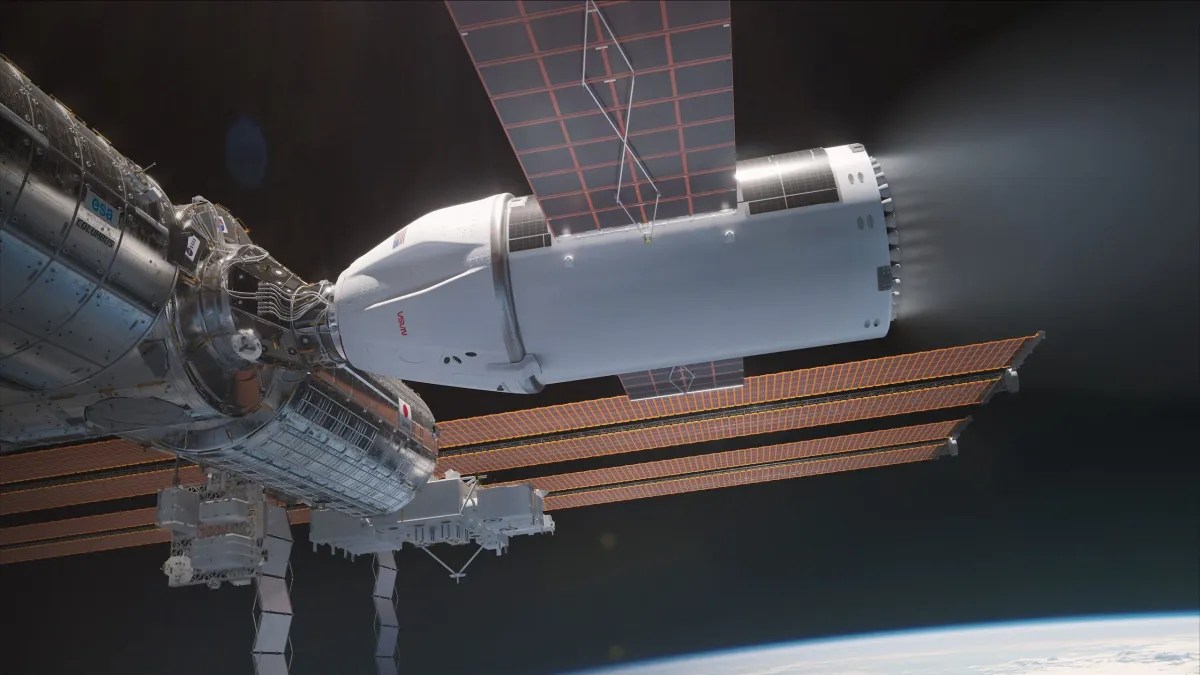
SpaceX has received a contract from NASA to deorbit the International Space Station around the year 2030. The contract is for a little bit less than a billion dollars. SpaceX will develop a special Dragon capsule with enough fuel to deorbit the space station. The idea is to drop the space station’s orbit over a period of months and guided in its final journey to a spot in the South Pacific Ocean called Point Nemo, which is the spot between New Zealand and Chile near longitude 120° W and latitude 50° South. Point Nemo is named after the captain of the fictional submarine Nautilus from the Jules Verne novel 20,000 Leagues Under the Sea. Point Nemo is the farthest point in the South Pacific Ocean from any landmass: island or continent.
The astronomical event times given are for the Traverse City/Interlochen area of Michigan (EST, UT – 5 hours). Times will be different for other locations.
Addendum
Ephemeris: 08/27/2024 – Space news
Sorry, about posting this late. I was working on our astronomical society article and newsletter. The article will be posted as an Ephemeris Extra in a couple of weeks. For a preview see my August 22nd post.
This is Ephemeris for Tuesday, August 27th. Today the Sun will be up for 13 hours and 27 minutes, setting at 8:27, and it will rise tomorrow at 7:01. The Moon, 1 day past last quarter, will rise at 12:55 tomorrow morning.
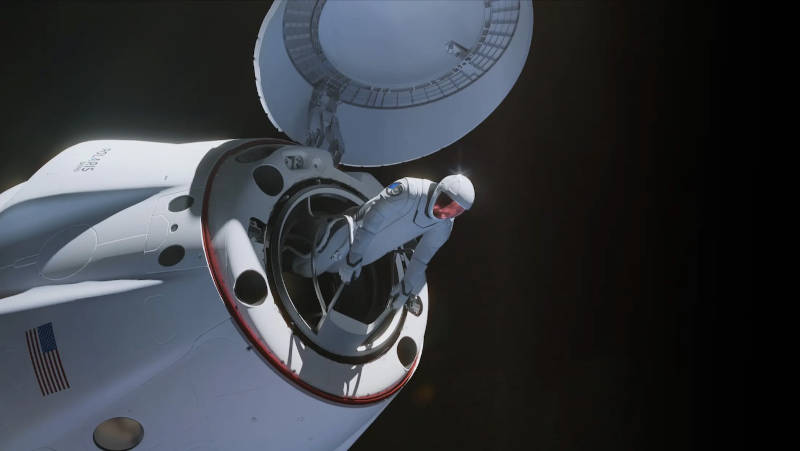
Let’s take a look at some space news. Today is the first day of the launch window for the SpaceX commercial mission Polaris Dawn where 4 private astronauts will ride a SpaceX Dragon capsule to the highest point astronauts have been since the Apollo days, some 1400 kilometers or 870 miles above the Earth. They will also perform the first commercial EVA or space walk. Two of the astronauts will take turns poking their body out the hatch capsule for a short period of time. They will not be free floating, but they will be connected to the capsule by foot or hand restraints.
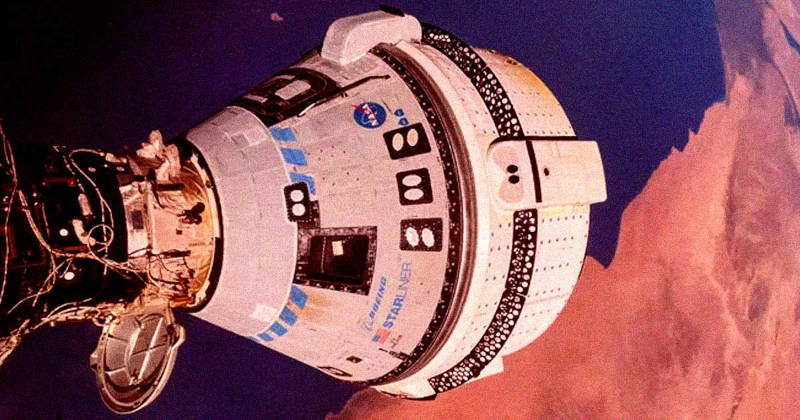
In other news NASA has decided to bring Suni Williams and Butch Wilmore, the Boeing Starliner test astronauts, back to Earth on a Dragon capsule in February due to safety concerns.
The astronomical event times given are for the Traverse City/Interlochen area of Michigan (EDT, UT–4 hours). Times will be different for other locations.
Addendum
Ephemeris: 07/19/2024 – SpaceX’s Falcon 9 has the first failure in many years
This is Ephemeris for Friday, July 19th. Today the Sun will be up for 15 hours and 6 minutes, setting at 9:21, and it will rise tomorrow at 6:16. The Moon, 2 days before full, will set at 4:45 tomorrow morning.
A week ago yesterday a SpaceX Falcon 9 rocket was unable to put a batch of 20 Starlink satellites into the proper orbit due to a failure in the second stage. The problem seems to be an oxygen leak that prevented a second burn of the engine to circularize the orbit leaving the orbit perigee or low point to be 135 kilometers high, which though in orbit, that orbit would soon decay, having the satellites burn up on reentry after a few orbits. The Falcon 9 fleet has been grounded pending an investigation. However, there are two immediate planned flights of the Falcon 9 utilizing the Crew Dragon, the first is at the end of July which is a private mission called Polaris Dawn and in August the Crew 9 transfer to the International Space Station. It remains to be seen how long those missions will be postponed.
The astronomical event times given are for the Traverse City/Interlochen area of Michigan (EDT, UT–4 hours). They may be different for your location.
Addendum
Ephemeris: 12/28/2023 – Next year in rockets and space
This is Ephemeris for Thursday, December 28th. Today the Sun will be up for 8 hours and 49 minutes, setting at 5:09, and it will rise tomorrow at 8:19. The Moon, 2 days past full, will rise at 6:35 this evening.
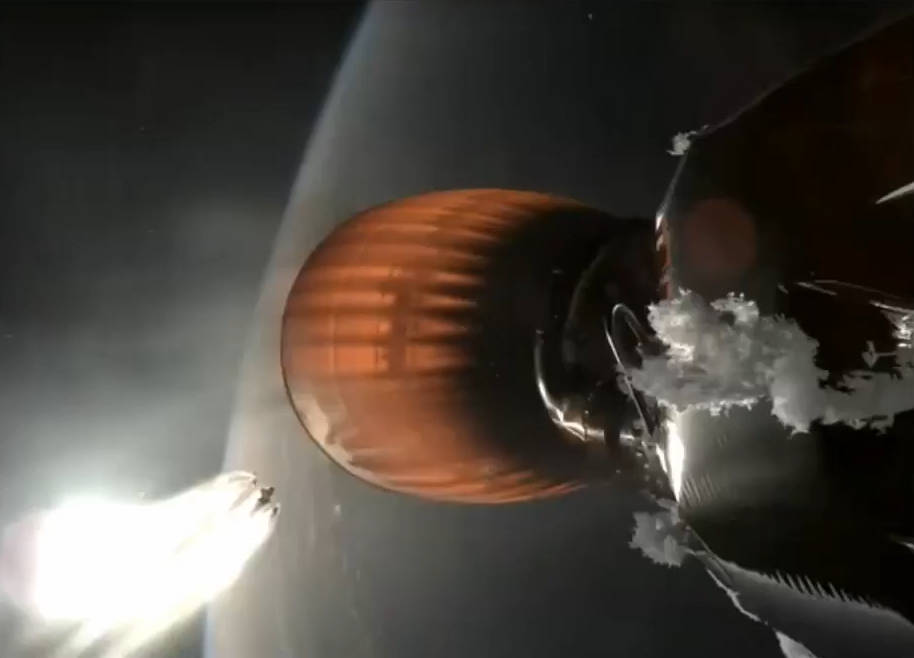
Let’s take a look at 2024 in space exploration. The Artemis 2 mission of sending a crew of four around the Moon and back will take place no earlier than November, so it could be pushed back into 2025 if there are any difficulties. SpaceX early next year will attempt the third flight of their gigantic Starship rocket. Hopefully this time it will reach near orbit. Blue Origin, sort of in competition to SpaceX, but have never put anything into orbit yet, is expected to launch their New Glenn rocket, which uses 7 BE4 engines next year. Also United Launch Alliance will be expected to launch their new Vulcan Centaur rocket, perhaps as early as January next year. It uses two Blue Origin BE4 engines as its main engines plus solid rocket boosters.
The astronomical event times given are for the Traverse City/Interlochen area of Michigan (EST, UT –5 hours). They may be different for your location.
05/02/2023 – Ephemeris – SpaceX finally launched its Super Heavy/Starship rocket
This is Ephemeris for Tuesday, May 2nd. Today the Sun will be up for 14 hours and 17 minutes, setting at 8:48, and it will rise tomorrow at 6:30. The Moon, 3 days before full, will set at 5:37 tomorrow morning.
On April 20th SpaceX finally launched their Starship atop the Super Heavy, which is the booster for the Starship for an attempted orbital test flight, from Star Base at Boca Chica, Texas. As we all know, it did not reach orbit. It made it about 36 kilometers up or about 22 miles before it lost control and had to be destroyed, however what it did to the launchpad and its surroundings is rather disheartening Elon Musk thought he could get away with not having a flame diverter underneath the launch mount. The Super heavy, which is undoubtedly the most powerful rocket in the world, dug a hole underneath the launch mount and threw big chunks of concrete all over the place damaging their launch infrastructure, and raining debris on a neighboring town. SpaceX will have to make lots of changes before they can launch again.
The astronomical event times given are for the Traverse City/Interlochen area of Michigan (EDT, UT –4 hours). They may be different for your location.
Addendum

Super Heavy and Starship, beginning to climb amid clouds of dust and debris. Screen grab from Sky News video.
09/13/2022 – Ephemeris – SpaceX Crew-5 flight to the ISS will be commanded by first Native American female astronaut
This is Ephemeris for Tuesday, September 13th. Today the Sun will be up for 12 hours and 37 minutes, setting at 7:57, and it will rise tomorrow at 7:20. The Moon, 3 days past full, will rise at 9:38 this evening.
On or around October 3rd a SpaceX Crew Dragon capsule will be launched to the International Space Station with an international crew of four with the first female Native American astronaut Nicole Mann as commander, pilot Josh Cassada, both NASA astronauts, Japanese astronaut Koichi Wakata, and Russian cosmonaut Anna Kikina. Nicole Mann, a member of the Round Valley Indian Tribes of northern California, is also the first female commander of a Commercial Crew spacecraft. She was originally assigned to the Boeing CST-100 Starliner, but was transferred to the SpaceX Dragon due to the prolonged problems with the former vehicle. Crew 5 will be a part of Expeditions 67 and 68 on the International Space Station.
The astronomical event times given are for the Traverse City/Interlochen area of Michigan (EDT, UT – 4 hours). They may be different for your location.
Addendum
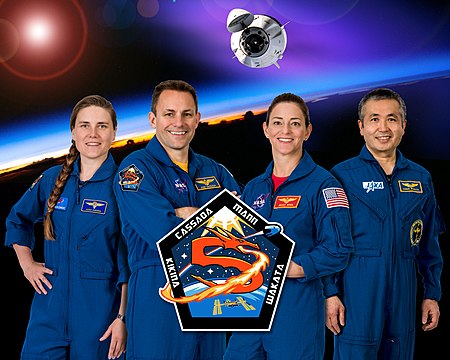
SpaceX Crew-5 Official Crew Portrait – Left to right: Anna Kikina, Josh Cassada, Nicole Mann and Koichi Wakata.
08/30/2022 – Ephemeris – The Space Launch System (SLS) will evolve over time
This is Ephemeris for Tuesday, August 30th. Today the Sun will be up for 13 hours and 20 minutes, setting at 8:22, and it will rise tomorrow at 7:04. The Moon, 3 days past new, will set at 10:02 this evening.
The Space Launch System or SLS rocket that’s used for Artemis I is not the final configuration of the rocket to be flown. For Artemis I and II, which will take astronauts around the Moon and back, the SLS is in its Block 1 configuration with an Interim Cryogenic Propulsion Stage, or ICPS as the upper stage. After the Moon landing by Artemis III, the upper stage will be replaced by the Exploration Upper Stage with nearly four times the thrust of the other. That’s Block 1B. After Artemis VIII, or the eighth launch of the SLS, NASA will have run out of solid booster segments left over from the Shuttle program and will have them replaced with more powerful boosters, making it Block 2. With Block 1 the ICPS needs the core stage to get into a highly elliptical orbit, to send the Orion capsule to the Moon. The ICPS cannot do it by itself.
The astronomical event times given are for the Traverse City/Interlochen area of Michigan (EDT, UT – 4 hours). They may be different for your location.
Addendum
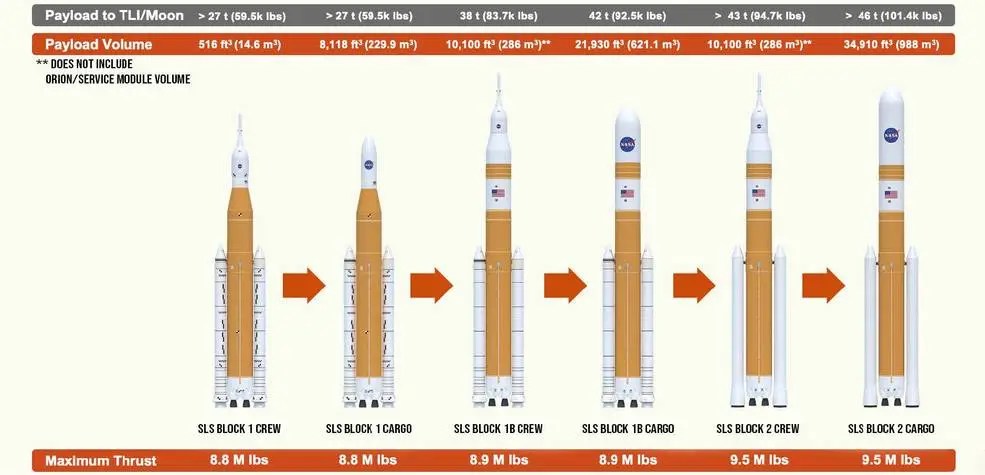
Diagram comparing SLS variants. The chart also shows the cargo variant, one of which was supposed to launch the Europa Clipper mission to Jupiter’s icy moon Europa. That launch has since been reassigned to a SpaceX Falcon Heavy rocket, due to SLS delays. The Falcon Heavy is not as powerful as the SLS, so the Europa Clipper spacecraft will take longer to reach Jupiter’s vicinity (6 vs. 3 years), but will save $2 billion in launch costs. Click on the image to enlarge it. Credit: NASA.
04/11/2022 – Ephemeris – SpaceX Transporter 4’s weird launch trajectory
This is Bob Moler with Ephemeris for Monday, April 11th. Today the Sun will be up for 13 hours and 17 minutes, setting at 8:22, and it will rise tomorrow at 7:03. The Moon, 2 days past first quarter, will set at 5:37 tomorrow morning.
On April 1st SpaceX launched their Transporter 4 mission taking forty small satellites into sun synchronous orbits. Sun synchronous orbits are cool The plane of the orbit precesses 360 degrees over the period of a year so as it orbits it flies over the same part of the Earth at the same time of the day, so the sun angle on the ground is the same. This is great to see changes on the ground over time. To do that, the orbit has to have an inclination of 97 degrees. Which is hard to do launching from Cape Canaveral, the rocket must be sent toward the south-southwest, but must not cross southern Florida. So the rocket launches to the southeast and bends its path southward, keeping offshore. The second stage completes the turn to achieve the 97 degree inclination.
The astronomical event times given are for the Traverse City/Interlochen area of Michigan (EDT, UT – 4 hours). They may be different for your location.
Addendum
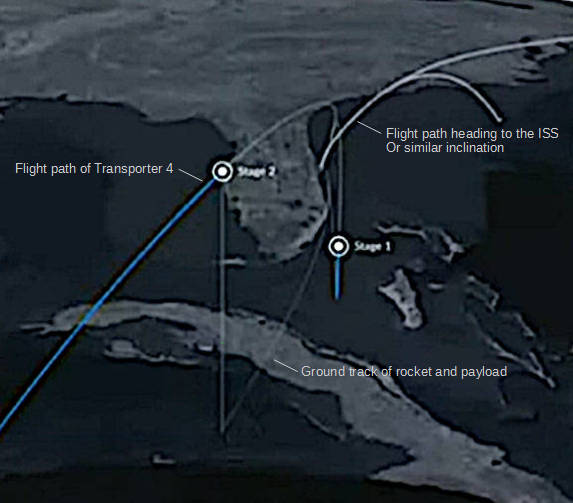
Screenshot of the animation from SpaceX launch webcast of Transporter 4. Launches of polar orbiting satellites are generally made from Vandenberg Space Force Base in California, which have a clear shot to the south and south-southeast. Curving the launch trajectory like this exacts a penalty in the amount of payload mass that can be put into orbit. Credit: SpaceX.
04/05/2022 – Ephemeris – The first Axiom Space mission to the ISS amid a busy April
This is Bob Moler with Ephemeris for Tuesday, April 5th. Today the Sun will be up for 12 hours and 59 minutes, setting at 8:15, and it will rise tomorrow at 7:14. The Moon, halfway from new to first quarter, will set at 1:15 tomorrow morning.
One of the commercial entities working to launch their own space station is Axiom Space, founded in 2016. The first Axiom mission is Ax-1, an 8-day mission to the International Space Station that, as of when I am recording this last Sunday night, is scheduled for tomorrow on a SpaceX Falcon 9/Crew Dragon from launch pad 39A at Cape Canaveral. The Artemis-1 wet dress rehearsal was halted earlier Sunday due to a pressurization problem with the mobile launch tower. That’s on pad 39B, a bit over a mile and a half away. I’m assuming that Artemis-1 has priority over the Axiom mission. Plus, there’s the SpaceX Crew-5 launch later this month to the space station, which also has president. It could be an interesting time at the Cape.
The astronomical event times given are for the Traverse City/Interlochen area of Michigan (EDT, UT – 4 hours). They may be different for your location.
Addendum
April 4, 2022: The SpaceX Axiom-1 launch is now scheduled for no earlier than Friday, April 8, for an 8-day mission to the International Space Station (ISS). The SpaceX Crew-4 launch had previously been pushed back to April 20. The Crew-3 return from the ISS was to be 5 days later.
The Artemis-1 Wet Dress Rehearsal was scrubbed April 4th with a malfunctioning vent valve. A successful test will have fuel and oxidizer loaded and all prelaunch functions completed, and counted down to a bit over 9 seconds to launch.
Axiom Space: space station plan
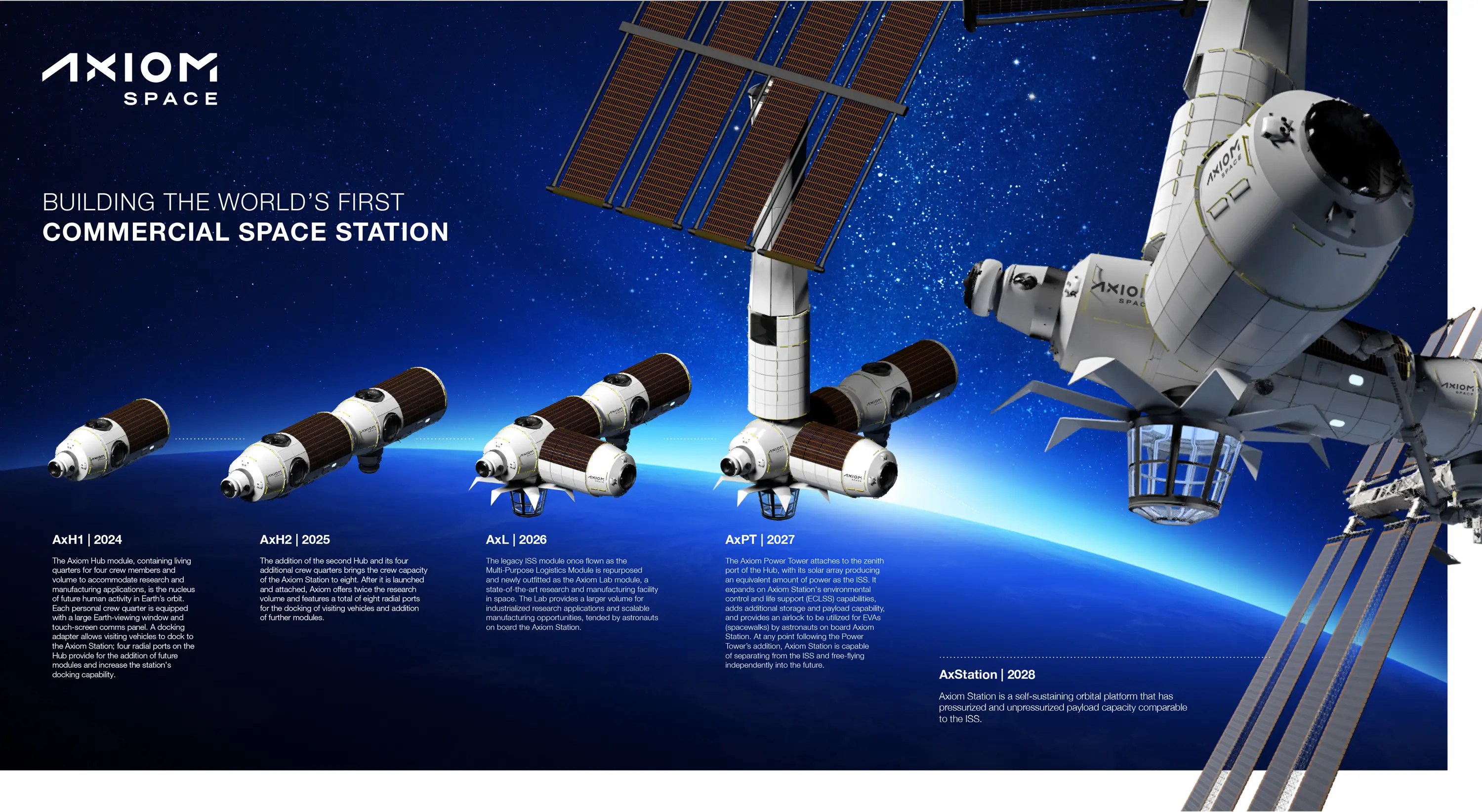
The planned evolution of the Axiom commercial space station. It will start being a module attached to the ISS starting in 2024, according to the current plan. Various modules will be attached. After the power tower containing solar panels is attached, it can be detached from the ISS to fly free. Click on the image to enlarge. Credit: Axiom Space.
 Bob Moler's Ephemeris Blog