Archive
05/09/2023 – Ephemeris – The planet Uranus’ rings
This is Ephemeris for Tuesday, May 9th. Today the Sun will be up for 14 hours and 35 minutes, setting at 8:57, and it will rise tomorrow at 6:20. The Moon, 3 days before last quarter, will rise at 1:56 tomorrow morning.
Today, the planet Uranus is in conjunction with the Sun. I don’t talk about Uranus that much, because it can’t be spotted in the sky with the naked eye. However, the James Webb Space Telescope observed it, and gave our clearest view of the planet since Voyager 2 flew past it in January 1986. Uranus has a system of rings, which were discovered in March 1977. Though not visible, they blocked the light of a star. Astronomers at the time were trying to get a more accurate diameter of the planet by timing the disappearance of a star behind the planet. Extra short dips in brightness before and after the main occultation revealed the existence of the rings. Uranus also has an extreme axial tilt of 98 degrees.
The astronomical event times given are for the Traverse City/Interlochen area of Michigan (EDT, UT –4 hours). They may be different for your location.
Addendum
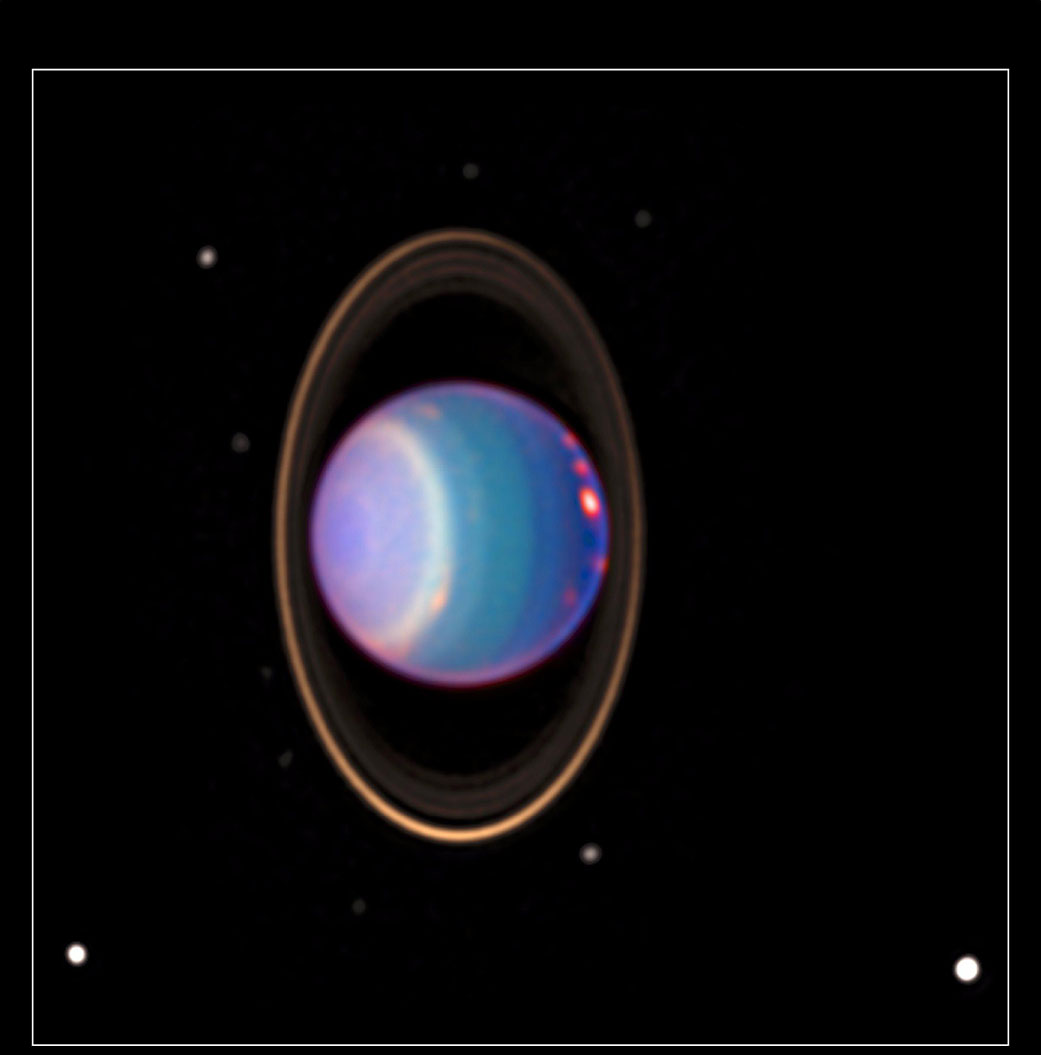
Uranus and its rings as photographed by the Hubble Space Telescope. Credit NASA/ESA.
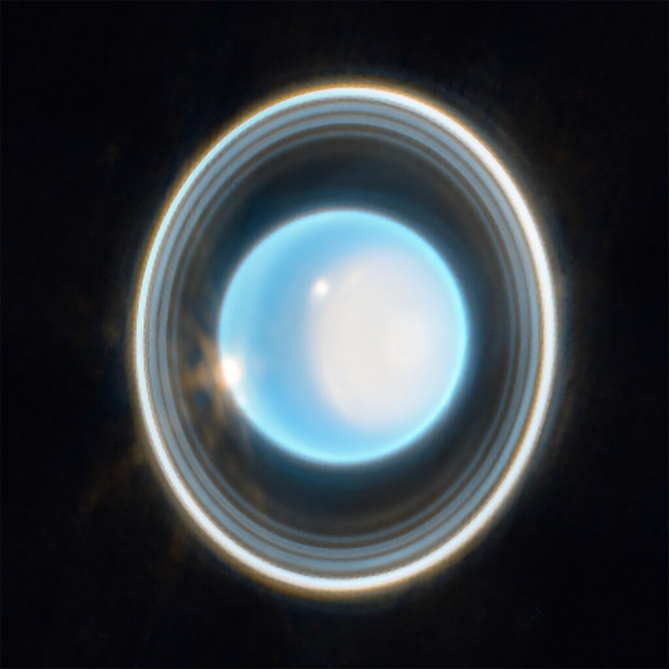
Uranus and its rings as photographed by the James Webb Space Telescope. The rings are much brighter in the infrared. Credit: NASA\CSA\ESA.
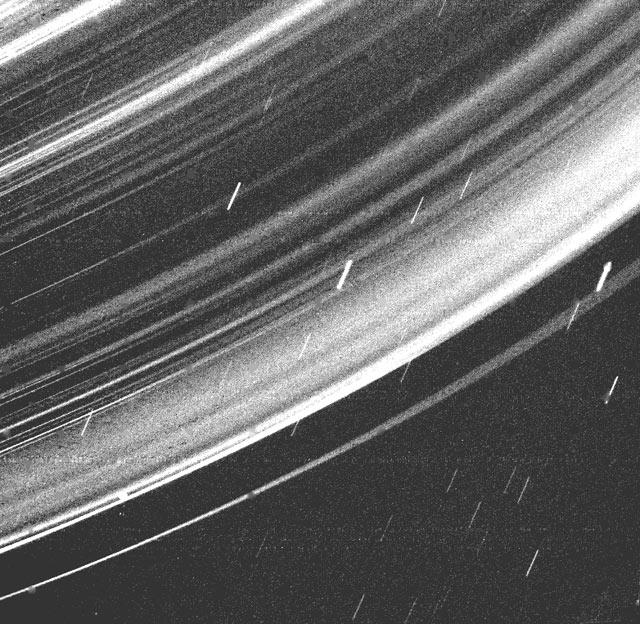
Closeup of the Uranian rings from Voyager 2. The stars are trailed due to the spacecraft turning to focus on the rings as it moves through the Uranian system in this time exposure. Credit NASA/JPL.
09/05/2017 – Ephemeris – Neptune’s at opposition from the Sun today
Ephemeris for Tuesday, September 5th. The Sun will rise at 7:09. It’ll be up for 13 hours and 1 minute, setting at 8:11. The Moon, 1 day before full, will set at 7:22 tomorrow morning.
The sea green eighth planet from the Sun is named for the Roman god of the sea, Neptune. Today it is at opposition from the Sun, meaning it is opposite the Sun in the sky, rising at sunset. It resides at 30 times the Earth’s distance from the Sun. It is seen now against the stars of the constellation of Aquarius. While it is barely visible in binoculars the bright Moon will serve as a pointer to it tonight, but also make it hard to find. It will be three and a half moon widths left of the Moon* at 10 p.m. In telescopes it shows a tiny disk, so it’s not quite star-like. The large dark spot seen on Neptune in 1989 by Voyager 2 soon disappeared, however two years ago Neptune began to show activity again as seen from Earth and by the Hubble Space Telescope.
The times given are for the Traverse City/Interlochen area of Michigan. They may be different for your location.
* For the Eastern Daylight Time zone (0200 UT, 2017/09/06). Add one Moon diameter for every hour prior to 0200 UT, subtract one for every hour after 0200 UT.
Addendum
Click on the charts to enlarge
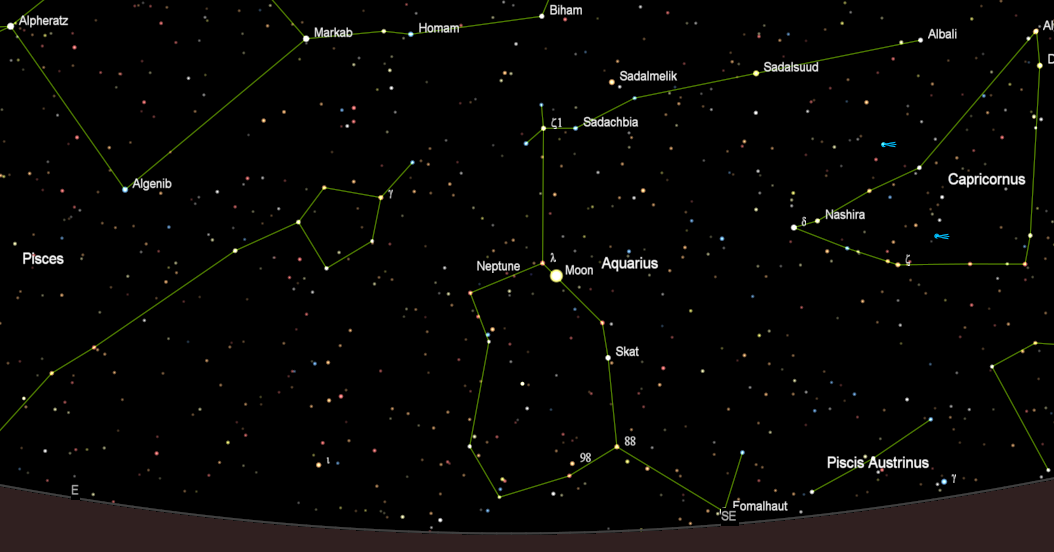
The constellations around Neptune at 10 p.m. September 5, 2017. Created using Cartes du Ciel (Sky Charts).
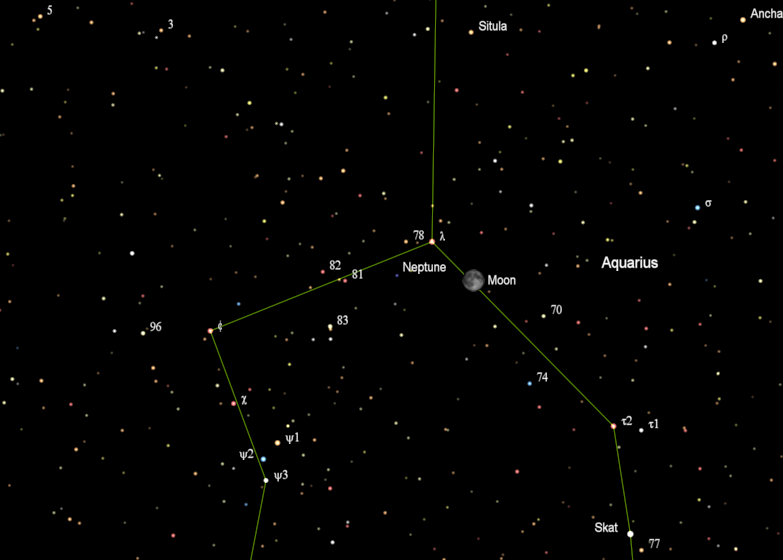
Finding Neptune tonight, September 5, 2017. Neptune moves slowly, so this finder chart, without the Moon, will work for a few months, Created using Cartes du Ciel (Sky Charts).
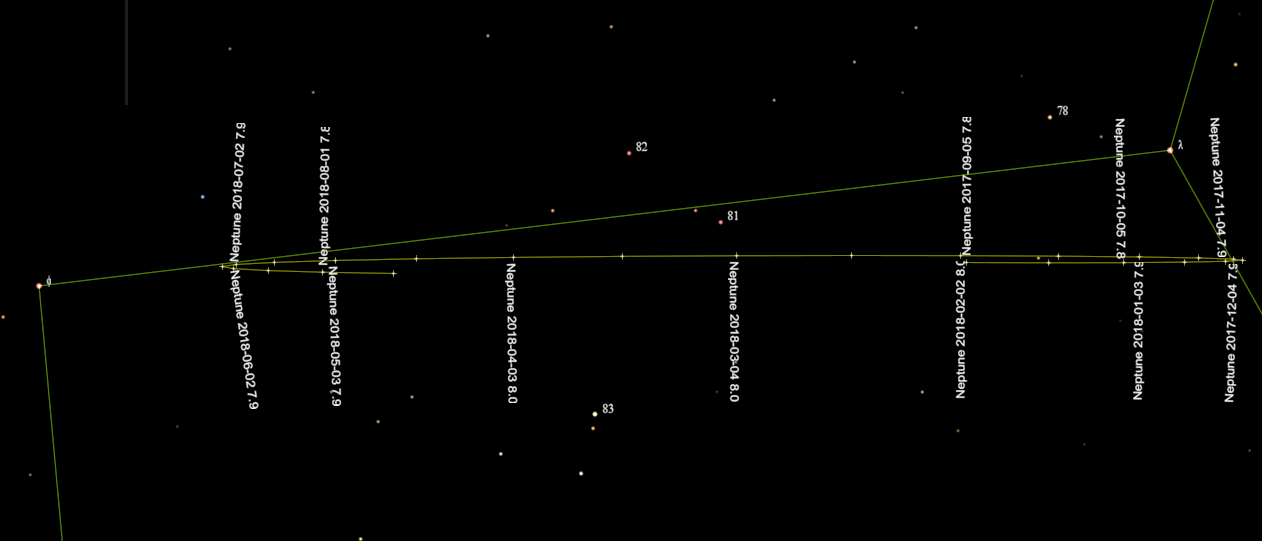
A 300 day track for Neptune with positions every 15 days starting September 5, 2017. Created using Cartes du Ciel (Sky Charts).
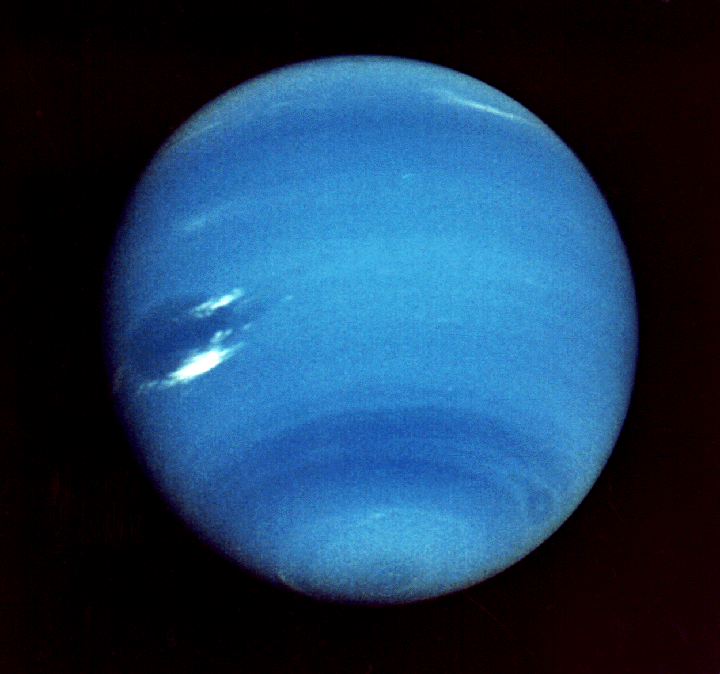
Neptune with the Great Dark Spot in 1979 as seen by Voyager 2. Credit NASA/JPL
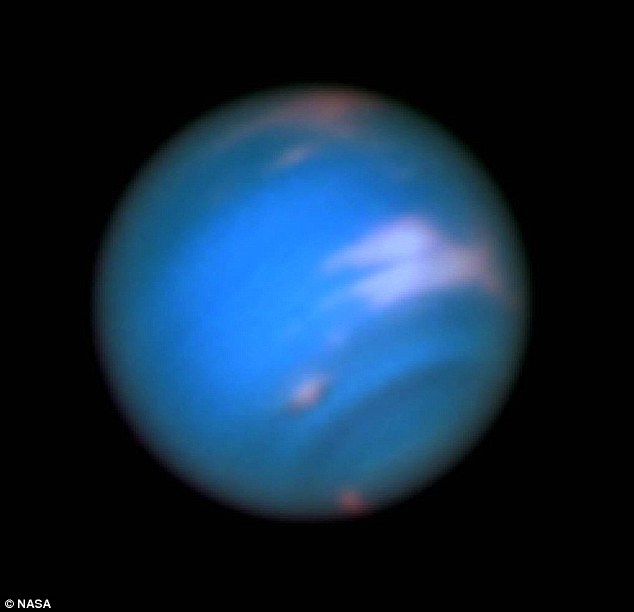
Neptune from the Hubble Space Telescope in 2016. Credit NASA/ESA.
 Bob Moler's Ephemeris Blog